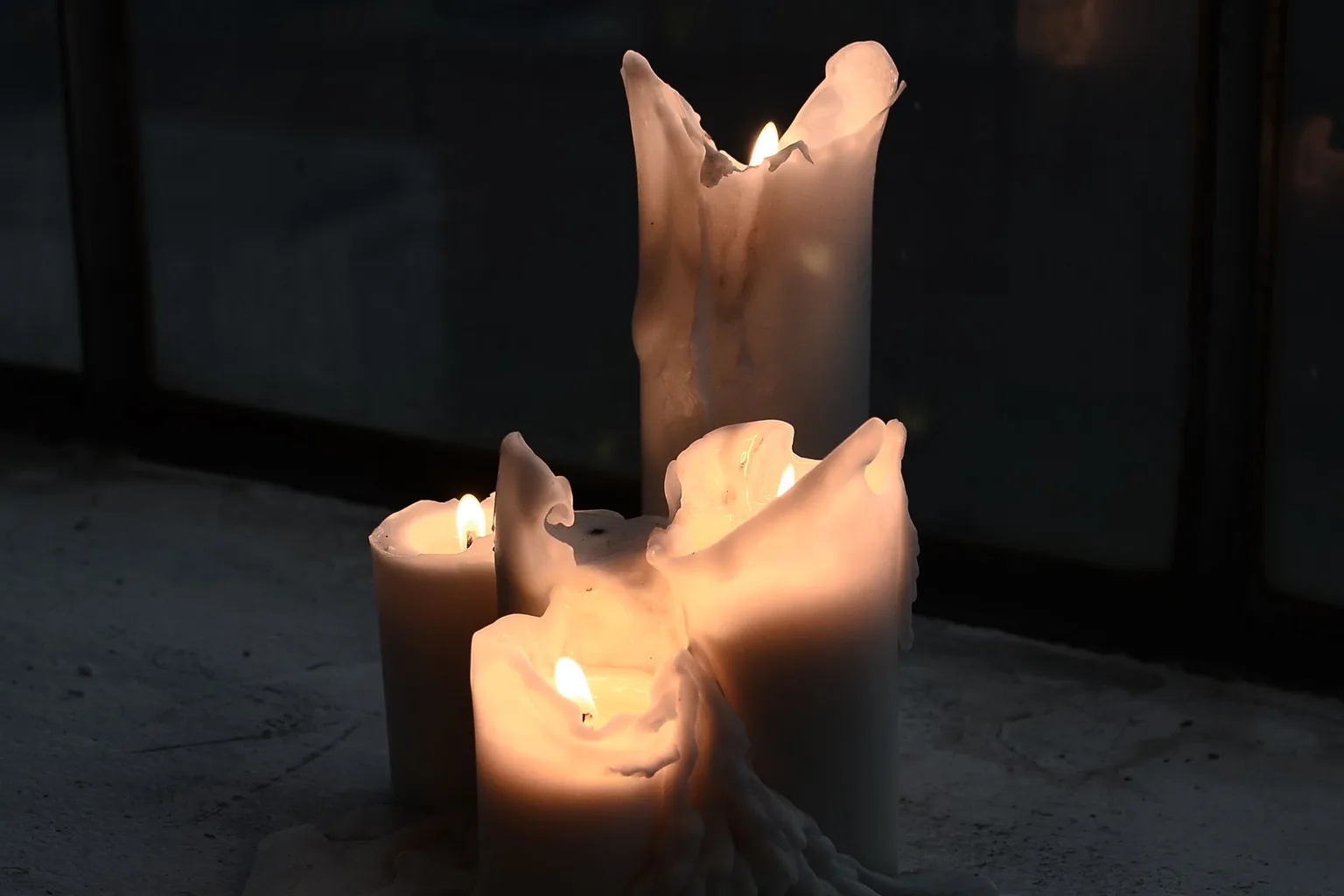
Candle season runs long in most households, picking up as the weather cools and running straight through the holidays, and with more candles burning more often, wax drips on carpet and furniture become a routine part of fall and winter household life.
It looks like it should be a disaster — a hard, waxy blob fused to the carpet fiber — but wax is actually one of the more forgiving stains to deal with, once you understand that the removal method works in the opposite direction from almost every other stain-treatment instinct.
The Counterintuitive Approach: Harden It Further
Most stains respond to some version of loosening and lifting while wet. Wax is different. The goal is to get it as hard and brittle as possible, because hardened wax separates cleanly from carpet fiber in a way that soft, warm wax never will.
If a fresh drip is still warm or soft, resist the urge to wipe it immediately. Let it cool and fully harden on its own — this can take a few minutes for a small drip or up to twenty minutes for a larger pool. Once it's genuinely hard rather than merely cool to the touch, the actual removal process can begin.
Speeding up the hardening with an ice cube wrapped in a cloth, held against the wax for a minute or two, is a reasonable shortcut if you don't want to wait for it to cool naturally, and it makes the wax more brittle than air cooling alone, which can help with the next step.
The Scrape-and-Lift Process
- Once fully hardened, gently scrape off as much excess wax as possible using a dull edge — a credit card or the back of a spoon works well, and a butter knife works if handled carefully to avoid cutting the fiber.
- Vacuum the area to remove any loose wax fragments before moving to the heat step.
- Place a brown paper grocery bag, cut flat, or a few layers of a plain paper towel over the remaining wax residue.
- Set an iron to a low-to-medium setting with no steam, and press it briefly on top of the paper directly over the wax — a few seconds at a time, not a continuous press.
- Lift the paper and check. The melted wax should have wicked up into the paper. Move to a clean section of paper and repeat over any remaining residue.
- Continue until no more wax transfers to a fresh section of paper.
The paper is doing the real work here — it acts as a wick, pulling the just-melted wax up and away from the carpet fiber through capillary action, the same basic mechanism that lets a paper towel absorb a spill. The iron only needs to warm the wax enough to become mobile again, not fully liquefy it.
The Color Left Behind
Once the wax itself is gone, a faint colored stain sometimes remains, especially with deeply pigmented or scented candles. That color is dye from the wax, and it needs to be treated as its own separate problem rather than assumed to have been removed along with the wax.
A mild detergent solution, blotted gently from the outside of the stain toward the center, usually lifts residual dye if it is treated promptly. Rubbing alcohol on a clean cloth, tested first in an inconspicuous area, can help with more stubborn dye stains, but it should be used sparingly on carpet, since it can affect certain dyes and fiber treatments if overused.
Soot from the candle's flame is a separate consideration that often gets lumped in with the wax problem but behaves quite differently. A candle that burned with a smoky flame — often a sign of a wick that was too long, or a draft disturbing the flame — can leave a faint sooty residue on nearby carpet and upholstery that has nothing to do with the wax spill itself. Vacuuming that area separately, rather than assuming the wax-removal process addressed it, catches what the heat-and-lift method was never designed to handle.
Upholstery Needs a Gentler Touch
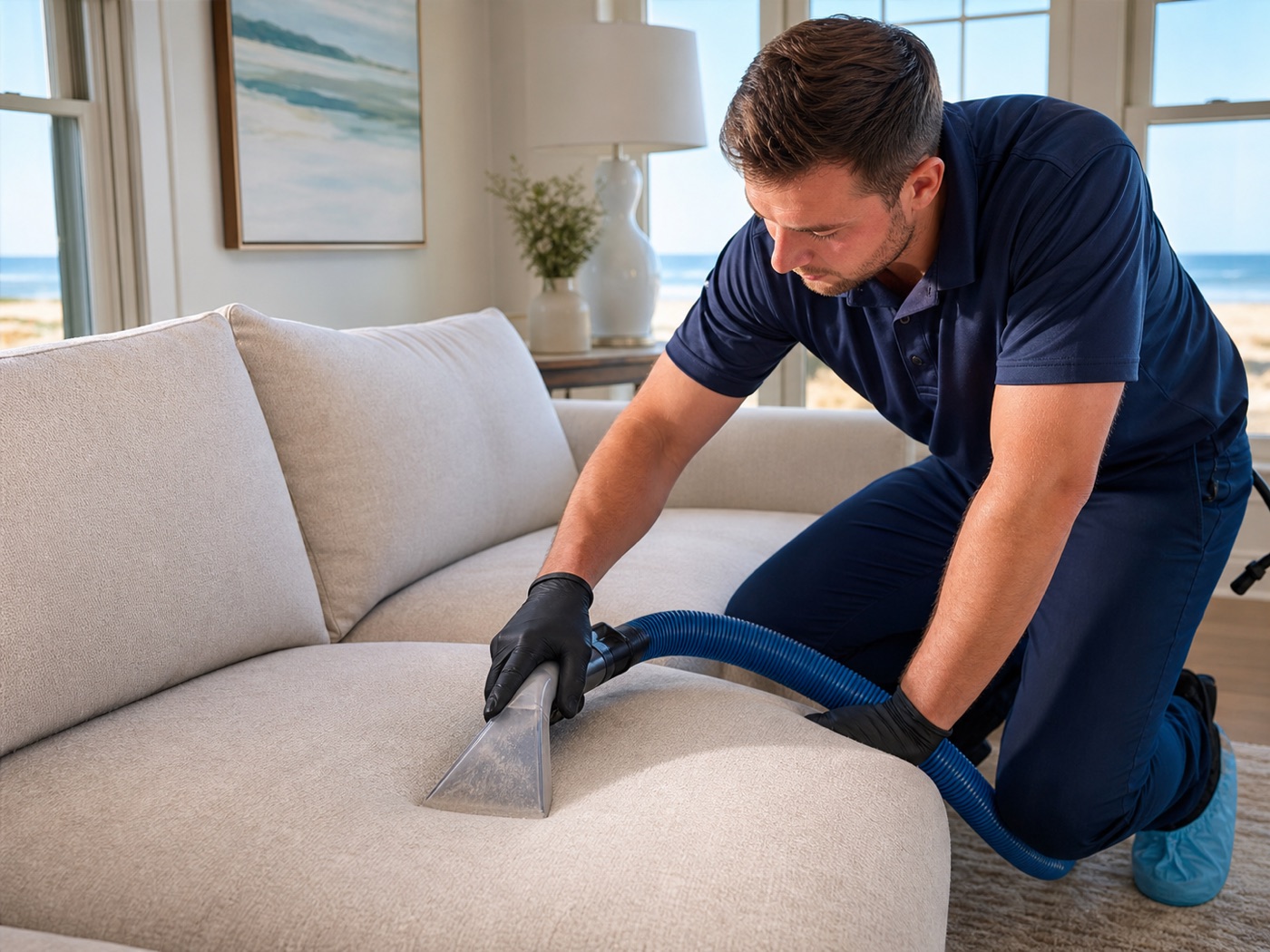
The same basic principle applies to upholstery — harden the wax, then lift it with heat and absorbent paper — but the execution needs to be more careful, because upholstery fabric reacts to direct heat differently than carpet fiber does.
Some synthetic upholstery fabrics can scorch, melt, or develop a shiny, flattened patch under direct iron contact, even at settings that would be perfectly safe on carpet. Testing the iron on a hidden section of the same fabric — the underside of a cushion, or a spot facing the wall — before working on the visible stain is worth the extra few minutes it takes.
Keeping the iron moving in small circular motions rather than pressing and holding, and using the lowest effective setting, reduces the risk considerably. For upholstery with a fabric code that specifically restricts water or steam, checking that code before starting is worth doing, since the same wax-removal process interacts differently depending on what the manufacturer allows for that specific fabric.
Preventing It in the First Place
A little placement awareness during candle season prevents more wax spills than any removal technique fixes after the fact, and it costs nothing beyond a slightly more deliberate approach to where candles actually go in a room.
- Keep candles on stable, flat surfaces well away from foot traffic paths, rather than on a side table that gets bumped regularly.
- Use a proper candle holder or tray rather than balancing a candle directly on a surface with no catch basin for drips.
- Trim wicks before each use — a wick left too long burns hotter and drips more, which is one of the most common and overlooked causes of wax spills.
- Avoid candles in drafty spots, since airflow makes a flame burn unevenly and drip more on one side.
- Blow out candles rather than letting them burn to the very end unattended, since the last bit of wax pooling in the holder is the most likely to spill if the holder gets knocked.
Wick trimming in particular is an underused habit — most people replace or discard candles long before they think to trim the wick partway through, even though a properly trimmed wick burns cleaner, drips less, and makes the candle last longer.
It is also worth thinking about candle placement relative to whatever residential carpet cleaning schedule a household already follows. A candle-heavy room might warrant a slightly shorter interval between cleanings during the fall and winter months specifically, since wax residue, soot, and general candle-related buildup accumulate faster in that room than elsewhere in the house.
When Wax Has Really Set In
Wax spilled onto a thick, plush carpet or into a deep-pile rug sometimes works its way further into the fiber than a surface spill on a flatter carpet, and repeated DIY attempts do not always fully resolve it, particularly on carpet with a dense, high pile where the wax has more fiber to work into.
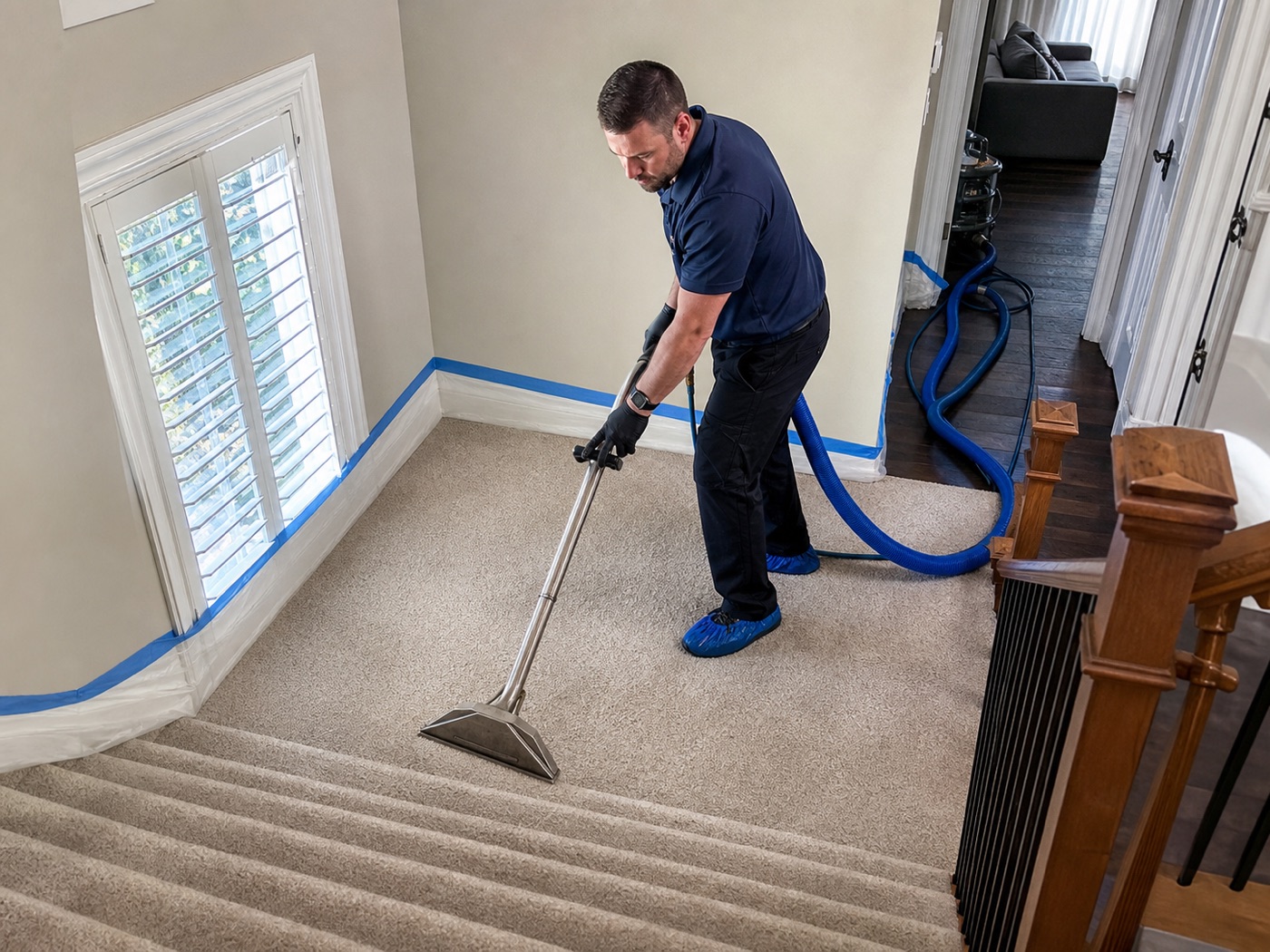
A professional cleaning can address wax residue that DIY methods could not fully lift, using extraction to pull out what remains after the surface wax has been addressed. It is also the right call for a large spill — a knocked-over candle rather than a small drip — where the volume of wax involved is more than a paper-and-iron approach can reasonably handle, and where the same treatment can be extended to nearby upholstery in one visit.
All City Carpet Cleaning And Building Solutions handles wax and other seasonal spot treatments for households across Virginia Beach, Norfolk, Chesapeake, Suffolk, Hampton, Portsmouth, and Smithfield, with pricing published up front.
Wax season overlaps almost exactly with the stretch of the year households are already thinking about hosting, decorating, and getting the house ready for guests, which makes it a reasonable time to bundle a general refresh in with whatever wax-specific attention a room needs.