
Carpet cleaning pricing is more confusing than it needs to be, and most of the confusion traces back to one word that nobody defines the same way. Understanding what an "area" means, and what a minimum charge is actually covering, makes almost every quote you receive comparable.
All City publishes starting prices rather than requiring a phone call to find out, so this article can be specific about real numbers rather than talking in ranges.
The Published Numbers
These are starting prices for residential carpet cleaning, and they are on the pricing page rather than being quoted case by case.
| Service | Starting price | Notes |
|---|---|---|
| Up to 2 areas | $180 | Also the minimum service visit |
| Up to 3 areas | $250 | |
| Up to 4 areas | $300 | |
| Up to 5 areas | $360 | |
| Carpet protector | $25 per area | Optional add-on |
| Chairs | $65 | Upholstery |
| Loveseats | $90 | Upholstery |
| Sofas | From $150 | Depends on size and fabric |
| Sectional sofas | From $250 | Depends on configuration |
Everything else — pet odor removal, urine treatment, tile and grout, hardwood, water extraction, floor stripping and waxing, ink and slime removal, and commercial work — is quoted after a conversation about the actual project, because the scope on those genuinely varies in ways a table cannot capture. The full pricing page has the current figures.
Final pricing can depend on the actual area count, furniture size, surface condition, access, and the scope you request. The starting prices are a real basis for planning rather than a teaser number that changes once someone is at your door.
What an "Area" Actually Means
This is where most misunderstanding lives, and it is worth being concrete.
An area is generally one room. A bedroom is an area. A living room is an area. Beyond that, a few conventions apply across the industry and it helps to know them before you compare quotes.
- A hallway is normally its own area, not a free add-on to the rooms it connects.
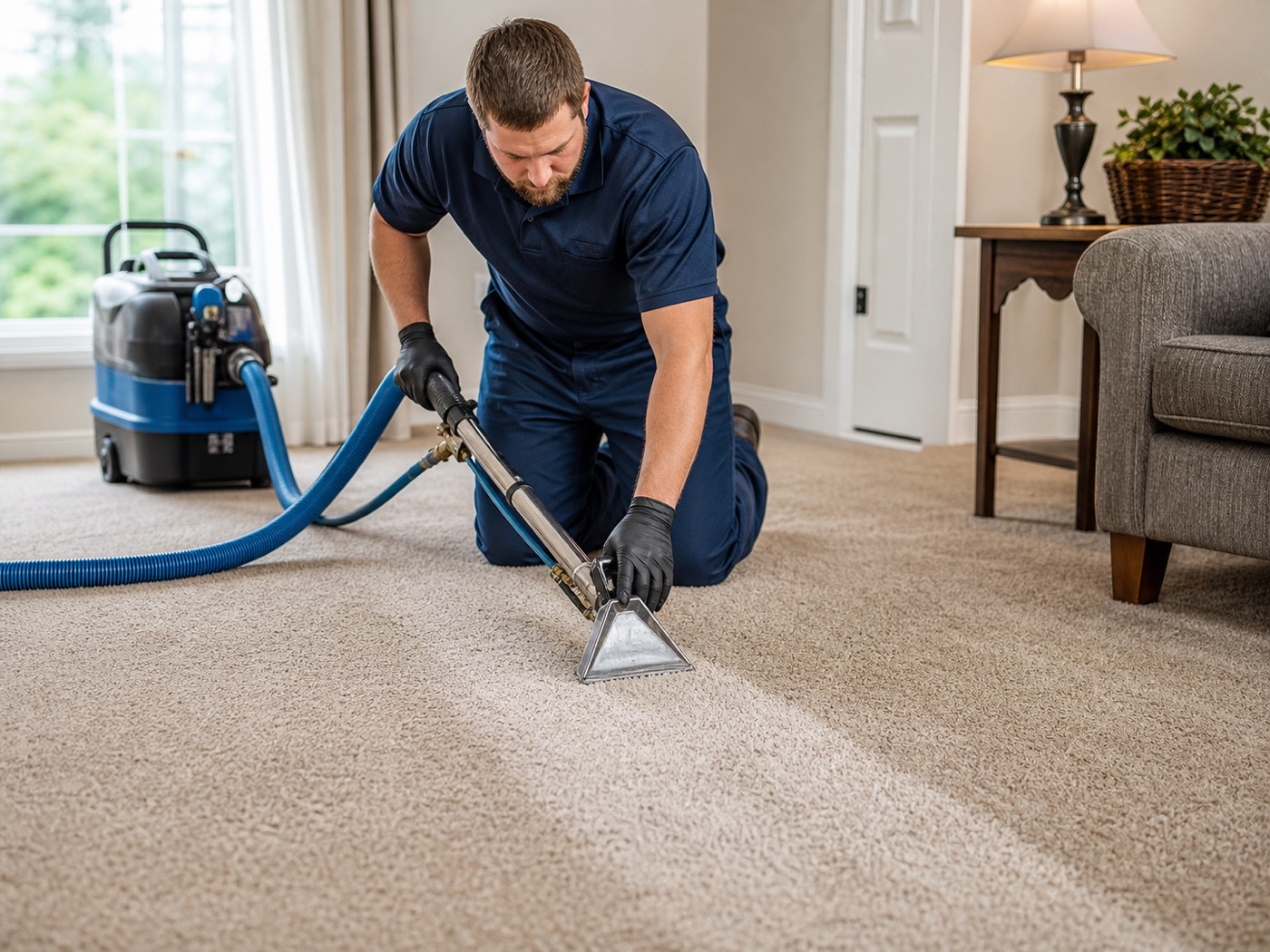
- A staircase is priced separately. Stairs are slow, awkward hand work — each tread and riser is cleaned individually, and a flight can take as long as a bedroom.
- A large open-plan living and dining space is frequently counted as two areas, because it is two rooms' worth of floor.
- Walk-in closets are usually included with the room they open off.
- Very large rooms may be counted as more than one, which is reasonable and should be said upfront rather than discovered on the invoice.
The practical advice when calling anyone for a quote: describe the rooms, not the square footage. "Three bedrooms, a hallway, and the stairs" produces an accurate number. "About twelve hundred square feet" does not, because the price follows the room count and the stairs.
Which Add-Ons Are Worth It
Add-ons are where the low-quote operators make their money, so it is worth knowing which ones do real work.
Carpet protector at $25 per area is genuinely useful in the rooms where spills happen — a family room with children, a dining room, a hallway a dog uses. It works by making the fiber less immediately absorbent, which gives you time to blot a spill before it soaks in. That is a meaningful advantage on the stains that are actually preventable. It does not stop wear, it does not stop abrasion, and it is largely wasted on a guest room nobody uses.
Deodorizer is worth having when there is a genuine odor and worth skipping when there is not. A fragrance applied to a carpet with no odor problem is scent, not cleaning, and it leaves residue behind.
The one that is not an add-on is pre-spray. Pre-treatment is where a large share of the actual cleaning happens, and if a company presents it as optional, the base price was never a complete service. That is the mechanism behind most bait-and-switch quotes in this market.
Why Some Jobs Cannot Be Quoted by Phone
Refusing to quote a number over the phone can look like evasiveness, and sometimes it is. For a handful of services it is the honest answer.
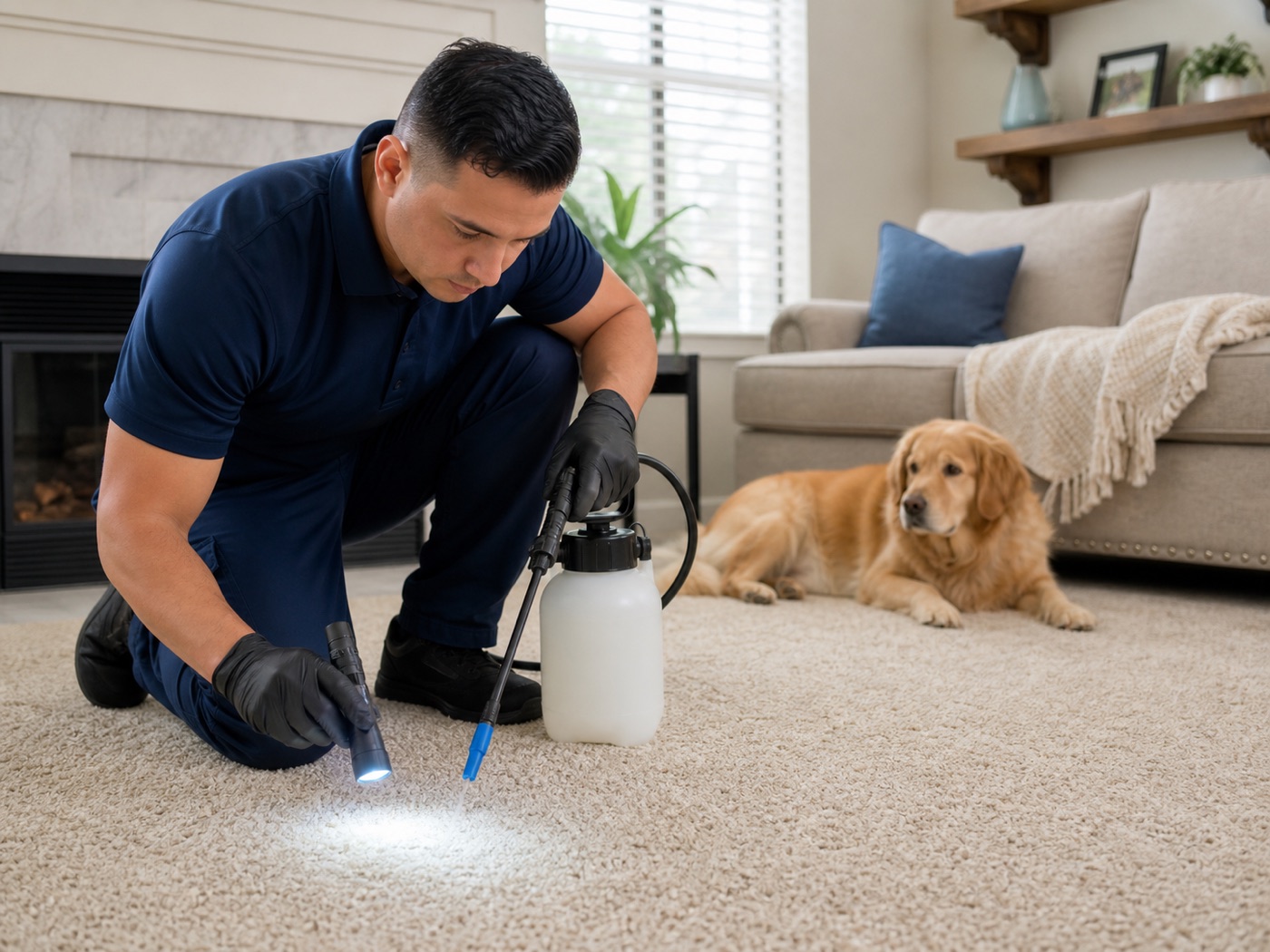
Pet odor is the clearest case. "My house smells like dog" describes two completely different jobs. If the smell is dander, coat oils, and general household accumulation, an extraction with an appropriate deodorizing step handles it and the price is predictable. If urine has soaked through the carpet into the pad — or through the pad into the subfloor and the tack strip — that is contamination rather than soil, and treating it means working at the source and sometimes concluding that pad replacement is the reliable answer.
Quoting the cleaning price and then discovering the contamination situation is how customers end up feeling misled, even when nobody intended it. Looking first costs a walkthrough and avoids that entirely.
Tile and grout, hardwood, and floor stripping are similar. The material has to be identified before anyone can responsibly say what the process will be, and the wrong process on the wrong surface is expensive to undo — floor finish applied to luxury vinyl plank or an acidic product used on natural stone both cost more to reverse than the job was worth.
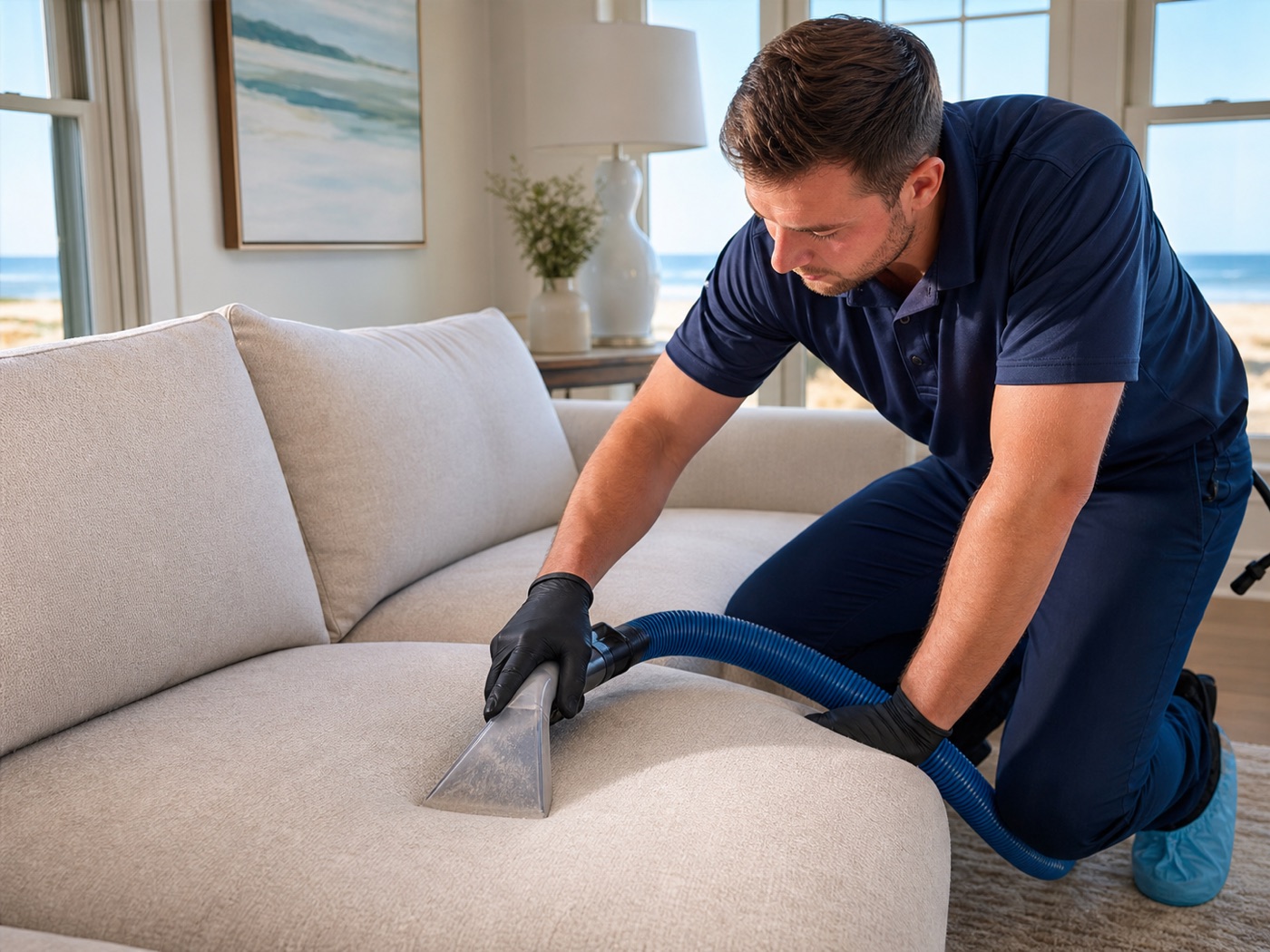
Upholstery sits in between. The published starting prices cover common pieces at typical sizes, and the final number depends on the fabric, the configuration, and the condition. A standard three-cushion sofa in a durable synthetic is straightforward. A large sectional in a delicate fabric with significant soiling is not, and quoting it sight-unseen would be a guess dressed up as a price.
The Cheapest Quote and the Real Cost
There is a version of carpet cleaning that costs very little and is genuinely worse than not doing it.
A quick pass with a portable machine, too much detergent, and not enough rinse leaves surfactant residue in the fiber. Detergent is sticky. A carpet carrying residue attracts and holds soil, so it looks acceptable for two weeks and dingier than before within two months — and each subsequent cleaning has to deal with the accumulated residue as well as the soil.
The second hidden cost is drying. Over-application with weak recovery leaves a floor damp for a day or more, and in a Hampton Roads summer that is how a clean carpet develops a musty smell. Both failures are invisible on the day and both cost money to correct later.
This is the real argument for paying a reasonable price rather than the lowest one: you are buying thorough extraction and proper rinsing, and those are exactly the things that cannot be evaluated while the technician is still in the driveway. Understanding what steam cleaning actually involves makes the difference much easier to see.
Getting the Most for the Money
- Do several rooms in one visit. The minimum charge means one room at a time is the most expensive way to buy this.
- Prioritize by traffic rather than by square footage. Hallways, stairs, and the family room earn frequent cleaning; guest rooms do not.
- Add upholstery to the same visit rather than booking a second trip for it.
- Buy protector for the rooms where spills happen and skip it elsewhere.
- Vacuum before the appointment if there is visible loose debris, so the cleaning works on what is embedded.
- Book fall or winter if you are flexible. Drying is faster and the calendar is less crowded than in November and spring.
The second point is the biggest lever. Households that clean the whole house annually usually get less for their money than households that clean the high-traffic third of it twice as often — the rooms people actually see stay in noticeably better condition, and the total spend is similar.
The Short Version
Starting at $180 for up to two areas and $360 for up to five, with a $180+ minimum visit and protector at $25 per area. An area is a room; stairs and hallways count separately. Pet odor, tile, and hardwood get quoted after a look because the scope genuinely varies. And the cheapest quote in the market is frequently the most expensive job in the market.
All City Carpet Cleaning And Building Solutions serves Virginia Beach, Norfolk, Chesapeake, Suffolk, Hampton, Portsmouth, and Smithfield, with published prices and written quotes.