
There is a lot of folklore about move-out inspections, most of it passed between neighbors and most of it wrong in the specifics. The useful thing to understand is that an inspection is not a judgment about how you kept the house. It is a person with a standardized form, walking a unit they have walked a hundred times, checking boxes.
Once you see it that way, the strategy becomes obvious: find out what is on the form, and deal with the items that are on it.
Take the Pre-Inspection
Most privatized housing communities offer a pre-inspection before the final walkthrough, and a surprising number of families skip it because it is one more appointment during the worst week of the year.
Skip nothing else, but do not skip this. A pre-inspection is a housing representative telling you, in advance and for free, exactly what they intend to flag — while you still have days or weeks to address it. It converts an unknown into a punch list, and a punch list is something you can actually price and schedule against.
The single most valuable thing to do at that appointment is ask directly: is the carpet going to be a charge, and if so, why. The answer tells you whether you need a cleaning, a treatment for something specific, or nothing at all. Spending three hundred dollars on a cleaning when the finding was a burn in the bedroom helps nobody.
Civilian landlords in Hampton Roads rarely offer a formal pre-inspection, but many will walk the unit if you ask. It is worth requesting in writing, because Virginia's deposit rules put the burden on the landlord to itemize deductions, and a landlord who has already told you what they see is easier to hold to that list later.
What Gets Checked, and What Gets Charged
The categories are consistent across most forms even when the wording differs.
| Finding | Usual classification | What actually helps |
|---|---|---|
| General soil throughout | Cleaning — expected | Professional cleaning with a dated receipt |
| Worn traffic path in a hallway | Normal wear | Your move-in photos, if it is questioned |
| Flattened pile under furniture | Normal wear | Nothing — it is not a finding |
| Set-in stains | Damage, often negotiable | Professional treatment plus documentation of the attempt |
| Pet odor | Damage | Source treatment, scoped honestly and early |
| Burns, cuts, bleach spots | Damage, not negotiable | Nothing cleaning can do; plan for it or arrange a repair |
| Carpet rippling or seams separating | Often maintenance, not tenant damage | Report it during the tenancy, in writing |
That last row is worth acting on now rather than at move-out. Installation problems are maintenance issues, and reporting them in writing during your tenancy creates the record that keeps them from becoming your problem later. A ripple you mentioned in year one is a work order. The same ripple discovered at the final walkthrough is an argument.
Where Inspectors Actually Look
People clean the middle of rooms. Inspectors look at edges, and there is a reason: the middle of a room is where a vacuum has been going for three years, and the edges are where nothing has.
- Closet floors, including the back corners behind where clothes hung.
- Under and behind where large furniture stood — often visibly different in color from the rest of the room.
- Room perimeters and along the baseboards, where a vacuum head never quite reaches.
- Stair treads, particularly the nose of each tread and the corners against the stringer.
- Transitions where carpet meets tile or vinyl, which collect grit and show wear first.
- Behind doors and in the swing path, where soil concentrates and nobody looks.
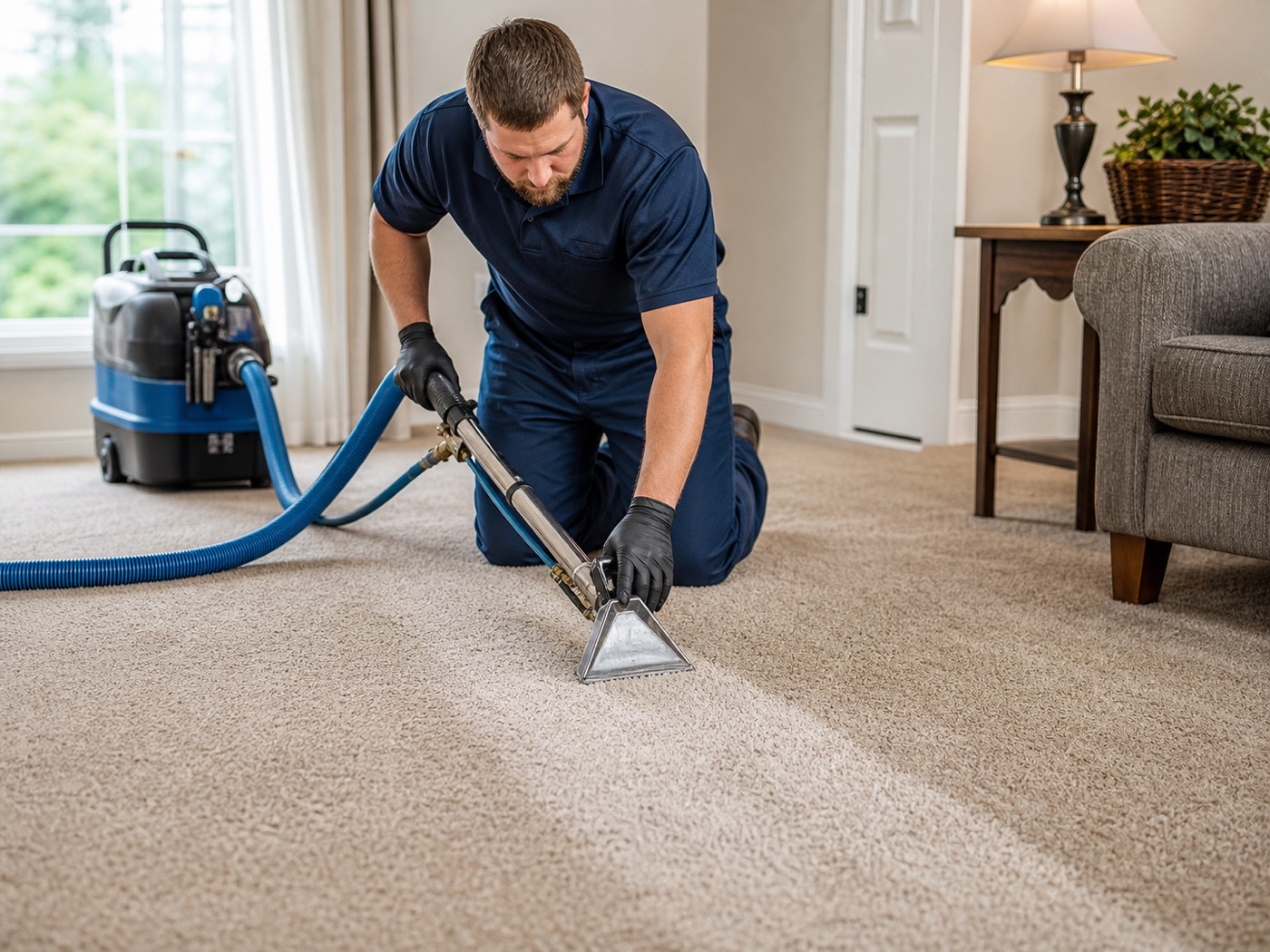
An empty unit makes all of this accessible for the only time in your tenancy, which is the practical argument for cleaning after the pack-out rather than before. It is also why a cleaning done in an empty unit is worth more than the same cleaning done around furniture — every square foot gets treated, including the areas an inspector is specifically going to look at.
Pets Are Where the Money Goes
Carpet charges at move-out are overwhelmingly pet charges. Everything else tends to be modest by comparison.
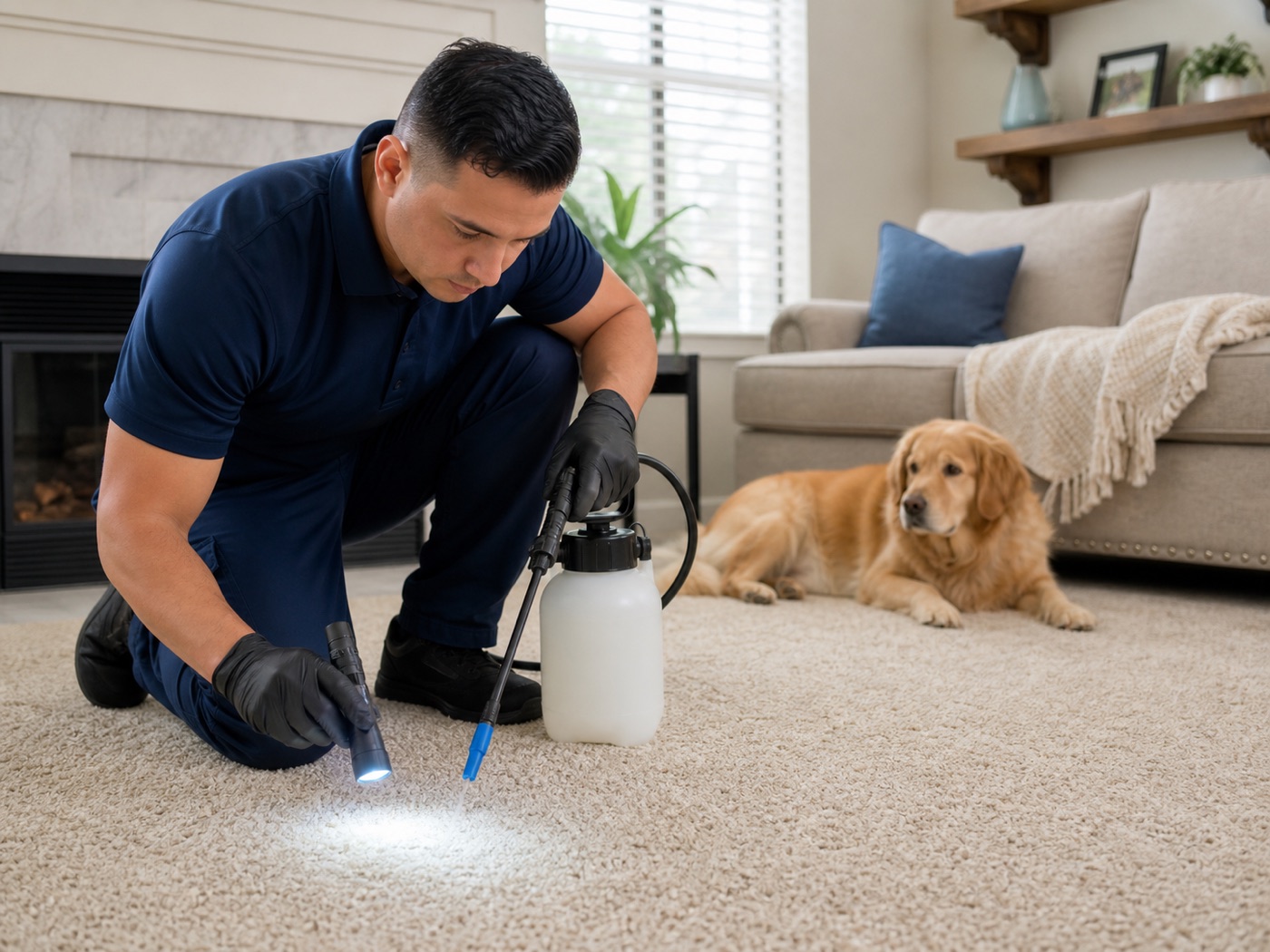
The reason is that urine does not stay in the carpet. It passes through the face fiber and backing into the pad, and with volume or repetition it reaches the subfloor and wicks into the tack strip at the edges of the room. Inspectors know this, and many carry a UV light or simply check the perimeter of rooms where a pet lived, because that is where the evidence concentrates.
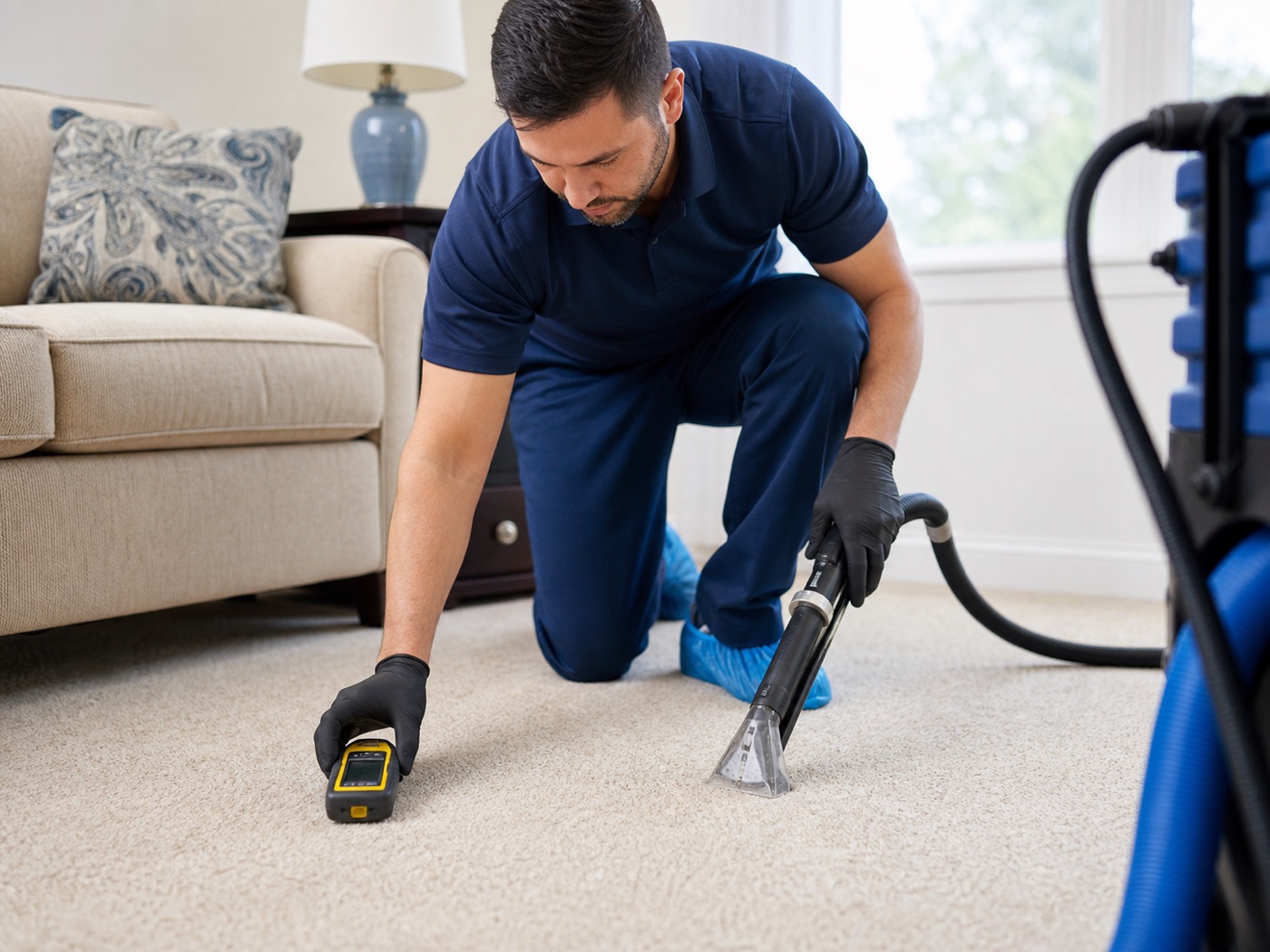
A surface cleaning genuinely improves a pet-affected unit and does not solve a pad-level problem. On a cool day in an empty house with the door open, the difference may not be obvious. On a July walkthrough with the air conditioning off, it will be. This is the finding most worth scoping honestly and early, because the realistic options change depending on how deep it went.
If contamination is extensive, the useful thing a cleaner can tell you is that cleaning will not get you there. Knowing that three weeks out lets you plan; discovering it the morning of the inspection does not. And if the damage predates you, this is exactly why the move-in condition report matters — document any odor when you arrive, in writing, before you have lived there a week.
What Not to Do in the Last Week
A few well-intentioned moves in the final days reliably make things worse, and they show up often enough to be worth naming.
- Do not attack a stain with household spot cleaner the night before. Residue attracts soil and can set some stains permanently — and an inspector sees the ring, not the effort.
- Do not use a rental machine over pet contamination. It adds water to a pad that already holds too much, and the smell comes back stronger in a closed unit.
- Do not clean before the pack-out. Movers will undo it in an afternoon and you will have paid for a floor nobody sees.
- Do not use bleach on anything carpeted, for any reason. Bleached fiber is permanent damage and it converts a cleaning question into a replacement charge.
- Do not cover an odor with a scented product. A closed unit in July defeats it completely, and it reads as concealment rather than cleaning.
The through-line is that most last-minute fixes trade a small, arguable finding for a large, unarguable one. A soiled carpet is a cleaning line item. A bleached carpet is a replacement.
The Paperwork That Decides Close Calls
Most disputes are not close. The ones that are get decided on documentation, and the documentation is cheap to produce if you do it at the right moment and nearly impossible to reconstruct afterward.
- Photograph every room at move-in, wide and close, before you unpack anything.
- Keep your signed move-in condition report somewhere you will find it in three years.
- Report maintenance issues in writing during the tenancy, not verbally.
- Take the pre-inspection and write down what was said.
- Photograph every room again after the pack-out and after the cleaning.
- Keep the itemized cleaning invoice, dated after the pack-out, listing the rooms.
That last item does more work than people expect. An invoice showing that the carpet was professionally cleaned on a date after the unit was empty makes a cleaning charge very hard to justify, and it demonstrates good faith on the categories that are genuinely arguable. The same record helps on the civilian side, where a move-out checklist and a receipt are the two documents that resolve most deposit questions.
The Short Version
Take the pre-inspection, get a copy of the form, and spend your money on the categories that are actually on it. Clean after the pack-out in an empty unit so the edges and closets get treated. Deal with pet odor honestly and early, because it is where the real charges are. And keep the paperwork, because that is what settles anything close.
All City Carpet Cleaning And Building Solutions works with service members across Norfolk, Virginia Beach, Hampton, Portsmouth, and Chesapeake, and we understand the calendar you are working against. If the pre-inspection flagged something, tell us what it said.