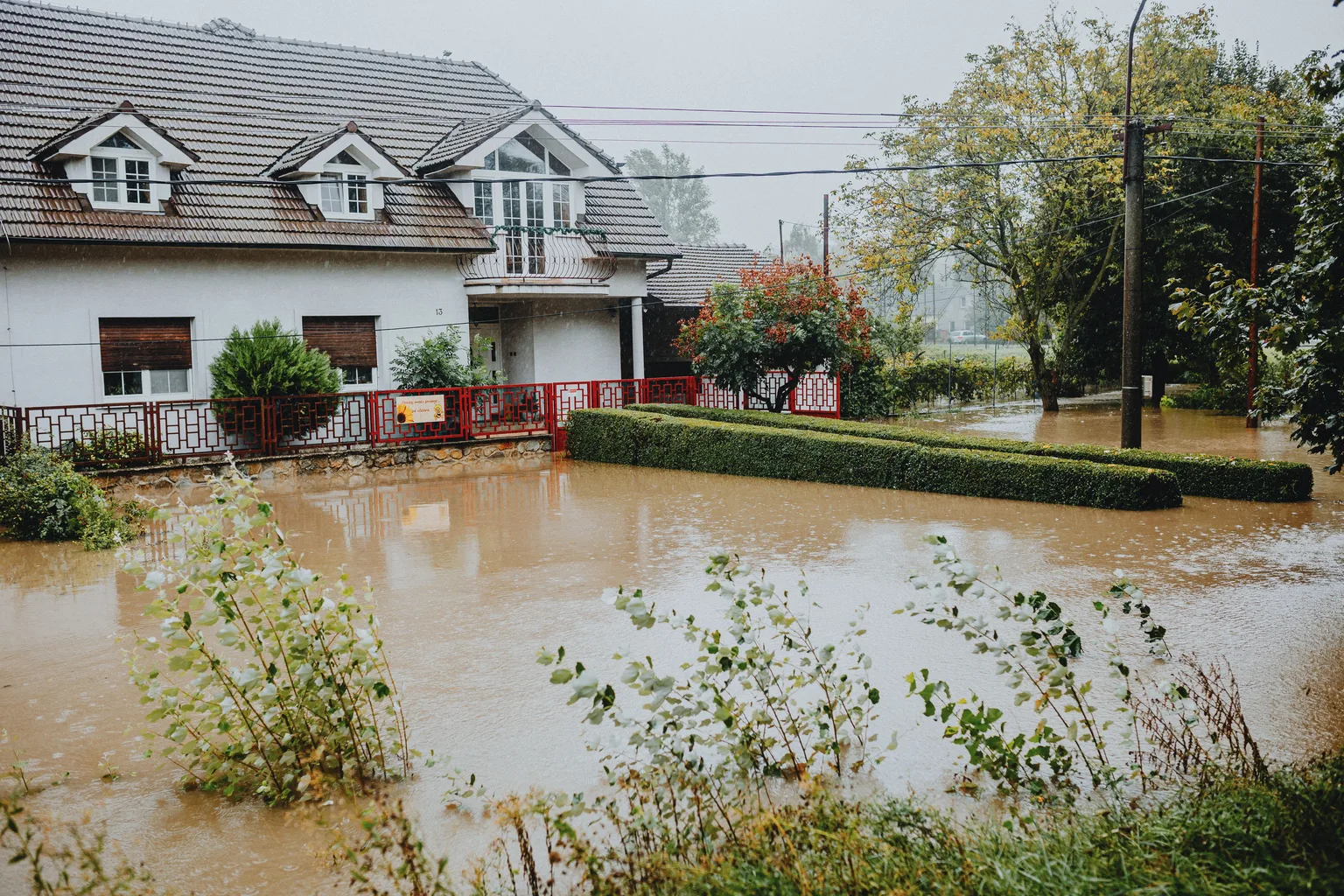

Hurricanes get the attention in Hampton Roads because they have names and cones and a week of forecasting. Nor'easters get considerably less, and they put water inside more houses in this region.
The reason is duration. A hurricane passes. A nor'easter parks itself off the coast for two or three days, pushing water up the Bay and into the rivers across successive high tides, so water levels build instead of spiking and receding. Neighborhoods that stay dry in a fast-moving tropical storm flood in a stalled nor'easter, and the season for them runs from fall into early spring.
The Forty-Eight Hour Window
Everything about water damage outcomes comes down to how fast the response starts. The industry works to a rough forty-eight hour threshold, and it exists for a biological reason rather than a procedural one.
Mold needs moisture, an organic food source, and time. A wet carpet pad in a closed-up house supplies all three, and in this climate the ambient humidity means the drying clock runs slowly on its own. Within a day or two of continuous saturation, growth begins in the pad and at the wall base, and past that point the conversation changes from cleaning to remediation.
Inside that window, a great deal is recoverable. Carpet extracted and properly dried within a day, with the pad addressed and air movement in place, usually comes back. The same carpet left for four days generally does not, and the cost difference is substantial.
One more reason to move early: after a regional event, availability collapses. A nor'easter that floods low-lying Norfolk and Portsmouth neighborhoods generates hundreds of calls in the same morning, and equipment gets committed within hours. The households that come out of it best are almost always the ones who called first, not the ones who waited to see how bad it would get.
Three Kinds of Water
The single most important thing to establish is what kind of water you are dealing with, because it determines what can be saved regardless of how fast you move.
| Category | Source | Carpet outcome |
|---|---|---|
| Clean water | Supply line, rain through a window, water heater | Carpet and pad usually salvageable if dried fast |
| Grey water | Washing machine, dishwasher, sink overflow | Carpet often salvageable, pad usually replaced |
| Black water | Sewage, or any water that crossed ground outdoors | Carpet and pad are removed, no exceptions |
Storm surge and street flooding are black water. This is the part people most want to argue with, because the water looks like rain, but water that has run across yards, roads, and storm drains carries sewage, fuel, fertilizer, and whatever else was on the ground. No cleaning process makes that carpet safe to keep in a house with children or pets in it.
Rain coming through a window or a failed roof is a different matter and is usually clean water. A house can take both in the same storm, in different rooms, and the two rooms get different answers.
What to Do Before a Storm
Nor'easters give less warning than hurricanes but usually a day or two of forecast, which is enough to do the things that matter.
- Lift area rugs off the floor. A wet rug on hardwood or LVP does more damage to the floor than to itself, and rugs are the easiest thing to move.
- Raise furniture on blocks or foil in rooms that have flooded before. Wooden legs wick water upward and stain carpet as they do it.
- Move anything stored on the floor of a ground-level closet up onto a shelf.
- Clear the gutters and the downspout extensions. Most storm intrusion in this region is roof water finding the wrong path rather than tidal flooding.
- Check that the crawlspace vents and any sump equipment are working before you need them.
- Photograph each room in advance. Before-and-after documentation is worth more than any receipt in a claim.
- Know who you would call. Everyone calls at the same time after a regional event, and the list gets long fast.
That last point is the one people learn the hard way. After a regional flooding event, every restoration company in Hampton Roads is booked within hours, and the difference between calling at eight in the morning and calling that evening can be a day or two of response time — which is most of the forty-eight hour window.
The First Few Hours
If water is already inside, there is a sequence that helps and a few things that make matters worse.
Safety comes first: if water is near outlets, a panel, or any electrical equipment, cut power to the area or leave it alone entirely. No floor is worth an electrical injury, and this is the part people skip when they are upset about their house.
Then stop the source if you can, photograph everything, and start removing standing water with whatever you have. A shop vacuum helps on clean water and is worth using immediately. Get furniture off the wet carpet, or put foil or blocks under the legs, because furniture stain transfer into wet carpet happens within hours and does not come out.
Get air moving — fans, open interior doors, air conditioning running if the power is on, because a working air conditioner is also a dehumidifier. What not to do: do not use a household steam cleaner on contaminated water, do not put a dehumidifier in a closed room and assume it is handling things, and do not lay wet rugs back down on hardwood.
What Professional Drying Involves
The part most homeowners underestimate is that extraction is only half the job, and the second half is what determines whether the house smells right in six months.
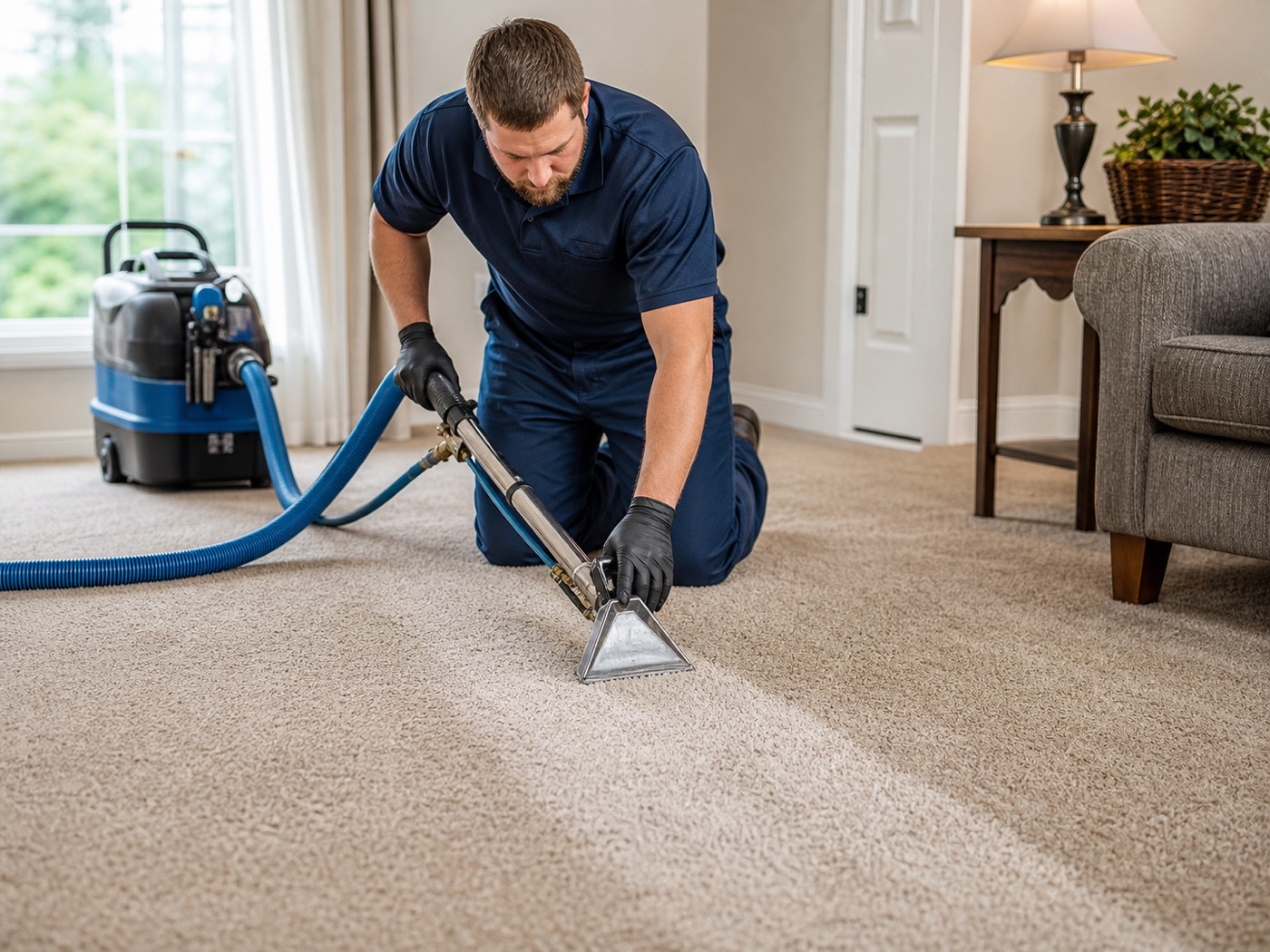
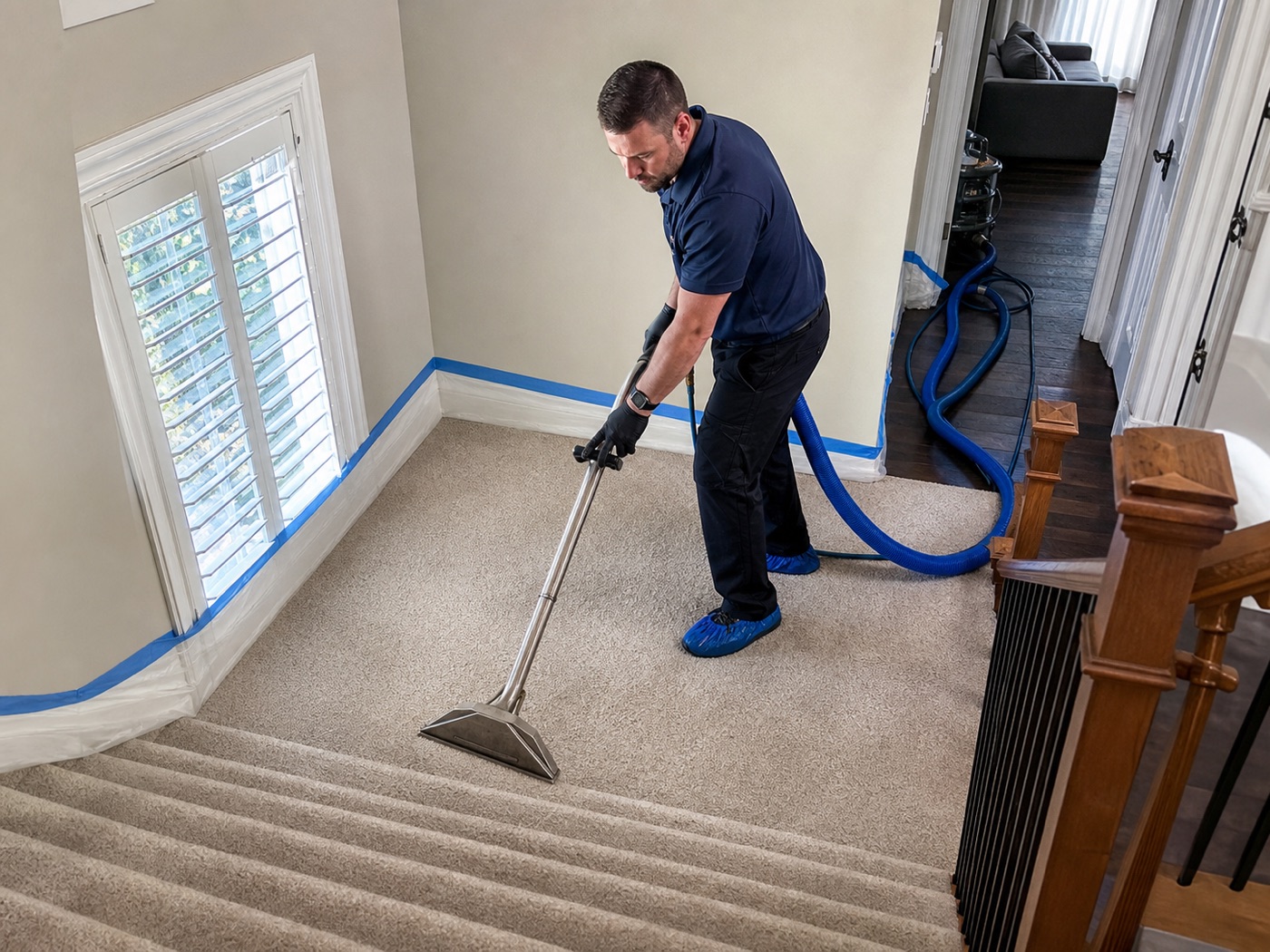
Extraction uses equipment that pulls water from beneath the carpet rather than across its surface — weighted tools that use body weight and strong vacuum to draw water up out of the pad. That is the step a shop vacuum cannot replicate, and the pad is where the water is.
Then comes structural drying: air movers positioned to create airflow across wet surfaces, dehumidification to remove the water once it is airborne, and moisture readings taken daily to confirm that the subfloor and the wall base are actually reaching dry rather than merely feeling dry. Carpet may be floated over air movers so both faces dry at once.
Baseboards often come off, and sometimes a row of drywall does too, because water wicks upward into wall cavities and a wall that looks fine at the surface can hold moisture for weeks. Skipping that is the most common reason a house that was dried ends up with a musty smell in the spring.
Hard Floors and the Rest of the Building
Carpet gets the attention because it is obviously wet, but hard flooring in a flood is often the more expensive problem and the less visible one.
Water finds the seams in a floating plank floor and sits between the flooring and the subfloor, where nothing evaporates and nobody can see it. The surface can look perfect for weeks while the subfloor stays saturated. If water has gone under a plank floor, that section has to come up to dry, and the sooner that decision is made the smaller it is.
Hardwood cups and crowns as it absorbs and releases moisture, and in a coastal house it is already living close to its limits. Tile survives flooding well, but the grout absorbs contaminated water and needs proper cleaning rather than a mop pass.
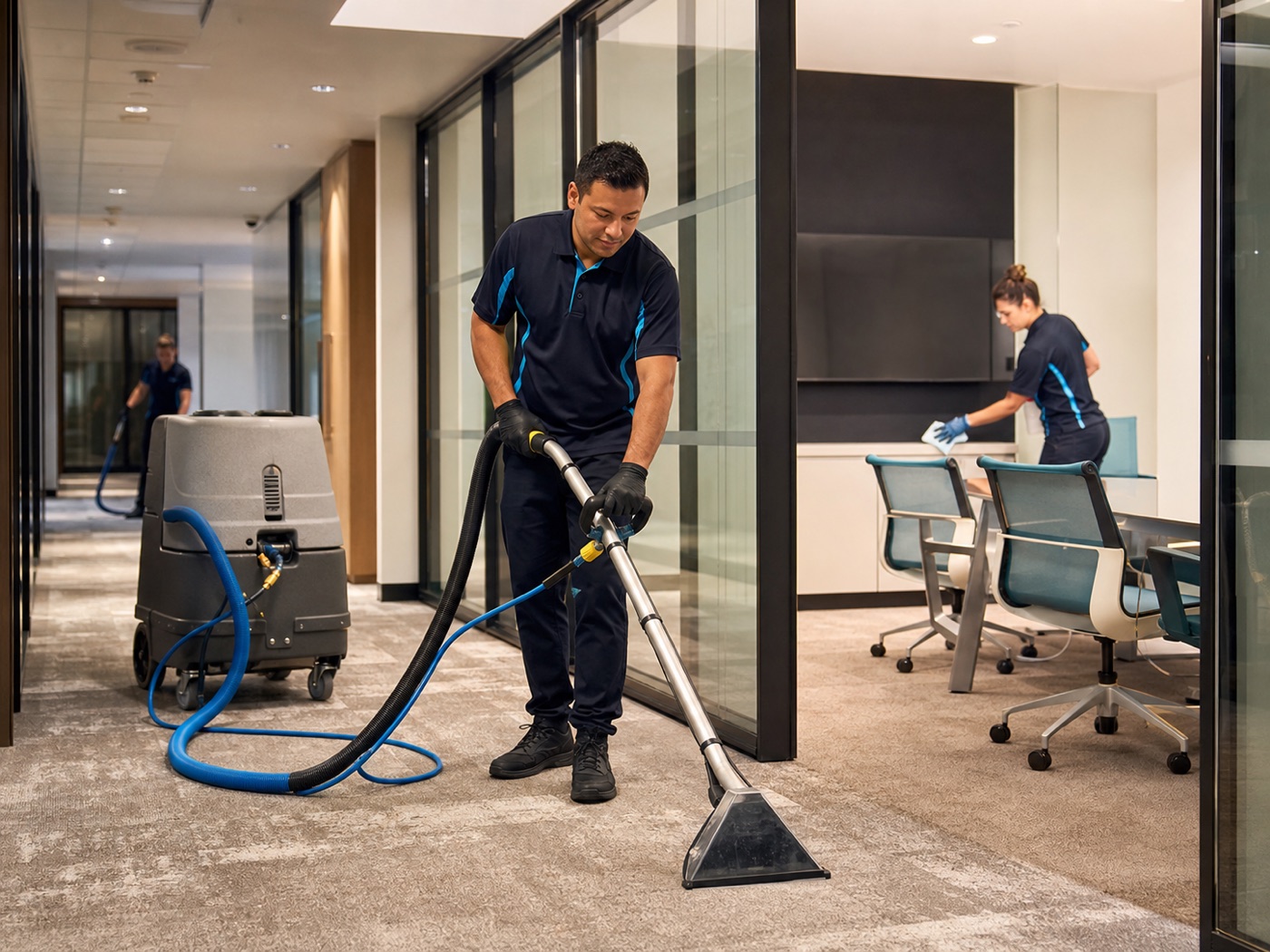
For commercial buildings the same principles apply with a business interruption clock attached, which usually justifies moving faster and bringing in more equipment than a homeowner would. Getting a retail floor or an office back into service in three days rather than ten is generally worth whatever the drying costs.
All City Carpet Cleaning And Building Solutions works across Virginia Beach, Norfolk, Chesapeake, Suffolk, Hampton, Portsmouth, and Smithfield, and our pricing is published so you are not negotiating during a bad week.