The fourth quarter compresses more visible business activity into a shorter window than any other stretch of the year. Client visits ramp up as vendors and partners try to close out contracts before year end, board meetings and annual reviews land on the calendar, and holiday gatherings bring staff, clients, and sometimes families through the same office space. All of it happens against the backdrop of carpet that's had eleven months to accumulate whatever wear the rest of the year left behind.
For a lot of businesses, especially those doing significant B2B work, this is the stretch where office appearance actually gets noticed by more outside eyes than at any other point in the year. Carpet condition is a small detail in the grand scheme of a client relationship, but it's exactly the kind of small detail that registers unconsciously even when nobody mentions it out loud.
Why Q4 Concentrates Scrutiny
Most businesses don't get walked through by outside visitors as a routine matter. Client visits happen in bursts around contract cycles, budget approvals, and relationship check-ins, and for a lot of B2B companies those bursts cluster heavily into Q4 as everyone tries to wrap up business before the calendar resets.
Board meetings and year-end reviews add another layer, often bringing in people who don't visit the office regularly the rest of the year — outside directors, investors, or regional leadership who form an impression based largely on what they see during that one visit. A conference room with visibly worn or stained carpet stands out more to someone seeing it for the first time in months than it does to staff who walk past it daily and have stopped noticing.
Holiday gatherings compound it further. An office holiday party often brings spouses, clients, and sometimes vendors into spaces that don't normally see that kind of foot traffic or that level of scrutiny, at exactly the time of year carpet has accumulated the most wear since its last cleaning.
What Clients Actually Notice, Whether They Say So or Not
Nobody walks into a vendor meeting and comments on the carpet. But the overall impression an office makes — clean, organized, well cared for versus tired and neglected — feeds into how a client evaluates the business behind it, often without either party consciously naming why they came away with that impression.
This matters more for B2B relationships specifically than it does for a retail storefront, because B2B clients are frequently evaluating whether a company's standards and attention to detail extend to how it will handle their account. An office that looks like maintenance has been deferred sends a signal, fair or not, about how other commitments might be handled too.
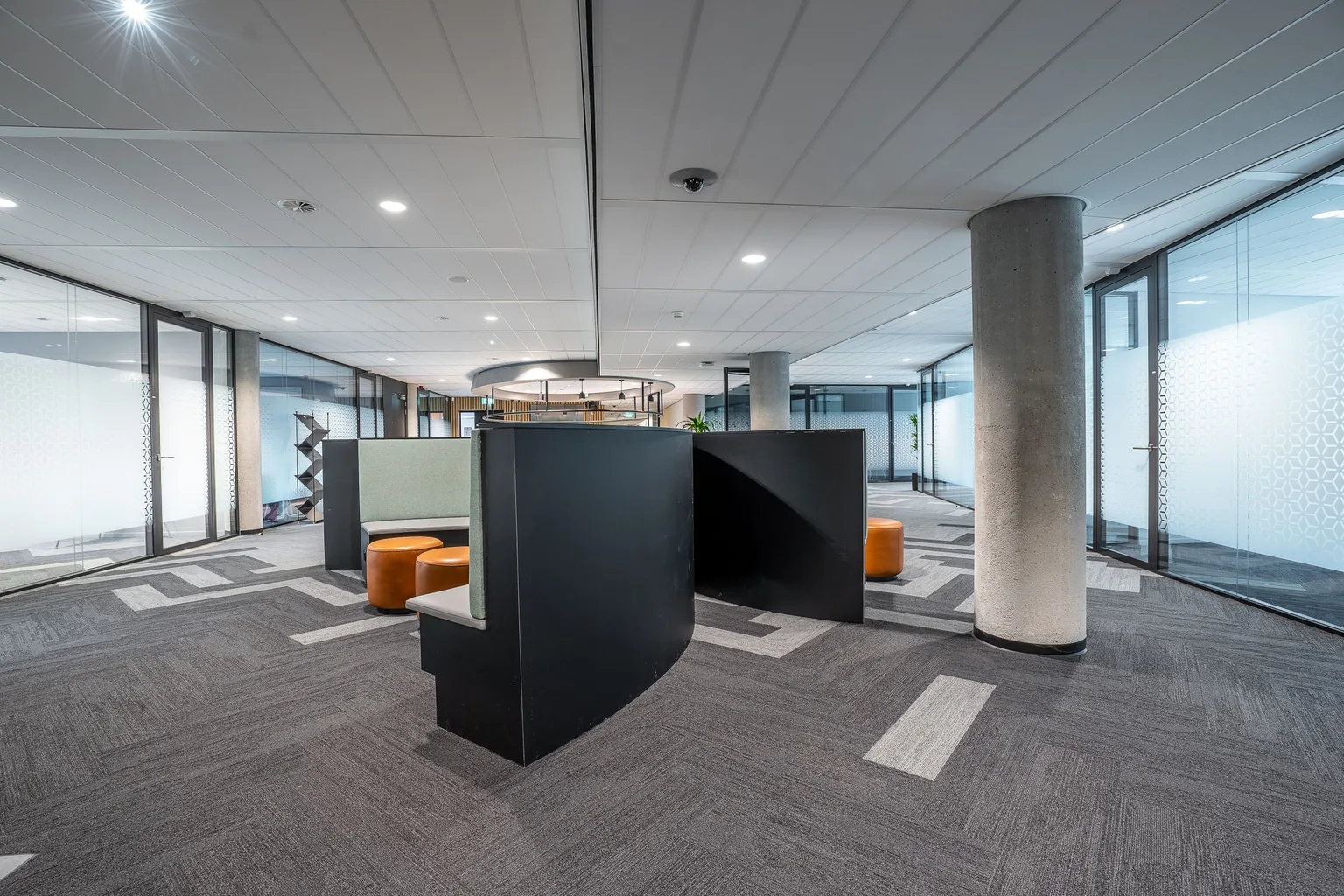
Conference rooms and reception areas carry the most weight here, since they're the spaces clients actually spend time in, more than the open floor plan behind the scenes. Prioritizing those specific rooms, rather than trying to do the whole office at once, is often the most efficient way to get the visible impact where it matters most before the year-end visit calendar fills up.
The Use-It-or-Lose-It Budget Factor
Beyond appearances, there's a budget mechanism that drives a lot of Q4 commercial cleaning demand specifically. Many organizations run facilities and maintenance line items on an annual budget that doesn't carry over into the next fiscal year, which creates real pressure to spend remaining funds before December rather than let them lapse and potentially shrink next year's allocation.
This makes Q4 the natural trigger point for cleaning that's been on a mental to-do list all year but never got formally scheduled. A facilities manager sitting on unspent budget in November has both the appearance pressure from client visits and a financial incentive to act before the fiscal year closes, which is why this window tends to be genuinely busier than the rest of the year for commercial cleaning services.
Businesses that wait until the second half of December to think about this often find fewer available appointment windows, since a lot of other companies are working from the same budget calendar and the same client-visit pressure. Scheduling in October or early November, rather than waiting, generally means more flexibility in choosing a date that actually fits.
Hard Floors and VCT Areas Need the Same Attention
Carpet gets most of the attention in this conversation, but a lot of offices, especially reception areas and hallways, run vinyl composition tile or other hard flooring that also shows wear and needs its own stripping and waxing schedule to look client-ready. Scuffed, dull VCT in a lobby sends the same negative signal as worn carpet in a conference room, and it's worth including in the same year-end review rather than treating hard floors as a separate, lower-priority conversation.
Tile and grout in break rooms and entryways also tend to darken and accumulate grime steadily over the year in ways that aren't always obvious day to day but become noticeable to a first-time visitor. A facilities manager planning a year-end cleaning push gets more value walking the entire visitor path — parking to lobby to conference room to break room — rather than defaulting to carpet alone simply because it's the most common surface type discussed.
Scheduling Without Disrupting the Workday
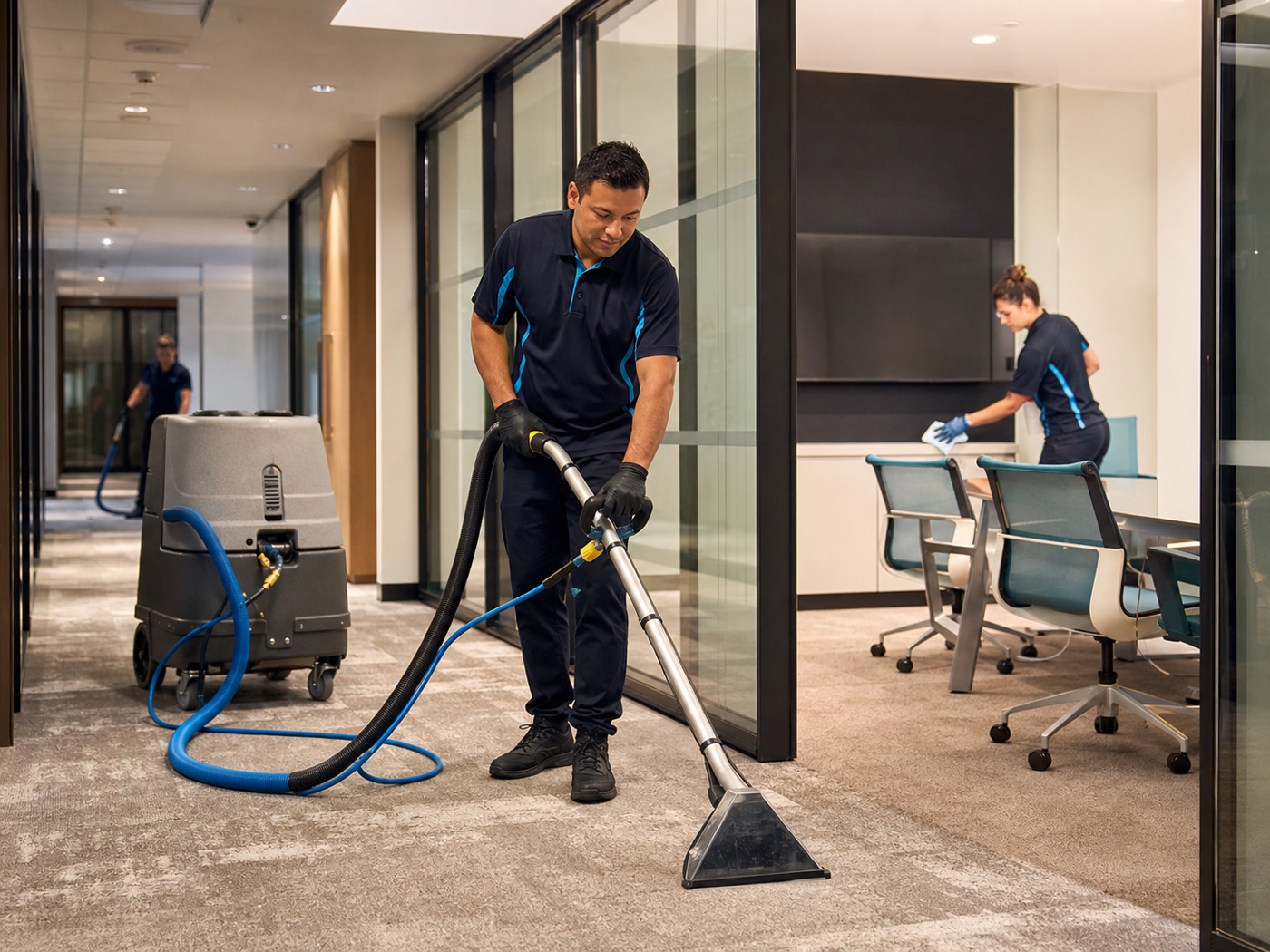
The main logistical hurdle for occupied office cleaning is timing it so it doesn't interfere with a normal business day, and this is fully solvable with enough lead time. Evening, overnight, or weekend appointments let carpet get properly cleaned and fully dry before staff and any client meetings return to the space the next business day.
- Prioritize conference rooms, reception areas, and hallways clients actually walk through over the full office footprint
- Schedule around a specific known client visit or board meeting date, working backward to allow full drying time
- Use evening or weekend appointment windows to avoid disrupting a normal workday
- Book in October or early November rather than waiting until December, when appointment availability tightens across the region
- Confirm remaining facilities budget early enough that a use-it-or-lose-it decision isn't made in a rush during the last week of the year
Multi-Tenant Buildings Add a Coordination Step
For a business leasing space in a multi-tenant office building, scheduling carpet cleaning often means coordinating with building management or a property management company rather than simply booking a vendor directly, since access after hours or on weekends may require building approval or security coordination. This adds a step to the planning timeline that's easy to overlook until it becomes the reason a cleaning appointment gets pushed later than intended.
Businesses in this situation benefit from starting the conversation with building management well before the desired cleaning date, ideally as soon as a client visit or board meeting lands on the calendar, rather than waiting until the week before and discovering building access rules complicate the timeline. Some multi-tenant buildings also offer common area and shared lobby cleaning as part of standard property management, which is worth confirming separately from what an individual tenant needs to arrange for their own suite.
Suite-specific carpet, particularly in a private office or conference room a business controls directly, still falls to the tenant to schedule and budget for, regardless of what the building handles in shared spaces. Confirming this division of responsibility early avoids a situation where nobody actually scheduled the cleaning because each side assumed the other was handling it.
Planning Toward Next Year's Budget Cycle
Businesses that find themselves rushing to spend facilities budget every December can get ahead of the problem by building carpet cleaning into next year's budget as a recurring quarterly or semiannual line item from the start, rather than treating it as a one-time year-end scramble. This spreads the cost more evenly and keeps the office consistently presentable year-round instead of cycling between neglected and freshly cleaned right before each major client push.
A facilities manager who sets this up once tends to find it saves time in subsequent years too, since a standing relationship with a cleaning vendor and a known schedule removes the annual question of when and how to fit it in around an already busy Q4 calendar.
All City Carpet Cleaning And Building Solutions works around business hours for occupied offices across Virginia Beach, Norfolk, Chesapeake, Suffolk, Hampton, Portsmouth, and Smithfield, with pricing that facilities managers can plan against before year-end budgets close out.