
Fall is when Hampton Roads households start hosting again. Cooler evenings, football watch parties, and the run-up to the holidays all bring more people into dining rooms and living rooms, and with them, more glasses of red wine and more pots of simmering marinara making their way across carpet and upholstery than any other stretch of the year.
Both red wine and tomato-based sauce carry strong, persistent pigments, and both are genuinely different problems from a routine dirt or mud spill. Understanding what is actually happening in the fiber, rather than reaching for the first stain trick a search engine offers, is what separates a spill that disappears from one that leaves a faint shadow for years.
Why These Stains Are Different From Everyday Dirt
Most household soil sits on the surface of a carpet fiber and lifts with routine vacuuming and periodic cleaning. Red wine and tomato sauce are pigment-based stains, meaning the coloring agent actually bonds to the fiber itself rather than just resting on top of it, which is why they behave so differently once they have had time to set.
Tannins in red wine and lycopene in tomato sauce are both strong natural dyes, and carpet fiber, especially the nylon and polyester blends common in most Hampton Roads homes, absorbs them readily. Heat speeds this bonding process along, which matters directly for sauce spills that are often still warm when they hit the floor.
The First Five Minutes Matter Most
The single biggest factor in whether a spill comes out completely is how quickly it gets addressed, not what product gets used on it. A spill blotted within the first few minutes, before the pigment has time to bond deeper into the fiber, has a genuinely good chance of lifting almost entirely with basic technique.
Blot, do not rub. Rubbing pushes the stain deeper into the fiber and can fray the carpet's pile, while blotting with a clean white cloth lifts liquid up and out. Work from the outside edge of the spill toward the center, which keeps the stain from spreading outward into a wider ring than the original spill ever was.
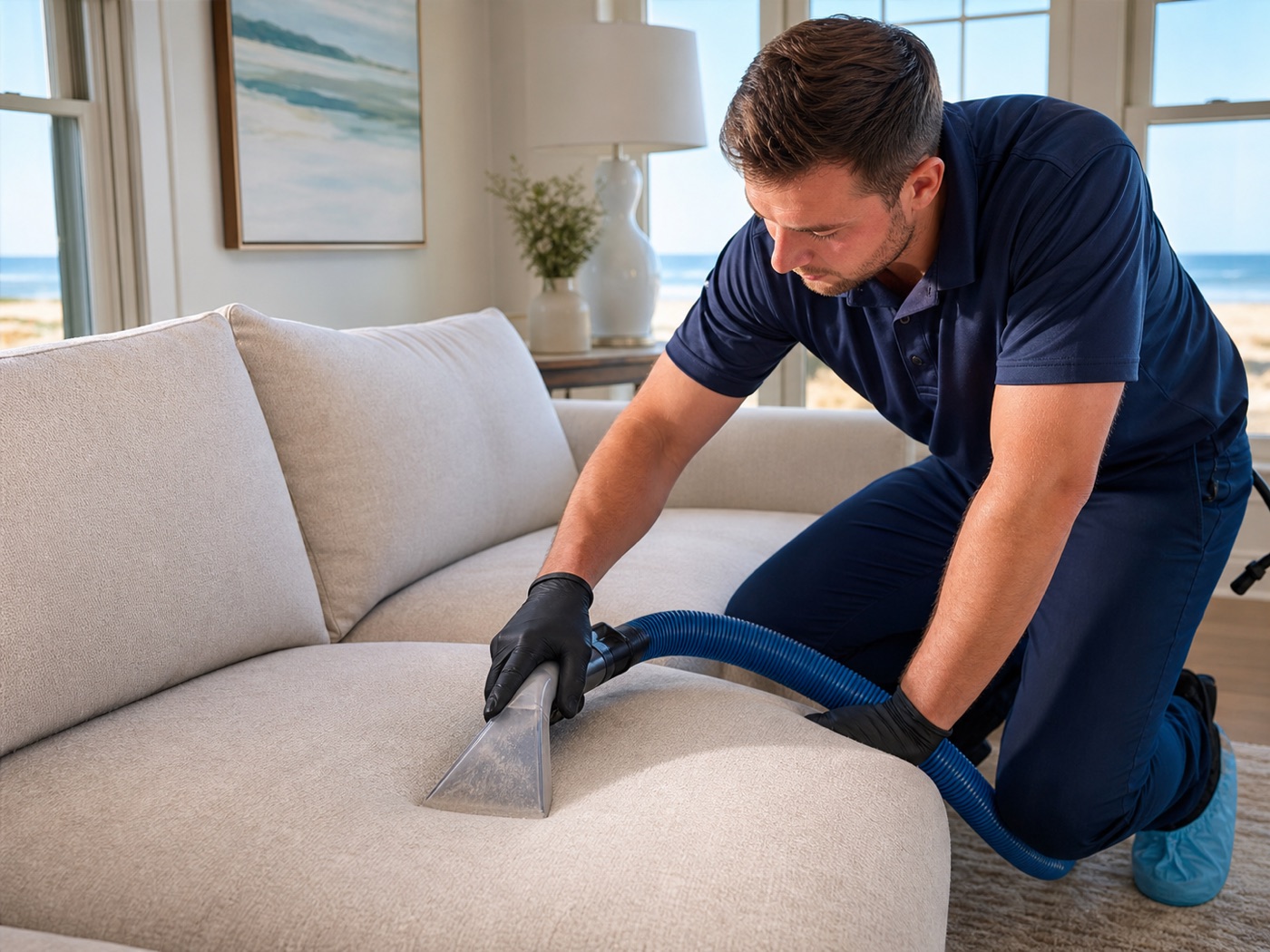
For upholstery specifically, the same blotting principle applies, but with an added step first: check the fabric's cleaning code before applying anything wet, since a water-based approach on the wrong fabric type can set a permanent ring rather than remove one.
What Salt and Club Soda Actually Do
Two stain tricks show up in almost every list of household advice for red wine: pour salt on it, or douse it in club soda. Both have a kernel of truth behind them, and both fall well short of what popular advice claims once you understand what is actually happening in the fiber.
Salt absorbs surface moisture and can make a spill look smaller within a few minutes, which is satisfying to watch but somewhat misleading. What salt pulls out is liquid, not the tannin pigment that causes the actual staining, and salt left on carpet too long can dry into the fiber and make the eventual cleanup more complicated rather than less.
Club soda works largely because it is a liquid that dilutes the spill, which does help, but plain cool water does essentially the same job. The carbonation itself is not doing meaningful chemical work on the pigment, despite how often it gets credited as a special ingredient. Neither trick replaces an actual carpet cleaning solution formulated for pigment-based stains.
What Carpet and Upholstery Material Changes
Not every fiber reacts to wine and sauce the same way. Nylon, the most common synthetic carpet fiber in Hampton Roads homes, resists staining reasonably well when it's been treated with a stain protector, which buys real time during that critical first-response window. Wool, less common but still found in some older homes and area rugs, stains faster and is far less forgiving of a delayed response or an overly aggressive cleaning attempt.
Upholstery adds another layer of variation on top of fiber type, since fabric weave and backing material both affect how deep a spill travels before it's blotted. A tightly woven fabric slows a spill's spread somewhat, giving a few extra seconds of reaction time, while a looser weave or an older cushion with worn backing lets liquid travel through to the padding underneath much faster, which is where a stain becomes considerably harder to fully remove.
| Surface | Typical risk | First response priority |
|---|---|---|
| Treated synthetic carpet | Lower, buys time | Blot promptly, then treat |
| Untreated or older carpet | Higher, sets faster | Blot immediately, no delay |
| Tightly woven upholstery | Moderate | Blot, check fabric code before wetting further |
| Loose-weave or worn upholstery | High, travels to padding | Blot fast, professional extraction sooner rather than later |
Sauce Spills Need a Slightly Different First Step
Tomato-based sauces bring an added complication that wine does not: they often carry oil from the cooking process along with the pigment, which means a single blotting pass is treating two different problems at once. Scraping off any solid sauce residue first, gently with a spoon edge, before blotting the remaining liquid keeps you from grinding solids further into the pile.
Because sauce is frequently still warm when it lands, it sets into fiber faster than a room-temperature wine spill does, which makes speed even more important here than with wine. A sauce spill that sits through the rest of a dinner party before anyone gets to it is a meaningfully harder stain to fully remove than one addressed within the first few minutes.
When DIY Stops Being Enough
A stain that has already dried, been walked over, or sat overnight is a different situation than a fresh spill, and it usually needs more than a cloth and a store-bought spot remover. At that point the pigment has bonded further into the fiber than surface blotting can reach, and repeated home attempts can sometimes set the stain further by pushing cleaning product deeper without fully extracting it back out.
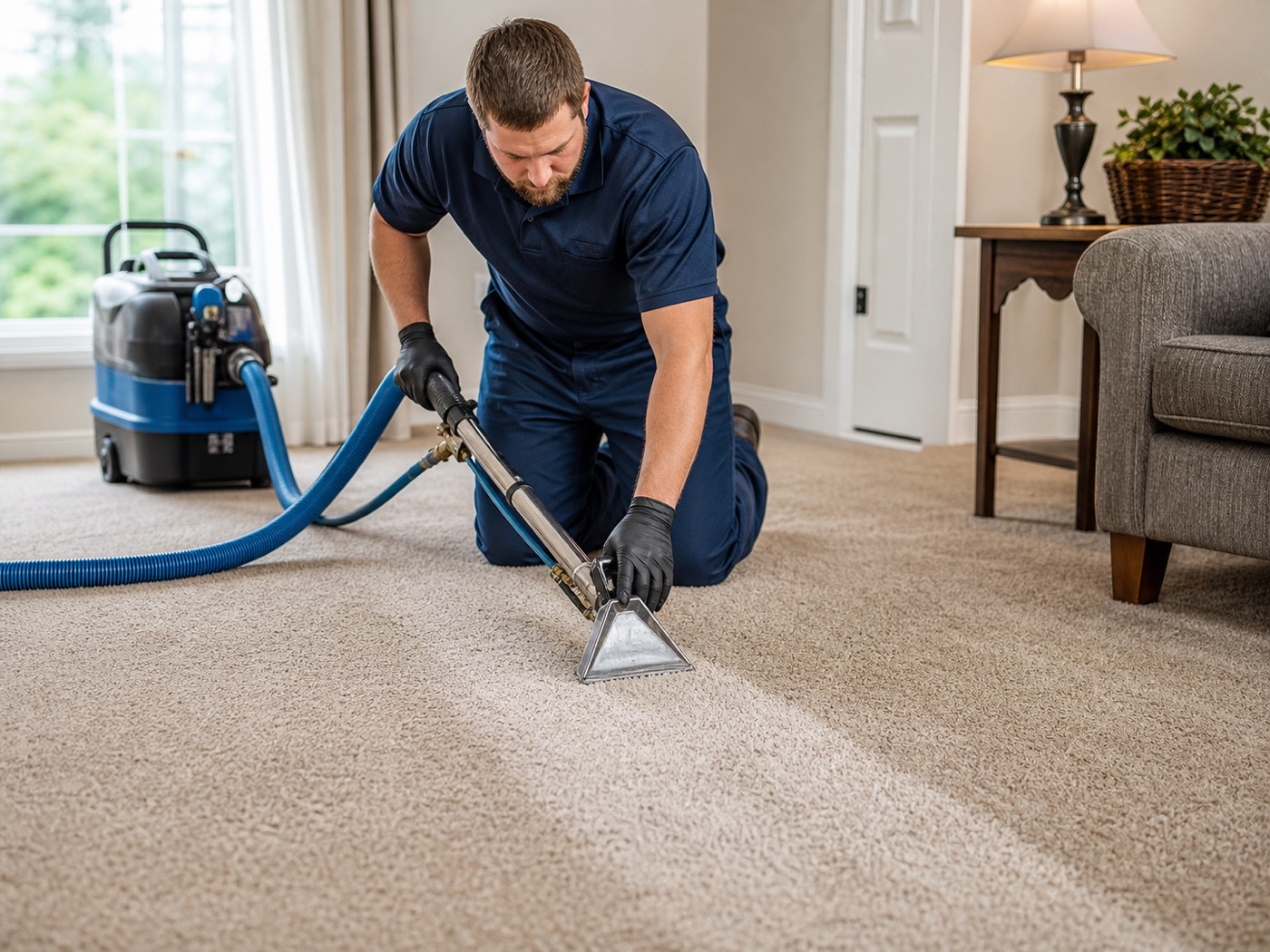
Professional hot water extraction reaches deeper into the fiber than any household method, pulling both the moisture and the loosened pigment out through suction rather than just spreading it around the surface. For a wine or sauce stain that has already set, this is usually the difference between a faint permanent shadow and a floor that looks untouched.
A full walkthrough of what to do in the first minutes after a spill, covering coffee and ink along with wine, is worth keeping bookmarked before the next dinner party rather than searched for in a panic after the glass tips over.
Protecting Ahead of the Next Gathering
For households hosting multiple times through fall and into the holidays, a carpet protector treatment applied ahead of the season gives every spill a little more time before it bonds to the fiber, which is often the difference between a clean blot and a stain that needs professional attention. It does not make carpet spill-proof, but it buys the minutes that matter most.
It is also worth thinking about seating arrangements around the dining table itself. Keeping red wine glasses away from the edges nearest carpeted transitions, and having cloth napkins within reach rather than relying on someone to jump up mid-conversation, cuts down on how many spills happen in the first place rather than just how well they get handled afterward.
A stocked spill kit near the dining area makes a real difference in how quickly a host can respond once a glass tips over. Clean white cloths, a small spray bottle of cool water, and a dedicated pigment-safe spot cleaner kept within reach shave off the minute or two it normally takes to grab supplies from a kitchen or laundry room, and that minute is often the difference between a spill that lifts completely and one that leaves a faint shadow behind.
It's worth having this conversation with anyone helping host, too, since a well-meaning guest reaching for the nearest paper towel and scrubbing in circles can undo what a calm, correct first response would have accomplished. A quick word before the party starts about where the spill kit lives and the blot-don't-rub rule saves more stains than most hosts expect.
All City Carpet Cleaning And Building Solutions handles fresh and set-in stain calls throughout Virginia Beach, Norfolk, Chesapeake, Suffolk, Hampton, Portsmouth, and Smithfield during dinner party season, with published pricing so a quick spill doesn't turn into an open-ended guess.