Ask a carpet cleaner which part of a house fails first and the answer is almost always the stairs. Not the hallway, not the family room — the staircase, and usually by a wide margin.
It is also the surface homeowners think about least, partly because it is awkward to deal with and partly because it is not somewhere anybody stands still long enough to look at it.
Why Stairs Wear Faster
Three separate mechanisms compound on a staircase, which is why the wear is so disproportionate.
The first is load concentration. Walking across a floor distributes weight across the whole foot and across a wide path. Climbing stairs puts weight onto the front portion of the tread — most people contact the first two or three inches and never touch the back half. All the traffic a staircase receives lands on roughly a quarter of its surface area.
The second is tension over the nose. Carpet wrapped over a stair nosing is stretched and unsupported at the point of highest contact, which makes the fiber more vulnerable to abrasion than the same yarn lying flat on a pad.
The third is the crevice. Where the tread meets the riser there is an angle that a vacuum head cannot enter, and grit collects there continuously. Every step presses the foot toward that line, and the material collected in it works back out under the tread with each pass. In a coastal region where the tracked-in soil is abrasive quartz rather than soft dirt, that is a slow milling operation.
The Vacuuming Problem
Most households vacuum stairs by hauling an upright onto them and running it over the treads, or by skipping them entirely, and neither approach removes much.
An upright on a stair contacts the middle of the tread and misses the nose, the crevice, and the edges — which are three of the four places that matter. It is also genuinely unsafe on a staircase, which is part of why the job gets avoided.
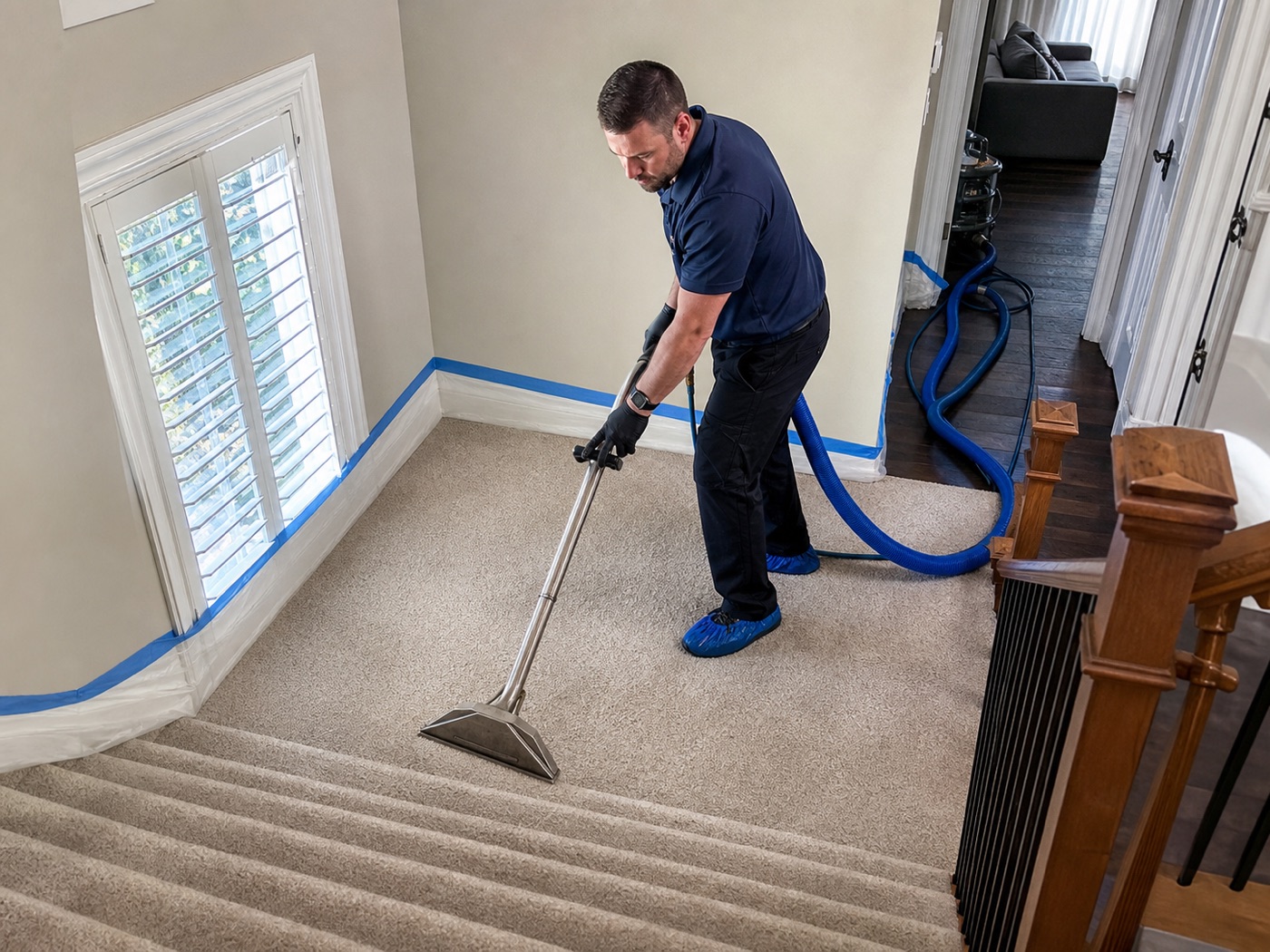
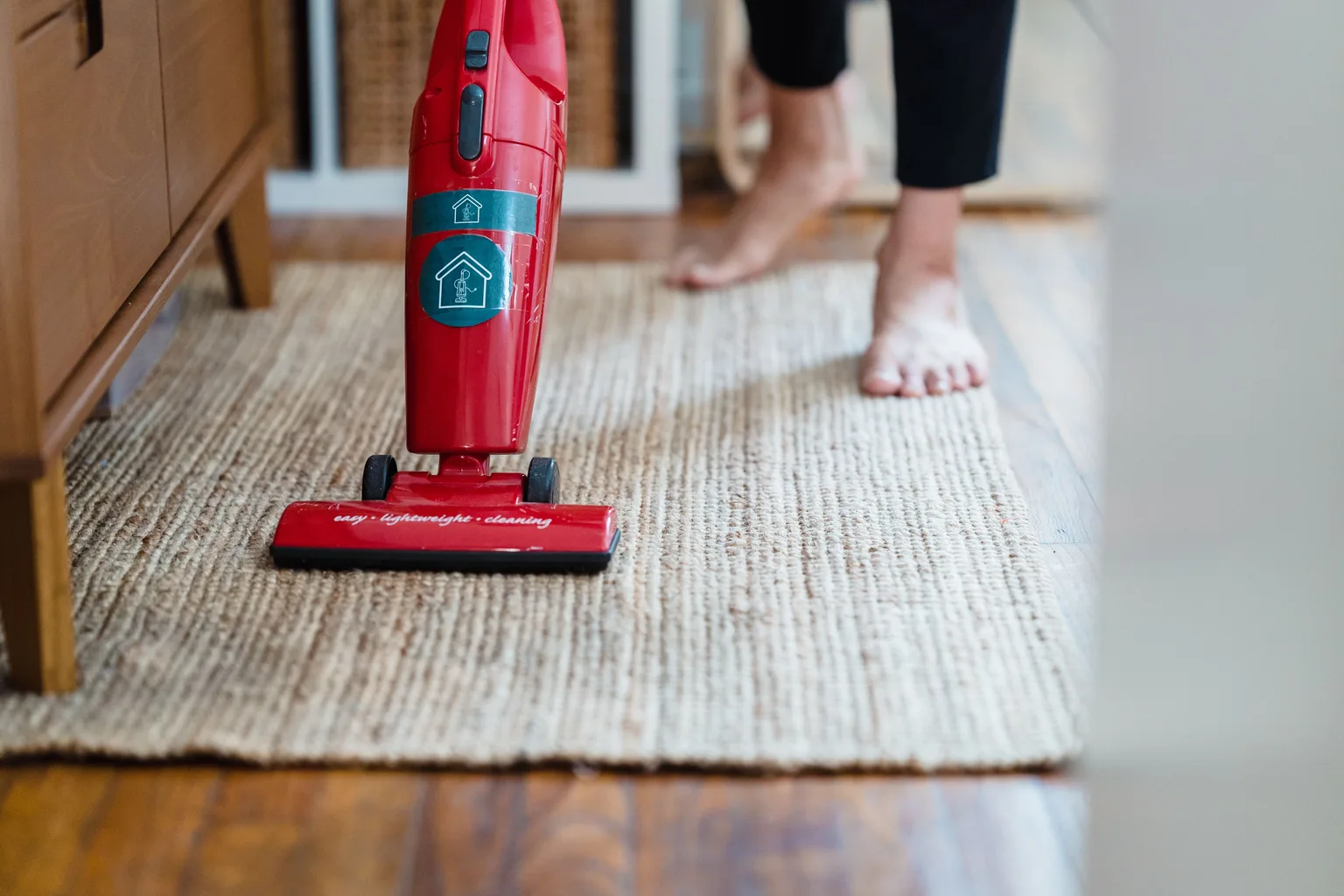
The correct method is the hand tool, working each tread as its own small job: across the face of the tread with several overlapping slow passes, then the crevice tool along the line where tread meets riser, then along both edges where the carpet meets the skirt board or balusters. A flight of stairs takes ten to fifteen minutes done this way.
Do it once or twice a week and you will remove a genuinely surprising amount of material from a staircase that looked clean. The general vacuuming rules apply here with extra force, because speed and dwell time matter more on a surface where the grit is wedged into a corner.
What Professional Cleaning Involves
Stairs are priced per flight rather than by area for a straightforward reason: they take longer per square foot than anything else in a house.
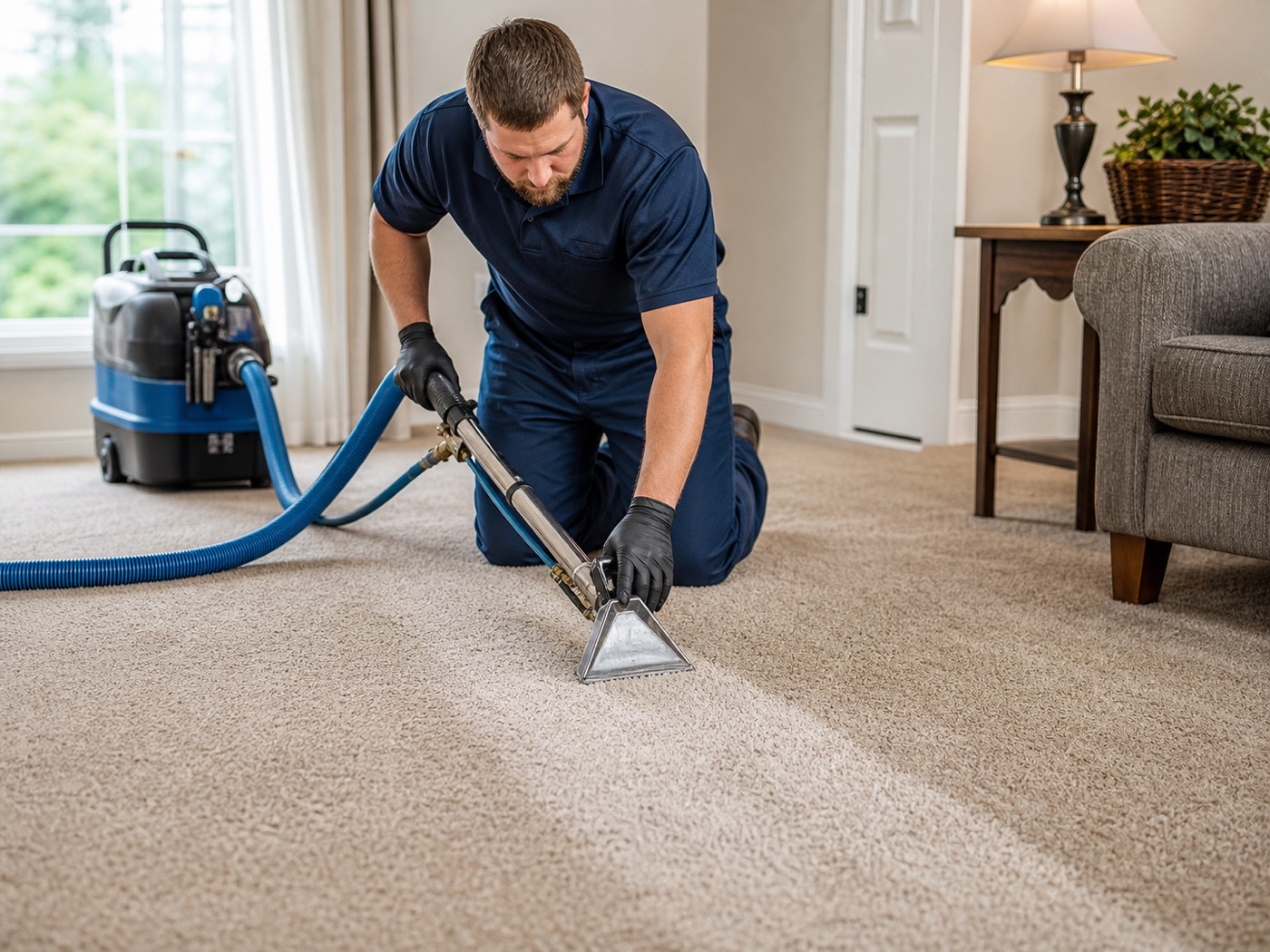
An open room is wand work — long passes, good coverage, efficient. A staircase is fifteen or so individual surfaces, each requiring a hand tool, each with a nose and a crevice and two edges. A flight can take as long as a bedroom that is ten times its area.
The technique matters too. Stairs are cleaned from the top down so that dirty water does not run onto treads already finished, with careful moisture control because a stair cannot be dried from below and the framing underneath is not something you want to introduce water to. Extraction has to be thorough rather than fast.
The result is usually the most dramatic single change in a house. Stairs hold more soil per square foot than anywhere else, so the before-and-after is stark in a way an already-decent bedroom never is.
Drying is worth planning for as well. A staircase is a circulation route, and it is the one surface in a house that people genuinely cannot avoid walking on for six hours. Cleaning stairs first thing in a visit, or scheduling them for a morning, gives the treads the longest possible window before anyone has to use them.
Landings and the Turn
Landings deserve a mention of their own, because they take a specific kind of abuse that flat floors do not.
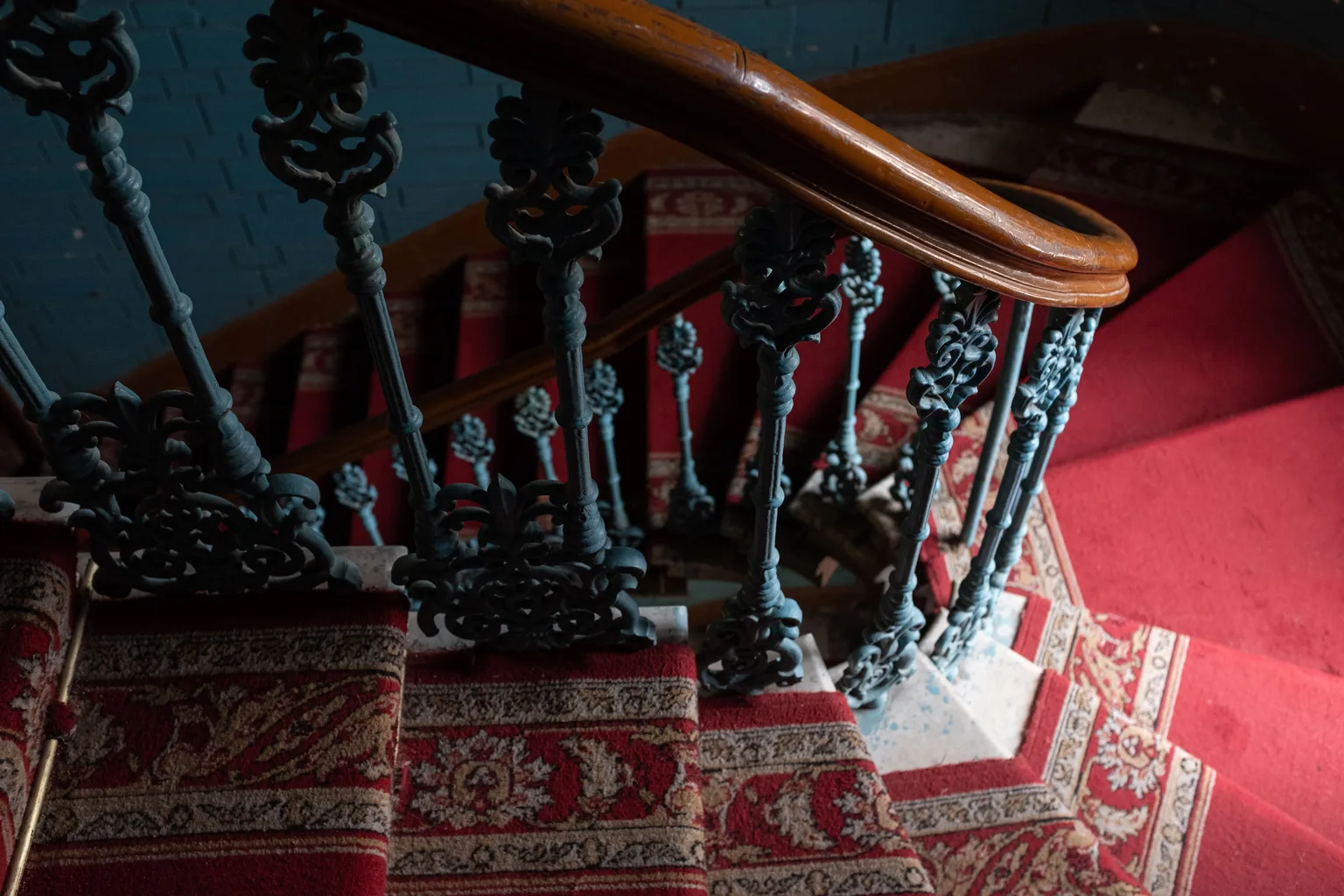
A landing is where direction changes. People pivot on it, which twists the pile rather than compressing it, and twisting is harder on fiber than straight traffic. On a switchback staircase the inside corner of the landing takes nearly every footstep in the house, concentrated into a couple of square feet.
Winder treads — the pie-shaped steps on a curved staircase — have the same problem in a worse form, since the narrow inside edge takes the traffic and the wide outside edge takes almost none. They are also the hardest surface in any house to clean properly, and they are where premature wear on an otherwise fine staircase usually starts.
Both are good candidates for a runner. A runner over a landing or a set of winders takes the wear instead of the carpet and can be replaced for a fraction of what repairing the carpet underneath would cost.
Habits That Add Years
A staircase responds better to small habits than almost any other surface, because the wear is so concentrated that small reductions compound.
- Vacuum the treads and crevices once or twice a week with a hand tool. This single habit does more than anything else on the list.
- Take shoes off at the door. Stairs receive whatever the entry lets through, magnified by the concentrated load.
- Put real walk-off matting at every exterior door, long enough for several steps, so less arrives at the staircase in the first place.
- Vary where you step occasionally if the staircase is wide enough. Most households wear a single narrow path up the middle.
- Deal with spills on stairs immediately, because gravity carries liquid down several treads before it stops.
- Have the stairs cleaned two or three times as often as the bedrooms rather than on the same schedule.
The frequency point is worth stating plainly, because it is where most households get it wrong. Stairs and bedrooms get cleaned on the same visit as a matter of convenience, when the stairs are taking perhaps twenty times the traffic. Cleaning by zone rather than by house is a better use of the same budget.
Worn stairs push people toward replacing carpet throughout, because stairs usually connect to rooms carpeted in the same material and matching a new dye lot to an old one is difficult.
Before accepting that, ask about two repairs. Restretching addresses carpet that has loosened over the nosings — common in this climate, where humidity cycling works fasteners loose over years — and it makes a staircase look markedly better for a couple of hours of labor. Patching addresses worn or damaged individual treads with donor carpet from a closet, from under a permanent fixture, or from a remnant.
Both are considerably cheaper than recarpeting, and both buy years. The broader question of when a carpet is genuinely finished rather than merely tired applies here as much as anywhere, and stairs are the place people call it earliest.
If you are replacing anyway, it is worth spending on the pad and on a better-grade carpet for the staircase specifically, even if the rooms get something more modest. The stairs will outlive the difference.
Stairs in Commercial Buildings
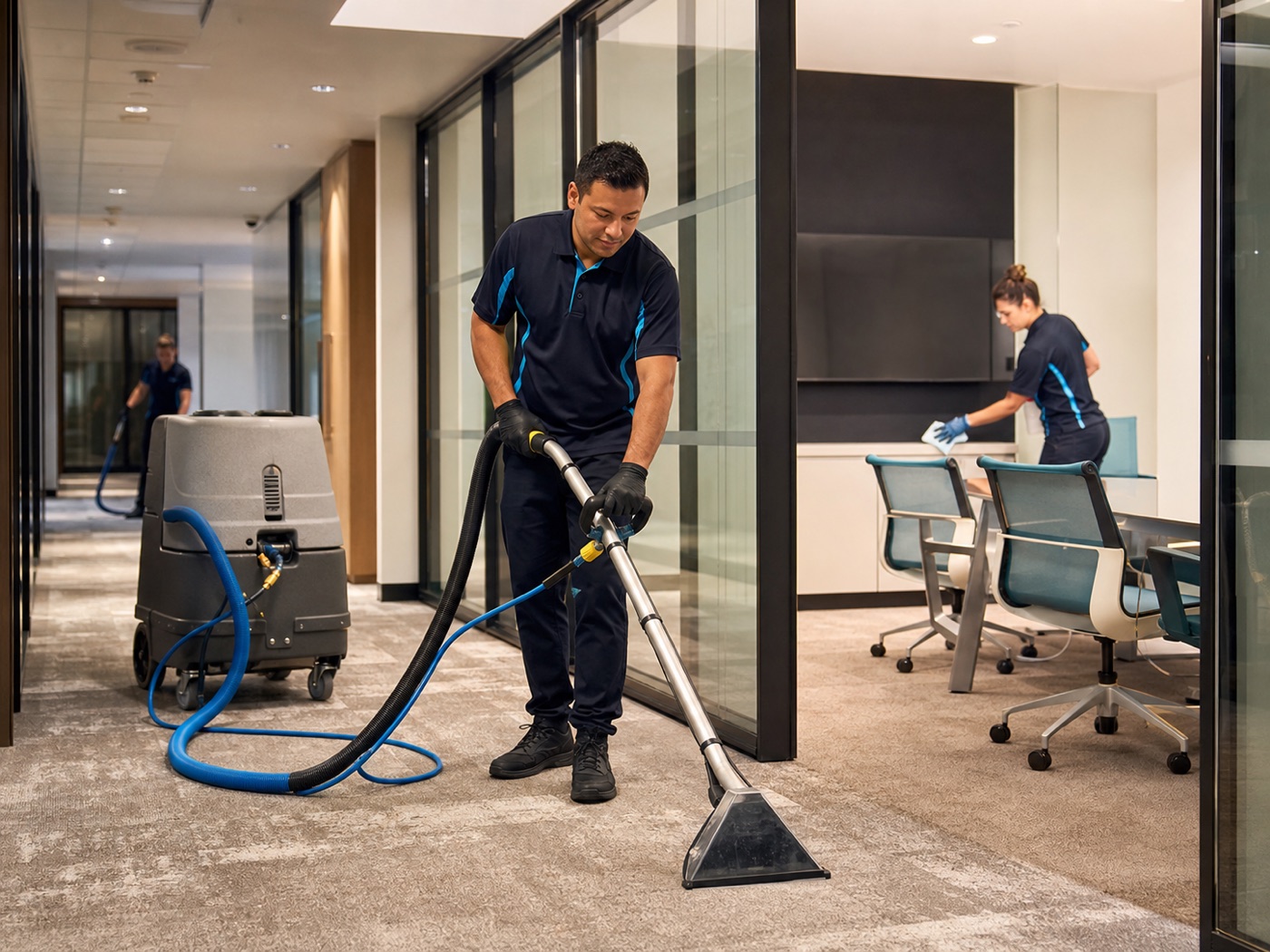
Everything above is worse in a commercial setting, where a single staircase can take hundreds of trips a day.
Stairwells in office buildings, apartment corridors, and community association buildings are frequently the most neglected floors in the property — out of the way, unglamorous, and nobody's specific responsibility. They also carry liability considerations that a living room does not, since a loose or worn stair carpet is a trip hazard rather than an aesthetic problem.
Building them into a scheduled program twice a year is inexpensive relative to the traffic they take, and it keeps a surface that everyone uses from becoming the thing residents complain about at the next meeting.
All City Carpet Cleaning And Building Solutions cleans stairs, landings, and everything they connect to across Virginia Beach, Norfolk, Chesapeake, Suffolk, Hampton, Portsmouth, and Smithfield. Stairs are priced per flight and the number is published with everything else.