
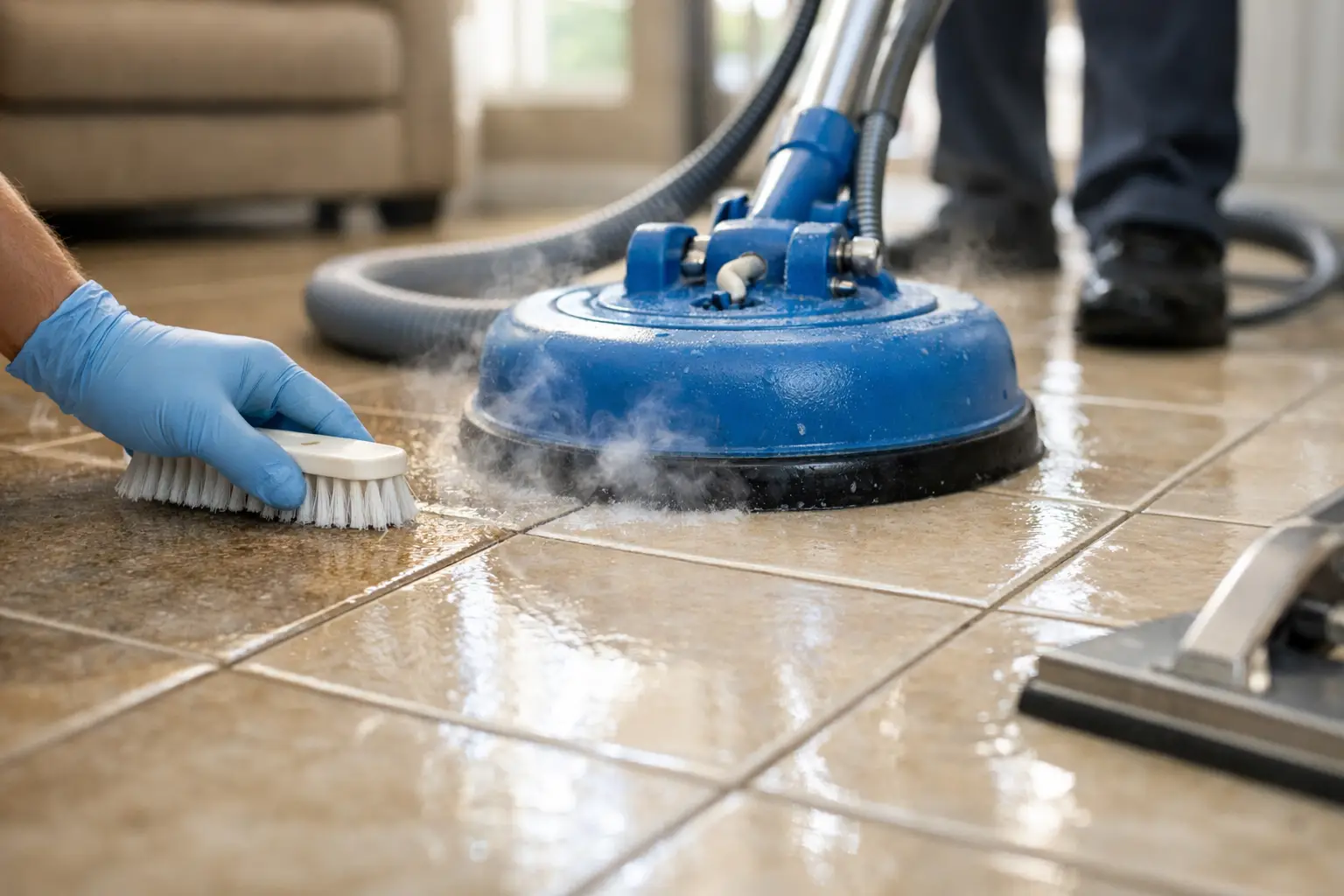
A tile floor can look clean at first glance and still hold months of tracked-in soil, cooking residue, soap film, and moisture in its grout lines. Professional tile and grout cleaning addresses the buildup that ordinary mopping often leaves behind, restoring a fresher, more even appearance without taking unnecessary risks with the floor itself.
For homes, that can mean bringing a tired kitchen, bathroom, entryway, or laundry room back to life. For offices, rental properties, restaurants, and other commercial spaces, it helps maintain the polished, professional environment employees, tenants, and visitors expect. The difference is often not the tile — it is the condition of the grout around it.
Why Tile and Grout Become Difficult to Clean
Tile has a hard, smooth surface, but grout is naturally more porous. Small particles of dirt and grease settle into those tiny openings over time. In bathrooms, soap residue, body oils, and moisture can leave grout dull or discolored. In kitchens and break rooms, grease and food splatter add another layer of buildup. Entryways collect outdoor soil, salt, and debris carried in on shoes.
Mopping is valuable for routine care, but it generally cleans the surface of the floor. Dirty mop water can also settle into recessed grout lines, especially when the floor is heavily soiled. This is why grout may look darker than its original color even when the tile itself appears reasonably clean.
The challenge is not simply making the floor wet or applying a stronger cleaner. Effective cleaning requires the right balance of cleaning solution, agitation, controlled moisture, and extraction. Too little treatment leaves soil behind. Too much water, harsh chemicals, or aggressive scrubbing can damage grout, strip protective sealer, affect certain tile finishes, or leave residue that attracts more dirt.
Signs It Is Time for Tile and Grout Cleaning
A gradual change in floor appearance is easy to miss because it happens over months or years. Comparing a small hidden area to a frequently used section often reveals how much soil has accumulated.
It may be time to schedule professional service when grout lines remain dark after regular cleaning, the floor feels sticky or looks hazy, or there is visible buildup around toilets, sinks, kitchen work areas, and entrances. A lingering odor in a tiled room can also point to residue or moisture concerns that deserve closer attention.
Property managers may notice the issue during move-outs, turnovers, inspections, or before showing a vacant space. In commercial settings, dull grout can make an otherwise well-maintained lobby, restroom, hallway, or break room appear neglected. Clean floors support the overall impression of a property, particularly in spaces where customers and guests notice details quickly.
What Professional Tile and Grout Cleaning Does Differently
Professional service begins with evaluating the floor. Tile and grout are not all the same. Ceramic and porcelain tile are common and durable, while natural stone, specialty finishes, older grout, and damaged areas may require a more cautious approach. A qualified technician considers the floor material, soil type, grout condition, traffic level, and any prior coatings or sealers before selecting a cleaning method.
The process typically starts with dry soil removal, followed by an appropriate cleaning solution designed to loosen embedded buildup. Agitation works the solution into the grout and textured areas of the tile where dirt tends to settle. Professional equipment then lifts away the suspended soil and moisture rather than simply moving it across the floor.
That extraction step matters. It helps reduce residue, speeds the return to normal use, and produces a more consistent result across the floor. Corners, edges, and heavily trafficked areas may need additional attention because those locations often collect the most buildup.
A professional can also identify conditions cleaning alone will not correct. Cracked grout, loose tile, mold-related damage, failed caulk, permanent staining, and water intrusion are maintenance or repair concerns. A dependable cleaning company should be straightforward about the difference between a floor that needs deep cleaning and one that needs repair work before or after cleaning.
The Role of Grout Sealing
After a thorough cleaning, grout sealing can be a practical next step for many floors. A quality sealer helps reduce how quickly liquids, oils, and soil penetrate the grout. It does not make the floor maintenance-free, and it will wear over time, especially in busy commercial areas and active households.
Whether sealing makes sense depends on the grout type, location, existing sealer, and expected use. A bathroom floor and a high-traffic restaurant entryway face different conditions. Still, protecting clean grout can make routine maintenance easier and help preserve the refreshed look longer.
DIY Cleaning Versus Professional Service
Routine at-home cleaning is part of responsible floor care. Sweeping or vacuuming grit, using a neutral cleaner that fits the floor type, and promptly wiping spills can make a meaningful difference. For light soil, these habits may be all that is needed.
The trade-off comes when household products are used to solve deep staining or heavy buildup. Bleach, acidic cleaners, and abrasive powders may seem like quick answers, but they can create problems. Some products can weaken or discolor grout, leave a film, etch natural stone, or affect nearby metal fixtures and finishes. Mixing cleaners is especially unsafe and should never be attempted.
Rental equipment and scrub brushes can help in limited situations, but results vary with the machine, cleaner, operator technique, and floor condition. Excess water can be a concern around damaged grout, baseboards, transitions, and flooring edges. For deeply soiled floors, professional extraction and experienced handling are usually more efficient than spending a weekend trying several products with uncertain results.
Keeping Clean Tile Looking Its Best
Once tile and grout have been professionally cleaned, everyday care protects the investment. The goal is simple: remove dry soil before it gets ground in, clean spills promptly, and avoid leaving residue behind.
Use mats at exterior doors and in areas where water is common, such as sinks and showers. Sweep, dust mop, or vacuum regularly with a hard-floor-safe setting. When mopping, use a clean mop head and change the water when it becomes dirty. A neutral cleaner is often a safer choice than a product that promises an aggressive shine or heavy fragrance.
Avoid applying waxes or coatings unless they are specifically appropriate for the floor material. Some products can create a cloudy appearance, trap dirt, or make future professional cleaning more complicated. If you are unsure how a product will affect your tile, test it in an inconspicuous area or ask a cleaning professional before treating the entire floor.
Tile and Grout Cleaning for Commercial Properties
Commercial floors work harder than residential floors. Foot traffic, weather, deliveries, restroom use, food service, and frequent cleaning all affect the appearance of tile and grout. The best cleaning schedule depends on the space rather than a one-size-fits-all calendar.
A small office restroom may benefit from periodic deep cleaning alongside consistent janitorial care. A medical office, retail entrance, apartment common area, or restaurant may require more frequent attention because appearance and sanitation expectations are higher. Scheduling service during low-traffic hours can reduce disruption while helping the property stay presentable for the next business day.
For Hampton Roads property owners and managers, local experience matters. Humidity, rainy weather, coastal sand, and busy seasonal traffic can all add to floor maintenance demands. All City Carpet Cleaning & Building Solutions brings professional care and efficient project management to residential and commercial cleaning projects, with a focus on results that meet client expectations.
A clean tile floor should not require constant scrubbing to look cared for. When grout lines are restored and routine maintenance is manageable again, the entire room feels cleaner, brighter, and more welcoming. If your floors are showing the effects of daily use, professional attention can be a practical way to protect the appearance of your home or business.