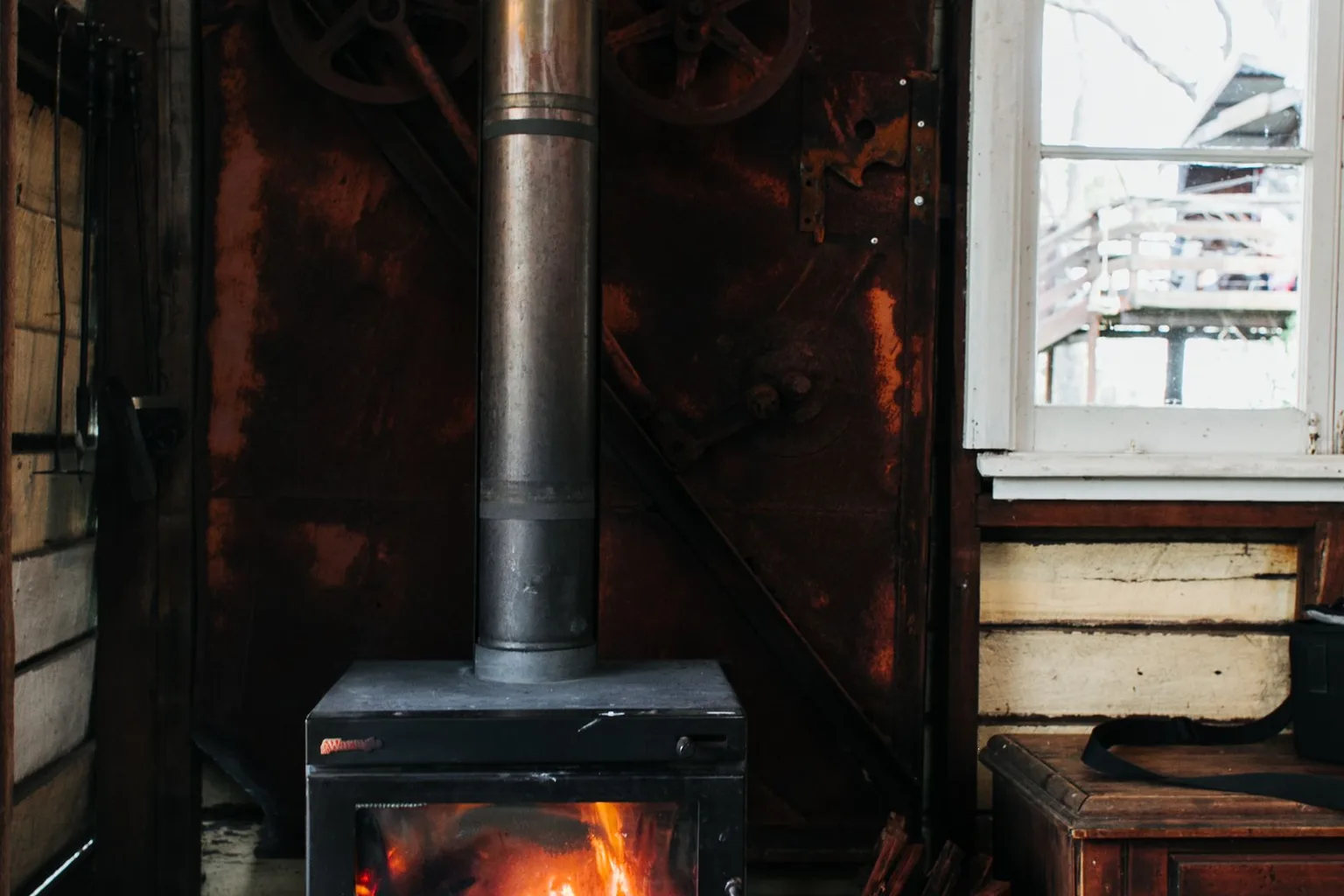
Wood stove and fireplace season starts quietly in Hampton Roads. A cool snap arrives, someone loads the stove for the first time since spring, and within a few weeks a fine gray dusting has started showing up on the carpet near the hearth that was not there before. It is easy to treat as ordinary household dust, but ash and soot are a different category of soil, and treating them like everyday dirt tends to make the problem worse rather than better.
The households that deal with this well every year are not the ones who clean up spills fastest. They are the ones who understand that ash and soot behave differently from typical dirt in two specific ways, and who set up their hearth area accordingly before the season gets going in earnest.
Why Ash Behaves Differently Than Ordinary Dirt
Wood ash is the mineral residue left after cellulose burns away, and what remains is mostly fine calcium, potassium, and silica particles. Those particles are harder and more angular under a microscope than the organic dust and soil that typically lands on carpet, which means that when ash gets walked on repeatedly, it behaves like a very mild abrasive grinding against carpet fiber with every step, rather than just sitting on the surface waiting to be vacuumed away.
This matters because carpet fiber wear from grit is usually associated with sand and outdoor soil tracked in on shoes, and most households already manage that risk with entry mats. Ash gets less of that same defensive thinking even though the particle behavior is similar, largely because it originates indoors near the hearth rather than being tracked in from outside, so it does not trigger the same instinct to intercept it early.
The particle size is also part of the problem. Fine ash is light enough to stay airborne briefly after it is disturbed, which is why a quick sweep near a stove can leave a faint haze that settles onto nearby carpet minutes later, well outside the immediate hearth zone.
Soot Is a Different Substance Entirely
Soot is not simply darker ash. It forms from incomplete combustion, typically when a fire burns cooler or with less airflow than ideal, and it carries an oily, resinous component made up of unburned hydrocarbons alongside the carbon particles that give it its color. That oily component is what makes soot behave so differently once it lands on carpet or upholstery.
A dry ash spill can usually be vacuumed up cleanly if it is caught before much foot traffic passes over it. Soot resists that same approach because the oily residue bonds to fiber on contact, and a dry vacuum pass over a soot mark tends to remove only the loose surface particles while leaving a faint gray smudge embedded in the pile. Attempting to wipe that smudge with a damp cloth, which is most people's first instinct, typically smears the oily residue across a wider area of fiber instead of lifting it, turning a small mark into a noticeably larger stain.
Setting Up the Hearth Zone to Intercept Debris
Almost all the ash and ember debris that ends up on carpet originates from a small, predictable zone directly in front of a stove door or fireplace opening, during the loading, tending, and cleanout steps rather than from general use of the room. That makes the hearth zone the highest-leverage place to intervene, and a generously sized, ember-rated hearth mat placed there catches the large majority of the problem before it ever reaches carpet fiber.
For households with the flexibility to make a small structural change, a short run of hard flooring or tile in front of the stove, extending a few feet past where anyone would stand to load or tend the fire, does even more than a mat alone, since it eliminates the fiber pile that ash would otherwise settle into. Where that is not practical, a mat that gets shaken out or vacuumed regularly through the season is the next best option.
It is also worth keeping the ash cleanout bucket itself away from carpeted paths between the stove and the door where ash typically gets carried outside. Even a covered ash bucket loses small amounts of fine particulate through the lid and handle area, and a carpeted route between stove and exit door tends to accumulate a faint gray trail over a season if that path is not being watched.
Vacuum Technique for Fine Ash
The vacuum matters more here than with most household soil. A standard vacuum without a sealed, fine-particle filtration system can push the smallest ash particles straight through the machine and back out through the exhaust, which means some of what looks like a successful cleanup actually just redistributes fine ash into the air of the room and, eventually, back onto nearby surfaces including the carpet itself.
A vacuum with a HEPA-rated filter and a sealed body handles this correctly, trapping particles down to the size that matters for ash rather than only the larger visible debris. Slow, overlapping passes work better than fast ones for ash specifically, since ash tends to sit lightly on top of fiber rather than embedding the way heavier soil does, and a slower pass gives suction more time to lift it fully rather than just disturbing it.
Never use a shop vacuum without a certified ash-rated filter and canister for actual fireplace ash cleanout, particularly ash that might still contain warm embers. That is a separate safety issue from the carpet question, but the two often get handled with the same tool by habit, and it is worth keeping them separate in practice.
When Professional Cleaning Makes Sense
A light dusting of ash near a hearth that gets vacuumed regularly rarely needs anything beyond good household habits. The situation changes once soot has visibly discolored an area of carpet, once ash has been ground in by weeks of foot traffic before anyone noticed, or once a household simply wants the carpet reset to a clean baseline heading into the heaviest months of fireplace use.
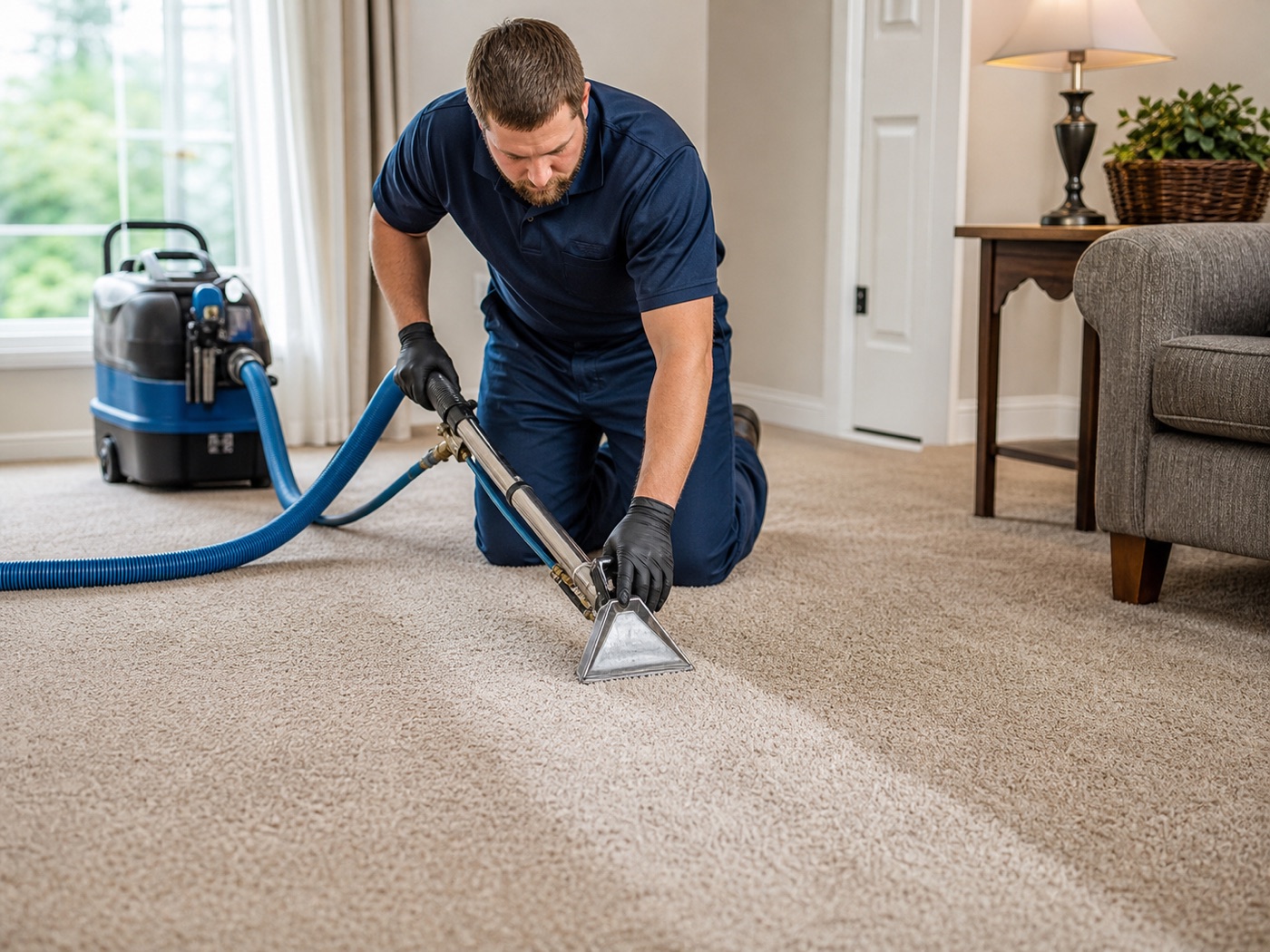
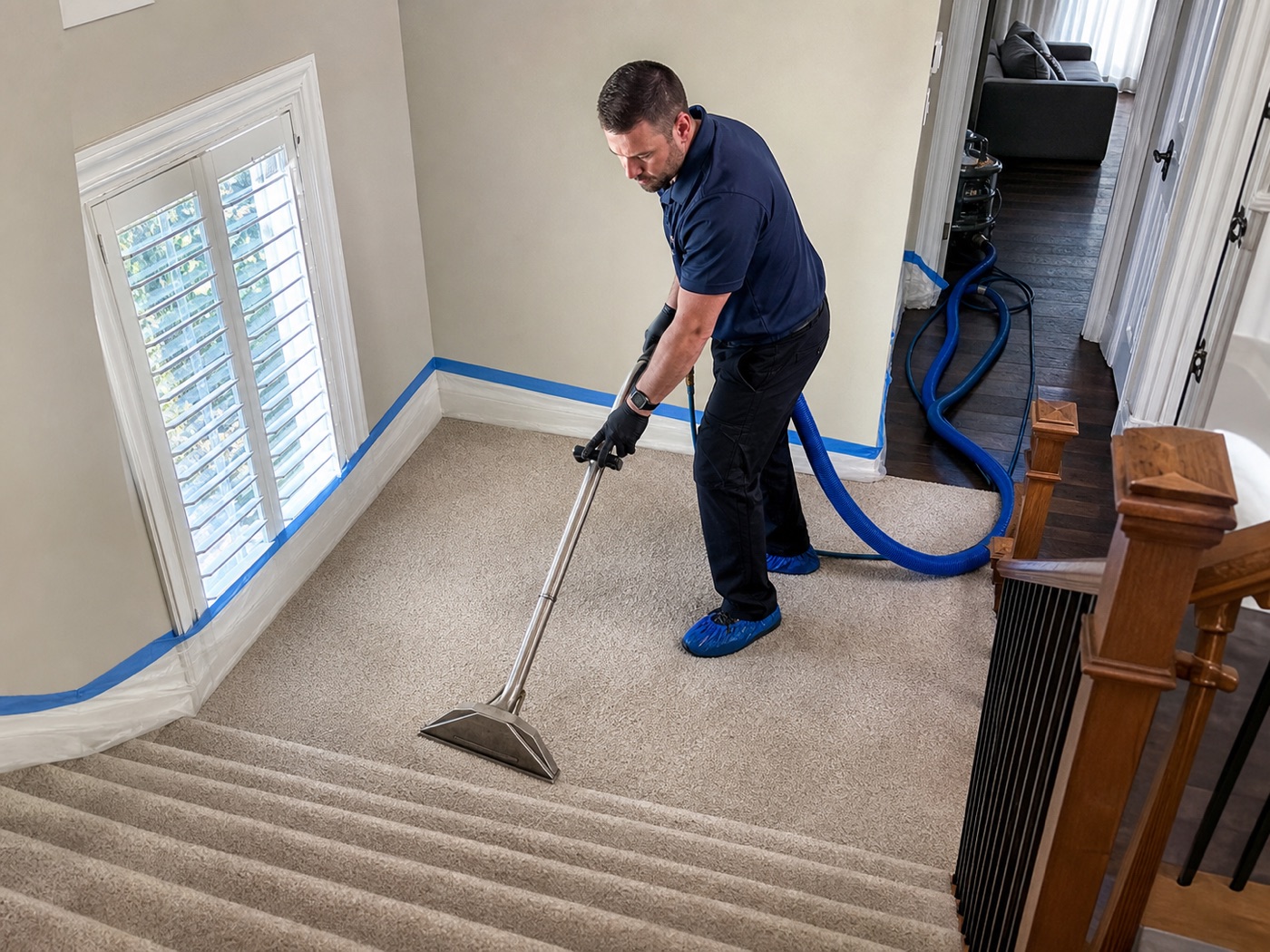
Professional hot water extraction lifts embedded ash and the oily residue from soot far more completely than a household vacuum and a spot cleaner can manage on their own, because it combines heat, agitation, and enough extraction power to pull particulate out of the base of the fiber rather than just off the surface. For homes running a wood stove regularly through the winter, scheduling a cleaning early in the season, before the heaviest use months, tends to work better than waiting until visible staining has built up.
This is also a good moment to have carpet protector reapplied near the hearth zone specifically, since that area takes disproportionate wear compared to the rest of a room during fireplace season, and a fresh protective treatment gives ash and soot less to bond to in the first place.
Furniture and Upholstery Near the Hearth
Carpet is not the only surface that picks up ash and soot residue during fireplace season. Upholstered chairs pulled close to a wood stove for warmth, and the arms of a sofa near a fireplace where hands rest after tending the fire, both accumulate the same fine particulate and oily soot residue over the course of a winter, just more slowly and less visibly than the carpet directly underfoot.
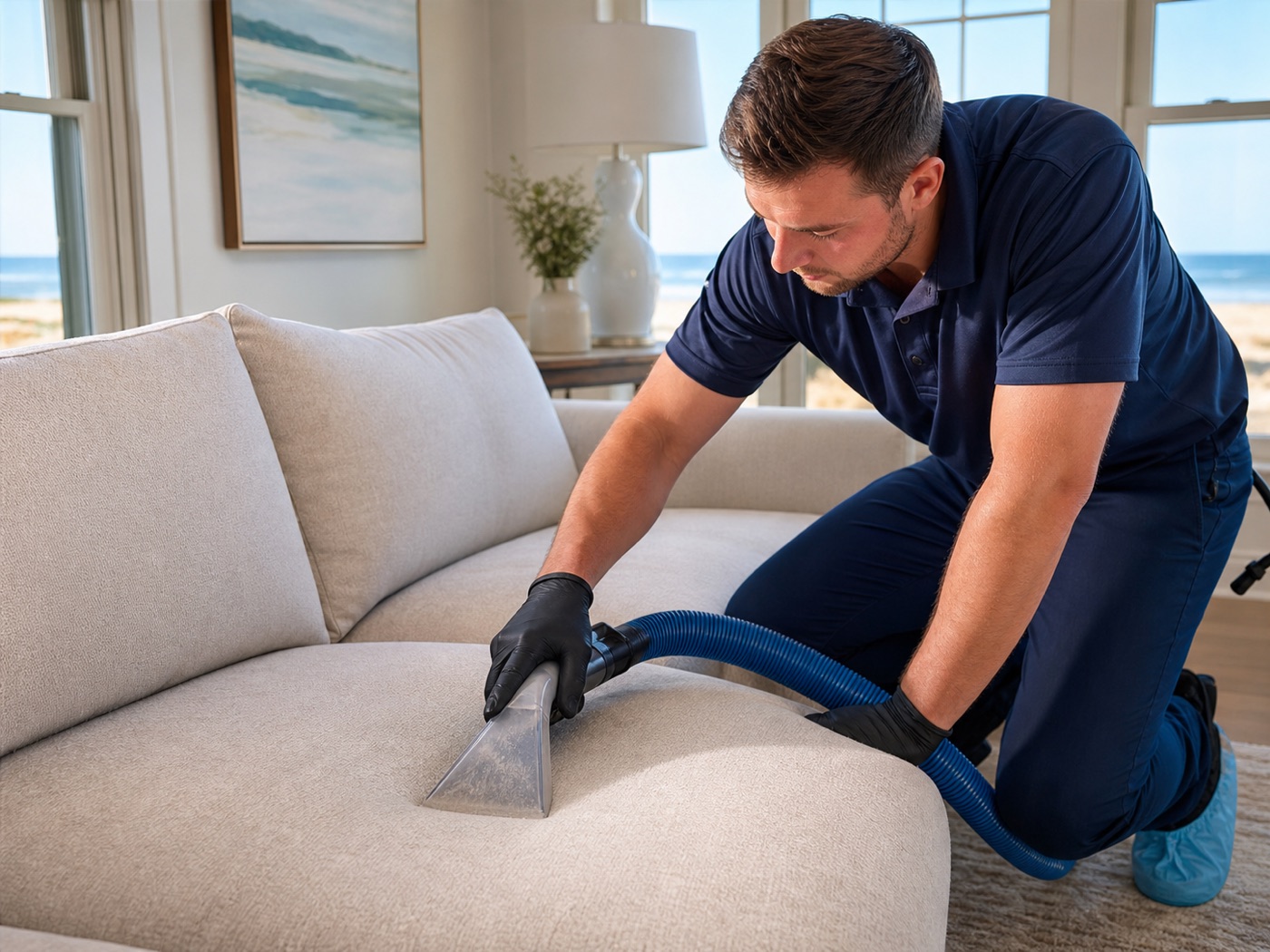
Because upholstery fabric often sits at eye level and gets handled directly, a buildup of ash residue there tends to show up first as a slight graying of the fabric rather than a distinct mark, which makes it easy to miss until a full season has passed. Scheduling upholstery cleaning alongside a hearth-area carpet visit, rather than treating them as separate projects on separate timelines, is usually the more efficient approach for households running a wood stove or fireplace through the full winter.
Throw blankets and decorative pillows kept near a seating area by the fire are also worth washing more frequently than usual during heavy fireplace months, since fabric items in that zone act as an additional surface catching airborne ash before it has a chance to settle anywhere else in the room.
Getting Ready for the Season Ahead
Fireplace and wood stove season in Hampton Roads typically runs from late October through March, with the heaviest use during the coldest stretch of that window. Setting up a hearth mat, checking that the household vacuum has adequate filtration, and getting carpet near the hearth professionally cleaned before the season ramps up are all cheap relative to the wear and staining that accumulate over a winter of daily fires without any of that in place.
All City Carpet Cleaning And Building Solutions cleans hearth-area carpet and upholstery across Virginia Beach, Norfolk, Chesapeake, Suffolk, Hampton, Portsmouth, and Smithfield, with straightforward pricing published for the standard visits.