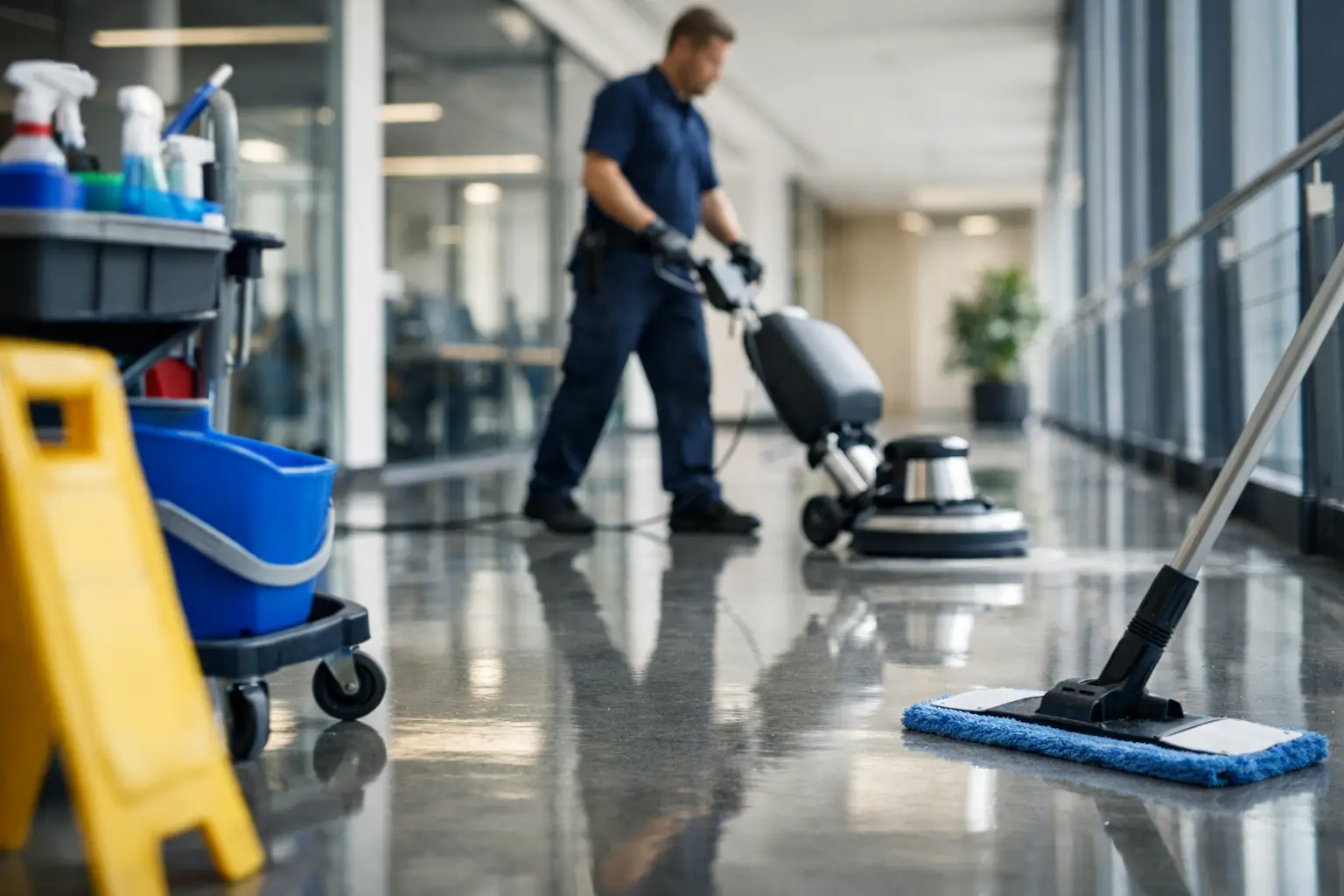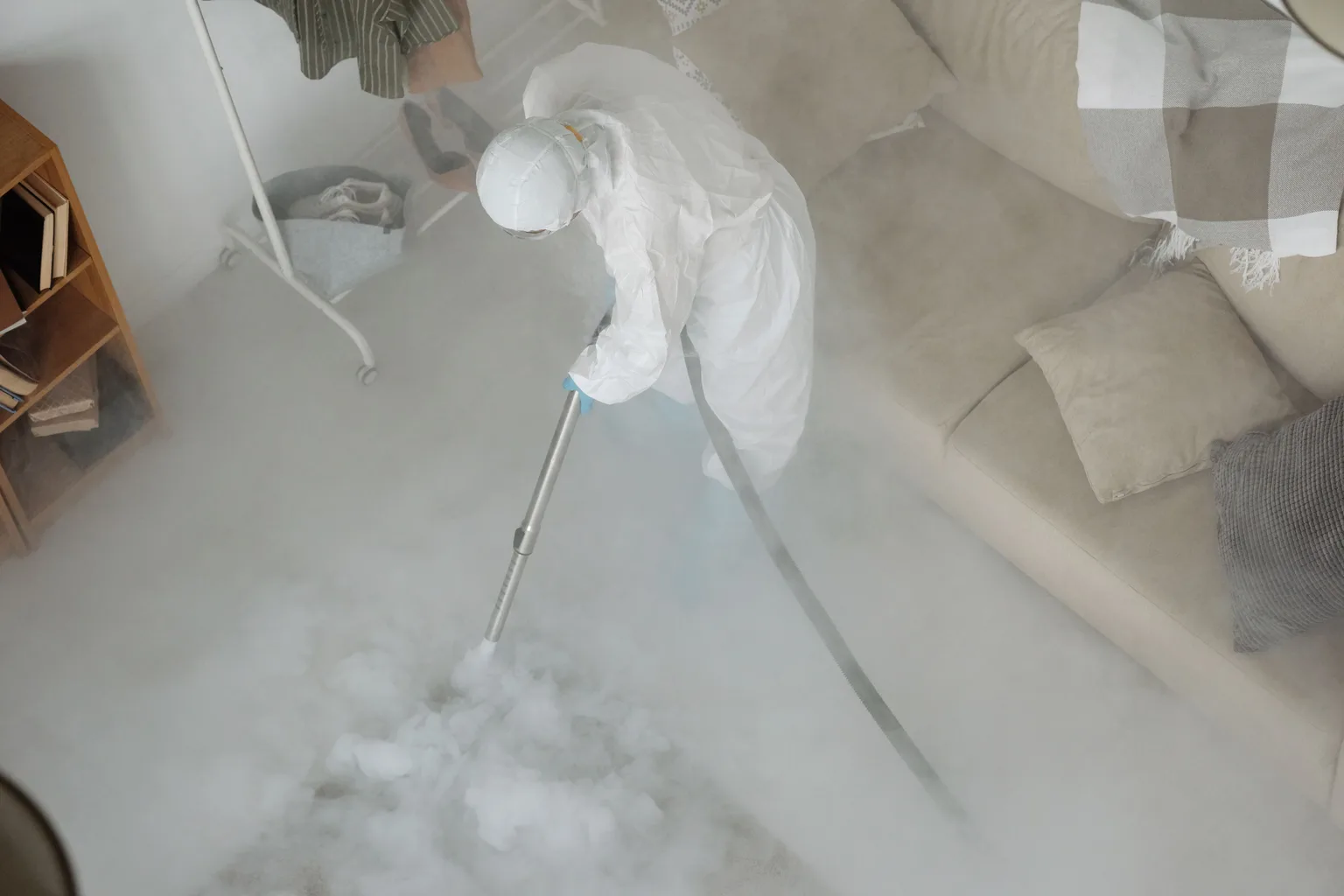

Office floor care rarely fails because someone used the wrong chemistry. It fails on the calendar. A facilities manager gets a quote, the work is planned for a Saturday, the Saturday gets used for something else, and eighteen months later the carpet has been cleaned once.
The fix is not a better vendor. It is a schedule that assumes the building stays open, because it will.
Zone the Building
The instinct is to look for a window when the whole space is empty. In most Hampton Roads offices that window is a holiday weekend, which arrives twice a year and is contested by every other vendor.
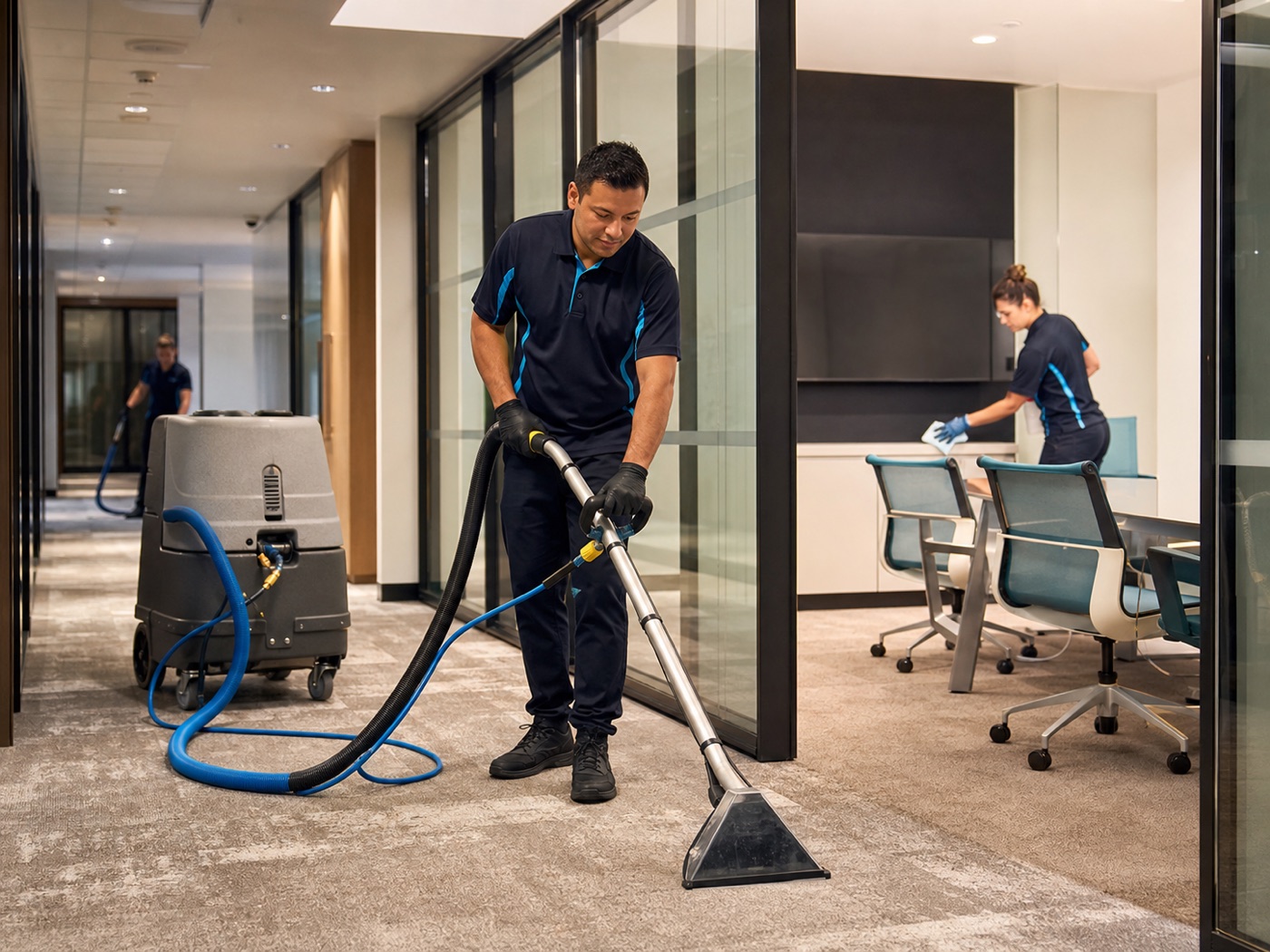
Zoning removes the constraint. The building is divided into sections, and each one is cleaned in its own evening — the east wing Monday, the west wing Tuesday, the conference level Wednesday. Each section is empty and dry before its occupants arrive, and nobody loses a day.
It also fits how office carpet actually soils. An entry, a corridor, and a private office accumulate soil at wildly different rates, and zoning lets each area be scheduled on its own interval rather than dragging the whole building along at the pace of its dirtiest section.
| Area | Traffic | Cycle |
|---|---|---|
| Main entry and elevator lobby | Every person, every day | Quarterly |
| Corridors and open workspace | Constant, lane-concentrated | Two to four times a year |
| Break room and kitchen carpet | Food and drink | Quarterly |
| Conference rooms | Bursts, with catering | Twice a year |
| Private offices | One or two people | Annually |
| Server and storage rooms | Minimal | As needed |
Match the Method to the Window
The available window should decide the method, not the other way around.
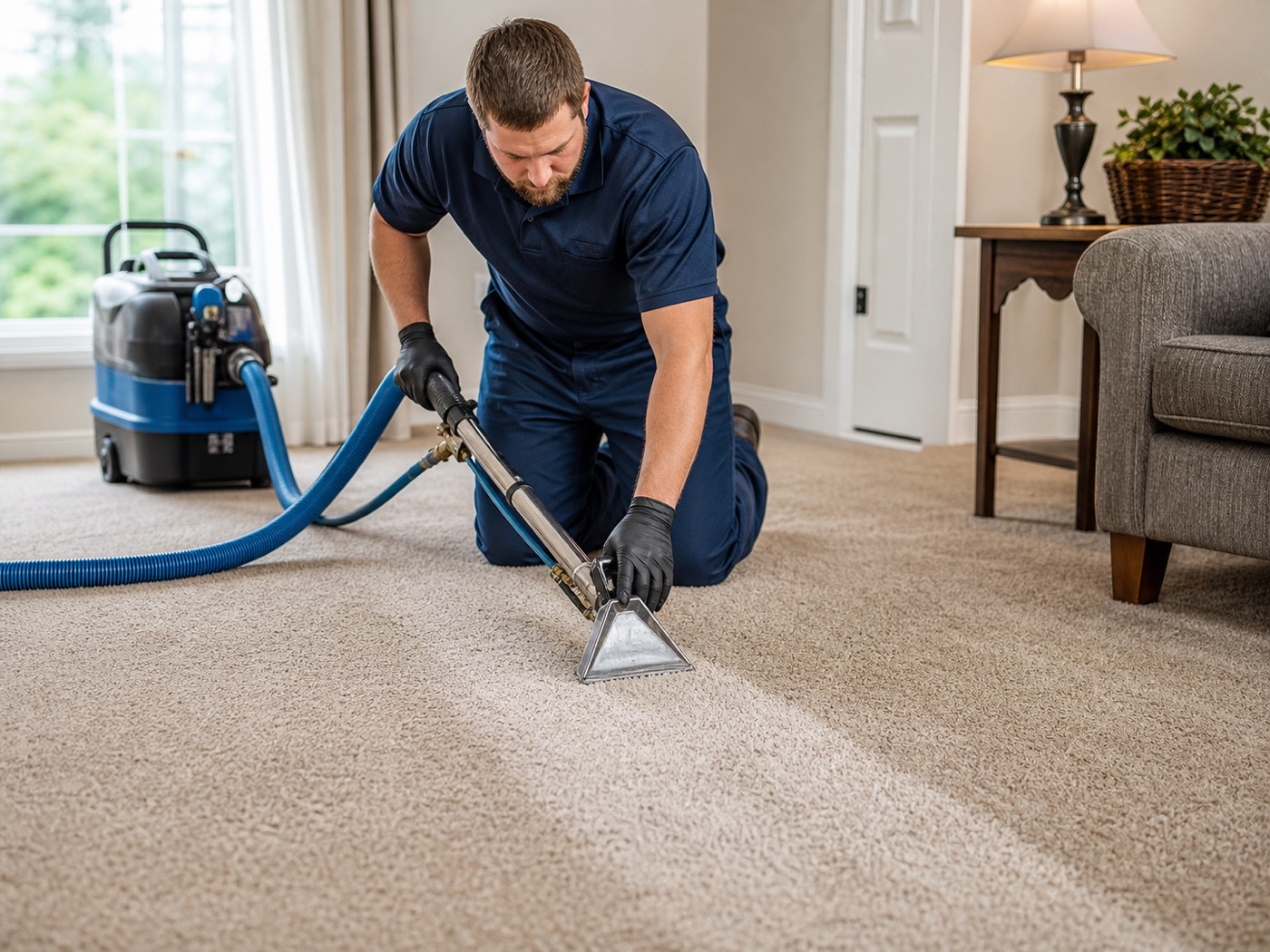
Hot water extraction removes the most soil and is what the carpet needs periodically, but it leaves the floor damp for several hours. It belongs in a Friday evening or weekend slot where there is time for the carpet to dry properly rather than being rushed back into service.
Encapsulation and other low-moisture methods dry in about an hour, which makes them usable midweek, overnight, or even during a lunch hour in a small area. They maintain appearance very effectively between deeper cleanings without removing the base-level soil load.
The arrangement that works best in practice is a rotation: low-moisture maintenance on a frequent cycle for the traffic lanes and entries, restorative extraction once or twice a year for the whole floor. It costs less across a year than extraction-only scheduling and the building looks better throughout.
The Logistics That Cause Problems
After-hours commercial work fails on access far more often than on anything technical, and the causes repeat across buildings.
- Access after hours. Who lets the crew in, and what happens if that person is out sick? A single point of failure here costs an entire scheduled night.
- Alarm codes and security. A crew that trips an alarm at ten at night has cost the client a police response and their own reputation with the building.
- Truck parking within hose reach. Truck-mounted equipment needs a spot near an entrance, and structured parking with low clearance rules it out entirely.
- Water access. A hose bib or a janitorial sink, and someone who knows where it is.
- Elevator access after hours, particularly in buildings where elevators go into a restricted mode at night.
- A named contact reachable in the evening for anything unexpected, which is the item most often missing.
Walking these through before the first appointment rather than discovering them at nine at night is the difference between a program that runs for years and one that quietly stops after two visits. It is worth the twenty-minute conversation.
Preparing the Space
The amount of preparation an office does before a crew arrives has a large effect on both the cost and the result, and most of it takes staff fifteen minutes.
Clearing floors is the main thing. Personal items, cables, boxes stored under desks, and anything on the floor that is not furniture slows a crew down and creates a decision about whether to move something that belongs to someone. An email the day before asking people to clear their floor space is worth more than any line in a contract.
Desks and workstations are usually cleaned around rather than moved, because modular furniture is anchored and disassembly is not what anyone is paying for. That is fine — the carpet under a fixed workstation takes no traffic and does not need what the lane beside it needs. What does need moving is anything on castors, and rolling chairs out of the way in advance saves real time.
It also helps to flag known problems in advance: the coffee spill in the corridor, the area by the printer that has never come clean, the conference room where catering happens. Spots benefit from specific treatment, and a crew that knows where to look handles them properly rather than running a general pass over them.
What the Cleaning Crew Cannot Fix
Two things determine office carpet appearance more than the cleaning schedule does, and both sit with the building rather than the contractor.
The first is matting. Walk-off matting at every exterior entrance, long enough for several full steps, captures a large share of the soil that would otherwise be ground into the lobby and the corridors. In Hampton Roads that soil is abrasive coastal sand, so the matting is doing structural work rather than cosmetic work. Most buildings have matting that is either too short or too worn to function.
The second is nightly vacuuming quality. Janitorial vacuuming is usually fast, and fast vacuuming leaves the grit at the base of the pile — the material that actually wears carpet out. Asking the janitorial contractor to vacuum traffic lanes daily and slowly, with machines whose filters are maintained, does more for carpet life than an extra cleaning visit.
Where a floor care contractor genuinely earns the fee is on what accumulates below vacuuming: oily film from skin and outdoor pollutants, spills that were surface-wiped, and the soil load at the base of the pile. Those need extraction, and no amount of nightly service substitutes for it.
The Budget Conversation
Facilities budgets treat floor care as an operating expense, which is accurate but incomplete, and the framing matters when the line comes under pressure.
Commercial carpet is a capital asset with a defined replacement cycle. Cleaning it on a schedule extends that cycle, and extending it by even a year across a large floor plate is a substantial number set against a small recurring one. Presenting the program as life extension on an asset in the capital plan is considerably more persuasive than presenting it as cleaning, and it survives budget season better.
The second argument is appearance, which is harder to quantify and easier to observe. Clients, candidates, and staff form impressions of an organization from its space, and the floor is most of what they are standing on while they do it. A worn entry undercuts a lot of money spent elsewhere in a lobby.
Fixed per-visit pricing across an annual schedule is what makes the line approvable, because it converts an open-ended expense into a known one. That is how we quote commercial work — by area and by visit, published rather than negotiated.
Hard Floors in the Same Visit
Most offices are not one surface. There is carpet in the workspace, tile in the restrooms, VCT in the break room and back hallways, and often an entry of stone or polished concrete.
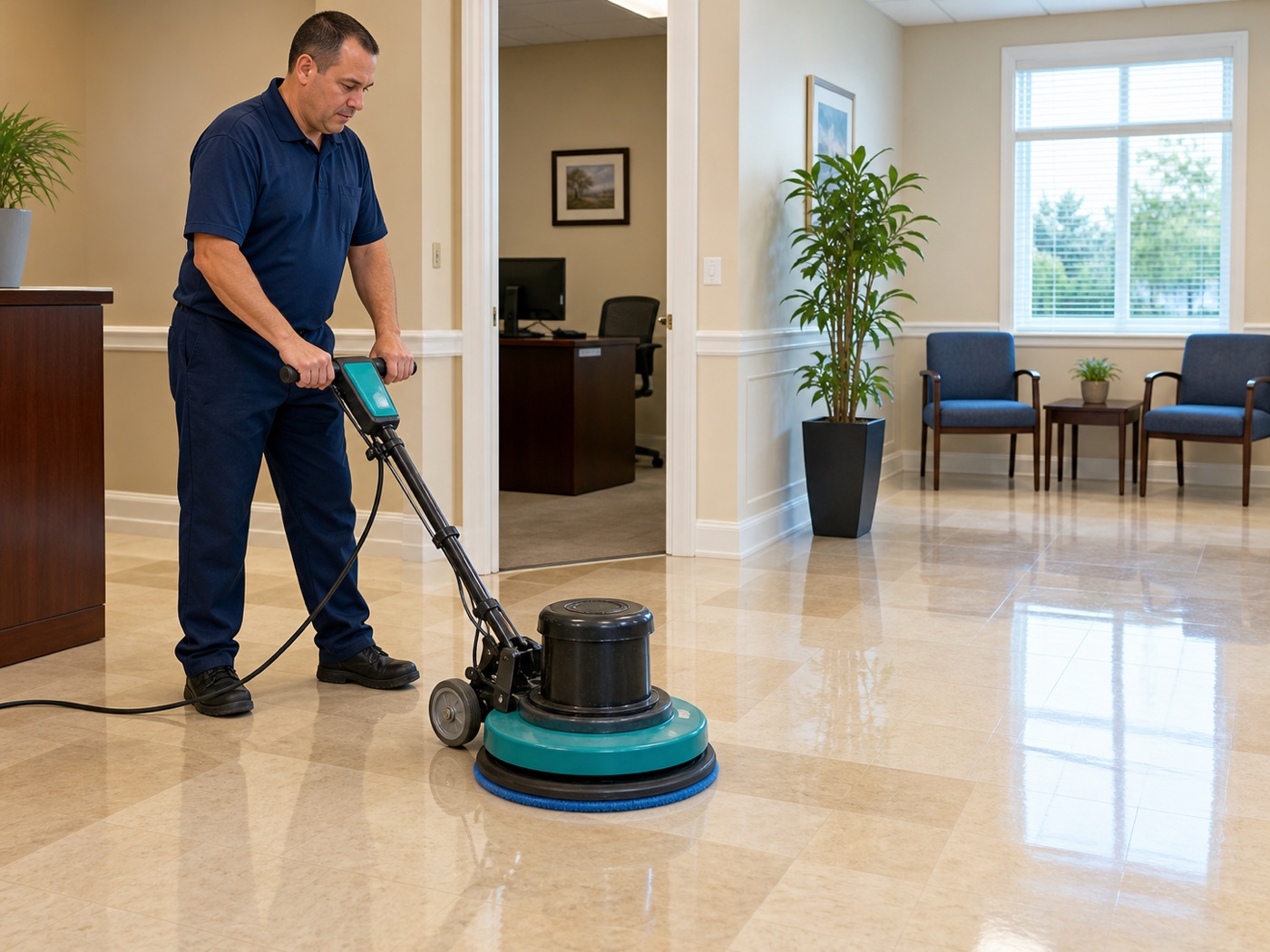
Handling all of it on one schedule with one contractor is simpler than coordinating three, and it lets the harder work sit where it belongs on the calendar. Strip-and-refinish on VCT needs a longer window than carpet extraction and is best planned around a holiday closure, so it makes sense to build the year around that date rather than fitting it in later.
Restroom tile and grout should be on its own cycle regardless, because grout is porous and absorbs what mopping leaves behind. It is also, along with the entry, one of the two surfaces visitors actually form an opinion from.
In this region there is a seasonal argument for putting the heavy work in fall. Drying conditions are the best of the year in September and October, which shortens every window and makes evening scheduling considerably easier than it is in August.
All City Carpet Cleaning And Building Solutions handles commercial carpet, tile, and hard surface across Virginia Beach, Norfolk, Chesapeake, Suffolk, Hampton, Portsmouth, and Smithfield, on a schedule built around your hours rather than ours. Pricing is published so budgeting does not require a sales call.