
There is a number worth knowing if you run a retail space anywhere near the water: it takes roughly fifteen feet of walk-off matting to remove the large majority of soil from a customer's shoes. That is the figure commercial facility maintenance works from, and almost no store meets it.
Most shops have a three-by-five mat inside the door. That catches one step, which handles the obvious debris and lets everything finer walk straight onto your sales floor — where in this region it is quartz sand, and where it starts cutting fiber and dulling finish immediately.
What the First Fifteen Feet Are Worth
The argument for matting is not aesthetic. It is that entry control is the only intervention that reduces how much abrasive material enters the building at all. Everything else in floor maintenance is dealing with grit after it has already arrived and already done some damage.
Quartz sand is harder than every carpet fiber and hard enough to scratch a polished finish. When a customer walks it across your floor, each grain is ground against the surface under body weight. On carpet that shears the yarn; on polished concrete or vinyl it produces the fine scratch pattern that dulls a traffic lane. Neither is reversible by cleaning.
So the economics are straightforward. A properly sized matting system costs a few hundred dollars and needs periodic replacement. Replacing a sales floor costs thousands and closes the store. Any intervention that meaningfully extends the interval between the second thing is worth doing.
- Outside: a coarse scraper mat that knocks loose material off before the door. This section does the heavy lifting on grit.
- Inside: an absorbent walk-off section that takes moisture and fines. This is what prevents wet-weather tracking across the floor.
- Width: size the matting to the full door swing. A mat narrower than the doorway means people walk around it, which defeats the whole system.
- Length: as many full steps as the entry allows. Two steps is meaningfully better than one; four is meaningfully better than two.
- Edges: beveled or securely laid. A curled mat edge in a retail entry is a genuine liability issue, not just an ineffective one.
Wear Is Not Evenly Distributed
The second place retail floor budgets get misallocated is in treating the sales floor as one uniform surface. It never wears that way.
| Zone | Why | What it needs |
|---|---|---|
| Entry and first ten feet | All outdoor soil arrives here | Matting plus the shortest cleaning interval in the store |
| Register and queue area | Standing, shuffling, pivoting; spills | Frequent attention; consider a hard surface or replaceable mat |
| Main traffic aisle | Every customer walks it | Traffic-lane focused cleaning between full cleans |
| Fitting room area | Concentrated traffic plus bare feet and dropped items | Regular cleaning; this is also the most-noticed area by customers |
| Perimeter and display areas | Customers browse but rarely linger | Much longer intervals |
| Stockroom and back of house | Staff only, but tracks in from loading areas | Matting at the loading door pays off here too |
The fitting room row is worth acting on. Customers form a strong impression there because they are standing still, often barefoot, looking down. A dingy fitting room floor gets noticed in a way that a dingy corner display does not, and it is a small area that is cheap to keep in good condition.
The loading door is the one usually forgotten entirely. It receives concentrated traffic from a parking or delivery area with no matting at all, and everything that comes in there gets distributed through the stockroom and out onto the sales floor. Matting there is cheap and nobody objects to it on aesthetic grounds, which makes it one of the few floor-care line items that is genuinely uncontroversial to approve.
The Seasonal Curve in a Beach Market
Retail in Virginia Beach and the surrounding cities does not run at a constant rate, and the floor plan should follow the traffic rather than the calendar.
Summer brings the highest volume and the worst soil load simultaneously — more customers, arriving from the beach, tracking sand and moisture. That is the season when matting matters most and when deep cleaning is hardest to schedule, because the store cannot close.
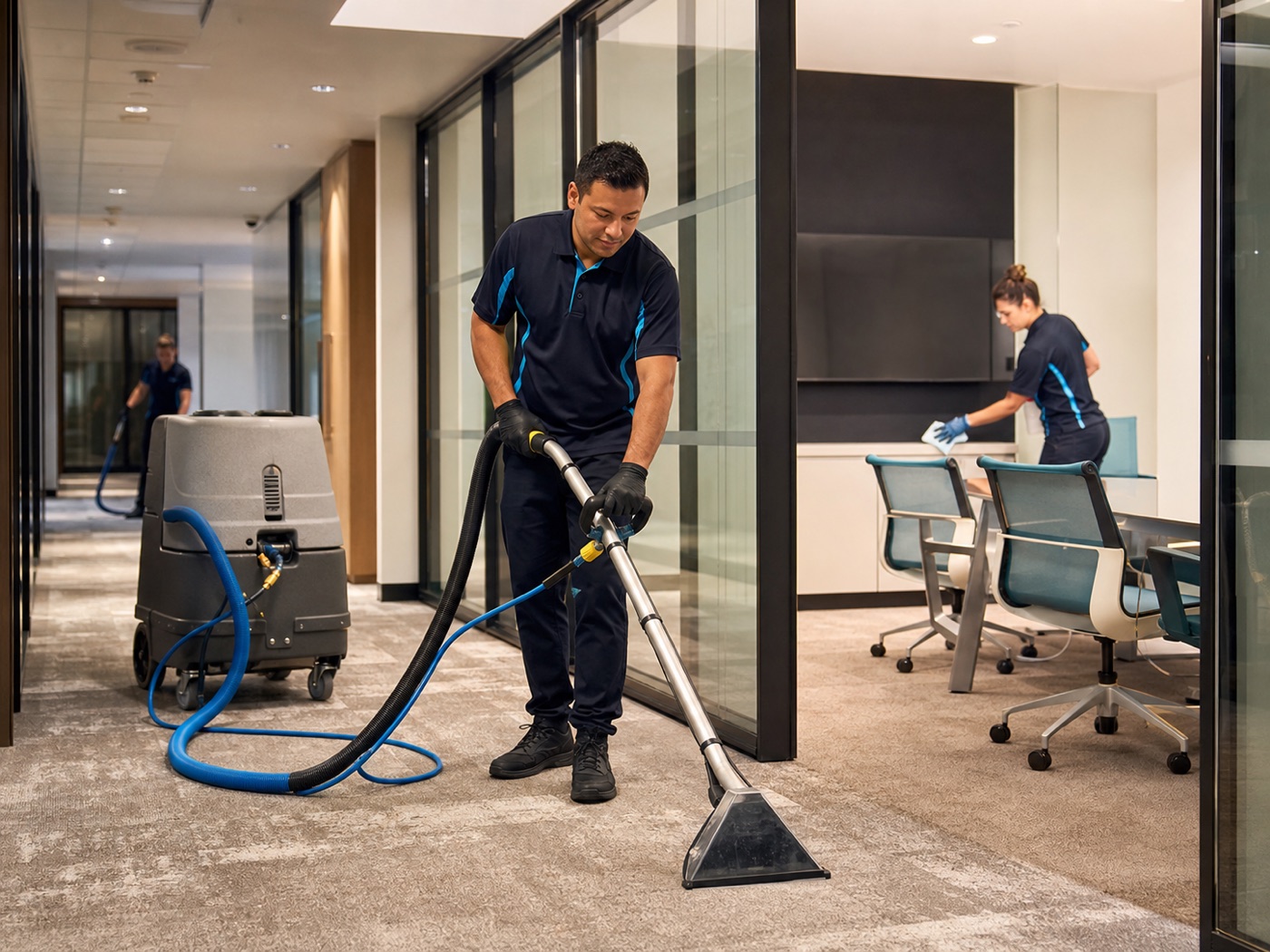
The workable pattern is maintenance-level work in season and the heavy resets in the shoulder months. Late spring, before the season opens, and October, after it closes, are both natural windows for full extraction, grout work, or anything involving floor finish. Holiday retail adds a second peak in November and December, so many stores end up doing their deep work in January instead.
Whichever windows you pick, reserve them. Every operator in the region reaches the same conclusion about the same weeks, and the difference between booking in February and booking in April is whether you get the dates you wanted.
What Customers Actually Notice
Retail floors get evaluated by customers constantly and consciously almost never, which makes it worth knowing what registers.
Smell is first. A store that smells musty — which in this climate usually means damp matting or carpet that never fully dries — creates an impression before anyone has looked at the merchandise. It is also entirely preventable, and it is almost always a moisture problem rather than a cleaning problem.
Second is anything underfoot. Grit that a customer can feel through their shoes reads as neglect. So does a floor that feels tacky, which usually means detergent residue from cleaning done with too much product and too little rinse.
Third is contrast. A customer rarely notices a uniformly worn floor, but they immediately notice a section that has been cleaned next to one that has not. This is an argument for zoning a store by traffic and then cleaning each zone on its own schedule, rather than cleaning half the sales floor at a time and leaving an obvious line down the middle.
None of those are about the flooring material or the cost of the service. They are about whether there is a plan, and the difference between a store with one and a store without one is visible to people who could not tell you why.
Matching the Process to the Floor
Retail spaces frequently have several floor types in one building, and applying the wrong process is expensive to undo.
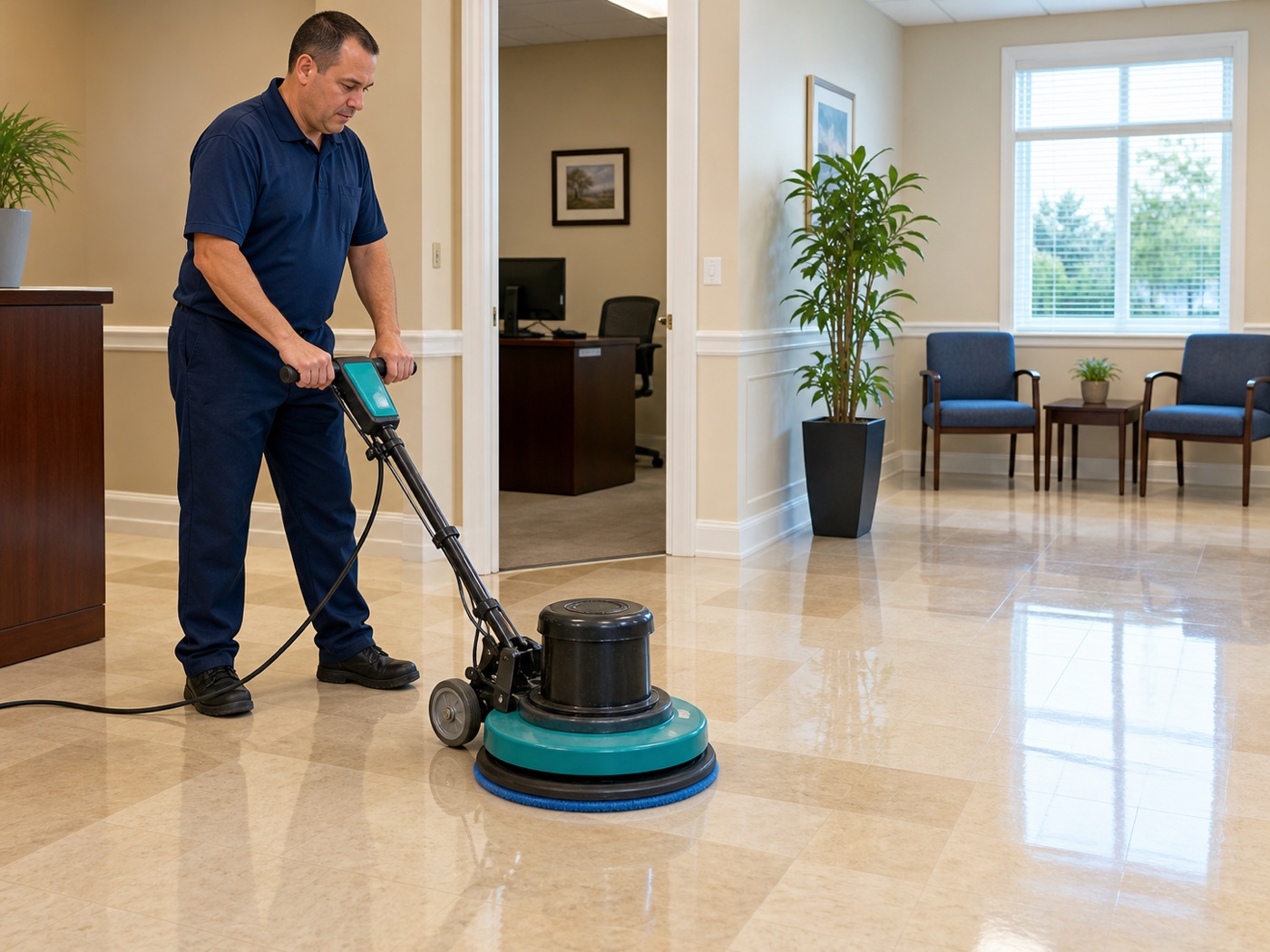
Vinyl composition tile — common in older strip retail, stockrooms, and back-of-house corridors — is a legitimate candidate for periodic stripping and recoating. Layered finish yellows and holds soil, and a scheduled strip-and-recoat cycle keeps it presentable.
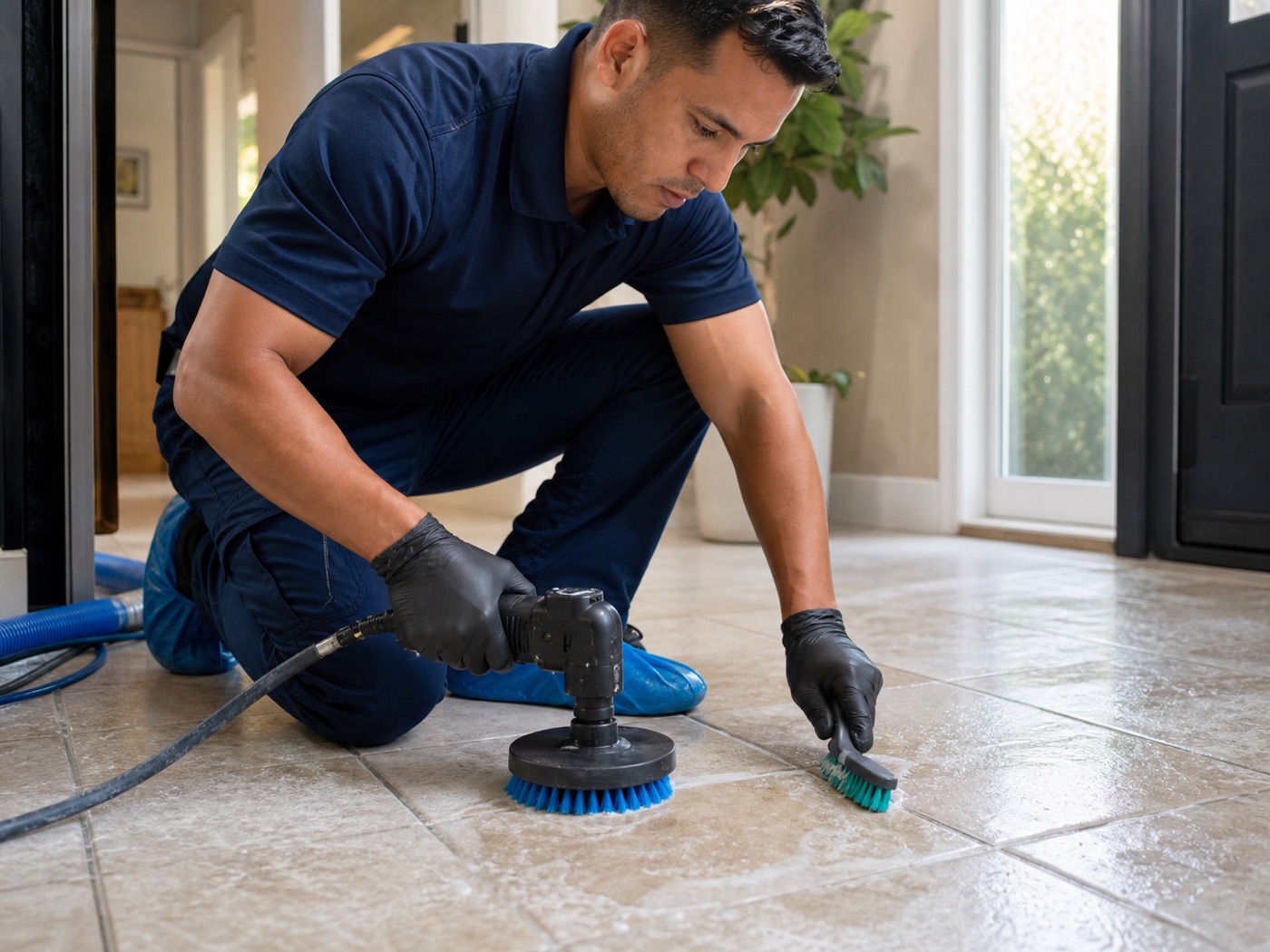
Ceramic and porcelain tile, natural stone, polished concrete, hardwood, and luxury vinyl plank should not be waxed. Finish on those surfaces peels and scuffs, and removing it later costs more than the maintenance it was supposed to simplify. Tile brings its own requirement instead: grout is porous, it collects everything that crosses it, and it needs mechanical agitation rather than mopping to actually reset.
If nobody on staff is certain what a given floor is, that is worth resolving before anyone quotes on it. It takes a few minutes during a walkthrough and it prevents the category of mistake that cannot be cleaned away afterward — the same problem restaurants run into with their mixed kitchen and dining surfaces.
The Short Version
Fix the entry first. Longer matting, split between an outside scraper section and an inside absorbent one, sized to the full doorway and maintained like equipment rather than decor. Then spend the cleaning budget on the entry, the register, the main aisle, and the fitting rooms rather than spreading it evenly. Put the loading door on the list. And keep floor finish off anything that should not have it.
All City Carpet Cleaning And Building Solutions works with retail and commercial properties across Virginia Beach, Norfolk, Chesapeake, and Hampton, with scope and scheduling built around your hours and your season.