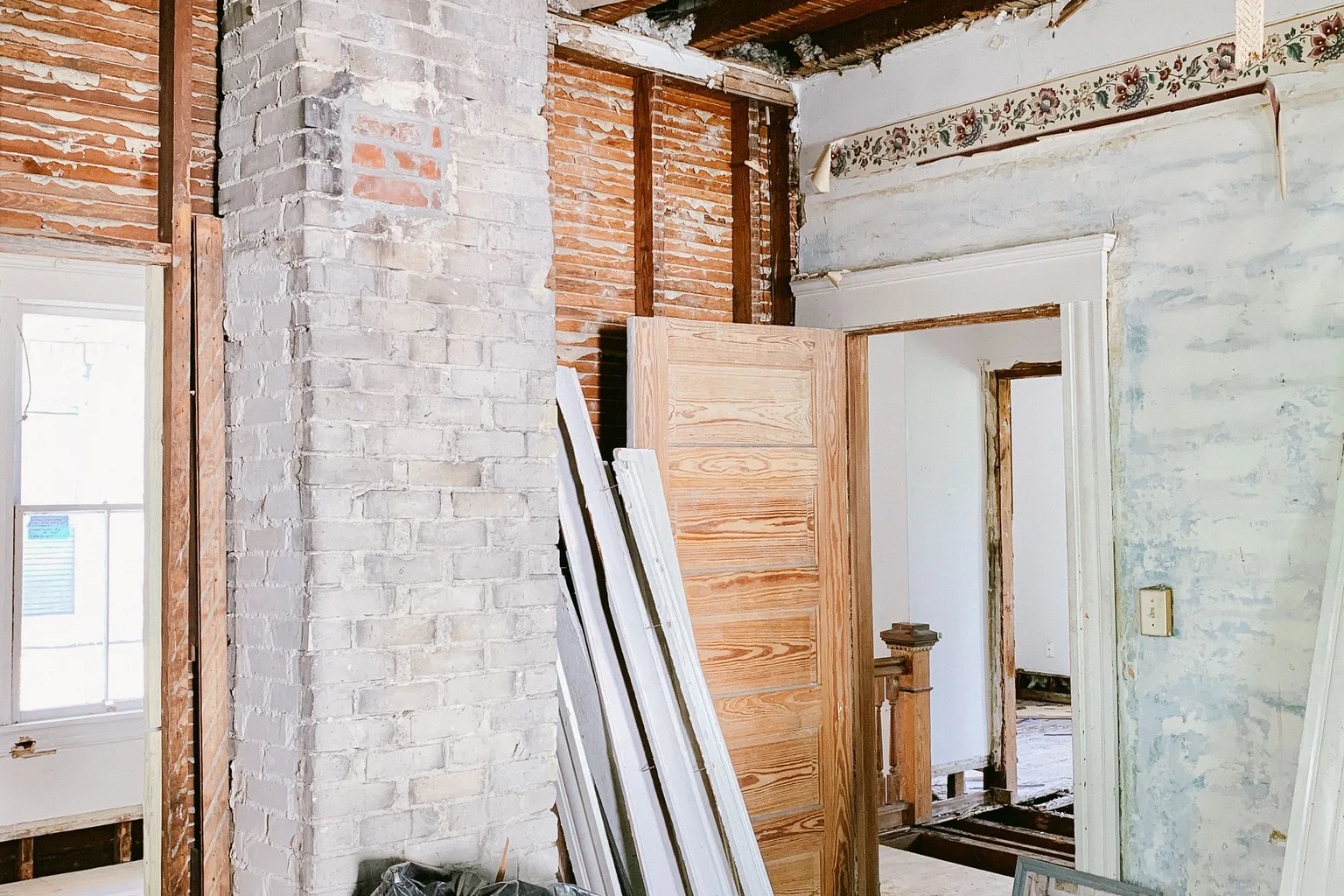
Fall is one of the most popular seasons for home renovation projects in Hampton Roads, with homeowners in Virginia Beach, Norfolk, Chesapeake, Suffolk, Hampton, Portsmouth, and Smithfield tackling remodels and repairs before the holiday season brings guests and family gatherings. Drywall work is involved in a large share of those projects, whether it is a full room addition, a bathroom remodel, or simply patching and repainting a wall.
What gets underestimated almost every time is what drywall dust actually does to carpet in the rooms nearby, even rooms that were not part of the renovation itself. It is not the same as ordinary household dust, and treating it that way leads to carpet that looks and feels dingy well after the contractors have packed up and left.
Why Drywall Dust Behaves Differently
Drywall dust comes primarily from sanding joint compound, and the particles produced by that process are extremely fine — much finer than typical dirt, pet dander, or outdoor dust that carpet deals with day to day. That fine particle size is exactly what makes it so troublesome for carpet.
Coarser household dirt tends to sit closer to the surface of carpet pile, where regular vacuuming reaches it reasonably well. Fine drywall dust, by contrast, sifts down between fibers under its own weight and settles at the base of the pile near the backing, a spot a standard upright vacuum's airflow is not always strong enough to fully dislodge. The particles are also gypsum-based, which gives soiled carpet a dull, chalky look rather than the darker soiling from typical dirt.
It travels farther than most homeowners expect, too. Fine dust of this size stays airborne longer than heavier dirt particles, which means normal air movement in a house — HVAC circulation, open doorways, foot traffic — carries it into rooms well outside the immediate work area over the course of a multi-day project.
The Vacuum Problem
A household vacuum is built around a certain expectation of what it will be picking up, and a large volume of fine drywall dust can exceed that. Standard vacuum filters and bags can clog faster than usual when they are loaded with fine gypsum dust, and some vacuums will lose suction or blow a portion of the finest dust straight back out through the exhaust rather than capturing it.
Beyond the mechanical issue, there is a real risk in simply running a vacuum repeatedly over heavily dusted carpet without addressing the dust first — the brush roll can grind fine particles further down into the pile and backing rather than lifting them free, essentially working the dust deeper in with every pass instead of removing it.
A shop vacuum with a fine-particle or HEPA-rated filter handles bulk drywall dust removal from hard surfaces and the initial pass on carpet far better than a standard household vacuum, but even that step is typically just the first stage rather than a complete fix for carpet that has taken on a meaningful amount of dust.
Sealing Off the Work Area Before It Starts
The cheapest and most effective way to handle drywall dust and carpet is preventing the dust from reaching carpeted rooms in the first place, rather than dealing with cleanup afterward.
Plastic sheeting taped over doorways between the work zone and the rest of the house creates a physical barrier that stops most airborne dust from migrating. Covering carpet directly in and immediately around the work area with heavier plastic or canvas drop cloths protects it from settling dust and foot traffic tracking compound dust in on shoes. Closing HVAC vents in the work area, or at minimum putting a filter over the return vent nearest the project, cuts down on dust getting pulled into ductwork and redistributed throughout the house.
For a project running more than a day or two, it is worth checking the seal periodically, since tape can loosen and plastic sheeting can shift, particularly with contractors moving in and out through the barrier repeatedly.
A dedicated walk-off mat placed just outside the sealed work area, paired with a request that contractors change or cover footwear before crossing into carpeted rooms, cuts down significantly on dust and compound residue that would otherwise get tracked directly into carpet fiber on shoe soles. This is a small ask that most contractors are used to accommodating, and it noticeably reduces how much cleanup carpet in adjoining rooms needs once the project wraps.
It Is Not Just the Carpet
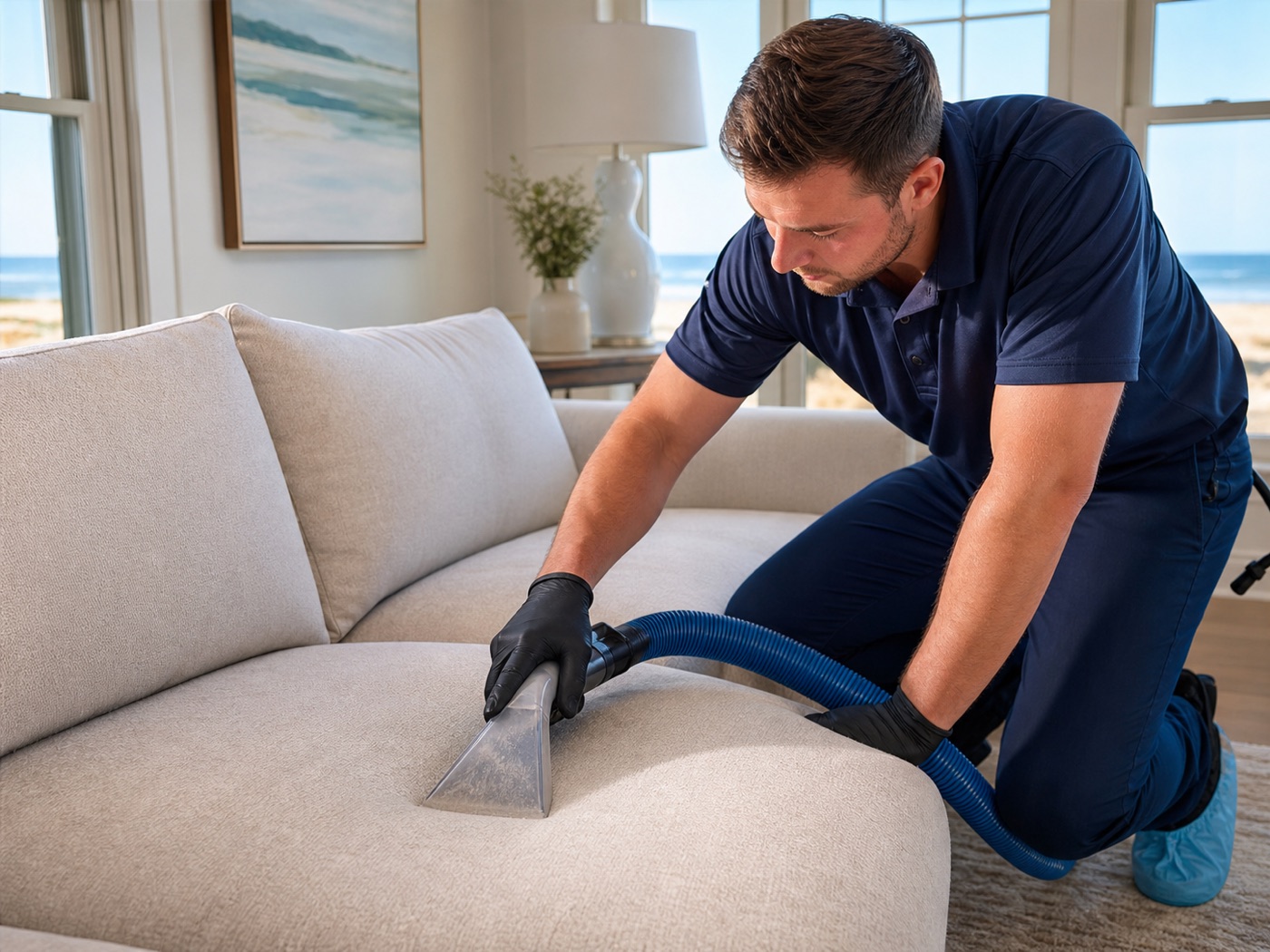
Drywall dust settles on every horizontal surface in a home during a renovation, and upholstered furniture in rooms near the work zone often takes on the same fine dust that carpet does, especially fabric sofas and chairs sitting close to open doorways during the project. A vacuum with an upholstery attachment handles the surface layer, but deeply settled dust in cushions can benefit from the same kind of professional attention as carpet.
Hard flooring in adjoining rooms picks up drywall dust too, though it is a simpler cleanup since dust sits on the surface rather than working down into a fiber structure. Sweeping or vacuuming followed by a damp mop typically handles hard-surface dust without the deeper cleaning concerns carpet raises, which is one more reason carpeted rooms near a renovation deserve the most planning attention of any surface in the house.
Why Extraction Cleaning Is Usually Needed Afterward
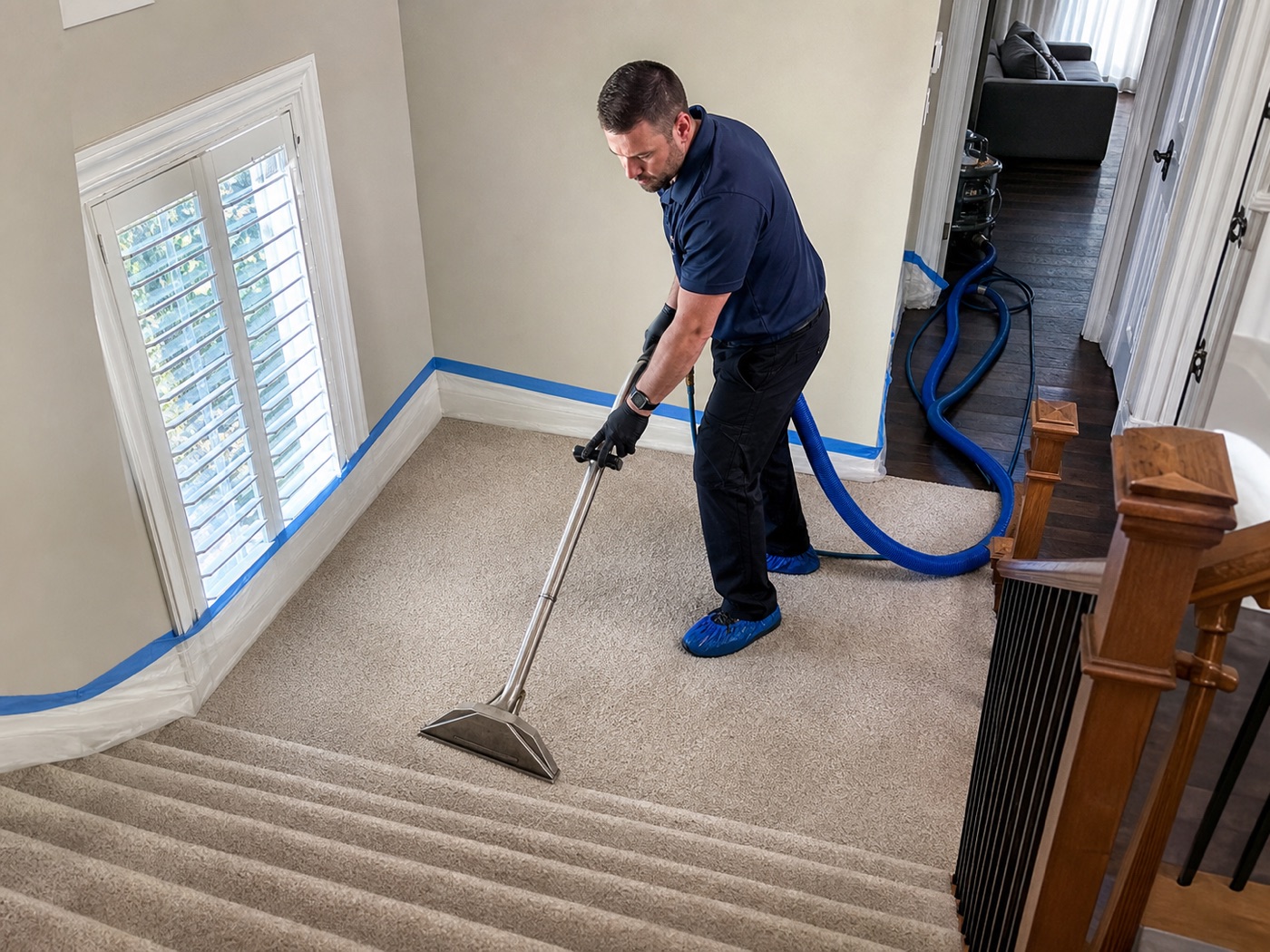
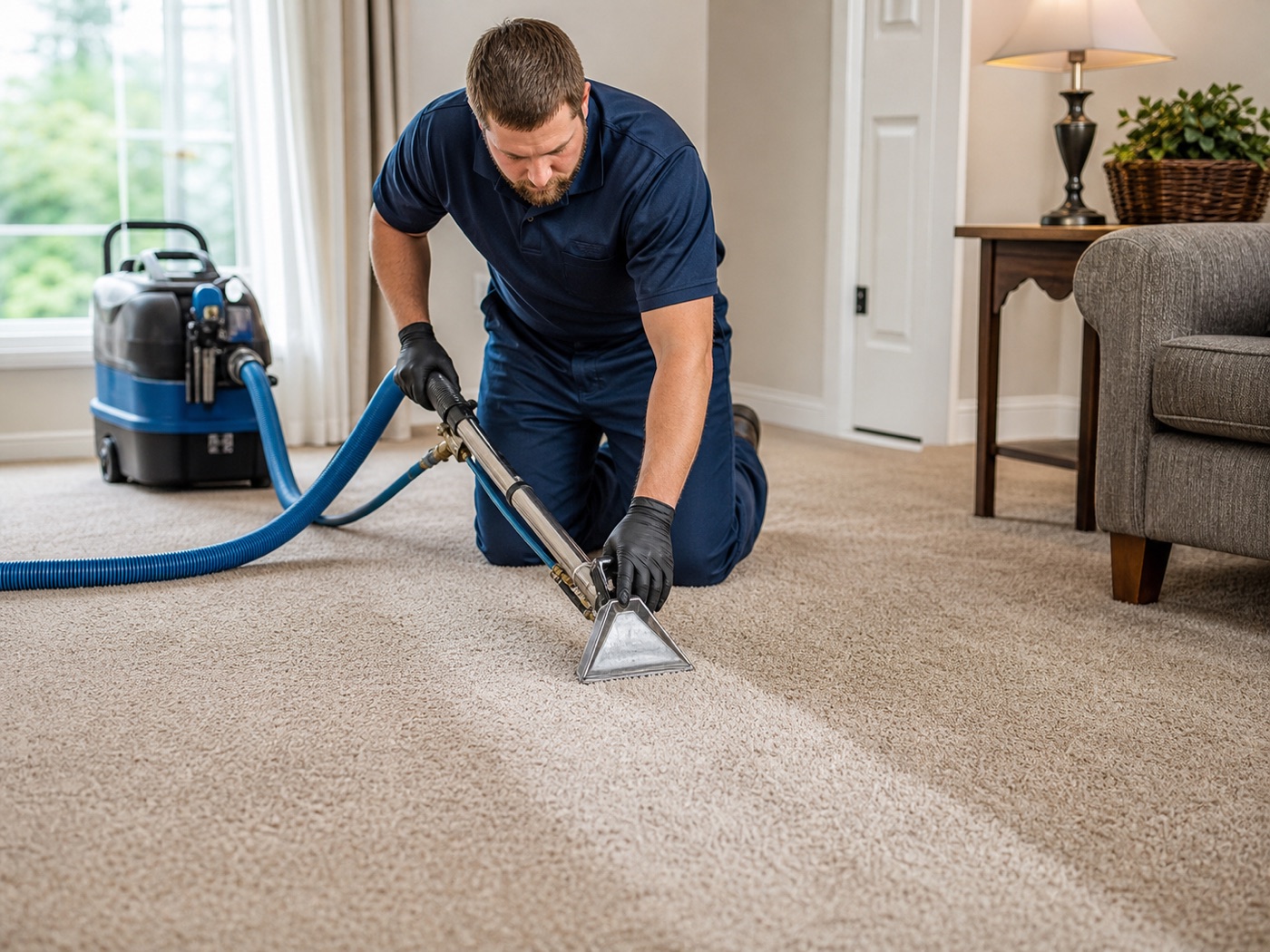
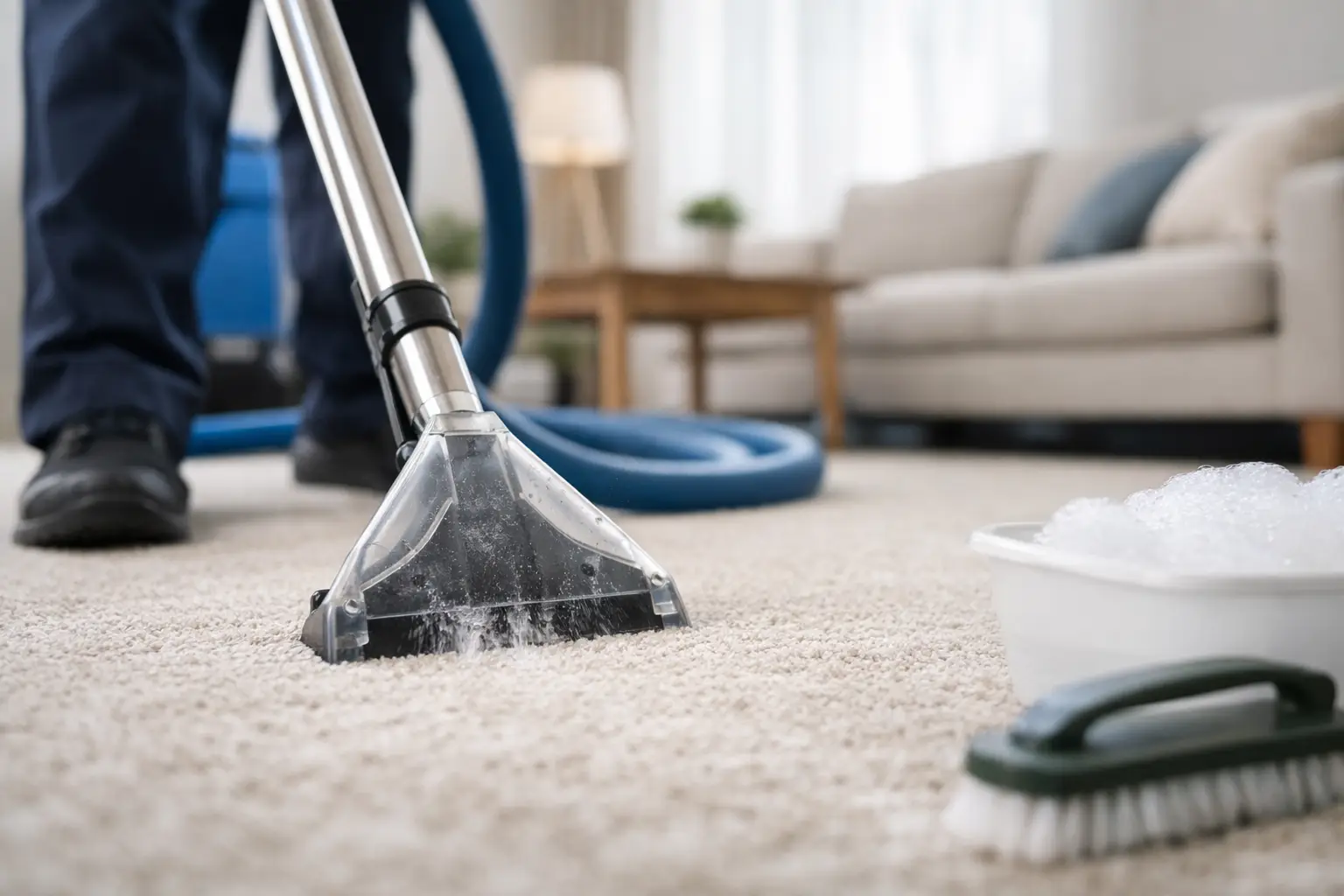
Once drywall dust has settled into carpet pile, hot water extraction is generally the method that actually removes it rather than just redistributing it. The combination of water, cleaning solution, and strong extraction suction flushes fine particles out from the base of the pile in a way dry vacuuming cannot fully replicate.
This matters even for carpet that looks reasonably clean after a homeowner's own vacuuming effort. Dust that has settled at the base of the pile is not always visually obvious from a casual look at the surface, and it can continue giving carpet a dull, slightly gray cast that persists until it is properly extracted rather than just brushed at the surface.
Rooms adjoining the direct work area deserve attention too, even ones that look untouched. Because fine drywall dust travels on normal air currents, a hallway or bedroom down from the renovation can end up with a measurable dust layer in the carpet despite no visible construction debris ever having been tracked in.
Timing the Cleaning Around the Project
The best time to schedule post-renovation carpet cleaning is right after the dust-generating phases of the work wrap up — sanding, drywall installation, and any demolition — rather than waiting until the entire project, including paint and finish work, is fully complete.
Waiting allows normal household traffic to resume across dust-laden carpet in the meantime, and every footstep presses dust further into the pile, which turns a moderate cleanup into a more involved one. For projects that will keep some rooms usable while work continues elsewhere in the house, getting the affected carpet cleaned in stages, rather than saving everything for one cleaning at the very end, tends to produce a better result overall.
It is also worth communicating the renovation timeline to whoever is scheduling the cleaning, since a project that runs longer than expected, or one with a second phase of sanding after an initial coat of joint compound, can mean an early cleaning appointment needs to be pushed back rather than wasted on carpet that is about to take on another round of dust. A quick check-in call ahead of the scheduled cleaning date avoids that kind of wasted visit, and it is a habit worth building into any renovation project that touches drywall, regardless of how large or small the scope of work turns out to be.
All City Carpet Cleaning And Building Solutions handles post-renovation carpet cleaning for homeowners across Virginia Beach, Norfolk, Chesapeake, Suffolk, Hampton, Portsmouth, and Smithfield, timed to fit around contractor schedules so carpet is ready well before holiday guests arrive. Call (757) 748-0654 to plan the cleaning alongside your renovation timeline.