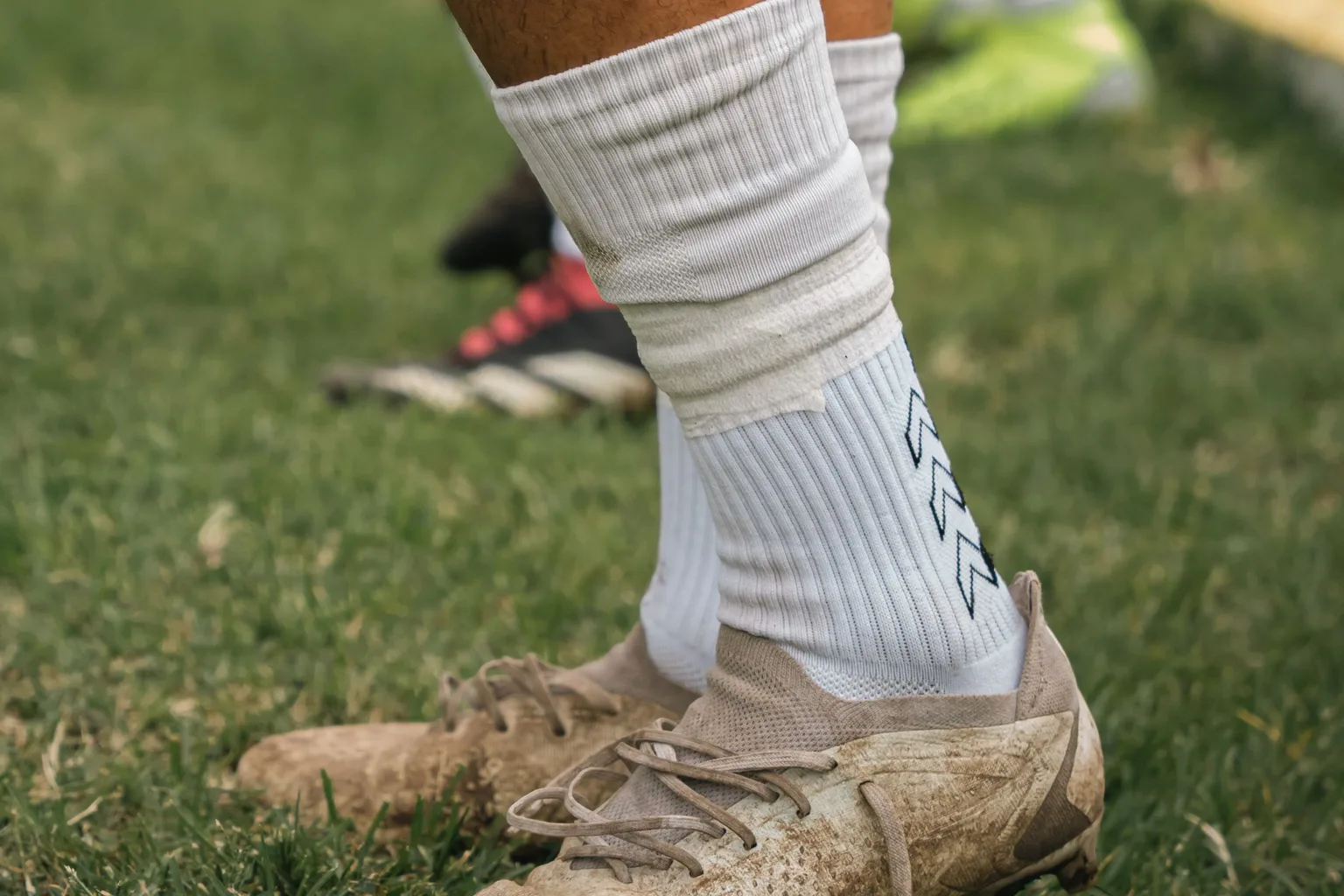
Fall sports season is wonderful for kids and rough on carpet, and the two facts are related in a way most households do not think about until the hallway carpet starts looking permanently grey.
Soccer, football, and field hockey all involve the same basic mechanism: cleated shoes designed to grip a field, worn by kids who are going to walk through the front door in them at least occasionally no matter what the house rule says.
Why Cleats Are Different From Regular Shoes
An ordinary shoe distributes a person's weight across a flat sole several inches wide. A cleat concentrates that same weight onto six to fourteen small studs, each pressing down with far more force per square inch.
That concentrated pressure does two things to carpet. It drives whatever soil is on the cleat deeper into the pile on contact, past the tips of the fiber and down toward the backing where ordinary vacuuming has the hardest time reaching. And it can, over repeated contact, physically crush and mat the pile in high-traffic spots like the entry hall and the stairs.
None of this is really about the mud itself. Ordinary dirt tracked in on a sneaker vacuums out reasonably well. Mud ground in by a cleat stud is a different, more stubborn problem.
Turf Crumb: The Quiet Problem
If your kids play on synthetic turf rather than grass, there is a second contaminant that is easy to overlook entirely: crumb rubber infill, the small black pellets that fill artificial turf to give it cushion and grip.
It hides in cleat treads, sock cuffs, and equipment bags, and it comes loose a little at a time all over the house rather than in one obvious dump. It is dense enough that a light vacuum pass often leaves some behind, and dark enough on light carpet that a scattering of it reads as general dinginess rather than a specific, addressable problem.
A slow, methodical vacuum pass over entry areas after practice — rather than a quick once-over — catches most of it. Turf crumb responds well to regular vacuuming; it is persistence rather than technique that matters here.
The Mud Problem, Handled Correctly
Field mud is not garden soil. It usually carries grass clippings, a mineral clay component that stains more than ordinary dirt, and whatever field conditioner or line-marking chalk was on the ground that day.
- Let it dry completely. Working wet mud into carpet with a towel spreads it and drives it deeper — the single most common mistake.
- Once dry, break up the clump with a stiff brush, working from the edges of the stain inward rather than starting in the center.
- Vacuum thoroughly with a beater-bar vacuum, going over the spot from multiple directions.
- For residue that remains, blot — never rub — with a mild detergent solution, working from the outside of the spot in.
- Blot with clean water to rinse, then blot dry and let the area air out fully before anyone walks on it.
Grass stains that come along with the mud are chlorophyll-based and behave differently from soil, responding better to an enzyme or oxygen-based treatment than to a general all-purpose cleaner. Treating them as one problem instead of two is why a lot of DIY attempts leave a faint green shadow behind.
Building the Habit Without a Fight
The realistic goal with kids and cleats is not a perfect shoes-off record. It is reducing the frequency of the worst-case scenario — cleats crossing the living room carpet in a hurry between the car and a snack.
A designated spot for cleats near the door, separate from the general shoe pile, gives a kid somewhere obvious to put them. A towel or boot tray under that spot catches the worst of what falls off. And a quick house rule — cleats come off at the door, sneakers and socks are fine past that point — is easier to enforce consistently than an all-shoes ban, because it targets the actual problem rather than every shoe in the house.
Car mats deserve the same attention. A cleated foot climbing into a car seat transfers turf and mud onto the floor mat, which then transfers to the house on the next trip. Keeping a boot tray or an old towel in the trunk for post-practice cleats solves this at the source.
The Uniform and Equipment Bag Problem
Cleats get all the attention, but the equipment bag sitting by the door for the rest of the week is its own slow contributor, and it is worth a separate look.
A practice bag holds shin guards, cleats, a grass-stained jersey, and whatever turf material clung to all of it, and it usually lives on the floor of a bedroom, a mudroom, or a hallway closet rather than somewhere sealed. Every time it is opened or moved, a little more debris finds its way onto the nearby carpet, which is why the carpet directly outside a kid's room can look surprisingly soiled compared to a room nobody uses for sports gear.
A cheap bin or a hook system that keeps the bag off the carpet entirely — even just a plastic tray under it — interrupts that slow drip. It will not stop the bigger cleat-related messes, but it closes off one of the quieter sources.
Jerseys and socks that come off the field belong in a hamper immediately, not on the bedroom carpet for a few hours before laundry day. Grass and turf residue that sits on fabric against carpet for an afternoon transfers more than most people expect, and a damp jersey left on carpet overnight can leave a faint ring that takes real effort to lift later.
Car pooling with other families compounds all of this. A carpool line means several kids' worth of cleats and bags moving through one vehicle and one entryway on a given afternoon, which is a good reason to keep the boot tray by the door stocked and visible rather than tucked in a closet where it gets skipped.
Why Fall Changes the Cleaning Math
A household that gets carpet cleaned once a year on a general schedule is usually timing it around spring or before the holidays. Fall sports season adds a genuinely higher soil load for roughly three months — August through November — that a once-a-year schedule does not account for.
Households with multiple kids in fall sports, practicing several times a week, often see better results moving to a quarterly interval through the season and dropping back to twice a year the rest of the time. It matches the cleaning to the actual traffic rather than the calendar.
Entry halls and stairs — the two areas that take the direct hit from cleats — are worth cleaning on their own shorter cycle even if the rest of the house stays on a longer one. It is a more targeted use of the same budget than treating the whole house as one uniform surface.
What Professional Extraction Does Differently
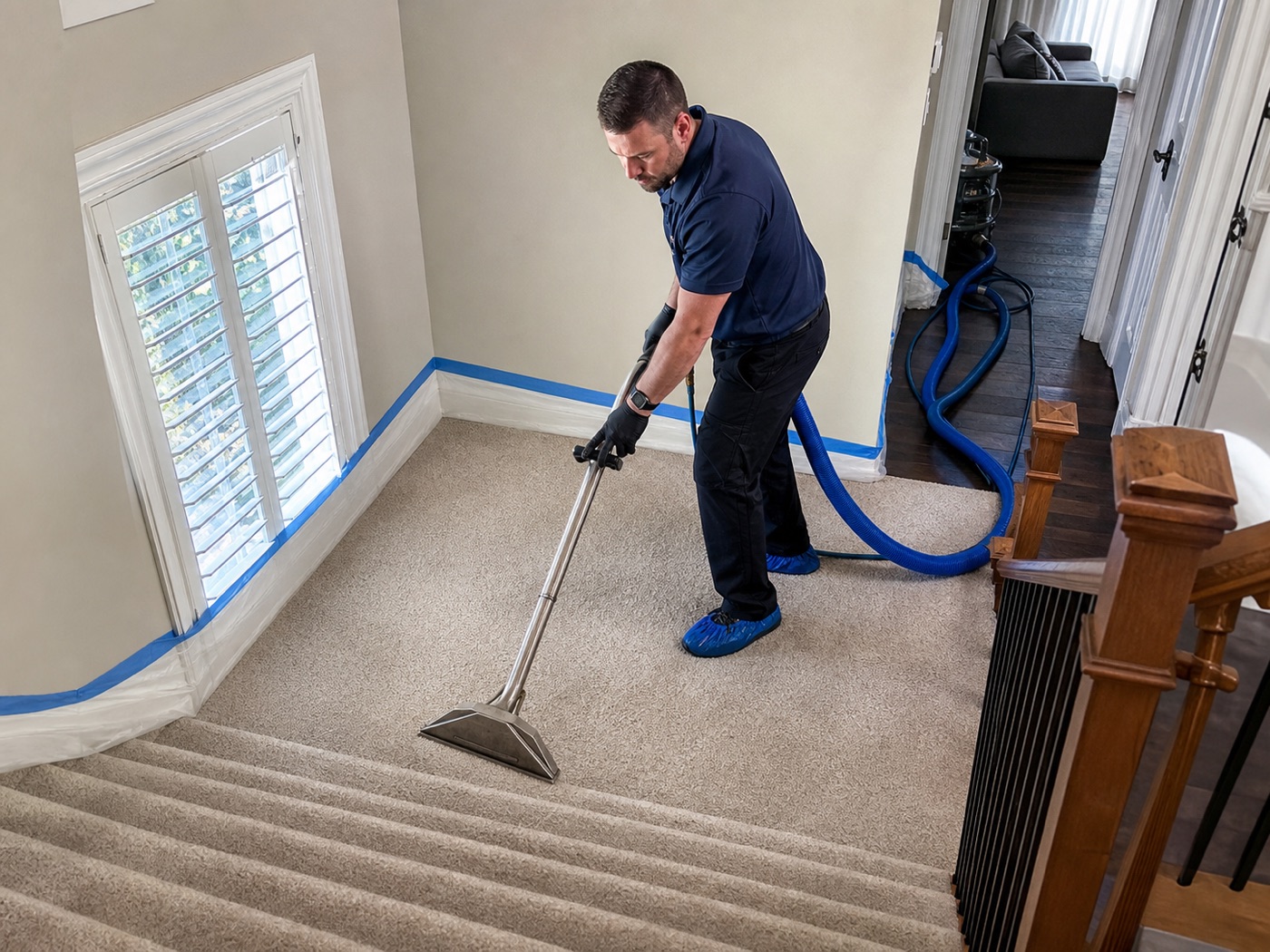
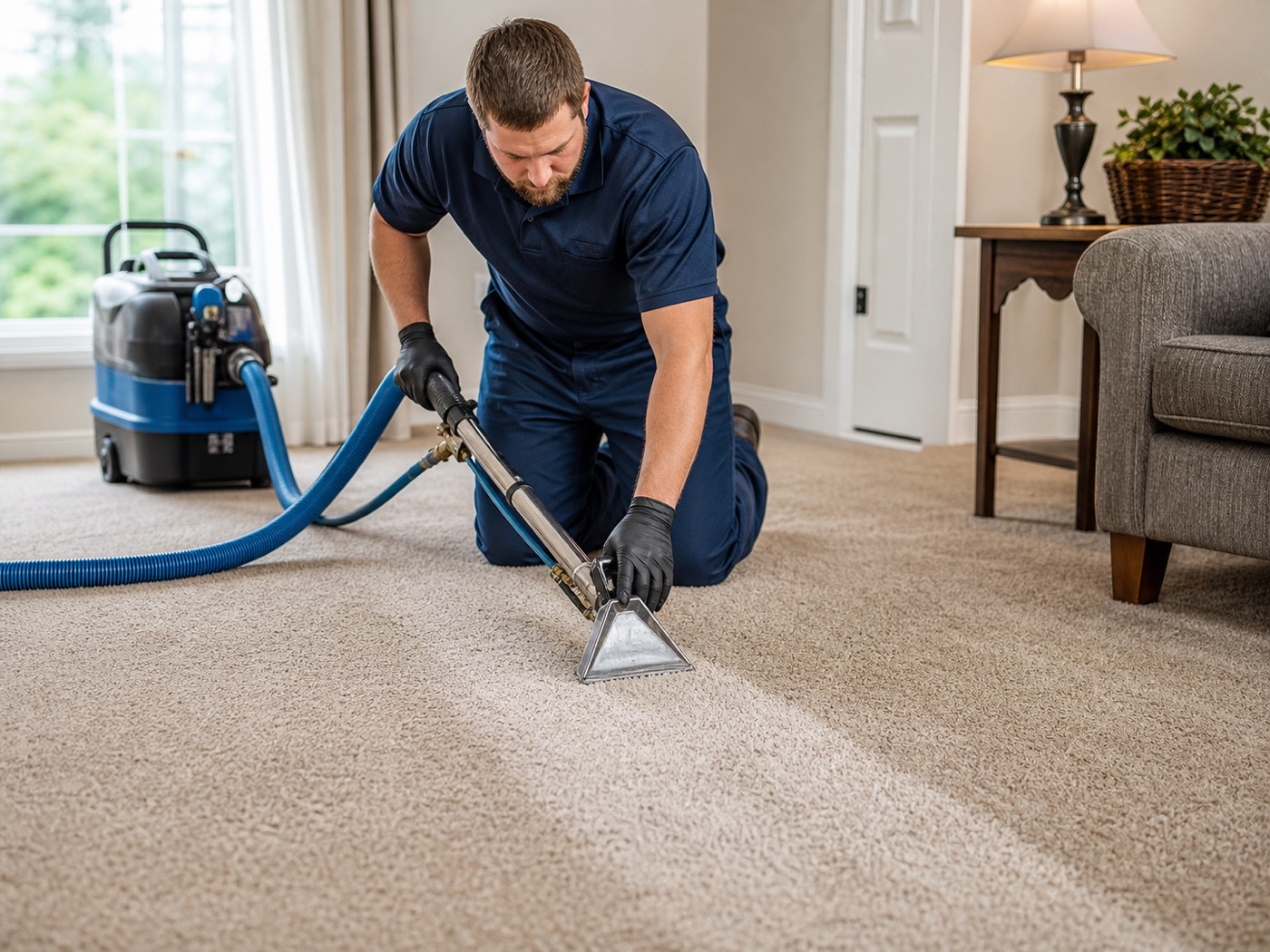
Field soil that has been ground in repeatedly over a season responds to hot water extraction in a way a rental machine or a spot cleaner usually cannot match, because the combination of heat, pressure, and dwell time reaches soil bonded well below the surface of the pile.
It also resets the carpet for the rest of the season rather than just treating the visible spots. A thorough pre-vacuum, pre-spray with dwell time, agitation, and full extraction addresses the accumulated soil across the whole traffic path rather than the individual stains a parent happens to notice.
For households where this is a recurring seasonal pattern rather than a one-time mess, a scheduled cleaning timed to the middle of the season — rather than waiting until it looks visibly bad — keeps the carpet from ever reaching the point where the fiber itself starts to show wear from repeated grinding.
All City Carpet Cleaning And Building Solutions works with families across Virginia Beach, Norfolk, Chesapeake, Suffolk, Hampton, Portsmouth, and Smithfield through every youth sports season, with pricing published up front so a quote is a formality rather than a negotiation.