
Ask three carpet cleaners how often carpet should be cleaned and you will get the same answer: every twelve to eighteen months. It is not wrong exactly, but it is a single number applied to a question that has at least four variables — and in this region it is on the optimistic side for most households.
The more useful way to think about it is by zone and by household, because those are what actually determine the answer.
Why Waiting for Dirty Is the Expensive Choice
Most households clean carpet when it starts to look bad. That is intuitive and it is the most costly possible schedule, for a reason worth understanding.
What makes a traffic lane look grey is only partly soil. A significant share of it is abraded fiber — yarn that has been cut by grit ground against it under foot traffic. Soil cleans out. Abrasion does not, because it is missing material rather than something sitting on the surface.
So by the time a hallway looks visibly worn, some fraction of that appearance is permanent, and the cleaning that follows can never fully bring it back. Everyone has had the experience of a carpet coming out cleaner but still looking tired in the traffic lane — that is the abrasion showing.
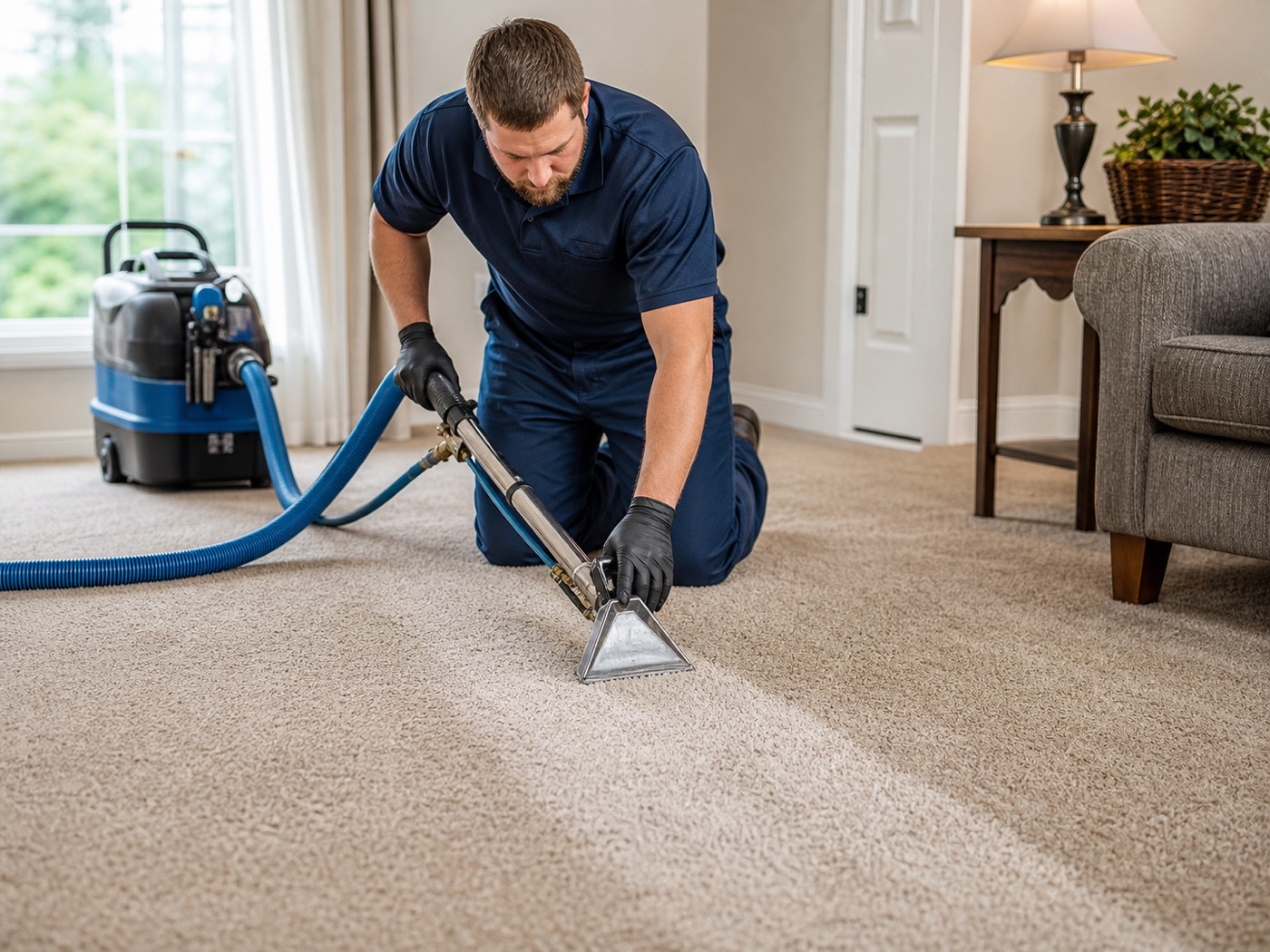
Cleaning on a schedule removes the abrasive material before it accumulates enough to do that work. That reframes the whole question: the interval is not about appearance, it is about how long you are willing to let grit sit in the fiber. It is also the argument for treating regular residential carpet cleaning as maintenance rather than housekeeping — it is protecting an asset you already paid for.
Clean by Zone, Not by House
The single biggest improvement most households can make costs nothing: stop treating the house as one unit.
A hallway takes every trip anyone makes between rooms. A guest bedroom takes a few dozen footsteps a year. Cleaning both annually means overpaying for one and neglecting the other, and it is why so many houses have tired hallways and pristine spare rooms.
| Zone | Traffic | Suggested interval |
|---|---|---|
| Entry and foyer | All outdoor soil arrives here | Every 4-6 months |
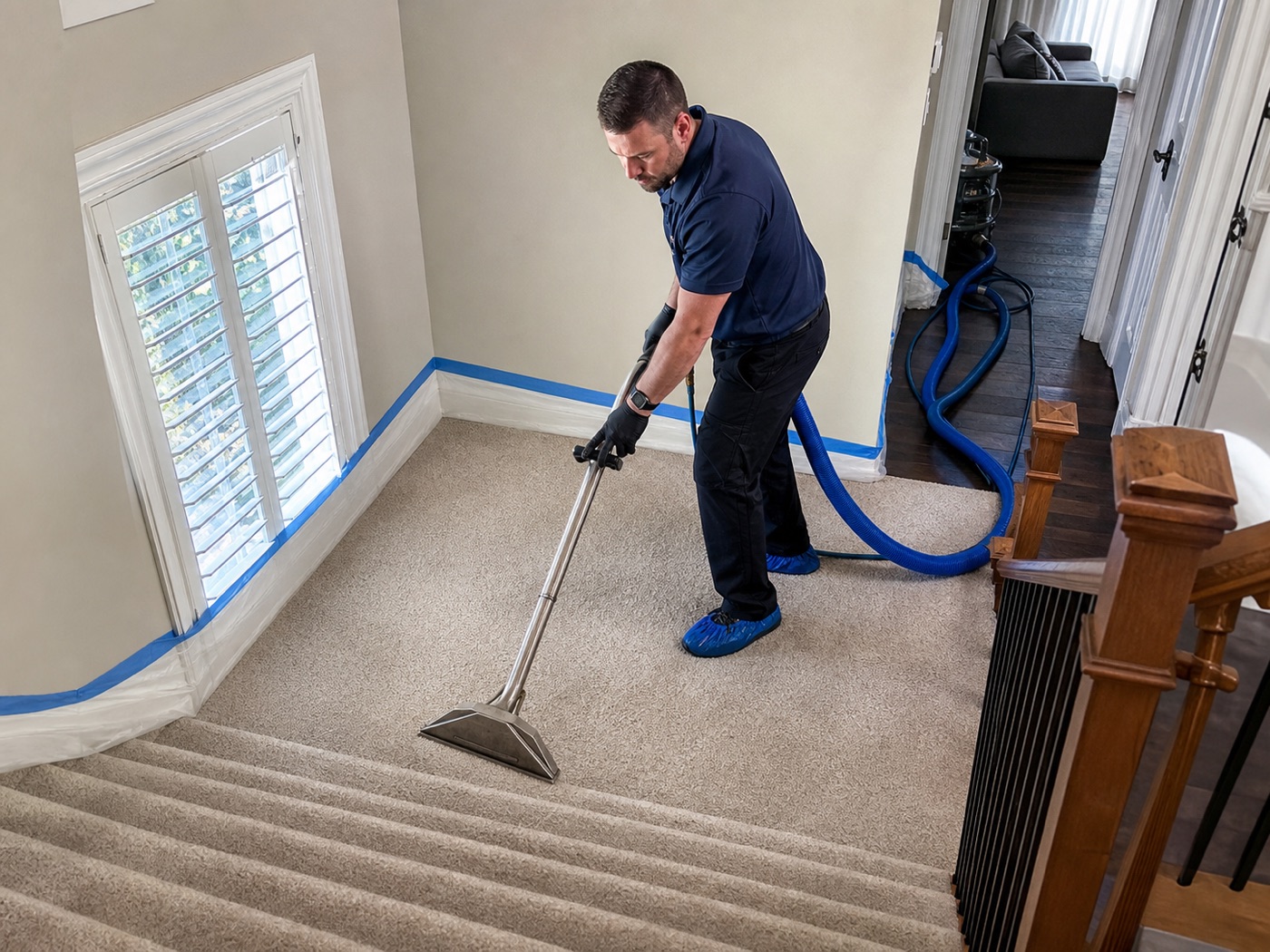
| Main hallway and stairs | Every trip funnels through | Every 6 months |
| Family or living room | Daily use, large area | Every 6-12 months |
| Dining room | Moderate, with food and drink | Every 12 months |
| Primary bedroom | Moderate, low soil | Every 12-18 months |
| Kids' bedrooms | Higher than adults', more spills | Every 12 months |
| Guest rooms and formal rooms | Very light | Every 2-3 years |
Because cleaning is priced by area, this reallocation usually costs about the same over three years as annual whole-house service — and the rooms people actually see look considerably better throughout. Knowing how area pricing works makes it straightforward to plan.
Then Adjust for the Household
On top of the zone baseline, a handful of factors shorten the interval, and they stack.
- Pets: shorten by roughly a third. Dander, coat oils, tracked-in soil, and the occasional accident all accumulate faster than most people estimate.
- Children under ten: shorten by roughly a third. More floor contact, more spills, more outdoor soil.
- Allergies or asthma in the household: every six months in the bedroom and main living areas.
- Anyone smoking indoors: every six months, and include the upholstery — residue is oily and settles on everything.
- Within a couple of miles of the water: shorten everything. Quartz sand is abrasive in a way ordinary yard soil is not.
- Light-colored carpet: not more damage, but soil shows sooner, so appearance-driven households will want a shorter cycle.
- A home business or frequent hosting: treat the affected rooms as light commercial rather than residential.
The allergy line has the strongest justification behind it. Carpet acts as a filter that traps particulate out of the air people breathe, which is a genuine benefit — but only if the reservoir is emptied. A six-month interval in the bedroom does considerably more for an allergy household than any product on a shelf.
Some Worked Examples
Putting it together for a few real household shapes.
A retired couple in Kempsville, no pets, low traffic, three miles from the water: hallway and living room every twelve months, bedrooms every eighteen to twenty-four, guest room as needed. The standard advice fits this household well.
A family of five in Great Bridge with two dogs and a fenced muddy yard: entry and hallway every four to six months, family room and stairs every six, bedrooms annually, guest room rarely. This household will spend more than average and will get considerably more carpet life for it.
A young family two blocks from the Oceanfront in Virginia Beach: everything shortens because of sand. Entry every four months, main living areas every six, bedrooms annually — plus serious entry matting, which does more than any of the above.
A military family in Hampton on a two-year rotation: clean when you move in, clean the high-traffic areas at the midpoint, and clean after the pack-out when you leave. Three appointments across a tour, with the move-in one being the most overlooked and among the most valuable.
A short-term rental at the Oceanfront: this is not a residential schedule at all. Weekly turnovers get vacuuming and spot response, with full extraction in the gaps and shoulder seasons — closer to a light commercial property than a home.
What You Do Between Cleanings Matters More
Frequency is the visible variable, but the habits between appointments determine how much work each cleaning has to do.
- Vacuum slowly — about one pass per second. Speed is why most vacuuming never reaches the grit at the base of the pile.
- Vacuum the entries and hallways several times more often than the bedrooms.
- Put real matting at every exterior door, long enough for three or four steps.
- Keep shoes off carpeted areas where you can. It is the highest-return habit available.
- Blot spills immediately and skip the household spot cleaner, whose residue attracts soil.
- Change HVAC filters on schedule, especially through pollen season.
Households that do those six things well can genuinely stretch their cleaning intervals. Households that do none of them will need the shorter end of every range in this article, and their carpet will still wear out sooner.
One more scheduling note specific to this region: fall is the best window we get. Dew points drop, floors dry in hours rather than most of a day, and a summer's worth of abrasive grit comes out before the wet season adds to it. If you clean once a year, October beats February.
Don't Forget the Furniture
Almost every frequency discussion is about floors, and the surface people are in closest contact with never comes up.
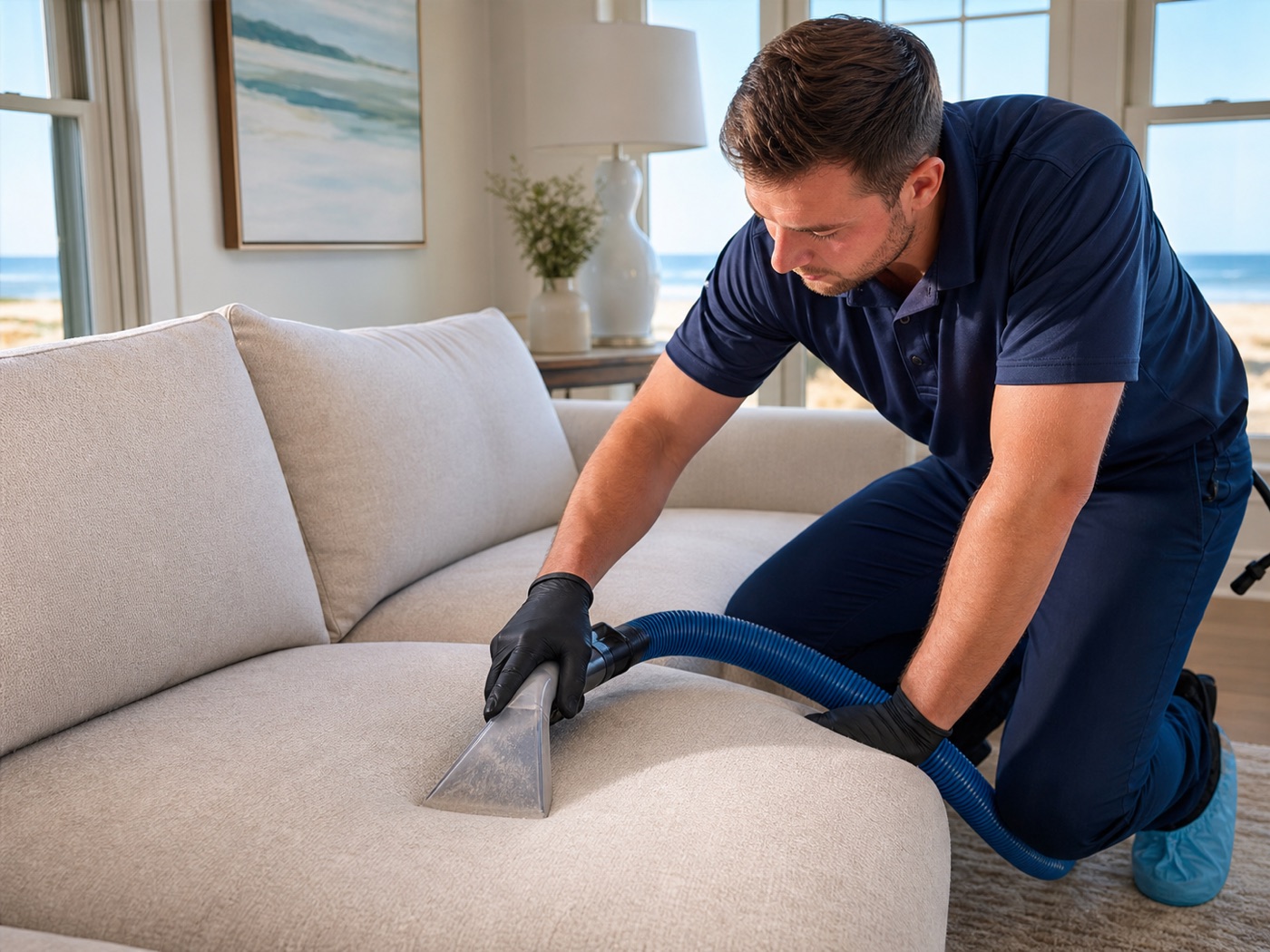
A sofa collects body oils, hair product, food residue, pet dander, and everything else that comes off a person sitting on it for hours a day. Unlike carpet, it never gets a vacuum pass, and cushion fill holds far more than the fabric surface suggests. In a lot of living rooms the seating is holding more than the floor is.
A reasonable interval is every twelve to twenty-four months for ordinary use, shortened to annually with pets, children, or anyone who eats in front of the television. The practical move is to add it to a carpet visit rather than booking separately, which avoids a second trip charge and gets the whole room done at once.
Mattresses belong in the same conversation and almost never get one. They are the single highest-exposure soft surface in any house — eight hours a night, every night — and they benefit from encasements more than from cleaning. But if a mattress has never had attention and someone in the house has allergies, it is worth including.
The Short Version
Forget the single annual number. Clean the entry and hallways two or three times as often as the bedrooms, shorten everything for pets, children, allergies, and proximity to the sand, and clean before the carpet looks dirty rather than after — because by then part of what you are looking at will not come out.
All City Carpet Cleaning And Building Solutions serves Virginia Beach, Norfolk, Chesapeake, Suffolk, Hampton, Portsmouth, and Smithfield. Tell us about your house and we will suggest an interval that fits it rather than one that fits our calendar.