Wood floors in Hampton Roads behave in ways that surprise people who moved here from a drier climate. Boards that were perfectly flat in March develop a subtle washboard texture by August. Gaps appear between planks in February that were not there in the fall. Homeowners reasonably conclude the floor was installed badly.
Usually the floor is fine. Wood is a hygroscopic material — it exchanges moisture with the air around it continuously, for as long as it exists — and this region gives it a great deal of moisture to exchange.
Why Wood Moves
A board absorbs moisture from humid air and swells; it releases moisture into dry air and shrinks. That happens across the grain far more than along it, which is why floors change in width rather than length.
Cupping occurs when the bottom of a board is wetter than the top. The underside expands more, and the edges of each board lift slightly relative to the center, producing a shallow trough down each plank. Run a hand across a cupped floor in August and you can feel it before you can see it.
Gapping is the reverse. In a dry winter, boards shrink and thin dark lines open between them. Both are normal seasonal behavior for a solid wood floor and both reverse as the season turns.
What makes this region particular is the size of the swing. Summer dew points in the seventies for months mean genuinely high indoor humidity unless a house is actively conditioned. Add a crawlspace under the floor and you have moisture arriving from below as well, which is exactly the differential that produces cupping.
When Normal Movement Becomes Damage
Seasonal movement is fine. Three situations turn it into something that needs attention.
| What you see | Likely cause | What to do |
|---|---|---|
| Mild cupping in summer, flat in winter | Normal seasonal movement | Manage humidity; do not sand it |
| Cupping in one area only | Localized moisture — leak or crawlspace | Find the source before anything else |
| Cupping that never reverses | Sustained moisture from below | Investigate crawlspace, drainage, and vapor barrier |
| Crowning — board centers higher than edges | Often a cupped floor sanded flat while still wet | Specialist assessment; this is harder to correct |
| Dark staining at board edges | Water sitting in the seams | Stop wet-mopping; check for a source |
| Finish clouding or lifting | Moisture under the finish, or the wrong cleaner | Identify the finish before applying anything else |
The crowning row is worth understanding because it is a self-inflicted problem. Sanding a cupped floor flat while the boards are still swollen means that when they dry and shrink, the centers end up proud of the edges. The correct sequence is always to fix the moisture, let the floor stabilize over weeks or months, and only then consider sanding.
Localized cupping is the one to act on quickly. A floor that cups in front of the dishwasher, under a bathroom wall, or in one corner of a room over a crawlspace is reporting a water source, and finding it early is dramatically cheaper than finding it late.
How to Clean Hardwood Without Damaging It
Most damage to residential wood floors is done gradually by well-intentioned cleaning rather than suddenly by an event.
- Sweep or vacuum regularly with a hard-floor setting. Grit is what scratches finish, and removing it is most of the job.
- Damp mop, never wet mop. The mop should be wrung until it is barely damp; the floor should be dry within a minute of passing over it.
- Use a cleaner formulated for wood floors. Skip vinegar, ammonia, oil soaps, and general-purpose sprays — all of them either dull, etch, or build residue.
- Never use a steam mop. It forces hot moisture into seams and through finish gaps, and it voids many manufacturer warranties.
- Wipe spills immediately. Standing water in a seam is how a small event becomes a dark permanent stain.
- Put felt pads under furniture and real matting at entries. Grit control matters more on wood than most people think.
The vinegar item is worth calling out because it is recommended constantly as a natural cleaner. It is mildly acidic, it dulls polyurethane over time, and on any adjacent marble or limestone it etches the surface permanently. Neither effect shows up immediately, which is why the advice persists.
Older Homes and Original Floors
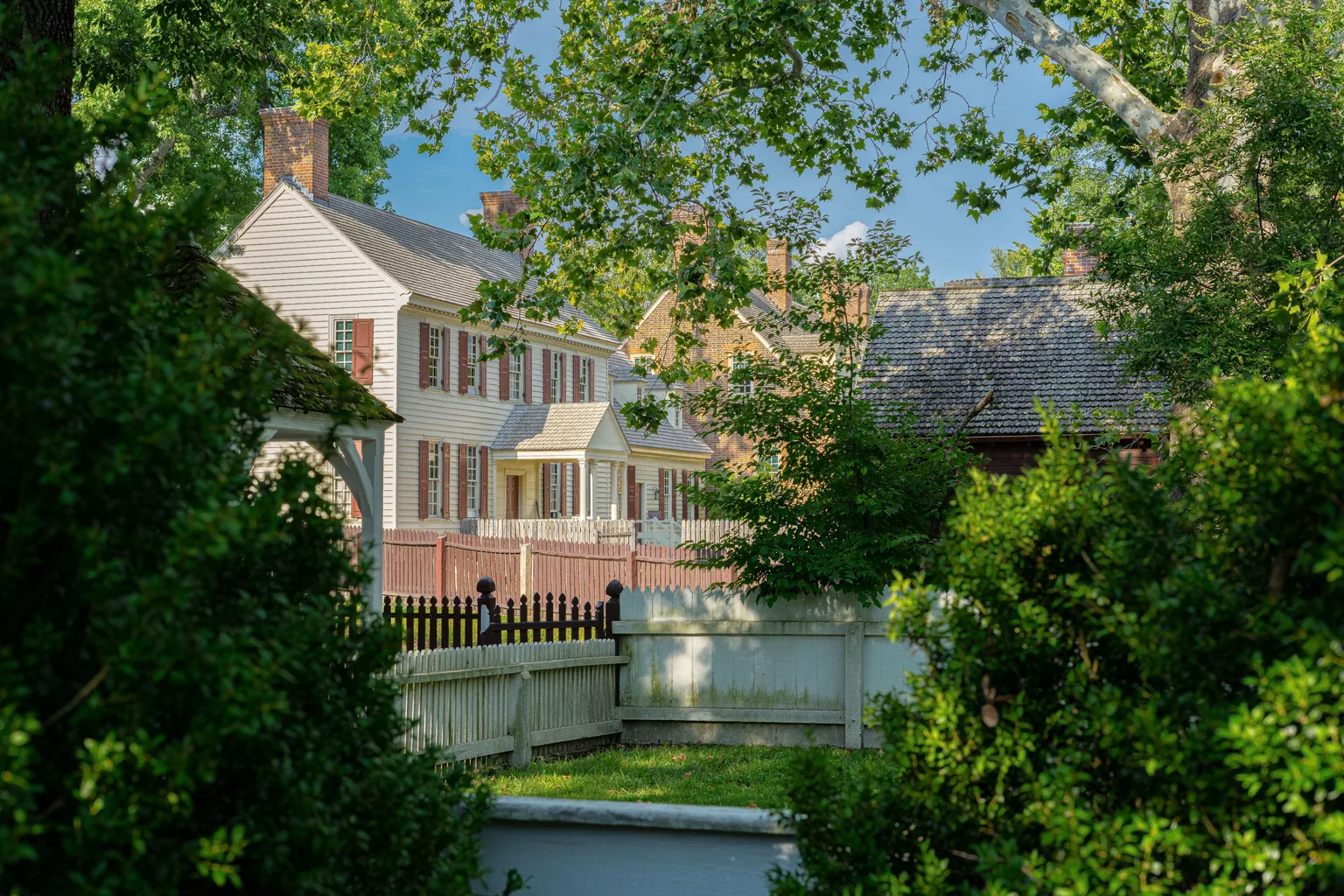
Norfolk, Portsmouth, and Smithfield have a great deal of housing with original heart pine or old oak, and those floors need more caution than a modern polyurethane-finished installation.
The finish on a hundred-year-old floor may be shellac, early varnish, penetrating oil, paste wax, modern polyurethane, or several of those in sequence. Shellac in particular dissolves in alcohol and clouds badly with water, and there is no reliable way to identify it by eye in a dim hallway. Applying a modern cleaner to an unidentified historic finish is how people end up with a cloudy patch that will not buff out.
These homes also tend to sit over crawlspaces, which means moisture arriving from below year round. That is the underlying reason old floors in this region cup more than newer ones over slabs, and it is a crawlspace problem rather than a flooring problem.
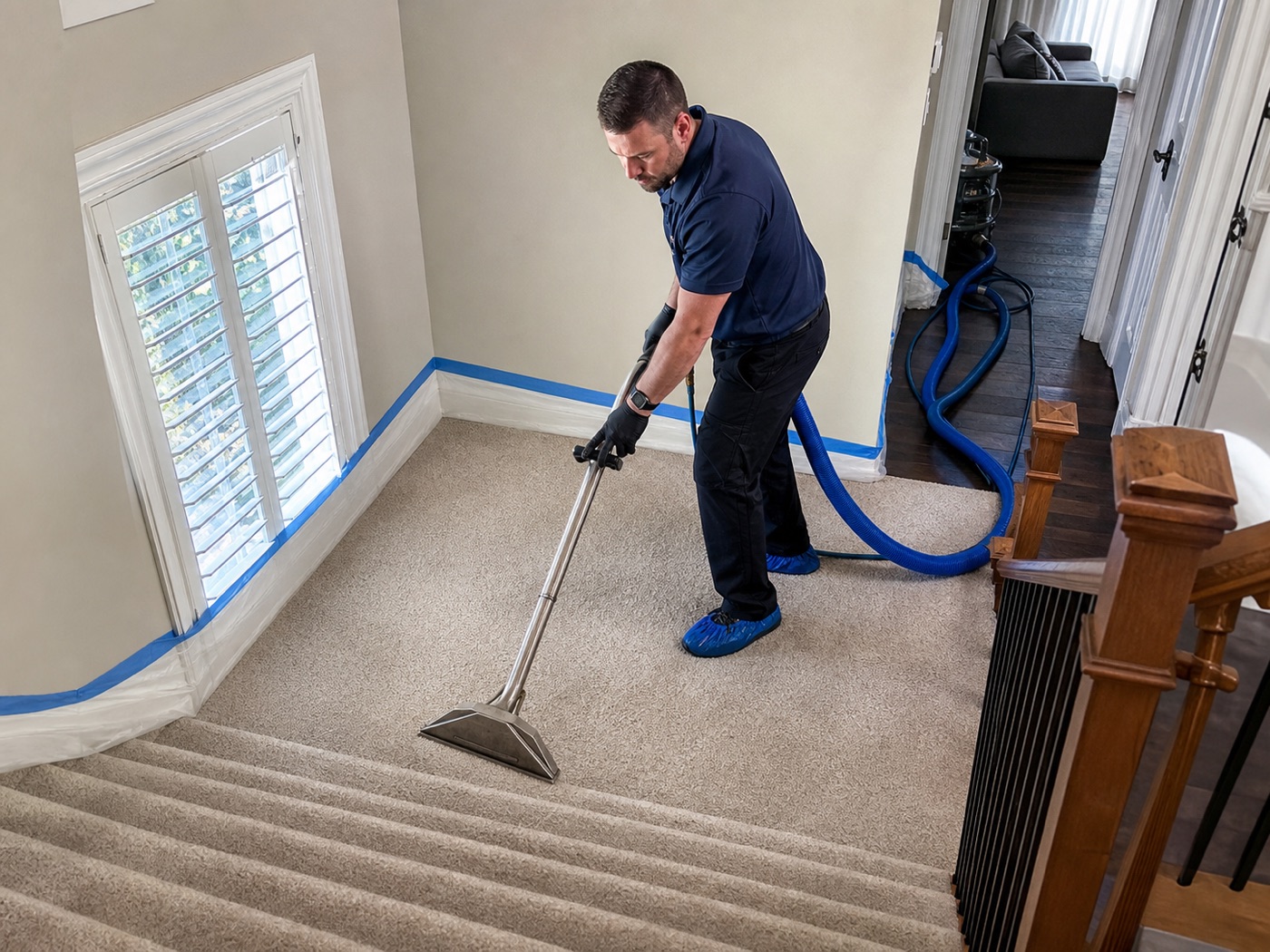
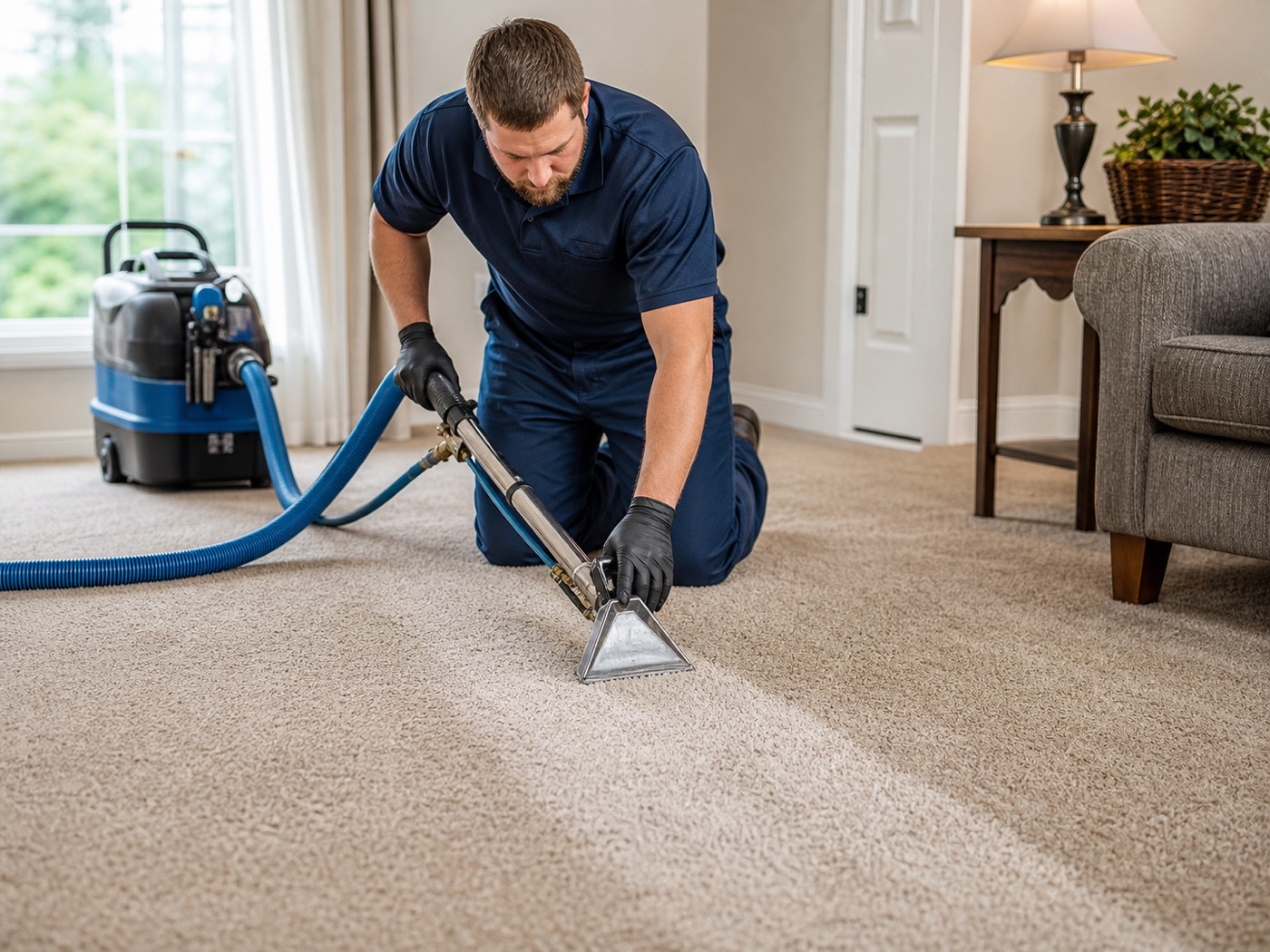
Where carpet has been laid over original wood — extremely common, and increasingly being reversed — cleaning that carpet requires real restraint. Water passing through carpet and pad onto old heart pine causes exactly the cupping and finish damage this article is about, which is why those jobs get less solution and more recovery passes.
Controlling Humidity in Practice
Holding thirty-five to fifty-five percent year round sounds simple and in this climate it takes deliberate effort in both directions.
Summer is the hard half. Air conditioning dehumidifies as a side effect of cooling, which handles a lot of it — but a system that is oversized cools the house quickly and shuts off before it has removed much moisture, leaving a room that is cold and clammy. If a house feels cool and damp at the same time, that is usually what is happening, and a standalone dehumidifier is the practical answer.
Crawlspaces are the other summer factor and the one most relevant to older homes here. A crawlspace over bare earth releases ground moisture upward into the floor assembly continuously. That is moisture arriving at the underside of the boards, which is precisely the differential that causes cupping. A sealed ground vapor barrier, corrected drainage and grading, and often encapsulation are what address it — and none of them are flooring work.
Winter is easier here than in colder climates, but a stretch of cold dry weather with the heat running can push indoor humidity low enough to open noticeable gaps. That is normal and it reverses. It only warrants humidification if the gaps are severe or if the house also has other dry-air problems.
The one habit worth adopting regardless of season: leave the HVAC set to run rather than shutting it off entirely when the house is empty for a week. A closed coastal house with no conditioning is the fastest way to get both cupped floors and a musty smell at the same time.
Where Hardwood Meets Everything Else
Transitions are where problems concentrate in a mixed-surface house.
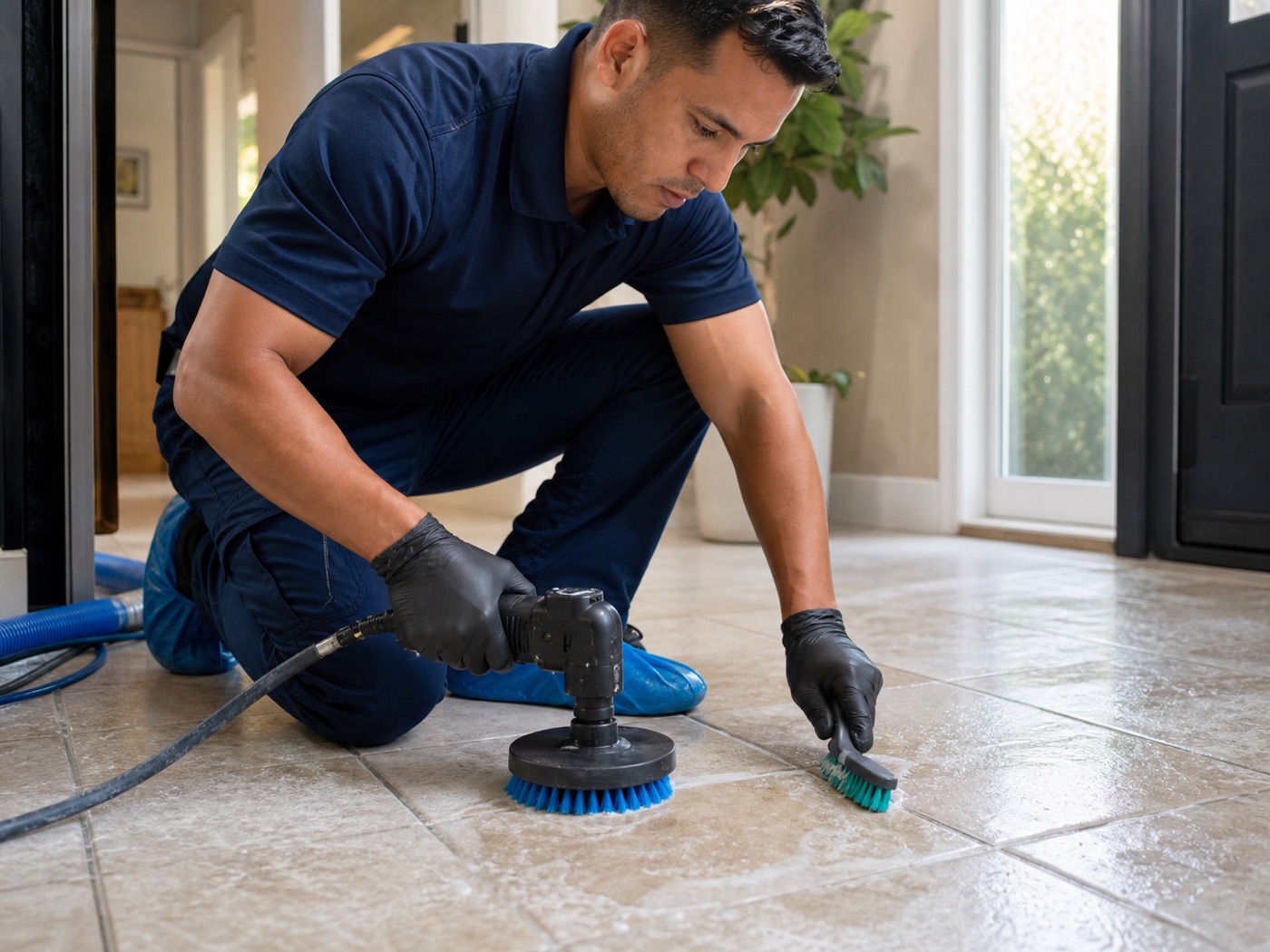
The threshold between wood and tile collects grit that gets carried onto the wood and scratches it, and it is exactly where a vacuum tends to skip. The edge where wood meets carpet is the same. And an entry that is tiled with soiled grout becomes a reservoir that reloads the wood floor beyond it every time someone walks through.
One more overlap worth knowing: a house with a persistent musty smell and a cupping wood floor is very likely telling you the same thing twice. Both point at moisture below the floor, and treating them as separate problems means solving neither.
The Short Version
Wood moves, and in this climate it moves a lot. Hold indoor humidity between thirty-five and fifty-five percent and most seasonal cupping and gapping stops being noticeable. Damp mop rather than wet mop, keep steam mops and vinegar away from it entirely, and treat localized cupping as a leak until proven otherwise.
All City Carpet Cleaning And Building Solutions offers hardwood floor cleaning alongside carpet and hard-surface work across Virginia Beach, Norfolk, Portsmouth, Chesapeake, and Smithfield. Refinishing and structural moisture work belong with specialists, and we will tell you when that is what you actually need.