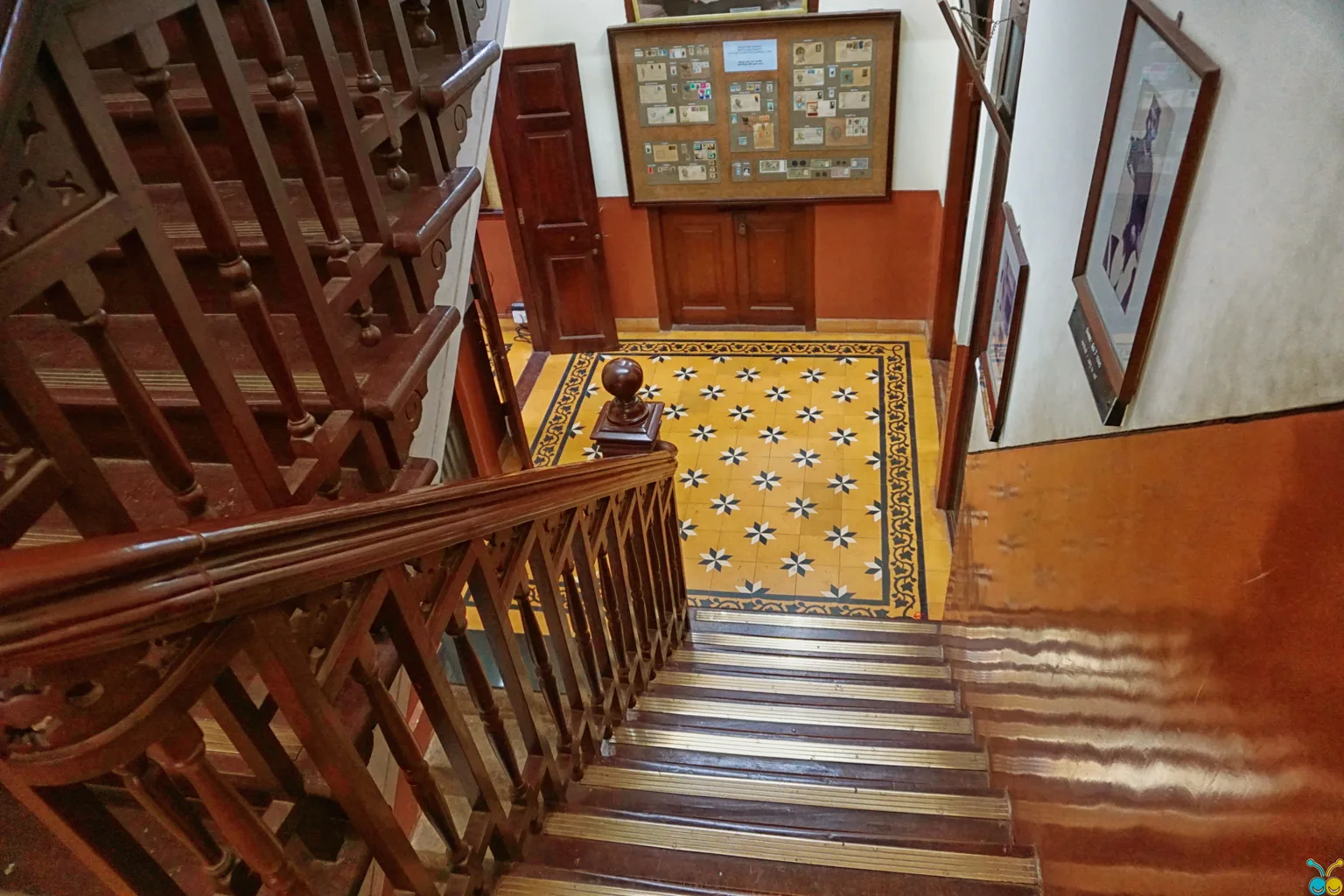
Norfolk has a housing stock that most of Hampton Roads does not. Walk through Ghent, Larchmont, Colonial Place, Freemason, or West Ghent and you are largely looking at homes built between 1900 and 1940 — heart pine and oak floors, plaster walls, deep baseboards, radiators, narrow stairs with a runner, and an entry that was tiled a century ago and has outlasted everything around it.
Those homes are wonderful. They also make carpet cleaning a different job, and the differences are not cosmetic. What is under the carpet, what the carpet is made of, and how long a stain has been there all change the correct approach.
What Is Usually Under the Carpet
In a house built in 1925, carpet is almost never the original floor. It was installed over hardwood at some point in the last several decades, sometimes with a thin pad and sometimes with almost nothing. That single fact drives most of the technical decisions.
Moisture is the concern. In a modern home over a plywood subfloor, a little excess water is unwelcome but rarely consequential. Over hundred-year-old heart pine with an original or early finish, water that gets past the pad can cause cupping, staining, or finish lifting — damage that is expensive and sometimes not fully correctable. The right response is not to avoid cleaning. It is to control how much moisture goes down and to make sure the extraction pass genuinely recovers it.
Practically, that means slower work, more recovery passes, and a willingness to use a lower-moisture method where the situation calls for it. It also means being honest about drying: if a room cannot get airflow, that is worth discussing before the job rather than after. Careful residential carpet cleaning in an older house is largely a question of restraint, and it is the same restraint that separates a genuine deep clean from an over-wetted floor.
Wool Rugs and Runners Are a Different Material
Wool shows up constantly in these neighborhoods — stair runners, dining room rugs, hall runners, and inherited orientals that have been in the family longer than anyone can date. Wool is a protein fiber and it does not behave like nylon.
It is more sensitive to high pH, more sensitive to heat, slower to dry, and prone to color bleeding when the dyes are old or were never fully set. Cleaning a wool rug with the same pre-spray and the same water temperature used on a synthetic bedroom carpet is how people end up with a browned, felted, or discolored rug. The correct process involves testing an inconspicuous area, using wool-appropriate chemistry, and keeping moisture and dwell time under control.
There is also a category we will decline to clean in place. Fragile foundations, unstable dyes, silk highlights, and significant existing damage are all reasons to send a rug to a specialist with a wash floor rather than treat it on site. Saying so costs us a job. It also avoids ruining something irreplaceable.
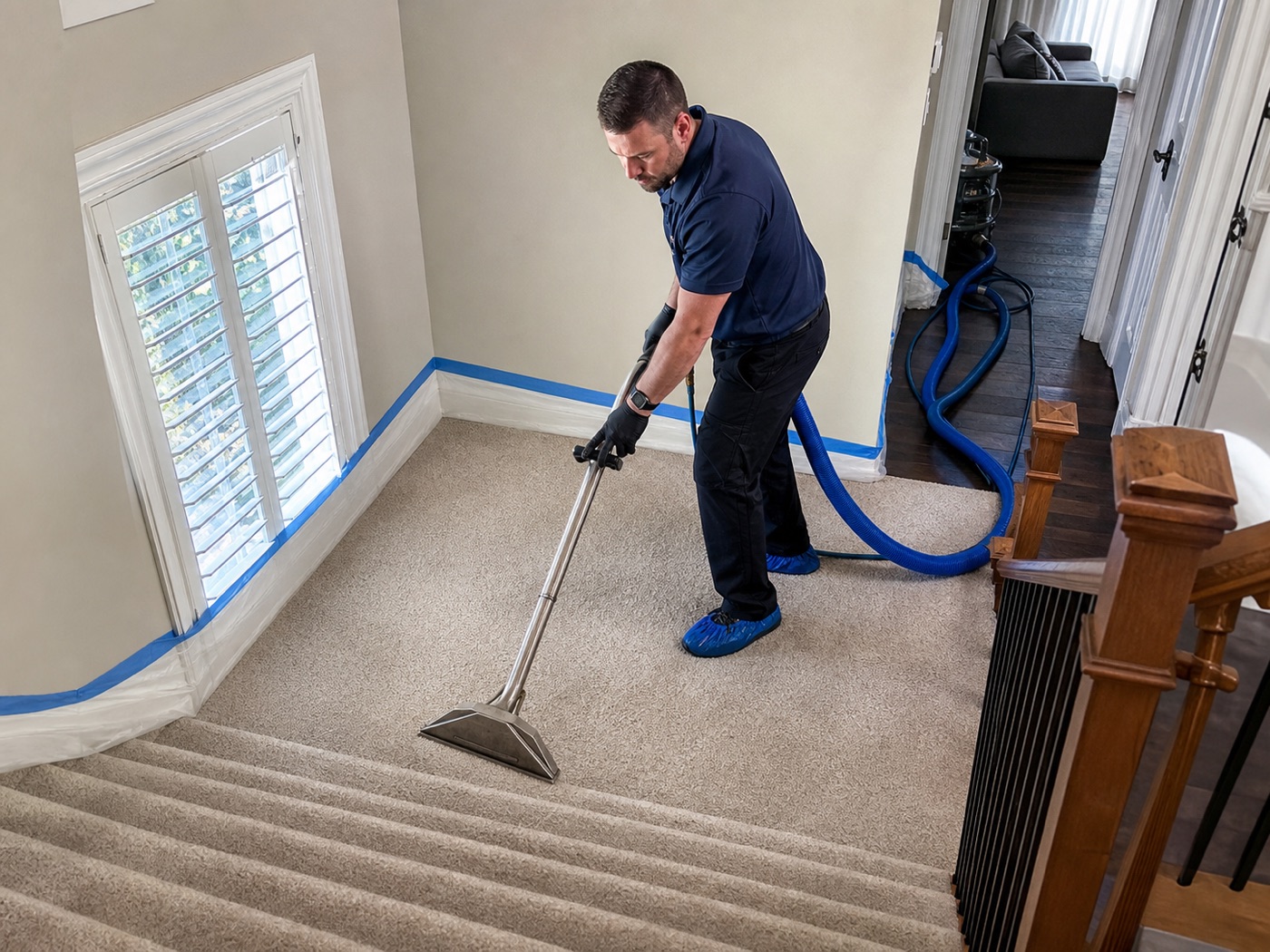
Stair runners deserve a specific mention because they take more abuse than anything else in these houses and are the hardest surface to clean well. Treads collect grit at the nose, the vertical risers stay comparatively clean, and the edges where a runner meets exposed wood are exactly where over-application shows up later as a dark line. Runners get worked by hand rather than with a wand, which is slower and is the reason a staircase is priced as its own item rather than folded into a room count.
Old Stains and What Can Realistically Be Done
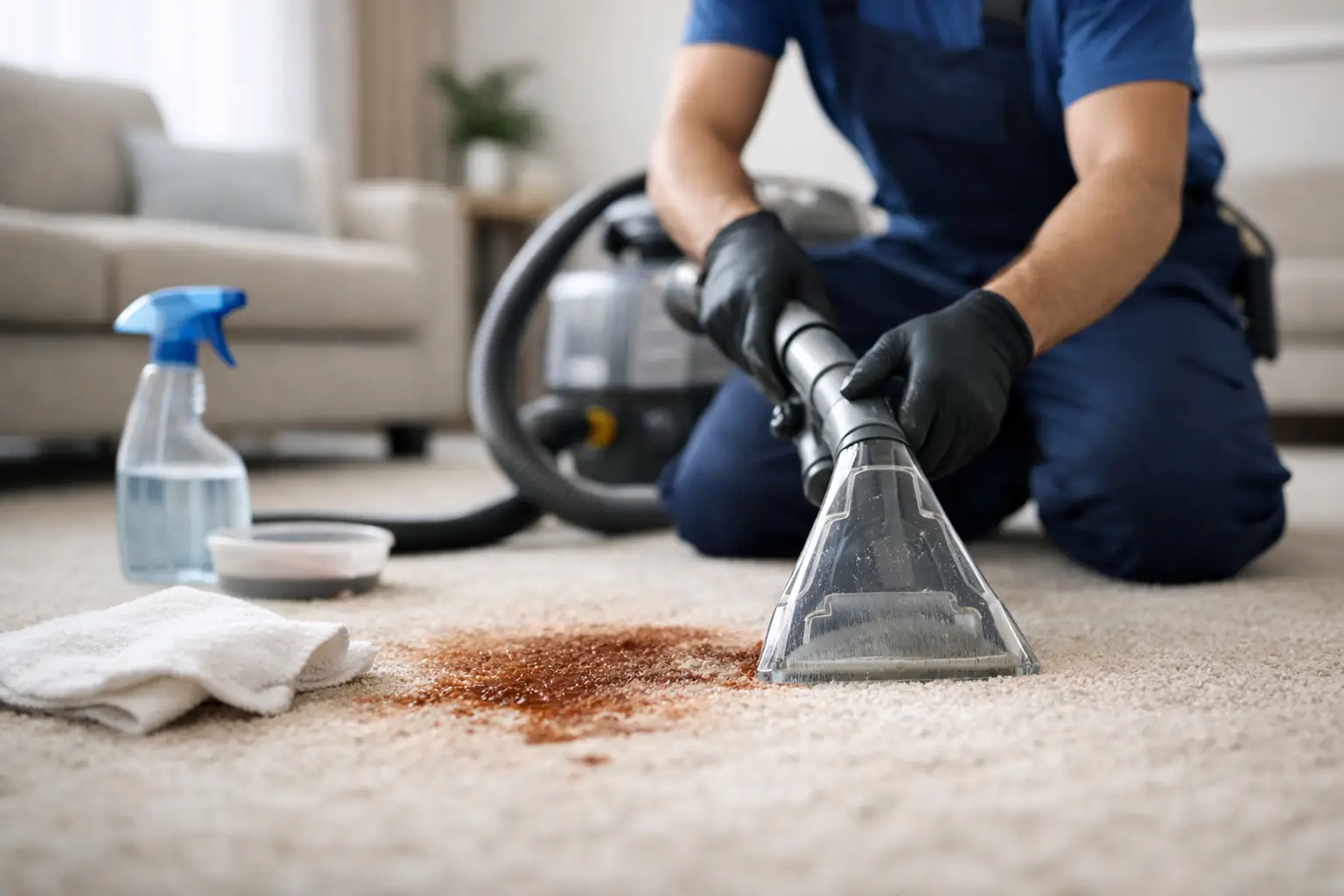
Every older home has a history written into its floors. Some of it comes out. Some of it does not, and the difference is about chemistry rather than effort.
| What we find | Why it happens | Realistic outcome |
|---|---|---|
| Gray traffic lanes on stairs | Grit abrasion plus decades of use | Cleans up substantially; abraded fiber stays duller than protected areas |
| Dark stains that reappear after drying | Wicking from contamination in the pad or backing | Often improved with a second targeted treatment; sometimes recurs |
| Yellowed or browned areas | Cellulosic browning, old jute backing, or previous over-wetting | Frequently responds to a browning treatment; not guaranteed |
| Faded strips near windows | UV exposure over years | Not correctable by cleaning — this is dye loss, not soil |
| Fine gray dulling throughout | Plaster dust, chimney soot, or HVAC particulate | Usually responds very well to extraction |
The honest framing is that cleaning removes soil. It does not reverse damage. Fiber that has been bleached, burned, permanently dyed by a foreign substance, or abraded is changed at the material level, and no product puts it back. Understanding which category a particular mark falls into is exactly the point of looking at it before quoting — which is the same reason it helps to know when stain removal service is worth calling for and when it is not.
The Entry Tile Nobody Thinks About
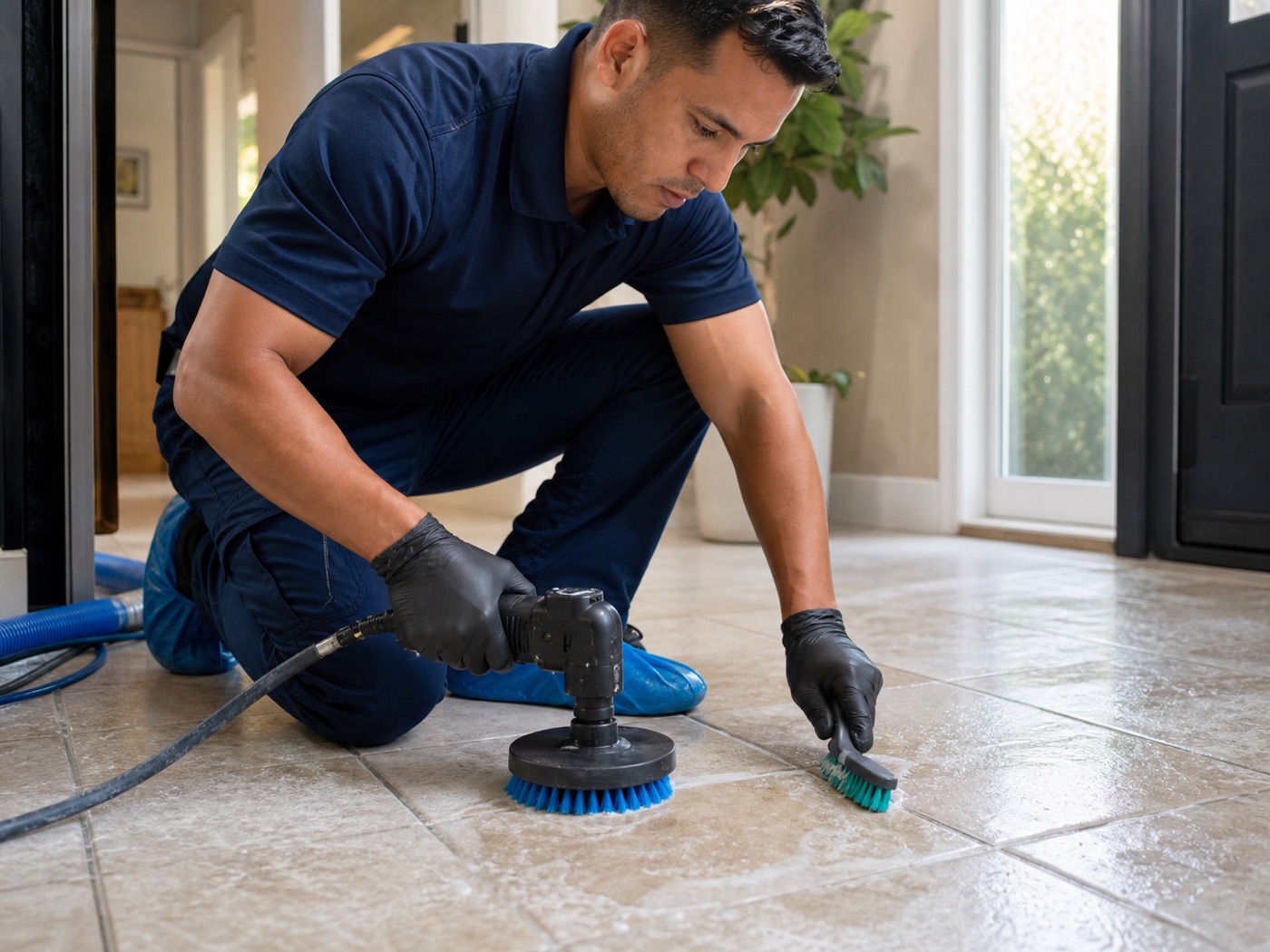
Many of these homes have an original tile entry — small hex, encaustic patterns, or a simple border laid when the house was built. It is often the most beautiful floor in the house and the most neglected, because it looks permanent and therefore looks fine.
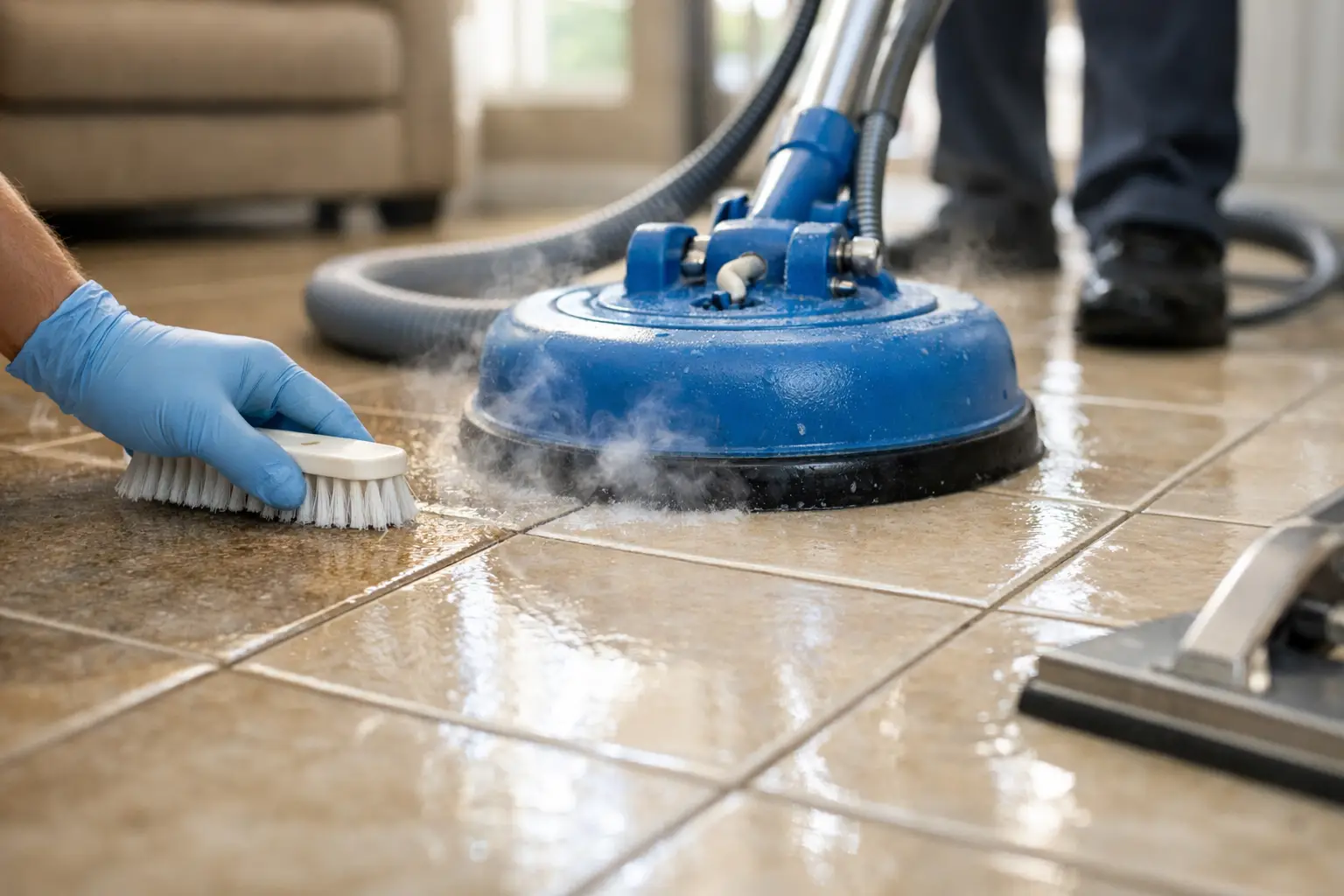
It usually is not fine. Grout is porous, a hundred years of foot traffic drives soil into it, and previous owners frequently sealed or waxed over the top of the problem. Cleaning the tile and grout properly changes the entry dramatically, and it has a practical benefit as well: a clean entry floor stops reloading the carpet just past it. Restoring tile and grout is often the highest-visual-impact part of a job in one of these houses.
Natural stone and unglazed historic tile need a different product set than modern porcelain, so it is worth mentioning the material when you call. If nobody knows what it is, that is fine — identifying it is part of the walkthrough.
Sequencing a Job in an Old House
Order of operations saves money in a house like this, and it is easy to get backwards.
- Finish any plaster, paint, or refinishing work first. Cleaning before dusty work means cleaning twice.
- Address moisture at the source — crawlspace, gutters, a leaking radiator valve — before treating an odor that keeps returning.
- Clean hard surfaces and entry tile before carpet, so soil does not migrate onto freshly cleaned fiber.
- Treat rugs and runners as separate line items with their own method, not as part of the wall-to-wall scope.
- Plan drying: open interior doors, run the air conditioning, and keep traffic off until the floor is genuinely dry.
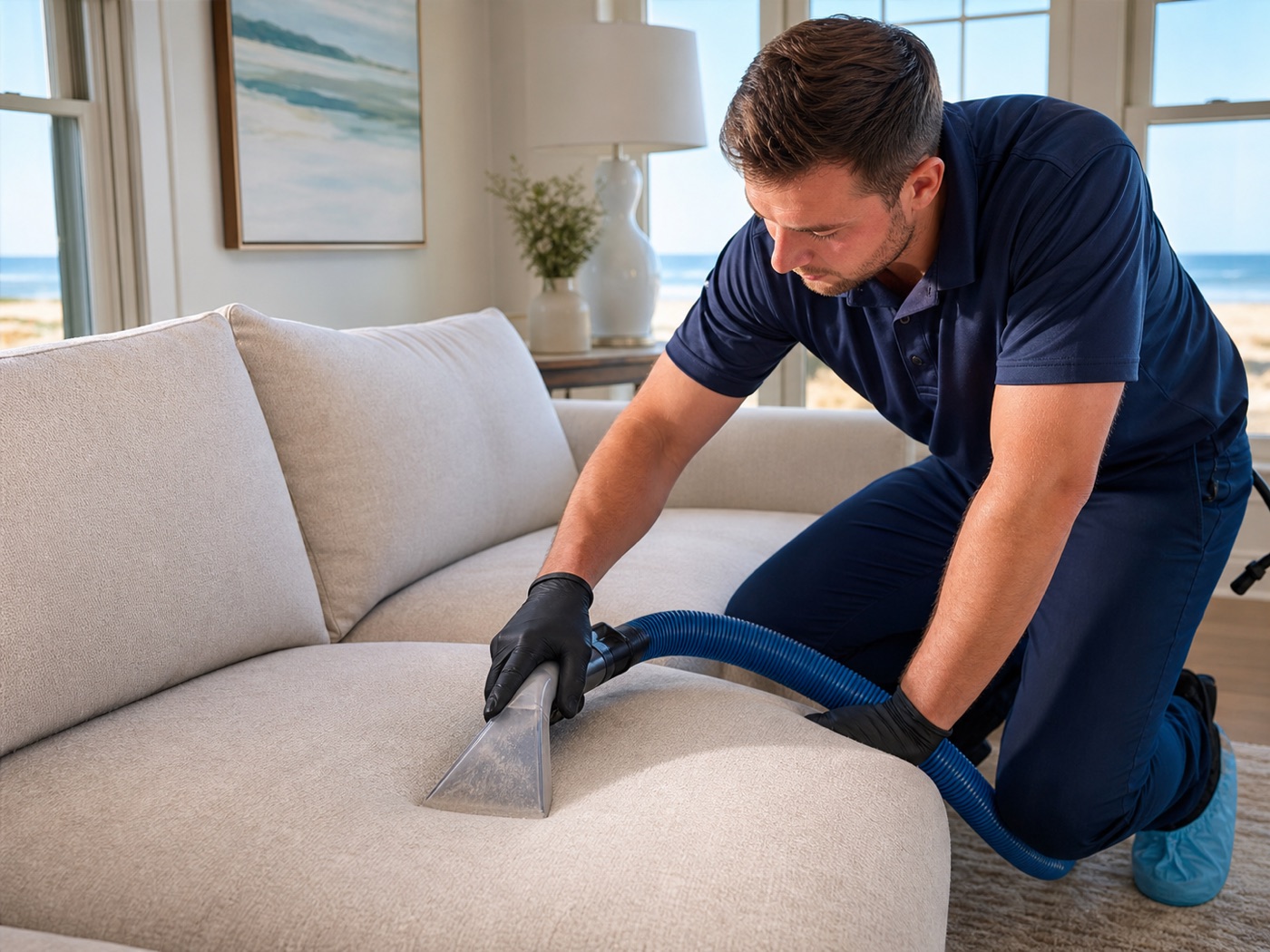
Upholstery in these homes deserves the same care as the rugs. Older frames, horsehair fill, and vintage fabrics are common, and a piece that has been in a family for fifty years is not a candidate for an aggressive process. Fabric seating gets inspected and tested the same way a wool rug does.
The Short Version
Cleaning carpet in a Ghent or Larchmont home is a slower, more careful version of the same job — less water, more testing, more attention to what is underneath, and a frank conversation about which marks are soil and which are damage. Done that way, these floors clean up beautifully. Done with a one-size process, they are exactly the houses where things go wrong.
All City Carpet Cleaning And Building Solutions works throughout Norfolk and the surrounding cities, and Carlton has spent seventeen years learning the difference between a floor that needs a heavier approach and one that needs a gentler one. If you have an older home and you are not sure where yours falls, that is worth a conversation before anyone brings equipment through the door. The walkthrough costs nothing, and in a house this old it frequently changes the plan.