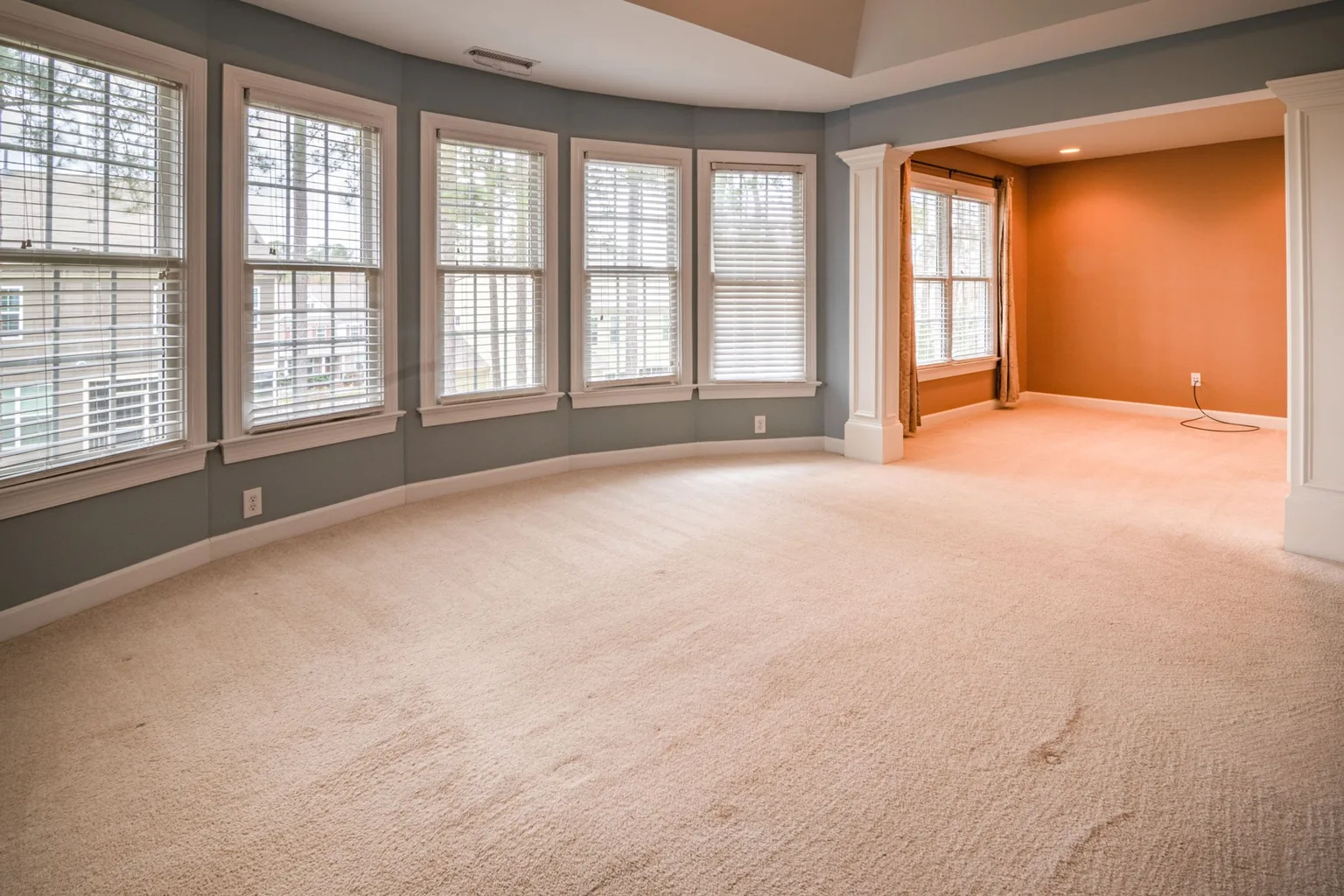
"How long should carpet last" gets asked constantly, and the honest answer is a range rather than a single number, because carpet lifespan depends on at least three variables that vary enormously from one household to the next: the fiber it is made from, how much traffic it sees, and how it gets maintained.
Homeowners in Virginia Beach, Norfolk, Chesapeake, Suffolk, Hampton, Portsmouth, and Smithfield ask this question most often when they are deciding whether to keep cleaning an older carpet or start planning for replacement, and getting a realistic sense of where a given carpet sits in its expected lifespan is the first useful step toward that decision.
The Realistic Range
Carpet manufacturers typically rate residential products for eight to twelve years of service life, and that figure holds up reasonably well as a middle-of-the-road expectation. The full realistic range, though, runs wider than that on both ends.
A budget polyester or olefin carpet in a high-traffic living room or a home with several kids and pets can show real wear inside five years, simply because the fiber was not engineered for heavy resilience testing and the traffic load exceeds what it was built to absorb without permanent crushing. On the other end, a quality nylon carpet or a well-made wool carpet in a lower-traffic bedroom or formal room, cleaned on a regular schedule, can genuinely reach fifteen years or more while still looking presentable.
The spread between those two numbers is the whole point: fiber and traffic set rough boundaries, but they do not determine the outcome by themselves.
Fiber Type Sets the Ceiling
Nylon is generally considered the most durable common carpet fiber, with strong resilience — meaning it springs back after being compressed by foot traffic or furniture — and good resistance to abrasive wear over time. Nylon carpet in good condition is a realistic candidate for the upper end of the lifespan range.
Polyester offers excellent stain resistance and a soft feel at a lower price point, but it does not resile as well as nylon, meaning traffic patterns and furniture indentations tend to become permanent sooner. Olefin, often used in berber-style loop carpet, resists moisture and fading well but crushes under weight more readily than nylon. Wool sits at the premium end, with strong natural resilience and a lifespan that can rival or exceed nylon, at a correspondingly higher price.
None of these fiber ceilings get reached automatically, though. A nylon carpet maintained poorly can wear out faster than a polyester carpet maintained well, which is the part fiber type alone does not explain.
What Actually Shortens Lifespan
Traffic volume is the most obvious factor — a stairway, a hallway, or the path from the front door to the kitchen sees dramatically more wear cycles per year than a guest bedroom, and it will show age first regardless of fiber quality.
Sunlight exposure fades and weakens fiber over years in rooms with large south-facing windows. Furniture that never gets moved crushes pile permanently in one spot. Pets add both physical wear from claws and the chemical damage that urine causes to fiber and backing over repeated exposure. But the single biggest controllable factor is embedded soil — sand, grit, and dust that work down into the pile and act as an abrasive every time the carpet gets walked on, essentially sanding the fiber from the inside with every footstep.
That abrasive wear is largely invisible day to day, which is exactly why it does so much cumulative damage — nobody notices a carpet getting thinner one footstep at a time, but it adds up to years of lost lifespan by the time it becomes visually obvious.
How Professional Cleaning Extends Life
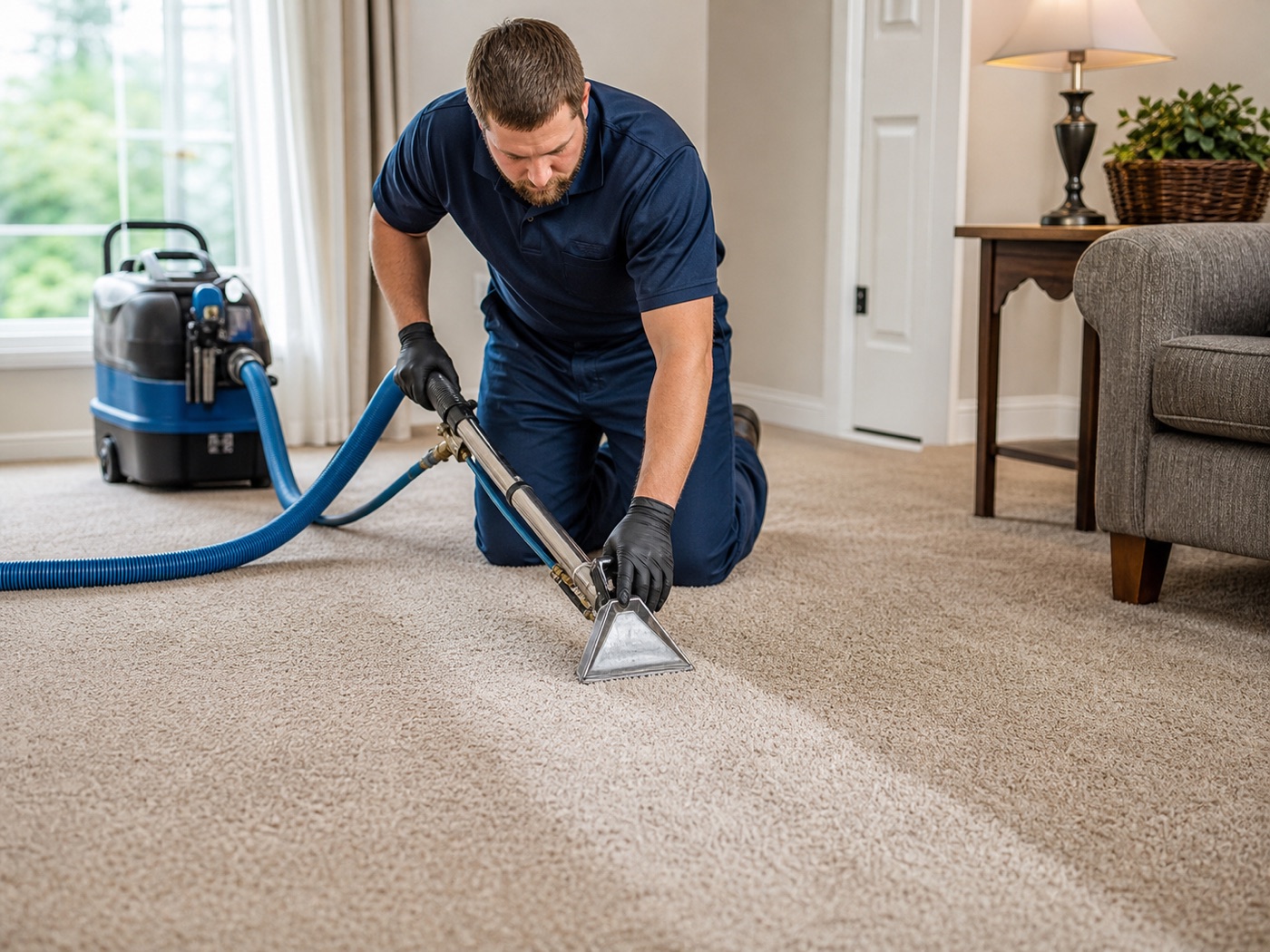
Regular professional cleaning removes embedded soil before it does its abrasive work, which is the mechanism behind the well-established finding that professionally maintained carpet lasts meaningfully longer than carpet cleaned rarely or only with a household vacuum.
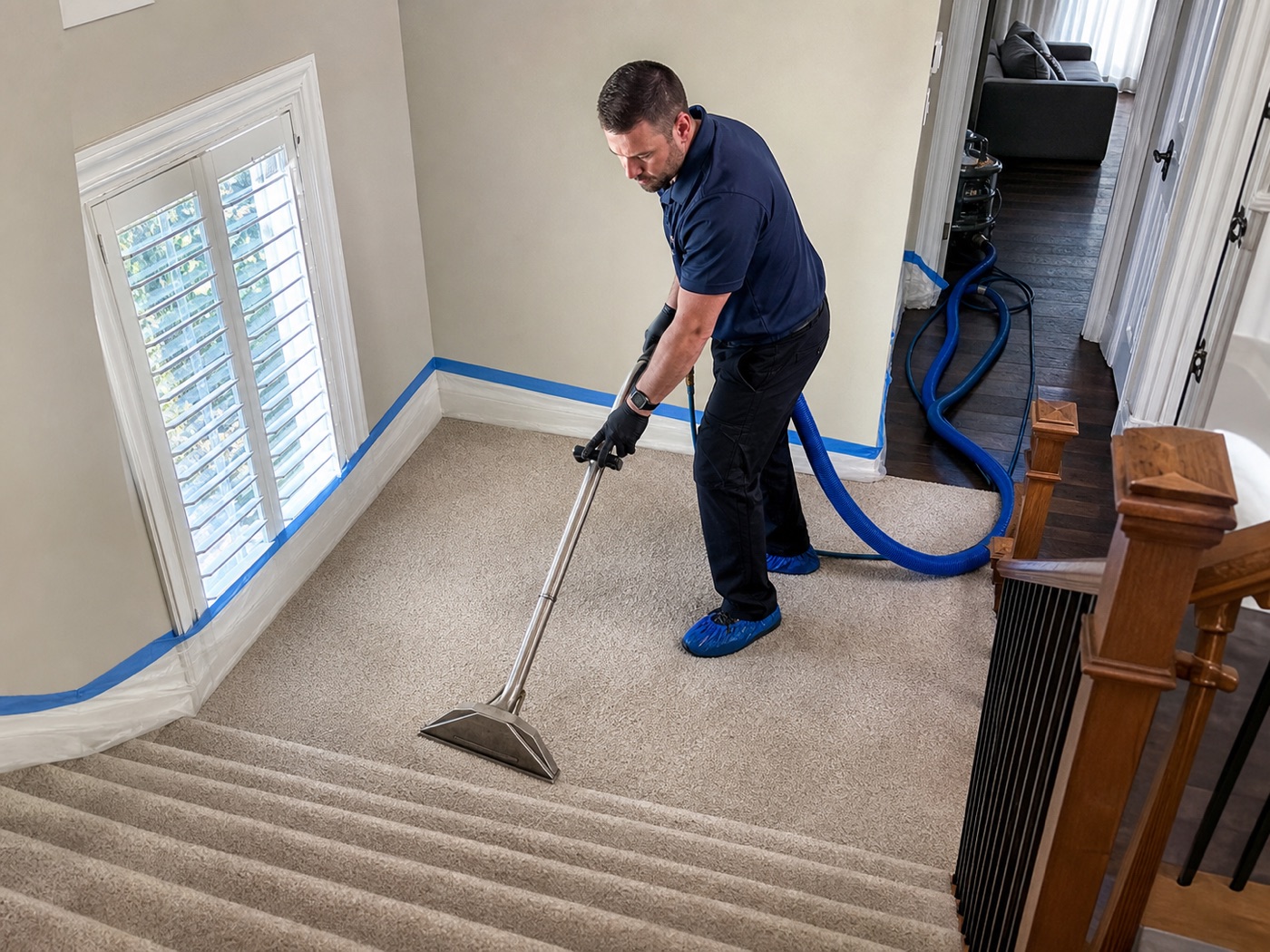
Hot water extraction reaches soil down at the base of the pile that vacuuming alone cannot access, since a vacuum primarily lifts surface debris and does relatively little for soil that has worked its way deeper into the fiber structure. For most homes, professional carpet cleaning every twelve to eighteen months is the interval that keeps embedded soil from accumulating to damaging levels, with higher-traffic homes or households with pets doing better closer to the twelve-month mark.
Carpet manufacturer warranties frequently require documented professional cleaning at set intervals to stay valid, which is itself a signal of how directly maintenance and lifespan are linked in the industry's own assessment of the product.
Signs Replacement Makes More Sense Than Continued Cleaning
Cleaning has real limits, and recognizing when a carpet has crossed from "needs cleaning" into "needs replacing" saves money on cleanings that will not deliver a meaningfully better result.
Pile that has permanently matted and no longer springs back after cleaning and grooming is the clearest sign — that is mechanical fiber damage, not soil, and cleaning cannot reverse it. Visible wear patterns that show backing through the pile in traffic lanes indicate the fiber itself has worn away, which is also permanent. A carpet pad that has compressed and broken down underneath still-decent pile is a case where the carpet may look fine but no longer feels or performs like it should, and replacing the pad alone is sometimes the more targeted fix.
Persistent odor that survives a proper professional cleaning, particularly from pet urine that has reached the pad or subfloor, is another case where cleaning has done what it can and the remaining problem is structural rather than surface-level.
Thinking in Cost Per Year, Not Just Purchase Price
A useful way to compare carpet decisions is cost per year of service life rather than sticker price alone. A budget carpet that costs less upfront but only lasts six years because it was never cleaned on schedule can end up costing more per year than a mid-range carpet maintained properly and carried out to twelve years, once replacement labor and disruption are factored in alongside the material cost itself.
This framing also makes the case for professional cleaning easier to see in dollar terms. A cleaning appointment every twelve to eighteen months, run across a decade of ownership, is a small recurring cost set against the much larger cost of replacing carpet several years earlier than necessary. Most homeowners intuitively understand this logic for other home systems — an HVAC unit maintained on schedule outlasts one that is not — but do not automatically apply the same thinking to the carpet underfoot.
Traffic Zones Within the Same Home Age at Different Rates
It is worth remembering that a single lifespan number rarely applies evenly across an entire home. A hallway, stairway, or the path between the garage and the kitchen absorbs a disproportionate share of total foot traffic and will show wear years before a formal living room or a guest bedroom that gets used a few times a month.
This unevenness is why homeowners sometimes see a stark difference in condition between rooms installed at the same time from the same carpet run. It is not a sign of defective material — it is simply the traffic math playing out over years. Recognizing this pattern also helps with planning: a household nearing the point of replacing high-traffic carpet can often get several more years out of lower-traffic rooms before those areas need the same attention, which spreads the cost of eventual replacement out rather than requiring a whole-house project at once.
It also means a single high-traffic room can benefit from a shorter cleaning interval than the rest of the house, since that room is doing the most work to accumulate the abrasive soil that shortens fiber life in the first place.
Getting a Realistic Read on Your Carpet
Most homeowners are not in a position to know for certain whether their carpet is a cleaning case or a replacement case just by looking at it, since matted pile and heavily soiled pile can look similar to an untrained eye before cleaning has actually been attempted.
A professional cleaning visit is a reasonable diagnostic step even for carpet a homeowner suspects might be near the end of its life — a technician who cleans carpet daily can generally tell within a section or two whether the dullness and flattening will respond to cleaning or whether it reflects fiber wear that no cleaning method will reverse. That assessment is worth having before committing to either another cleaning cycle or a full replacement, since guessing wrong in either direction wastes money.
All City Carpet Cleaning And Building Solutions cleans carpet across Virginia Beach, Norfolk, Chesapeake, Suffolk, Hampton, Portsmouth, and Smithfield, and gives homeowners a straight answer about whether their carpet has more life left in it before recommending a cleaning package. Call (757) 748-0654 to get that assessment scheduled.