
A property management company overseeing anything beyond a handful of units runs into the same problem eventually: carpet cleaning needs happen constantly, across different properties, on different timelines, and the quality of the vendor handling that work has a direct effect on turnover speed, resident satisfaction, and how well the company can defend its position in a security deposit dispute.
Property managers across Virginia Beach, Norfolk, Chesapeake, Suffolk, Hampton, Portsmouth, and Smithfield who set clear vendor standards up front, rather than calling whoever happens to be available for each individual job, tend to end up with far fewer scheduling headaches and far more consistent results across their portfolio.
Why a Consistent Vendor Standard Matters
Juggling multiple carpet cleaning vendors across different properties in a portfolio produces exactly the inconsistency a property manager is trying to avoid everywhere else in the business. One vendor's idea of a thorough turnover clean may differ meaningfully from another's, pricing can vary widely without any corresponding difference in quality, and tracking multiple vendors' invoices and schedules adds administrative overhead that a single, reliable vendor relationship eliminates.
Standardizing on a small number of vetted vendors, ideally one primary vendor with clear standards in writing, gives a property management company something it can actually manage: predictable pricing across the portfolio, a known response time, and a quality bar that does not shift from property to property or technician to technician.
Insurance and Liability Come First
Before anything else, a vendor working across a portfolio of occupied and vacant units needs proof of adequate insurance, and this should never be taken on trust or assumed based on a vendor's size or reputation.
General liability coverage protects the property management company if a cleaning job damages carpet, flooring, or a resident's belongings, and workers' compensation coverage protects against liability if a vendor's technician is injured while working on the property. A property manager should request a current certificate of insurance directly from any vendor before adding them to an approved list, and it is worth keeping that documentation on file and renewing the request annually rather than treating it as a one-time check.
A vendor unwilling or slow to provide proof of insurance is a red flag worth taking seriously, regardless of how competitive their pricing looks.
Response Time and Scheduling Commitments
Carpet cleaning sits on the critical path for most vacant unit turnovers, which makes vendor response time a bigger deal in property management than in most other commercial carpet cleaning contexts. A unit that cannot be shown or occupied until carpet is cleaned and dry means every day a vendor takes to schedule the job is a day of lost rent or a delayed lease start.
Setting a clear expectation with a vendor — same-day or next-day scheduling for a standard unit, with a defined process for rush requests during peak leasing months — gives a property management company something concrete to hold the vendor to, rather than an informal understanding that tends to slip during the busiest stretches of the year.
It is also worth asking how a vendor handles volume during a portfolio's busiest turnover periods, since a vendor who performs well with occasional single-unit requests can struggle when a property manager needs several units turned around in the same week.
Scope of Services Across Property Types
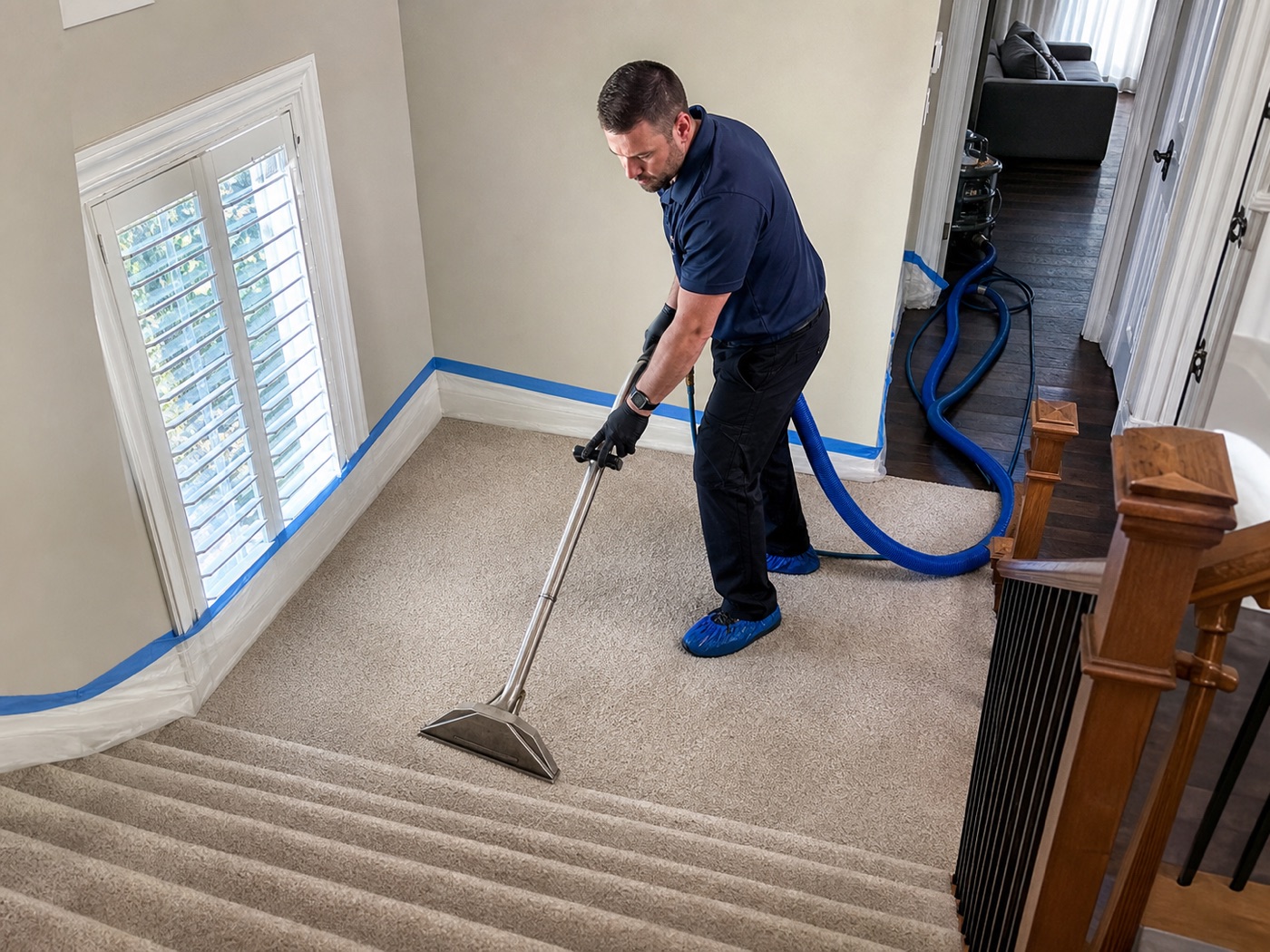
A portfolio rarely consists of identical properties, and a vendor standard worth setting should account for that. Occupied units typically need routine residential carpet cleaning on a schedule tied to lease renewals or periodic maintenance visits, while vacant units between residents need a faster, more thorough turnover clean before a new lease begins.
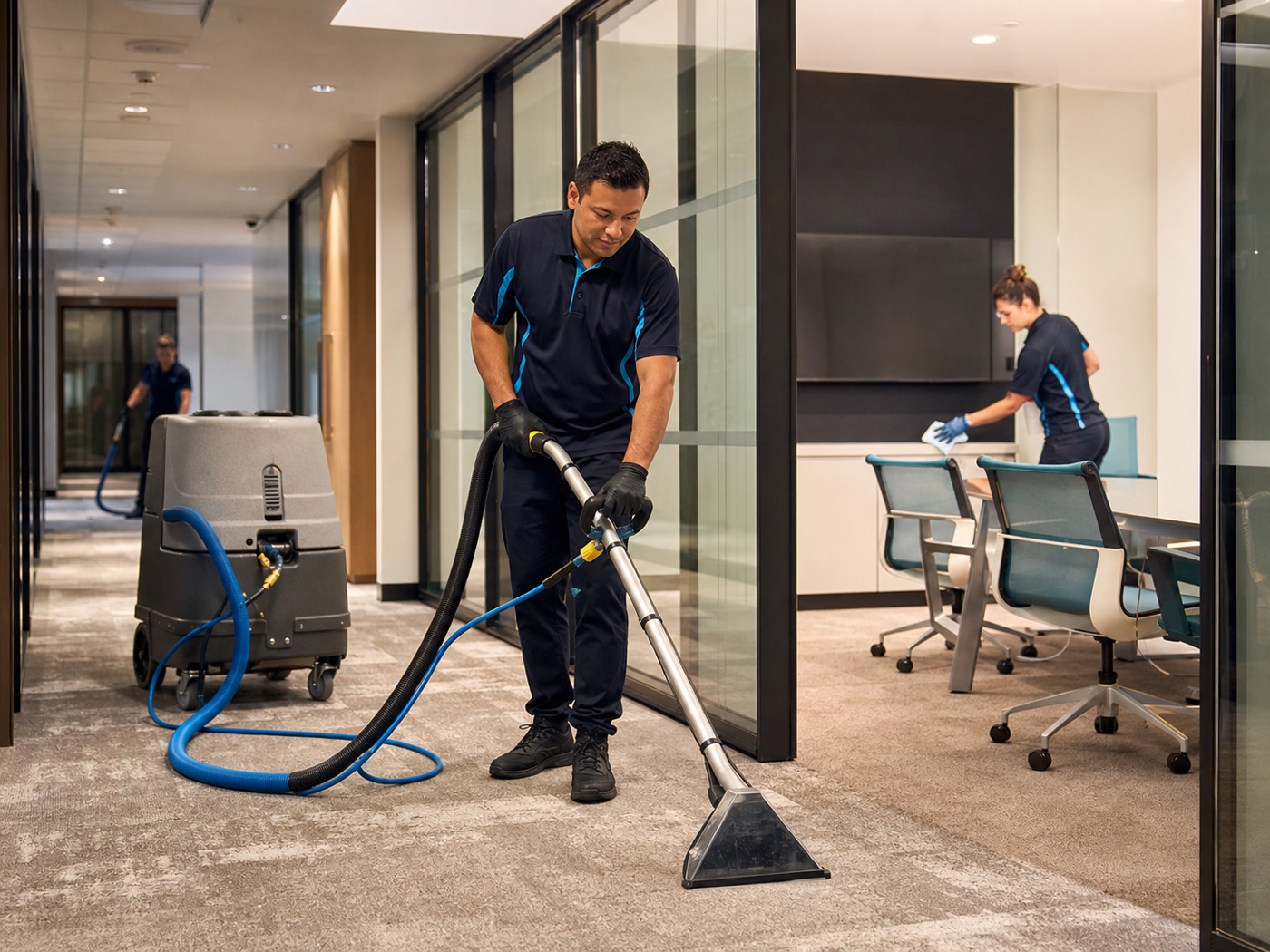
Common areas — leasing office lobbies, clubhouse carpet, hallway runners in multifamily buildings — fall into a different category still, closer to standard commercial carpet cleaning, with its own traffic patterns and appearance standards since these spaces are what prospective residents see first during a tour. A vendor capable of handling all three categories under one consistent standard, rather than a property manager needing separate vendors for units versus common areas, simplifies the entire relationship considerably.
It is worth spelling out expectations for each property type in writing as part of a vendor agreement — what a standard unit turnover includes, what common area cleaning frequency looks like, and how pet-related units or unusually soiled units are handled and priced, so nothing is left to be negotiated case by case.
Communication and Reporting Standards
Beyond the cleaning itself, a vendor relationship that scales across a portfolio benefits from a clear communication process — how jobs get requested, how quickly a vendor confirms scheduling, and how completion is reported back to the property management team responsible for coordinating move-ins.
For companies managing several properties with different regional managers or leasing staff, a single point of contact on the vendor side who understands the portfolio's standards, rather than a different technician or scheduler fielding every call, tends to produce more consistent results and fewer miscommunications about unit condition, access instructions, or timeline expectations.
Access logistics deserve their own mention here as well. Multifamily properties often require coordination with an on-site leasing office or a lockbox system for vendor entry, and a vendor familiar with how a given property handles access can move through a batch of units far more efficiently than one encountering the property's procedures for the first time on every visit. Building this familiarity over a sustained vendor relationship is one more reason consistency across a portfolio pays off operationally, not just financially.
Seasonal demand is another factor worth planning for in a vendor relationship. Leasing activity in most markets picks up noticeably in spring and summer, which means turnover carpet cleaning requests cluster heavily during those particular months as well, and a property management company benefits from confirming ahead of time that its vendor has the crew capacity to handle that seasonal surge without response times slipping just when they matter most to the bottom line.
Documentation for Security Deposit Disputes
Carpet condition is one of the most commonly disputed items in security deposit deductions, and a property management company's position in that dispute is only as strong as the documentation behind it.
A vendor who routinely provides dated before-and-after photos and an itemized invoice describing the actual condition and work performed gives a property manager real evidence to reference if a former resident challenges a deduction. A vendor who does not document this consistently leaves the property management company with nothing but a paid invoice to point to, which is a much weaker position in a dispute.
This documentation habit should be a standard requirement written into the vendor relationship, not something requested only after a dispute has already come up.
Consistent Pricing Across a Portfolio
Pricing that varies unpredictably from property to property, or job to job, makes budgeting difficult for a property management company trying to forecast turnover costs across dozens or hundreds of units. A vendor who can offer a standardized rate structure based on unit size and carpet condition, applied consistently across every property in a portfolio, is worth more than a vendor offering a slightly lower price on any single job.
This kind of pricing consistency also simplifies internal approval processes, since a property manager or regional supervisor can sign off on turnover cleaning costs without needing to verify each individual quote against a moving target. It also makes year-over-year budgeting more accurate, since a portfolio's carpet cleaning line item stops being a rough estimate and becomes a number a finance team can actually plan around with confidence.
All City Carpet Cleaning And Building Solutions works with property management companies across Virginia Beach, Norfolk, Chesapeake, Suffolk, Hampton, Portsmouth, and Smithfield, offering documented cleaning records, consistent portfolio-wide pricing, and dependable turnaround for vacant unit turnovers. We carry the insurance coverage property managers expect and can provide a certificate of insurance on request before any work ever begins on your properties. Call (757) 748-0654 to discuss vendor terms for your portfolio.