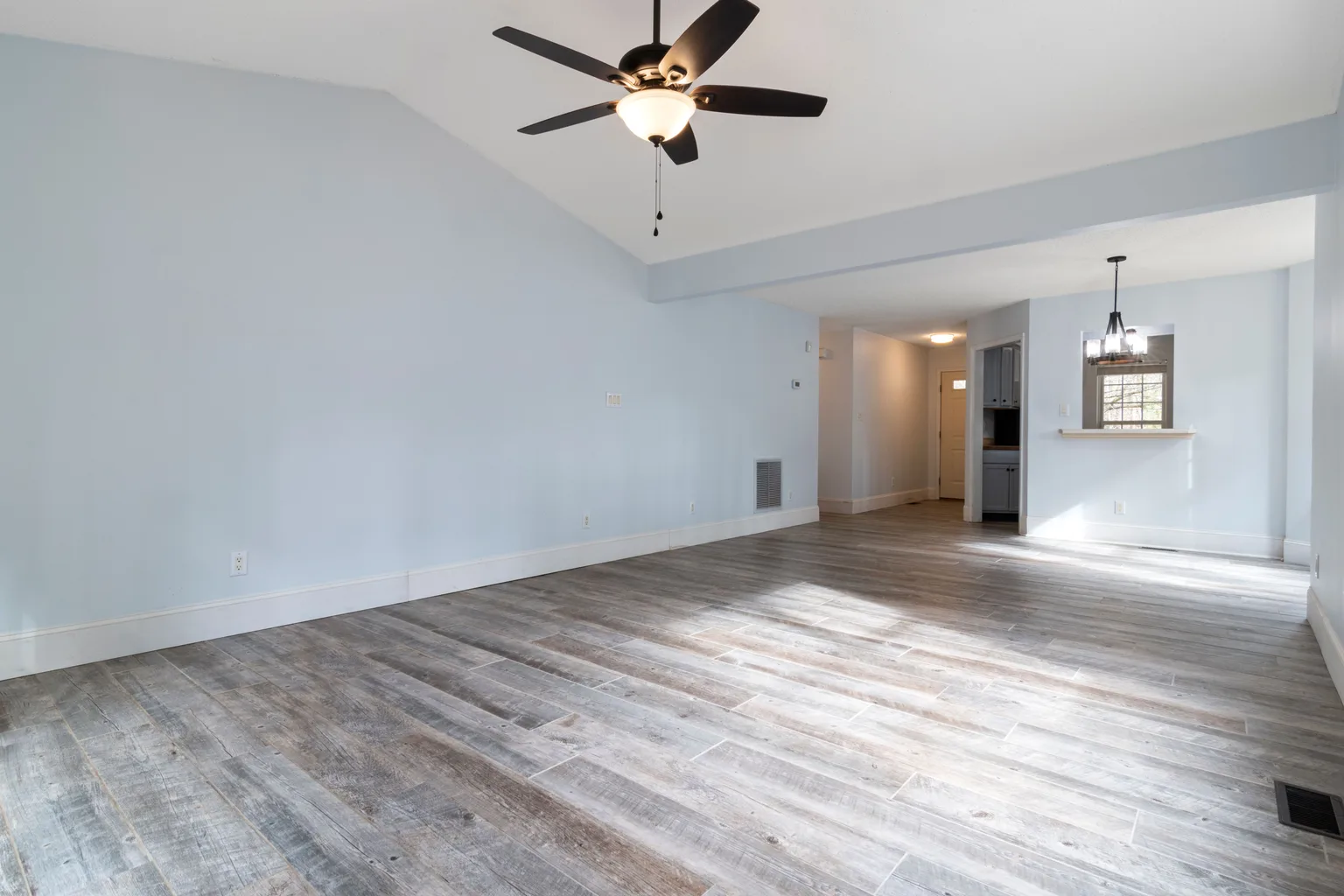

Turnover carpet is one of the few line items in property management where the same physical work can cost wildly different amounts depending purely on when and how it gets scheduled. The cleaning itself is straightforward. The decisions around it are where money is made or lost.
Hampton Roads adds a wrinkle that most markets do not have. With Naval Station Norfolk, NAS Oceana, Little Creek, Norfolk Naval Shipyard, and Joint Base Langley-Eustis all in one metro, the region's lease cycle is bent around the PCS calendar. Peak moving season runs from roughly mid-May through September, which means a large share of your annual turnovers land in a four-month window when every vendor in the region is booked.
Decide Clean or Replace Before the Unit Is Empty
The most expensive turnover pattern is the common one: schedule a cleaning, have the cleaner arrive, discover the carpet is beyond saving, pay for the visit anyway, then schedule replacement and lose a week of vacancy.
Most of that is avoidable with a look during the move-out inspection. Cleaning is the right answer for soil, traffic lanes, ordinary spots, and general dinginess — which describes the large majority of units. Replacement is the right answer when the fiber itself is compromised.
| What you see | Clean or replace | Why |
|---|---|---|
| General soil, traffic lanes, dull color | Clean | Cleans up well; fiber is intact |
| Spots and stains, no fiber damage | Clean, with expectations set | Most improve substantially; some are permanent |
| Visible abrasion, matted and rough underfoot | Replace | Cut fiber does not recover; it will look worn immediately |
| Seams separating or carpet rippling | Replace or repair first | A cleaning will not fix installation failure |
| Burns, cuts, or bleach spots | Replace or patch | Not a cleaning problem at all |
| Strong urine odor at the edges of the room | Inspect before deciding | Often pad or subfloor; cleaning alone rarely resolves it |
That last row is worth an actual inspection rather than a guess. Urine contamination follows gravity into the pad and sometimes the subfloor, and the correct scope depends entirely on how far it went. Treating it as a surface job when it is not is the single most common reason a turnover gets redone.
The Sequence That Avoids Doing It Twice
Order of operations in a turnover is not a matter of preference. Doing it backwards means paying for the same work twice.
- Move-out inspection with photographs, before anything is touched.
- Decide clean versus replace, and order materials immediately if replacing.
- Complete all dusty and wet trades — paint, drywall patching, any plumbing or appliance work.
- Clean hard surfaces, including any tile and entry flooring.
- Clean the carpet, in the empty unit, last among the cleaning trades.
- Allow full drying before the final walkthrough. In summer that means running the air conditioning, not opening windows.
- Photograph the finished unit and file the itemized invoice with the tenant file.
Step six is where Hampton Roads managers lose time in the summer. A unit cleaned on a humid August afternoon with the power off and no air conditioning running can still be damp the next morning, which delays the walkthrough and occasionally produces a musty complaint from the incoming tenant. Drying conditions are worth planning deliberately.
Documentation Protects Everyone
Virginia gives landlords 45 days after a tenancy ends to return the deposit with a written, itemized statement of deductions, and normal wear and tear cannot be deducted. Both halves of that matter operationally.
The 45-day clock means your turnover documentation has to be filed promptly and consistently, not reconstructed later. The wear-and-tear standard means the burden of showing that a charge is for damage rather than ordinary use falls on you — and a lightly worn traffic path through a hallway does not meet it.
In practice, the managers who never lose these disputes do three simple things: they photograph at move-in and move-out with timestamps, they keep an itemized cleaning invoice per unit, and they write down conditions the cleaning could not correct. That last item is the one most people skip, and it is the one that decides close cases. A tenant working through their own move-out checklist is building the same record from the other side, and it is better for both parties when the two records agree.
What Drives the Price of a Turnover
Cleaning is priced by area, but the total cost of a turnover is driven by several things that are not square footage, and knowing which ones you control makes budgeting far more predictable.
| Driver | Effect | Can you control it? |
|---|---|---|
| Number of areas cleaned | Direct, proportional | Yes — scope to what is actually needed |
| Units per visit | Setup and travel amortize across units | Yes — batch by building or complex |
| Lead time | Peak-season scarcity pushes everything | Yes — book the summer in advance |
| Condition on arrival | Heavy soil and pet work add scope | Partly — through screening and lease terms |
| Stairs and edges | Slower hand work than open floor | No — it is what the unit has |
| Pad-level contamination | Turns a cleaning into a repair | No — but you can catch it at inspection |
The two rows worth acting on are batching and lead time, because they are free. Scheduling four units in one building on a Tuesday costs meaningfully less per unit than four separate visits across a month, and reserving July weeks in March costs nothing at all. Our published pricing shows how areas are counted, which makes it straightforward to model a season against real numbers rather than estimates.
The condition row is where lease terms and mid-lease inspections earn their keep. A unit inspected once a year rarely produces a surprise at move-out; a unit nobody has entered in three years frequently does.
Building a Schedule Instead of Reacting
Reactive turnover scheduling is expensive in a market with a concentrated moving season. If you know roughly how many leases end in June, July, and August, those weeks can be reserved in advance rather than competed for.
It is also worth separating turnover work from common-area maintenance. Corridors, lobbies, stairwells, and leasing offices in multifamily properties accumulate traffic soil continuously and rarely get on anyone's calendar until they look bad. Putting common areas on a defined cycle keeps a property presentable during exactly the months prospective tenants are touring it, and commercial carpet work in occupied buildings is scheduled around access and re-entry rather than vacancy.
Common areas also make the strongest case for a maintenance-level program rather than restorative cleaning. Carpet in a corridor that gets attention every quarter never reaches the state where it needs an expensive rescue, and it never looks bad to a prospect. Carpet that gets cleaned once a year alternates between acceptable and visibly tired, and the annual cleaning has to work much harder to get back to the same place. Over a five-year hold, the more frequent schedule usually costs less in total and the property shows better the entire time.
The other common-area detail worth budgeting for is entry matting. Corridors and lobbies collect what walks in from the parking lot, and in a coastal market that includes abrasive sand. Replacing tired matting is cheap relative to replacing corridor carpet a year early, and it is the kind of line item that quietly never gets approved because nobody connects it to the flooring budget.
For managers handling military tenants, one more piece of context helps: service members are working against orders with fixed report dates, and their pack-out schedules move. Flexibility on the cleaning date is genuinely valuable to them and costs you very little, and it tends to produce smoother move-outs with fewer disputes.
The Short Version
Turnover carpet work rewards decisions made early. Assess at move-out rather than after the vendor arrives, order replacement materials the same day you decide, sequence the trades so carpet goes last, plan for real drying in a humid climate, and document consistently enough that the 45-day statement writes itself.
All City Carpet Cleaning And Building Solutions works with property managers and owners across Virginia Beach, Norfolk, Chesapeake, Portsmouth, Suffolk, and Hampton, on both single turnovers and standing schedules. Scope, access, and pricing are confirmed per property rather than quoted off a template.