
Ask most homeowners which carpet in their house is dirtier, and they'll point to the main floor — the entryway, the hallway off the garage, the living room where the family and any visitors spend most of their time. Upstairs carpet, tucked away in bedrooms and a hallway that guests rarely see, tends to get assumed clean by default, simply because it's out of sight.
That assumption isn't quite right. Upstairs carpet does see less direct outdoor soil than the main floor, which is true, but it accumulates a different set of problems that main-floor living spaces rarely deal with at the same intensity. Out of sight ends up meaning out of mind, and that's exactly how upstairs carpet quietly falls behind on a cleaning schedule it actually needs.
Less Outdoor Soil, More of Everything Else
The main floor absorbs the brunt of what comes in from outside — shoes, pet paws returning from the yard, whatever tracks in during Hampton Roads' rainy stretches or a muddy fall weekend. Upstairs, by the time anyone reaches the bedrooms, most of that outdoor soil has already been left at the door or wiped off somewhere along the way.
What upstairs carpet does accumulate instead is more personal and less visible. Bedrooms are where people spend time barefoot, in direct skin contact with carpet for far longer stretches than they do downstairs. Body oils, lotions, and general skin cell shedding work into bedroom carpet fiber at a rate that main-floor living spaces simply don't experience, because nobody's lying on the living room floor for eight hours a night.
This kind of soiling doesn't show up visually the way tracked-in mud does. A bedroom carpet can look perfectly clean while holding a meaningful amount of accumulated residue that's affecting the room's air quality and smell well before it's obvious to the eye.
The Out-of-Sight Problem
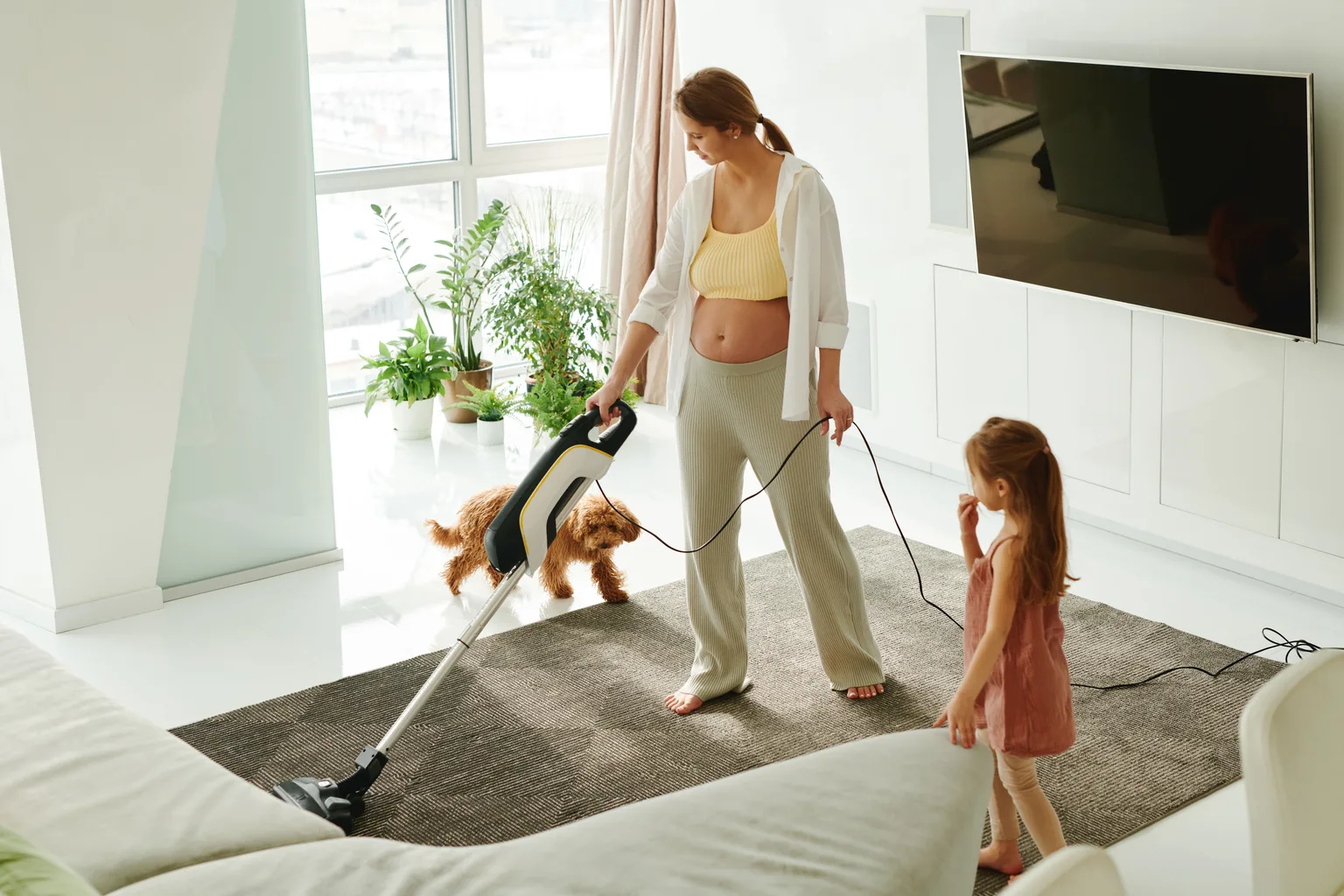
Households vacuum according to visibility and traffic more than any formal schedule, and upstairs simply doesn't get looked at as often. The main floor gets walked across dozens of times a day by everyone in the house, which means dirt and debris are visually obvious fast. A bedroom that only the person sleeping in it enters regularly gets far less scrutiny, and far less vacuuming as a result.
Guest bedrooms are the most extreme version of this problem. A room that gets used a handful of times a year can go months between vacuuming sessions entirely, simply because nobody has a reason to walk in and notice it needs attention. Dust and allergens settle undisturbed in a way that never happens in a high-traffic downstairs hallway.
This matters more in a household with allergy sufferers than people often realize, since a bedroom is where someone spends roughly a third of their day, breathing air close to carpet that may be going weeks between real attention.
Pets Pick Their Spots
Cats and dogs in a two-story home often gravitate toward a specific upstairs spot to sleep — the foot of a bed, a corner by a window, a closet floor — and that repeated use concentrates dander, body oils, and occasionally accidents into a small, specific area rather than spreading wear evenly the way foot traffic does downstairs.
Because that spot is often tucked in a corner or partially hidden by furniture, it's also one of the easiest areas to miss during a routine vacuum pass. A household that vacuums the open floor area of a bedroom regularly can still be leaving a concentrated pet spot essentially untouched for months at a time.
This is worth checking specifically rather than assuming a general vacuuming routine has it covered. Moving furniture periodically to check underneath, and checking closet floors where pets sometimes retreat, catches soiling that would otherwise build up for a long stretch before anyone notices.
Stairs and Landings Connect Both Floors
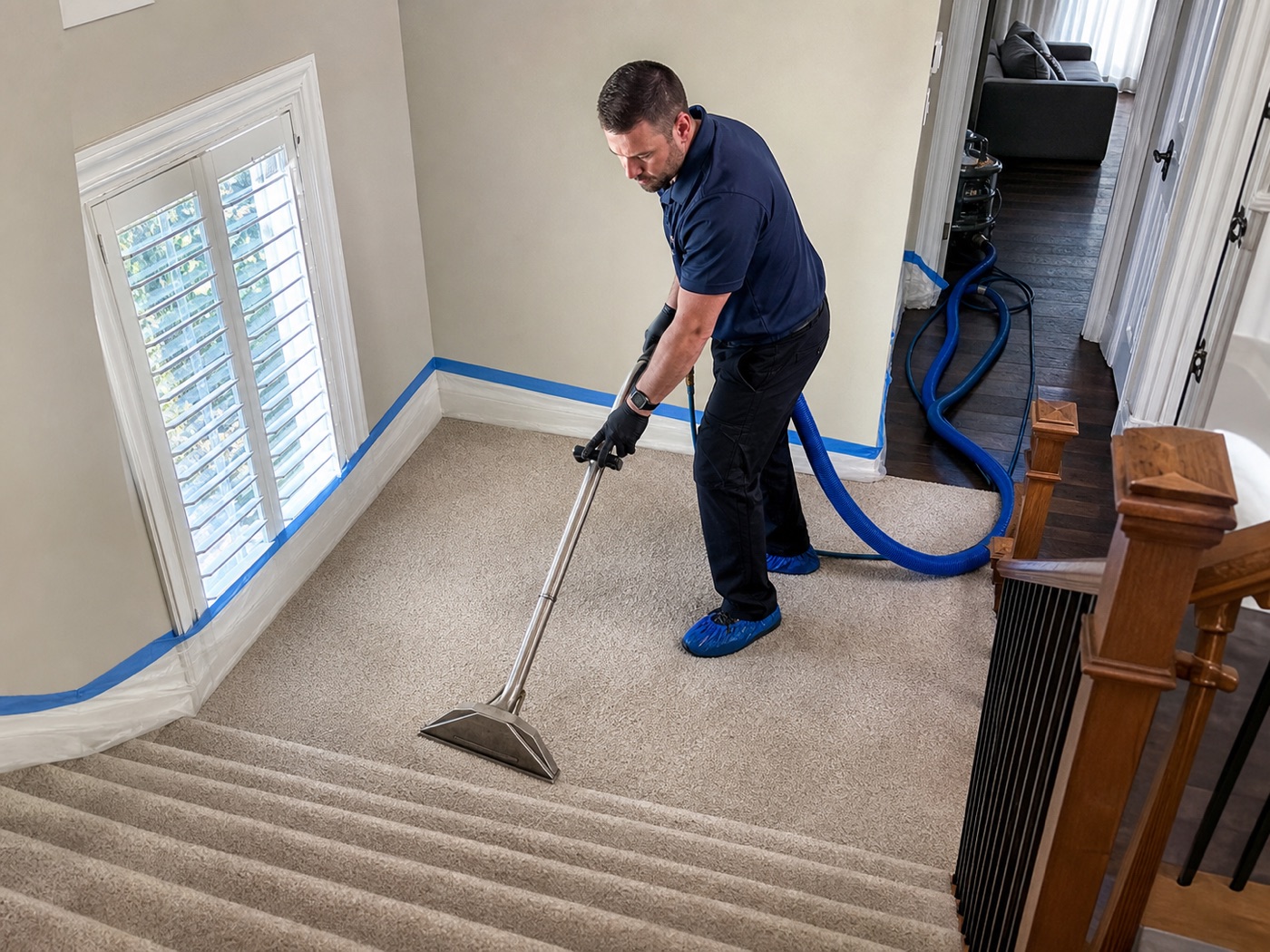
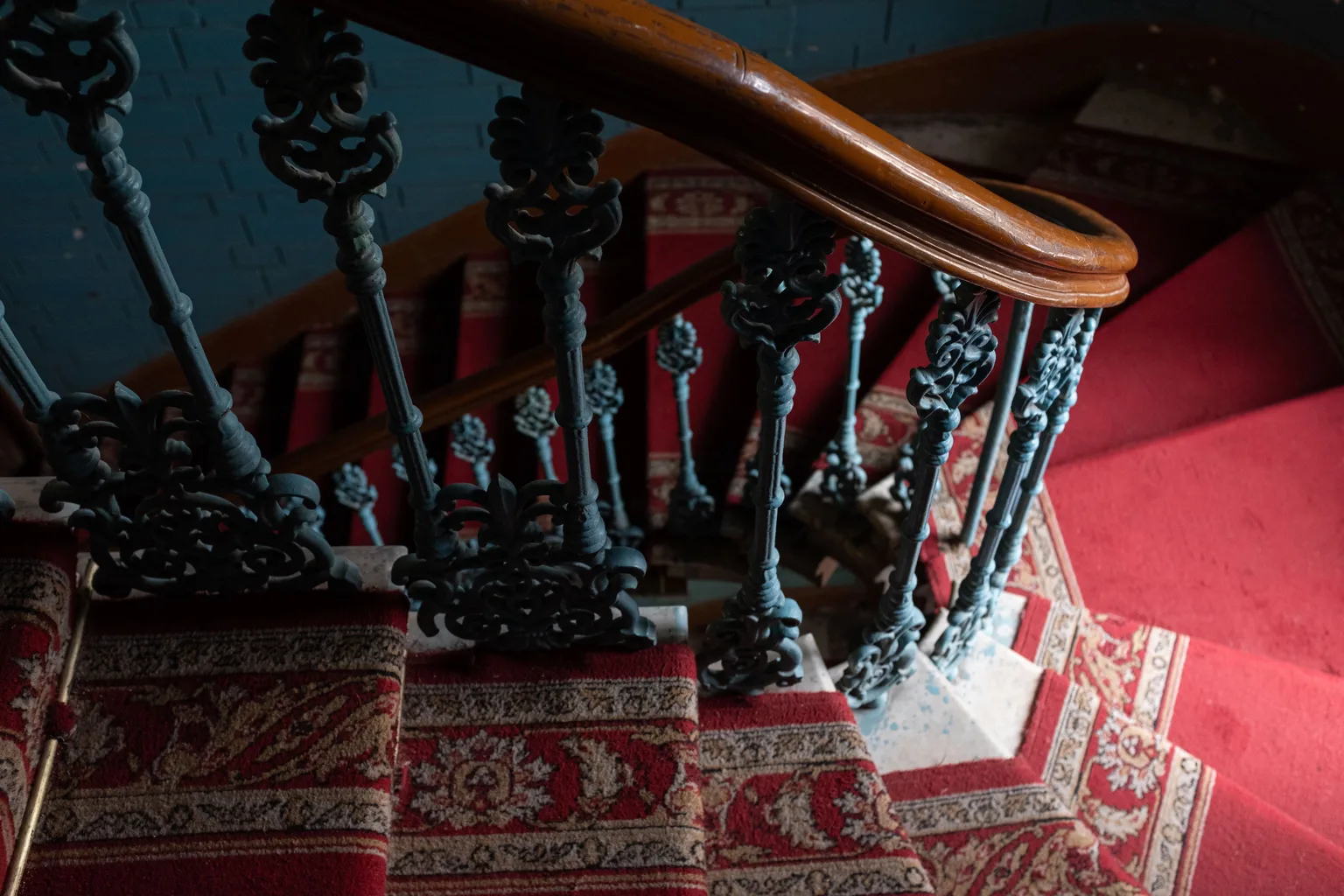
The staircase and upstairs landing sit in an odd middle zone, taking traffic from both floors while being awkward enough to vacuum thoroughly that they often get a rushed pass rather than full attention. Stair carpet in particular wears unevenly, taking concentrated pressure at the nose of each step in a way flat carpet never experiences.
Treating stairs and the upstairs landing as their own zone, rather than an afterthought between two rooms getting proper attention, closes one of the more common gaps in a household's overall carpet care routine.
HVAC and Airflow Work Differently Upstairs
Heat rises, which means upstairs rooms in most two-story Hampton Roads homes run warmer and often drier during heating season than the main floor, and the opposite during summer when upstairs bedrooms can lag behind in cooling. That temperature and humidity variation affects how carpet fiber holds onto odor and how quickly a spot treatment dries compared to the same treatment applied downstairs.
Return air vents are also less consistently placed upstairs in a lot of home designs, which can mean less consistent air circulation through bedroom carpet fiber than what the main floor's open layout provides. Less circulation means odors and moisture linger somewhat longer upstairs than they would in a well-circulated downstairs room, which is one more reason bedroom carpet can develop a subtle staleness that's hard to pin down to any single cause.
This is worth factoring in when deciding how often to run air purifiers or simply crack a window in bedrooms during mild weather, since upstairs rooms benefit from active air movement more than the main floor typically needs it.
Building a Realistic Upstairs Schedule
The fix isn't necessarily cleaning upstairs as frequently as the main floor, since the soiling mechanisms genuinely are different. It's making sure upstairs gets onto a schedule at all, rather than being cleaned only when something looks obviously wrong, which for the reasons above can take much longer to happen than it does downstairs.
- Vacuum bedrooms and upstairs hallways on a set schedule, not just when they look like they need it
- Check pet sleeping spots and closet floors specifically, since these are easy to miss during a routine pass
- Treat guest bedrooms as needing periodic attention even between uses, not just before guests arrive
- Include stairs and the upstairs landing as their own cleaning zone rather than a rushed connector between rooms
- Schedule a professional deep clean upstairs on roughly the same interval as the main floor, even if it looks cleaner
Kids' Rooms Add Their Own Wear Pattern
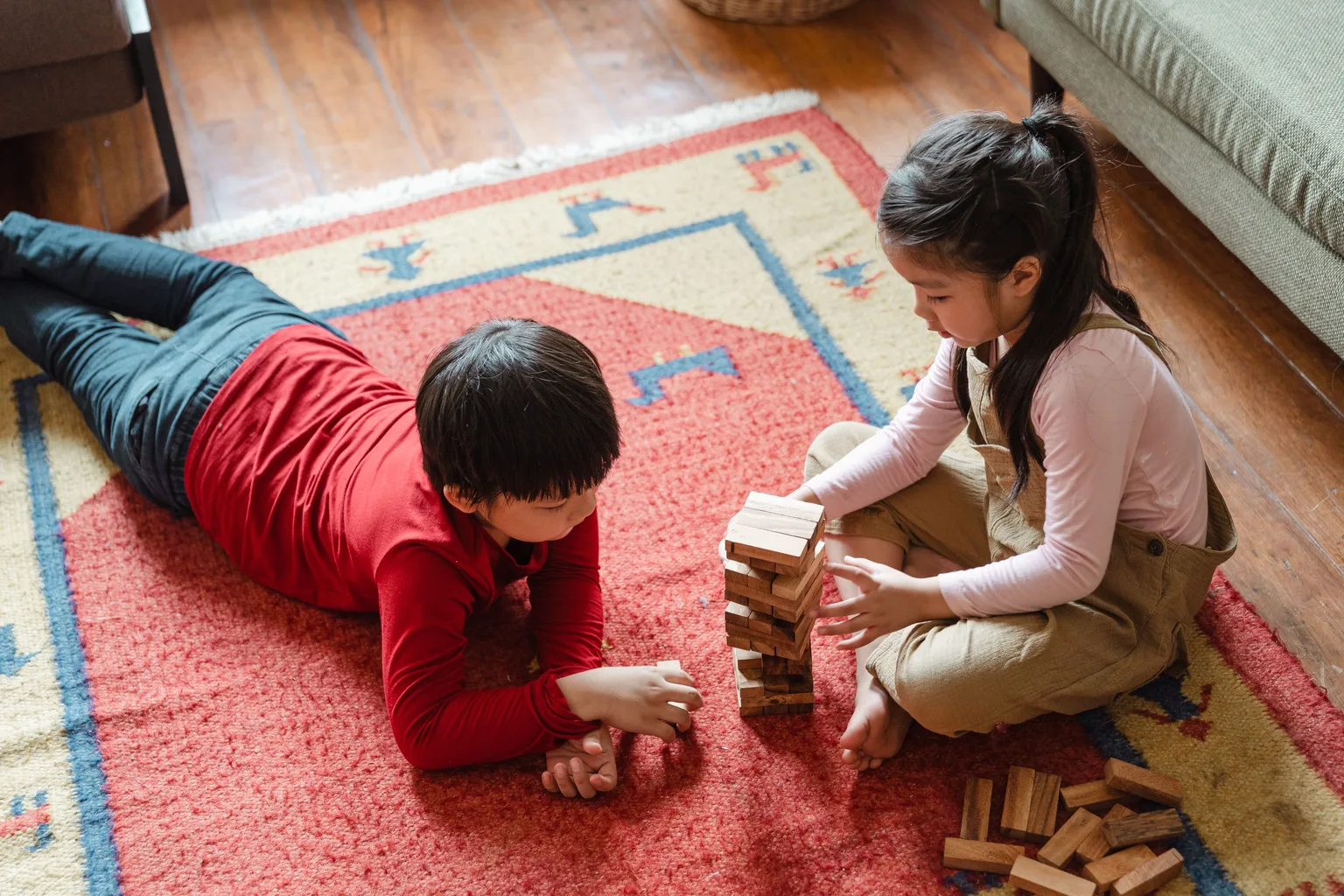
In households with children, upstairs bedrooms often see a category of soiling that adults' rooms don't — spilled juice, craft supplies, snacks eaten in bed, and general play that brings more debris into direct contact with carpet than an adult bedroom typically experiences. A kid's room can accumulate soil closer to what a main-floor living space sees, just concentrated in a smaller footprint and, again, largely out of a parent's daily line of sight.
This is worth acknowledging honestly when building a cleaning schedule rather than assuming every upstairs bedroom follows the same lighter-use pattern. A household with young children may find their kids' rooms actually need attention closer to what the main floor gets, even while a guest room down the hall genuinely can go longer between cleanings.
Closets in kids' rooms deserve a specific mention too, since they tend to accumulate forgotten spills, dropped snacks, and general clutter that sits undisturbed for long stretches, out of sight in a way that compounds the same out-of-sight problem the rest of the upstairs deals with. A quick closet floor check during routine vacuuming catches this before it becomes a surprise months later when furniture finally gets rearranged.
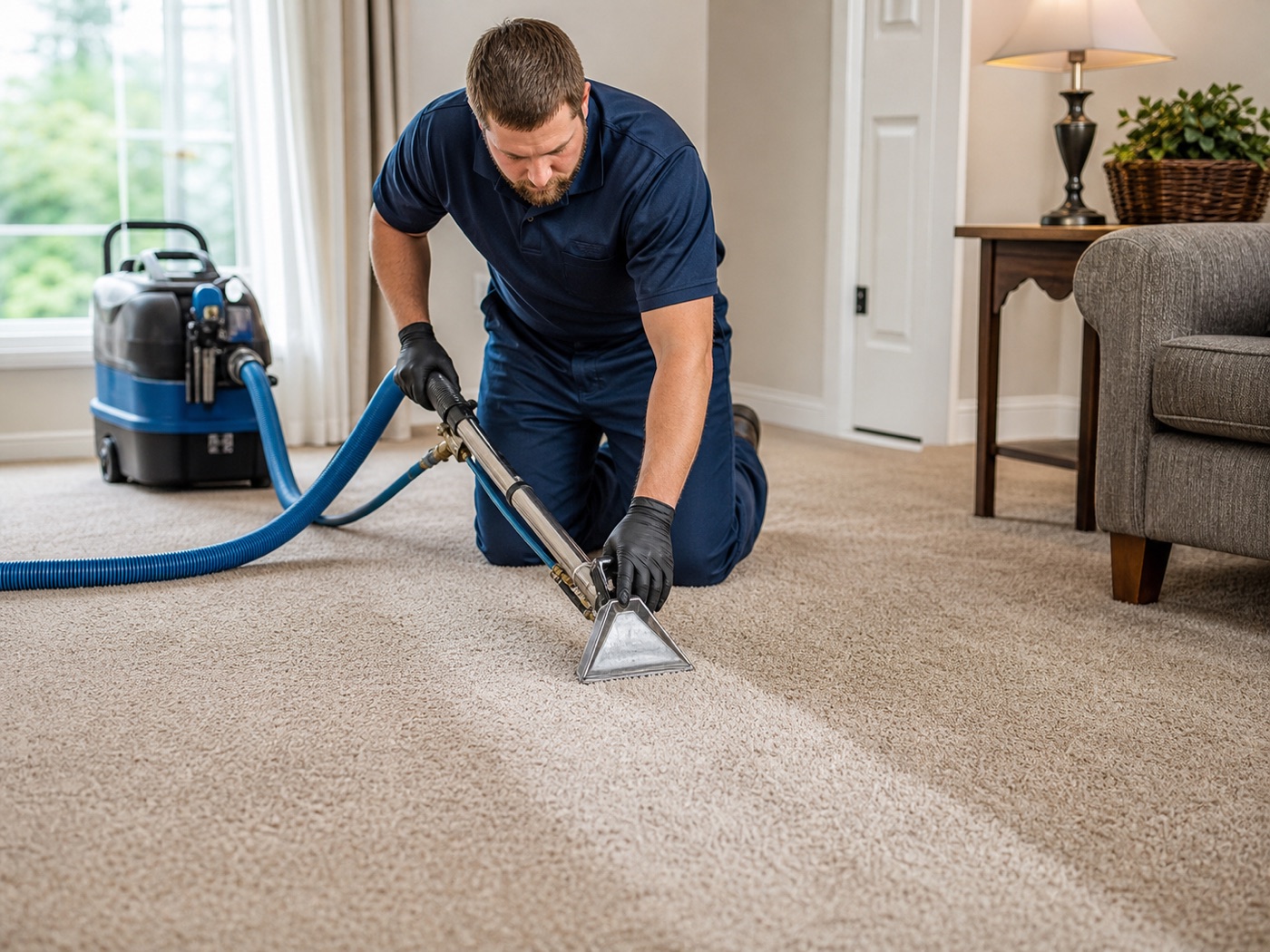
All City Carpet Cleaning And Building Solutions cleans upstairs bedrooms, hallways, and stairs with the same thoroughness as main-floor rooms across Virginia Beach, Norfolk, Chesapeake, Suffolk, Hampton, Portsmouth, and Smithfield, with pricing available for a full-home approach that doesn't skip the rooms that are easy to forget.