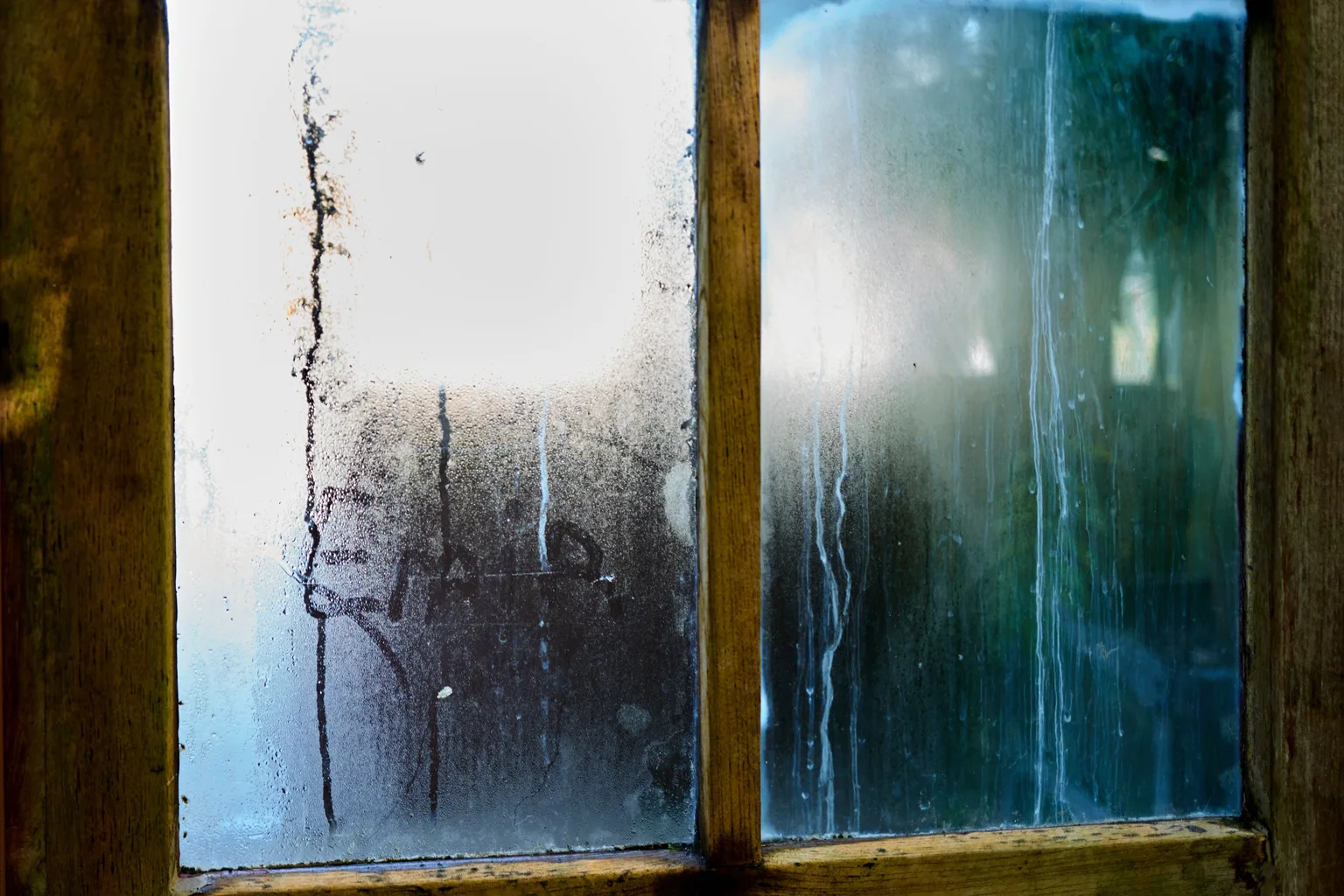
It is a common complaint and it sounds almost imagined until you understand the chemistry behind it: a house that smells perfectly fine on a dry, sunny week suddenly develops a noticeable carpet smell the moment a stretch of rain rolls through.
It is not imagined, and it is not a coincidence. Humidity does not manufacture new odor out of nothing — it reactivates odor-causing compounds that were already sitting in the carpet, dormant and mostly unnoticeable, waiting for the right conditions to become volatile again.
The Chemistry, in Plain Terms
Odor compounds need to become airborne to be smelled at all, and that process — called volatilization — happens more readily as humidity and, to a lesser extent, temperature rise. A compound sitting inert in dry carpet fiber releases into the air far more slowly than the same compound in carpet fiber that has absorbed ambient moisture from a humid day.
This is the same basic principle behind why a wine glass smells stronger as it warms, or why a perfume is more noticeable on a hot day than a cold one. Humidity and warmth increase the rate at which molecules escape a surface and reach your nose. Carpet, with its enormous surface area relative to a hard floor, is particularly good at holding onto these compounds between events and then releasing them when conditions change.
What Is Actually Trapped in There
A handful of common sources behave this way, and identifying which one applies matters for the fix.
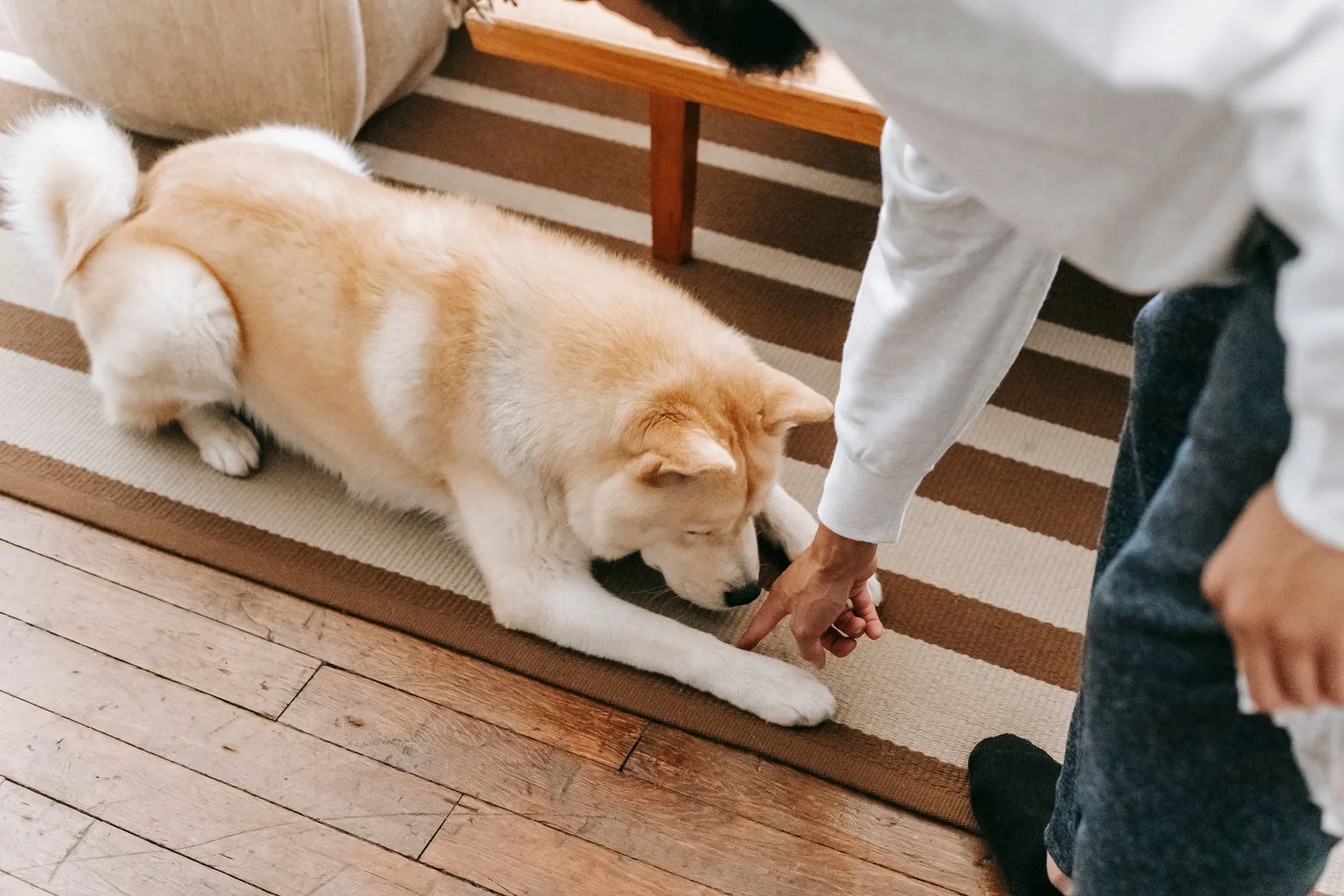
Old pet accidents are the most common culprit by far. Urine that was cleaned on the surface but not fully treated below it leaves crystallized compounds in the backing and pad that reactivate with moisture, which is exactly why a spot that seemed resolved months ago can suddenly smell again on a humid day.
Spilled food and drink residue works similarly on a smaller scale — a soda spill or a splash of milk that was wiped up but left a trace of sugar or protein behind in the fiber can develop a faint sour note that only becomes noticeable when humidity pulls it back into the air.
Mildew and mold, if present, are a more serious version of the same phenomenon and tend to have a distinctly earthy or musty character rather than the sourness of a food spill or the sharper note of pet residue. Any moisture event in the carpet's history — a slow leak, a flood, even carpet that was cleaned and did not dry fast enough — is a plausible source if the smell has that specific character.
Using a Rainy Day as a Diagnostic Tool
Rather than treating a rainy-day smell purely as an annoyance, it is worth using the next humid stretch as a deliberate diagnostic walk-through, because it reveals problem spots more clearly than any dry-day inspection would.
- Wait for a genuinely humid or rainy day rather than trying to force the test artificially.
- Walk each room slowly and note where the smell is strongest, getting down close to the carpet in suspected spots rather than judging from standing height.
- Mark or photograph the specific locations rather than relying on memory — smell fades from attention quickly once you leave the room.
- Cross-reference against the household's history: a spot near where a pet sleeps, a corner where a plant was watered generously, an area near an exterior wall that has had past moisture concerns.
- Treat what you find as a map for either DIY spot treatment or a conversation with a professional, rather than assuming the whole carpet needs the same treatment.
This single walk-through, done once during a rainy stretch, usually tells a household more about where its odor problem actually lives than months of vaguely noticing a smell without being able to pin down the source.
Why Deodorizer Does Not Actually Fix It
A spray deodorizer or a scented carpet powder addresses the symptom by adding a competing, stronger scent on top of the existing one, and it can work reasonably well for a day or two under normal conditions. It does nothing to the underlying compounds themselves.
On a humid day, the original compounds are volatilizing more aggressively than usual, and a deodorizer applied at its normal rate is not accounting for that increased release. The result is often a smell that seems to break through the masking scent specifically on the days it matters most — which reinforces the frustrating feeling that nothing is actually working.
A genuine fix removes or neutralizes the source material rather than covering it, whether that means a targeted enzyme treatment for pet residue, a proper cleaning for food and drink residue, or, for anything with a musty character, addressing the moisture source directly rather than just the carpet.
The Role of the Pad and Backing
A lot of homeowners focus entirely on the visible carpet fiber when trying to track down a rain-triggered smell, but the pad underneath and the backing the fiber is tufted into hold onto odor-causing material at least as stubbornly, and often more so.
Liquid that soaks through the carpet fiber reaches the pad, which is typically a foam or fiber material with far more surface area and absorbency than the carpet above it. Once something has saturated the pad, surface cleaning of the visible carpet does very little to address it, because the source sits below where a standard cleaning pass reaches. This is exactly why an old pet accident can seem fully resolved on the surface and still reactivate months later — the pad kept what the visible fiber gave up long ago.
In severe cases, particularly with pet urine that has had months or years to work its way through, the pad itself may need replacement rather than treatment, since foam padding that has fully absorbed contaminated liquid does not fully release it even under professional extraction.
Humidity Control as Ongoing Prevention
Beyond finding and treating existing sources, managing overall indoor humidity reduces how often and how strongly this phenomenon shows up in the first place, since lower ambient humidity means less volatilization even from whatever residual compounds remain.
Running air conditioning consistently through the humid months, using a dehumidifier in problem rooms, and ensuring good airflow throughout the house all reduce the baseline humidity that triggers the reactivation cycle. A household that has already addressed the specific source material but still notices mild seasonal smell shifts is often dealing with general humidity sensitivity in the carpet fiber itself rather than a remaining contamination problem, and humidity control is the more relevant fix at that point.
When Professional Treatment Is Worth It
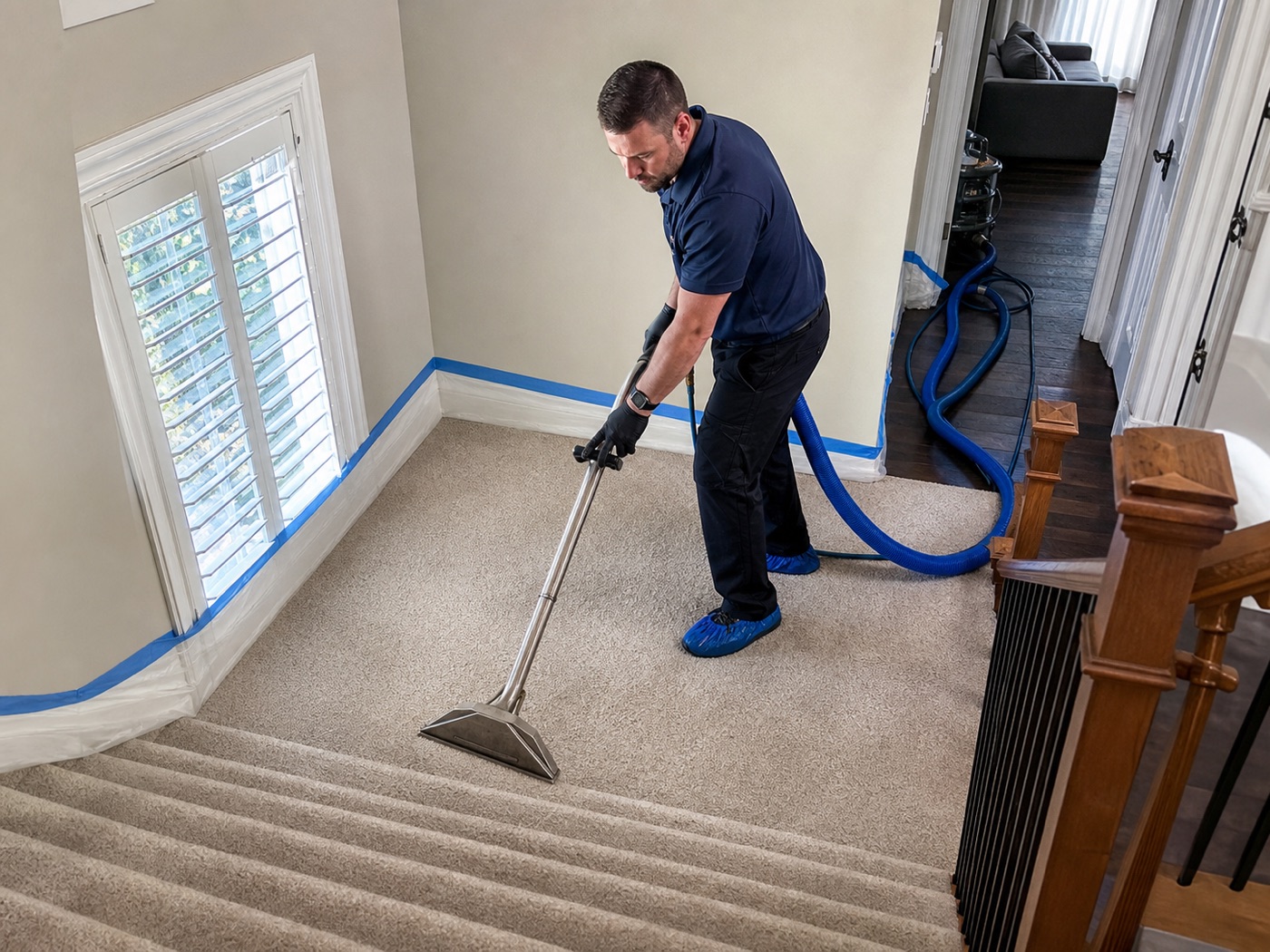
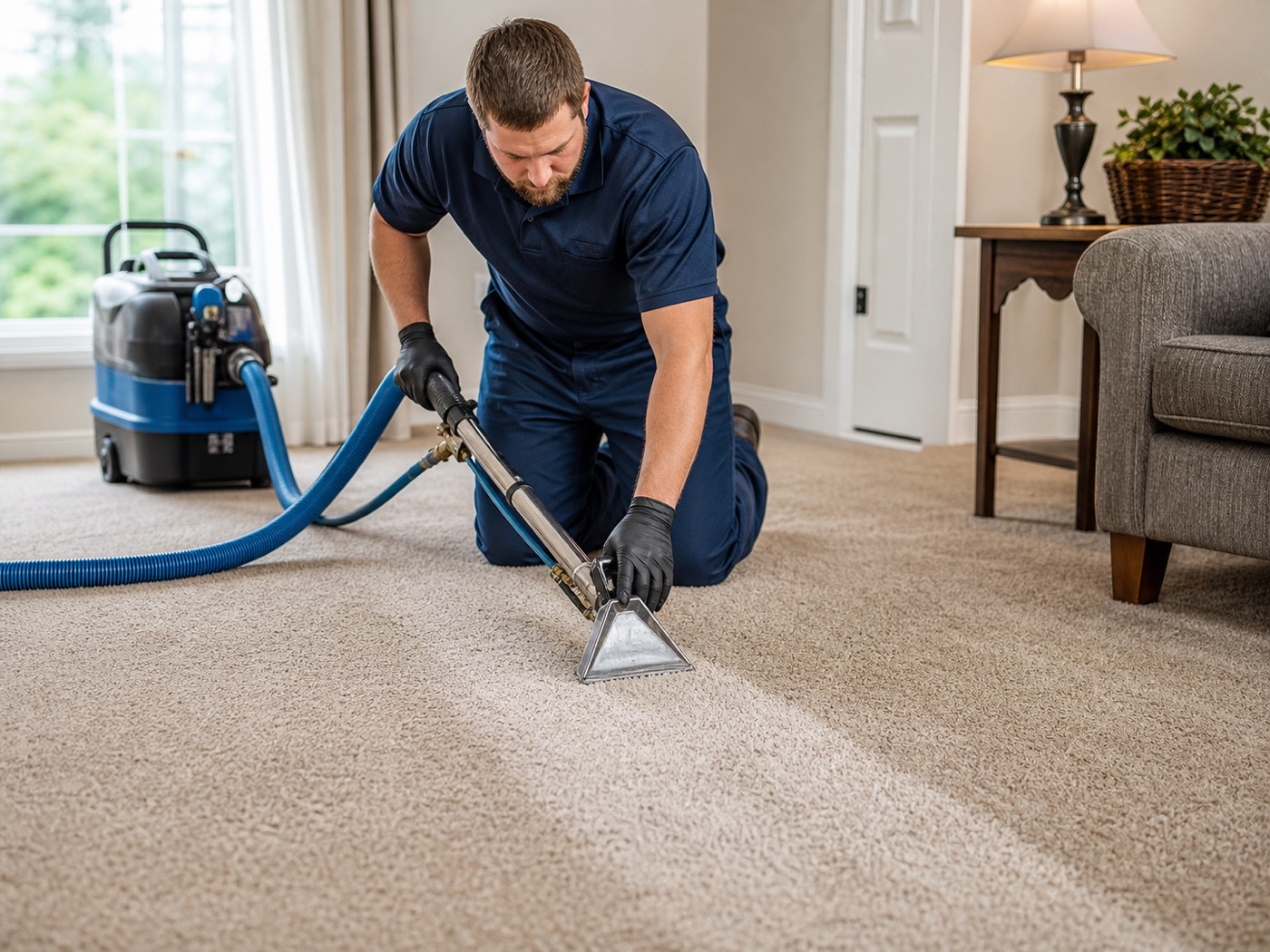
Surface-level spills and recent stains often respond well to prompt DIY attention. Odor that has been present long enough to reactivate seasonally, or that traces back to pet urine that has had time to work into the pad and backing, usually needs treatment that reaches below the surface of the fiber — which is where a professional extraction with a targeted enzyme or odor-neutralizing treatment earns its cost over a store-bought spray.
A household that has done the rainy-day diagnostic walk and identified specific spots is in a much stronger position going into that appointment, since it turns a vague complaint about the whole house into a precise list of locations that need attention rather than a general request to make the whole house smell better.
It also helps set realistic expectations. A single deep spot might need one targeted treatment, while a broader pet-odor history across multiple rooms might call for a full-house approach — and knowing which situation applies before the appointment starts makes the whole process faster and more accurately priced.
All City Carpet Cleaning And Building Solutions treats the source of carpet odor rather than masking it, for households across Virginia Beach, Norfolk, Chesapeake, Suffolk, Hampton, Portsmouth, and Smithfield, with pricing published so a targeted fix does not require guessing at cost.