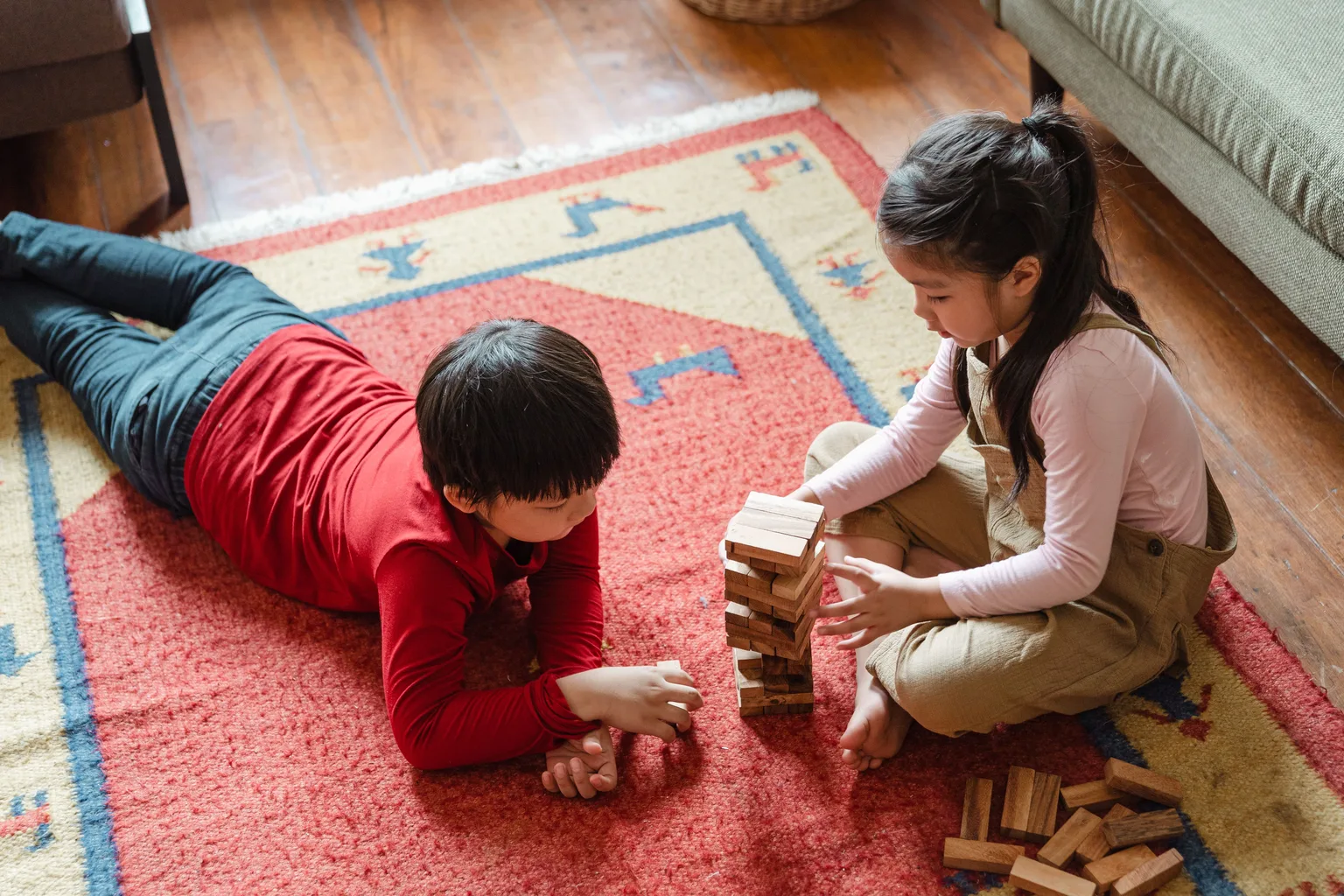

There is a moment in the first year when a baby stops staying where you put them, and the house quietly changes function. The floor stops being something you walk on and becomes the primary surface your child lives on — hands, knees, face, and everything that goes in the mouth on the way past.
Most families think about outlet covers and cabinet latches. Fewer think about the carpet, which is the surface the child will spend the most hours in direct contact with for the next year and a half.
The Breathing Zone Problem
An adult's breathing zone is five or six feet off the ground. A crawling infant's is about twelve inches, which places it inside the layer where settled particulate gets disturbed and resuspended with every movement.
That is not a scare tactic; it is geometry. Dust, pollen, pet dander, skin cells, and whatever has been tracked in on shoes all settle downward and accumulate at the base of the carpet pile. Crawling agitates the pile and lifts a portion of it back into the air, directly in front of a face that is breathing faster per pound of body weight than any adult in the house.
In Hampton Roads there are two local additions to the usual mix. Coastal pollen loads are heavy and long — the spring season here runs for months rather than weeks — and mold spore counts stay elevated through the humid part of the year. Both settle into soft surfaces and both are common triggers in young children.
None of this argues against carpet. Carpet is a filter, and a filter holding particulate is a filter doing its job. The problem is only that filters have to be emptied, and most household carpet never is.
Residue Is the Real Question
When parents ask whether carpet cleaning is safe around an infant, the honest answer is that the method matters far more than the fact of cleaning.
Any detergent left in the fiber stays there. It is what the child's hands contact, and it is what attracts soil so the carpet gets dirty faster afterward. A cleaning that leaves residue behind has arguably made the nursery worse rather than better, which is why thorough rinsing is the single most important specification.
Fragrance and deodorizers are the other thing worth declining outright. They add compounds to a room for no functional benefit — masking an odor rather than removing its source — and a nursery is the last place in the house that needs an air freshener. If there is a smell, the answer is to find and remove what is causing it.
Timing It Properly
Most babies start crawling somewhere between six and ten months, and the useful window for this work is before that rather than after.
Six to eight weeks ahead is about right. It gives the carpet time to be fully dry and fully settled, it lets you deal with anything the cleaning uncovers — an old pet spot, a section that needs repair — without a deadline, and it means the work happens while the household still has some slack in it.
There is a second useful window at around eighteen months, when a toddler is walking confidently and the floor has absorbed six months of food, drinks, and outdoor soil arriving on small shoes. Households with a new baby generally benefit from a shorter cleaning interval overall than the standard annual advice suggests.
In this region there is also a seasonal argument. September and October give the best drying conditions of the year — dew points have dropped and floors dry in hours rather than most of a day — which makes fall the easiest time to take a room out of service for an afternoon.
The Rooms That Matter
Priorities are different from an ordinary whole-house cleaning, because the child's world is smaller than the house.
| Room | Why | Priority |
|---|---|---|
| Nursery | Sleeping and floor play, many hours a day | Highest |
| Main living room floor | Where most crawling happens | Highest |
| Hallway between them | Constant transit, tracked soil | High |
| Family room seating | Feeding, holding, spit-up, naps | High |
| Entry areas | Where outdoor soil arrives | Moderate |
| Dining room | Once solid food starts | Moderate |
| Guest and formal rooms | Baby will not be there | Skip |
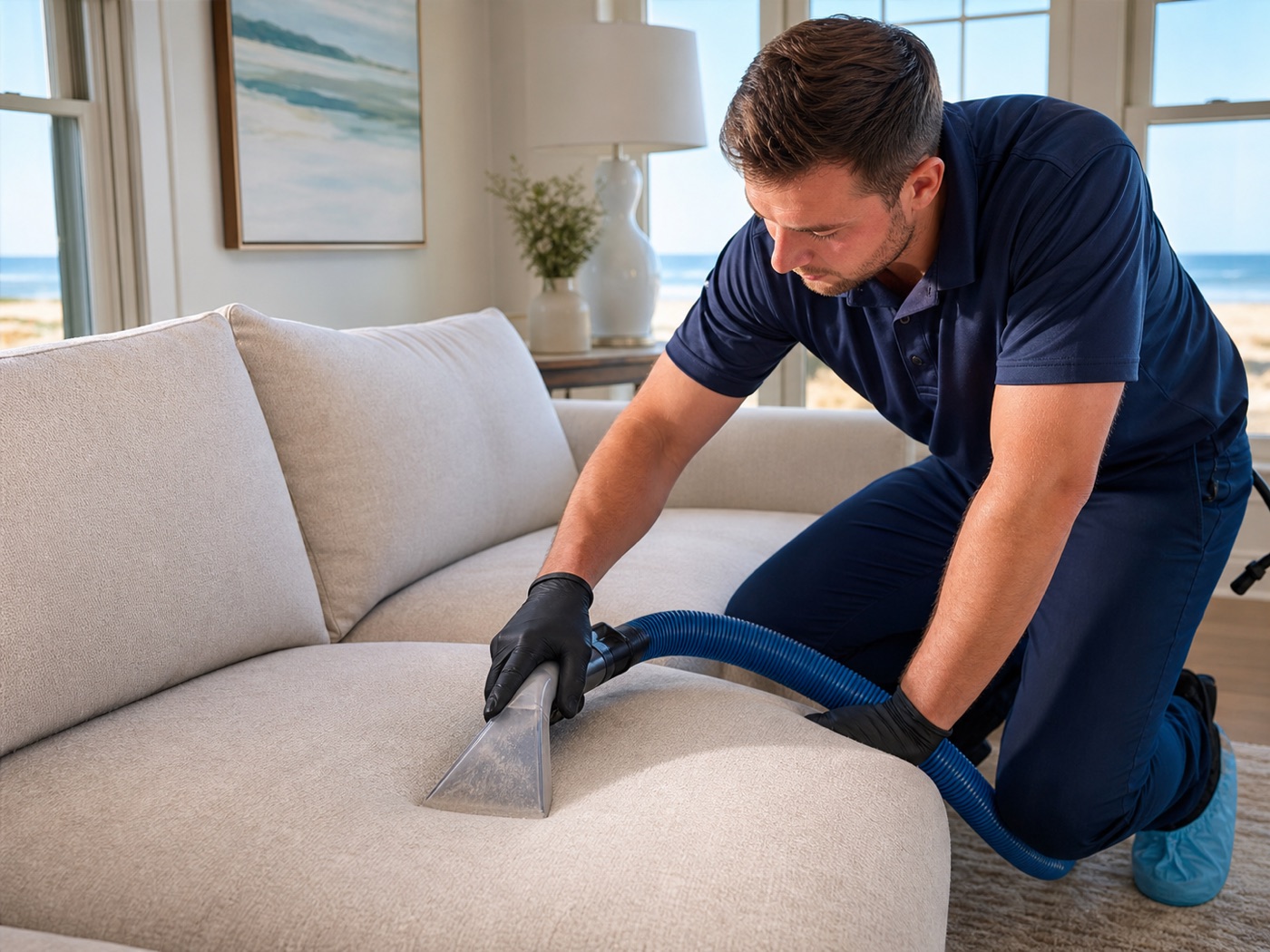
The seating belongs on that list more firmly than most people expect. A sofa or glider where a newborn is fed and held for hours daily accumulates milk, spit-up, and body oil in cushion fill that never gets vacuumed. It is often the most contaminated soft surface in a house with an infant, and it is almost never cleaned.
If a pet lives in the house, the priorities tighten further. Dander concentrates in exactly the places a crawling child spends time, and any history of pet accidents in a room the baby will use is worth resolving properly before the crawling starts rather than after.
What to Do Between Cleanings
Maintenance in a house with a crawling child is mostly about what arrives at the floor rather than what is already there.
- Make the shoe rule absolute for the crawling year. It is the single highest-return habit and it costs nothing.
- Vacuum the nursery and main play area two or three times a week, slowly, with a machine that has intact filtration.
- Use plain water and a white towel on spills. Skip the spray bottle entirely — the residue is the part that lingers.
- Change HVAC filters on schedule and run the system's fan periodically to keep air moving in a closed-up house.
- Keep a dehumidifier or the air conditioning running through the humid months. Dust mites need humidity above roughly fifty percent to thrive.
- Wash the play mat and any washable rugs on a regular rotation, and dry them completely before they go back down.
Carpet protector is one thing we usually suggest skipping in a nursery specifically. It is a useful product in a family room where spills are the issue, but in the room where an infant spends the most hours in direct contact with the floor, the fewer treatments present the better.
The Things That Are Not Worth Buying
New parents get sold a lot of products aimed at exactly this worry, and most of them do very little.
Carpet powders are the clearest example. They sit in the pile, the vacuum recovers a portion of them, and the rest stays behind as a fine residue at the base of the carpet — in the layer a crawling child disturbs most. They add fragrance and leave material in the one place you would least want material left.
Antibacterial sprays for carpet are the second. A carpet is not a countertop, the contact time needed for a disinfectant to work is longer than any spray achieves on a porous surface, and the residue outlives whatever benefit was claimed. Thorough removal of soil does more than surface disinfection ever will.
Air purifiers are a partial exception, in that a decent HEPA unit in a nursery genuinely reduces airborne particulate. It just does nothing about the reservoir in the floor, and a household running a purifier over an unmaintained carpet has addressed the symptom rather than the source. Both together work considerably better than either alone.
What Cleaning Sometimes Uncovers
A cleaning ahead of a baby occasionally turns up something that was already there and unnoticed, which is a good reason to do it early rather than late.
The most common is an old pet spot in the pad that was never fully treated. It may not be obvious to anyone in the household — noses adapt — but it is in the layer directly under where the child will be playing, and it is far easier to address before a nursery is furnished.
The second is moisture. In coastal Virginia, a carpet against an exterior wall or over a crawlspace can carry more moisture than it should, and that shows up as a musty note nobody can locate. If that is present, cleaning alone will not fix it, and it is worth knowing before rather than after.
We would rather tell a family in month seven of a pregnancy that a room needs more than a cleaning than discover it with a newborn in the house. That is a large part of why we recommend booking this one early.
All City Carpet Cleaning And Building Solutions serves families across Virginia Beach, Norfolk, Chesapeake, Suffolk, Hampton, Portsmouth, and Smithfield, and our area pricing is published so you can plan the rooms that matter.