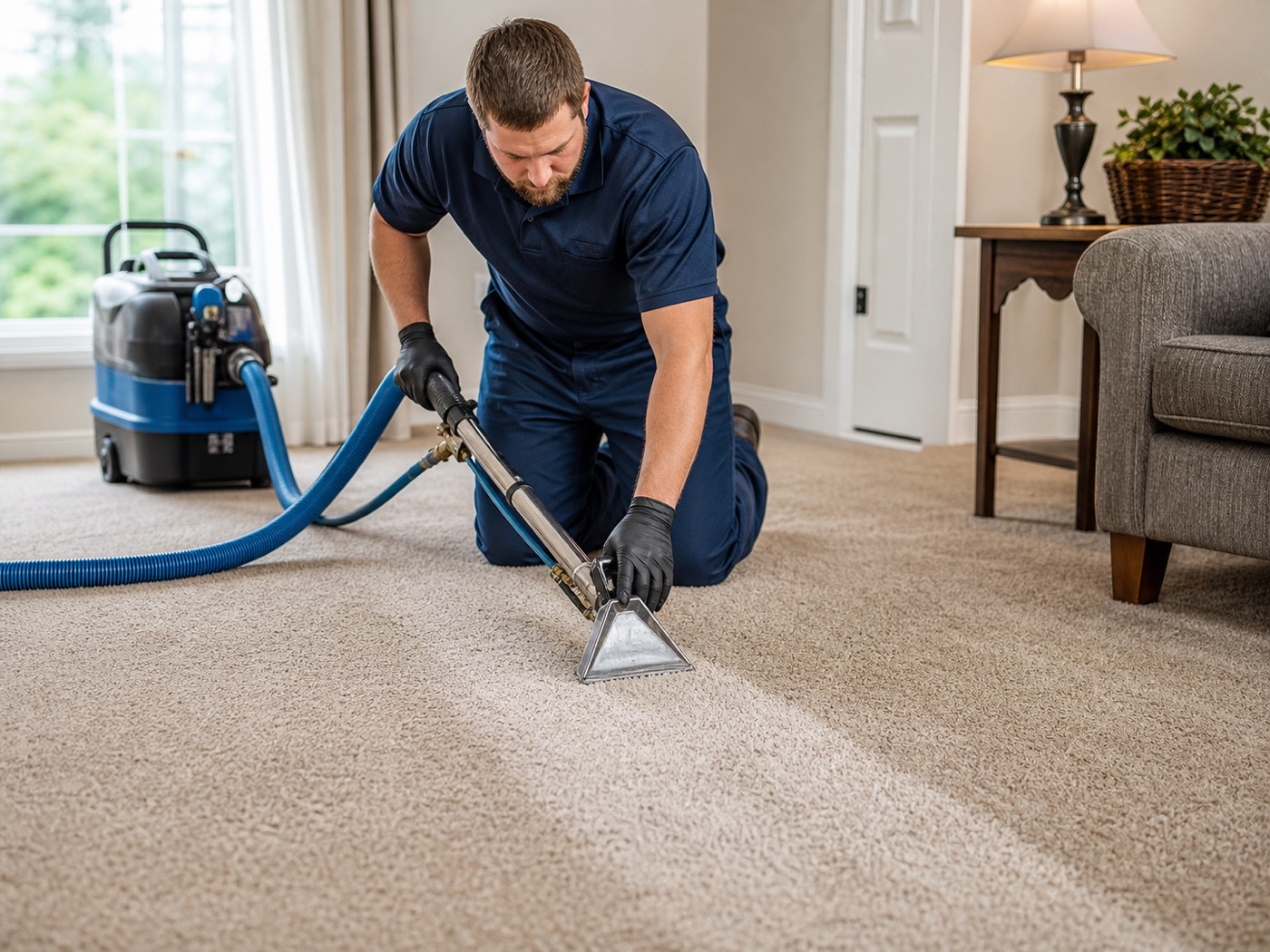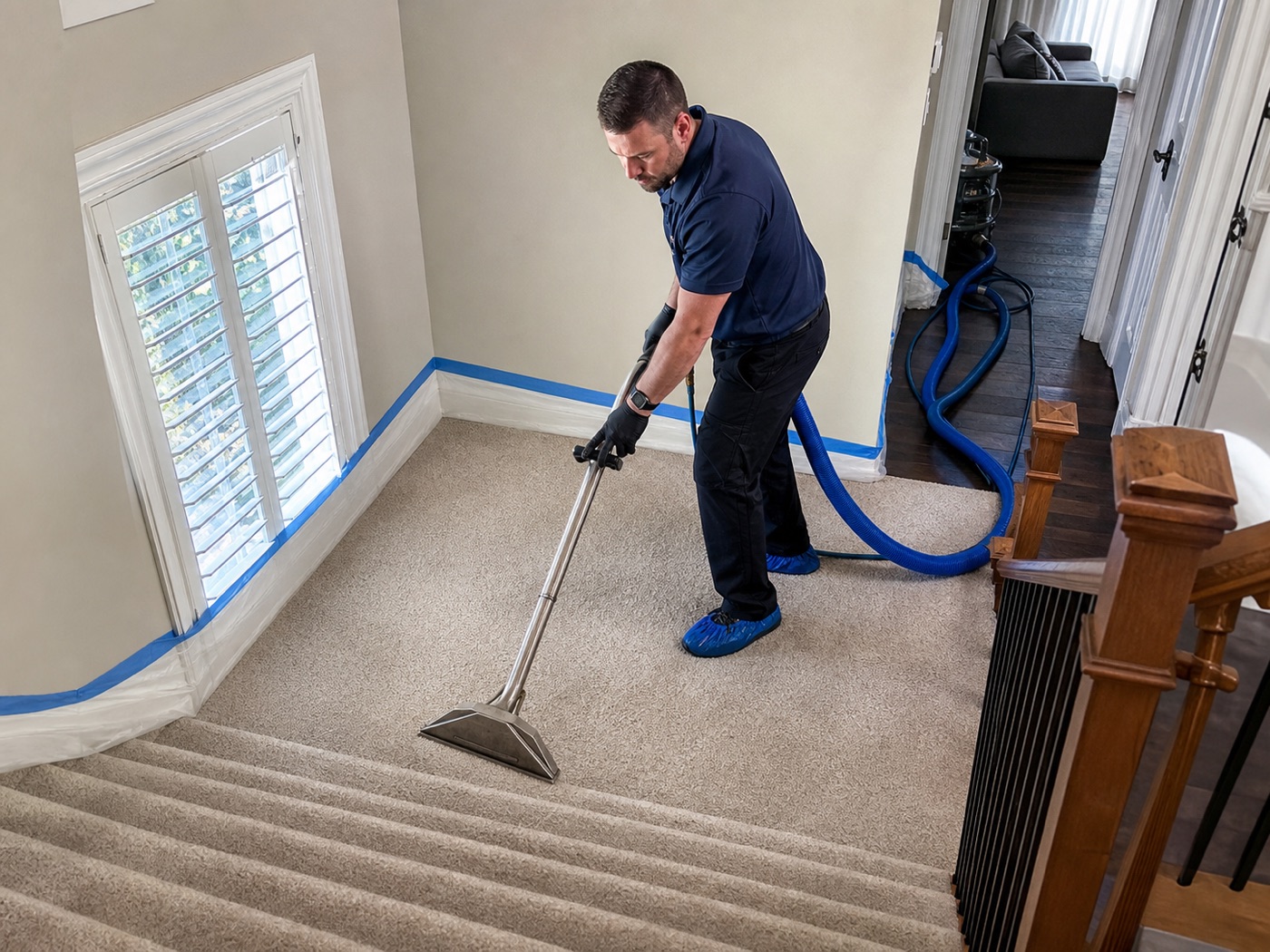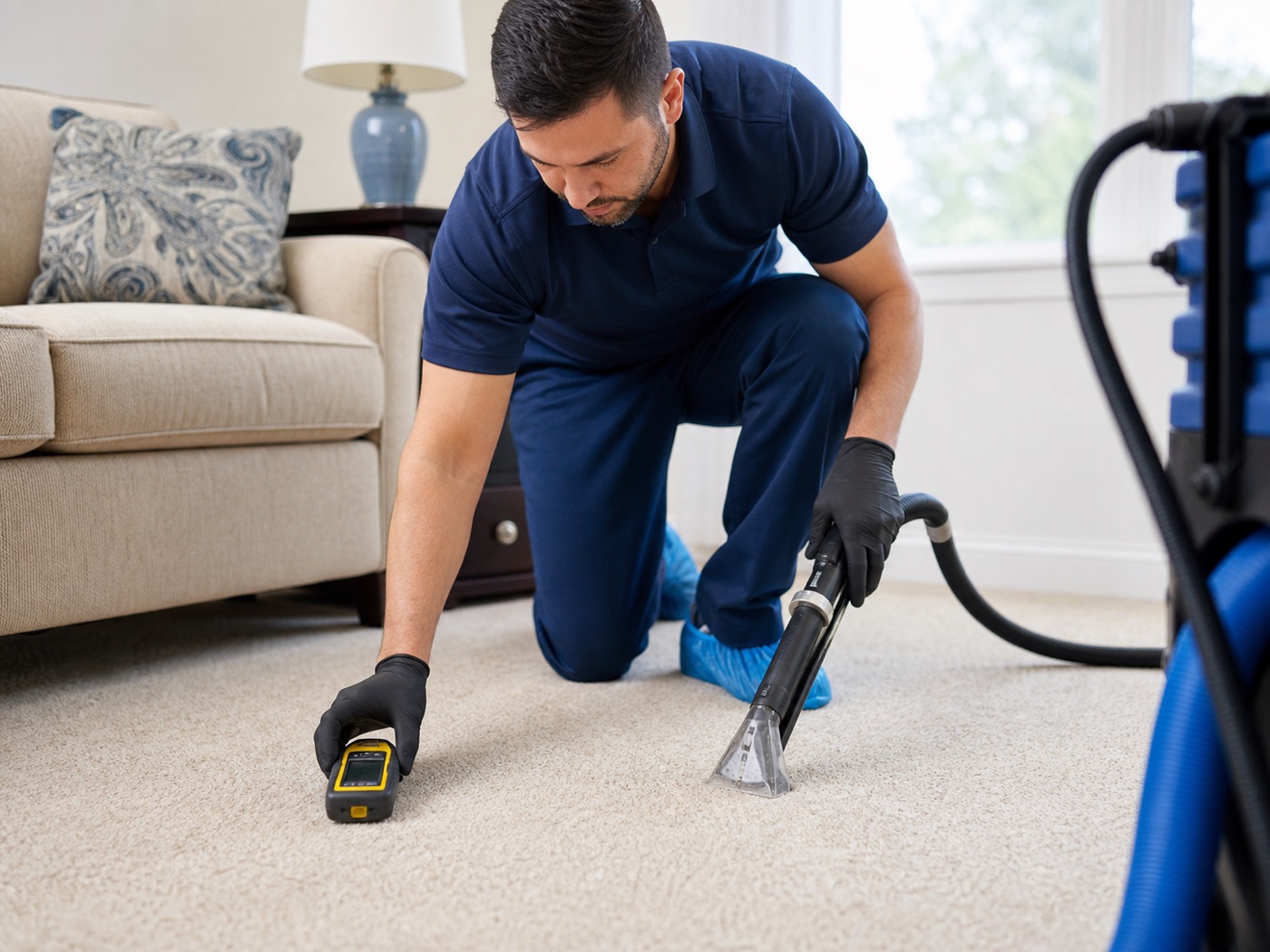
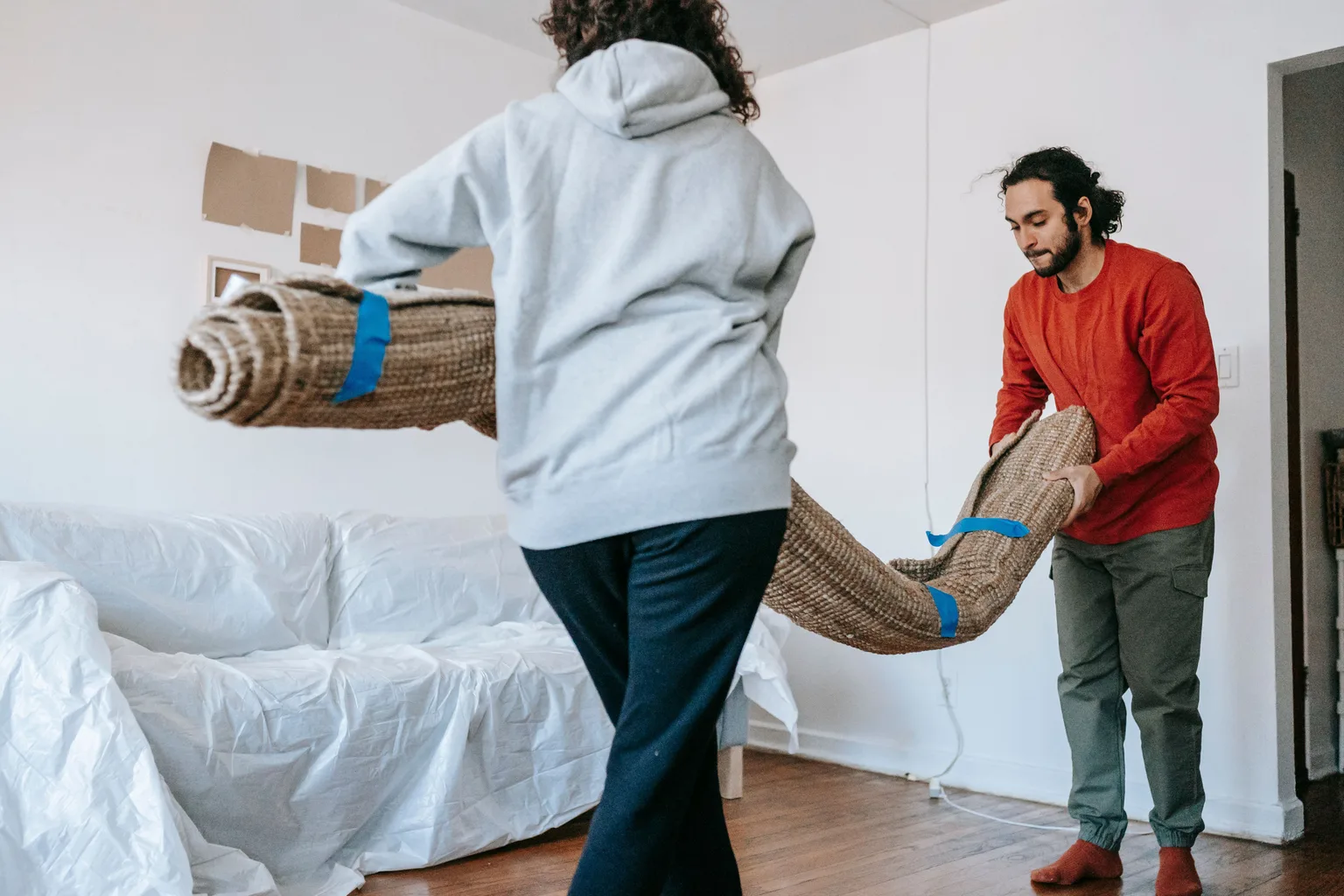
There is a conversation we have in Hampton Roads living rooms several times a month. The homeowner has already decided the carpet is finished and wants to know whether it is worth cleaning first. Sometimes the answer is that it genuinely is finished. More often it is that they are looking at soil and have talked themselves into a flooring bill.
And occasionally it goes the other way: a household that has paid for cleaning three times in two years on a carpet that failed structurally before the first visit.
The Question That Decides It
Every version of this decision reduces to one distinction: is the problem something on the carpet, or something that has happened to the carpet?
Soil, spots, oil, odor, and flattened pile are all things on the carpet, and cleaning addresses them. Abraded fiber, delamination, dye loss, burns, tears, and saturation in the pad are things that have happened to the carpet, and cleaning does not reverse any of them.
The reason this gets confusing is that a dirty carpet and a damaged carpet look similar from standing height. The test is to get down and look at individual fibers in the affected area under good light, comparing them to fibers in a protected spot — inside a closet, under a bed, along a wall. If the fiber tips in the traffic lane are frayed, split, or blunted compared to the protected sample, that is abrasion. If they look the same but darker, that is soil.
| Condition | Cleanable? | What it needs |
|---|---|---|
| General soil and traffic film | Yes | Hot water extraction |
| Oily or food spots | Usually | Solvent, then rinse and extract |
| Pet odor in the pad | Often | Sub-surface treatment, sometimes pad replacement |
| Flattened pile | Partly | Cleaning and grooming; may not fully recover |
| Abraded traffic lanes | No | Nothing restores cut fiber |
| Bleach or chemical color loss | No | Spot dyeing or patching |
| Delamination and ripples | No | Restretch, patch, or replace |
| Burns, cuts, and tears | No | Patching |
The Four Conditions That Mean Replacement
Four findings genuinely end the conversation, and an honest cleaner will name them rather than sell you a service that cannot help.
The first is widespread delamination. When the backing layers separate, the carpet loses its structure — it ripples, it feels loose underfoot, and cleaning accelerates the failure because moisture works into the separation. Isolated areas can be patched. A whole room cannot.
The second is extensive urine saturation. Discrete spots are treatable, often very successfully, but a floor where a large contiguous area has been used repeatedly over a long period is a different problem. At that point the pad has absorbed more than it can give up and the subfloor is involved, and the cost of aggressive treatment starts to approach the cost of new pad and carpet with a less certain outcome.
The third is severe abrasion across the main living areas. Not a worn hallway — a house where the traffic lanes have lost enough fiber that the backing is visible through the pile. There is no service that puts material back.
The fourth is age combined with all of the above. A fifteen-year-old builder-grade carpet with worn lanes, three bleach spots, and a history of pets is not a cleaning candidate, and paying to clean it is money that belongs in the replacement fund.
Repair Is the Underused Middle
Between cleaning and replacement sits a category most homeowners never consider, largely because nobody offers it to them.
Patching handles burns, pet chewing, bleach spots, and small tears. A section is cut out and replaced with donor carpet from a closet, from under a permanent piece of furniture, or from a leftover roll. Done well with proper seam tape and grooming, the result is difficult to locate afterward, and it costs a small fraction of replacing a room.
Restretching handles ripples and buckling, which in this climate often arise from humidity cycling rather than from bad installation. Carpet expands and contracts with moisture content, and over years it can loosen. A power stretcher pulls it taut again and re-secures it to the tack strip. It is a couple of hours of work and it makes a room look considerably younger.
Seam repair handles the separations that show up in doorways and hallways after years of directional traffic. All three of these are worth asking about before accepting a replacement quote, because the difference in cost is substantial and the improvement is often most of what the homeowner actually wanted.
The Conditions People Misread Most
Three findings look like the end of a carpet and usually are not, and each one sends households to a flooring showroom prematurely.
Filtration soil is the first. It appears as a dark line along the baseboards, under doors, or at the edge of a stair tread, and it looks like mold or water damage. It is neither — it is fine airborne particulate deposited where air is forced through the carpet under a closed door or through a gap at the wall. It is stubborn, it takes specific chemistry and patience, and it comes out far more often than people expect.
Wicking spots are the second. A spot returns a few days after cleaning, slightly larger than before, and the household concludes the carpet is ruined. What is happening is that a contaminant in the backing or the pad is travelling upward as the carpet dries. That is a treatable condition, not a permanent one, and treating the source rather than the surface resolves it.
Crushing in a traffic lane is the third. Flattened pile reads as worn even when no fiber has been lost, and cleaning with proper grooming lifts a good deal of it back. The way to tell the difference is the fiber test — flattened yarn still has intact tips, abraded yarn does not.
The Arithmetic
Put rough numbers against the options and the decision usually becomes obvious.
Cleaning a few rooms is a modest expense that can be repeated annually for years. Patching or restretching a room is a somewhat larger one-time expense. Replacing carpet in a typical Hampton Roads home — carpet, pad, installation, furniture moving, and disposal — is a different order of magnitude entirely, and it comes with a day of disruption and a period of new-carpet off-gassing.
The useful way to think about it is cost per remaining year. Cleaning a carpet with six good years left is excellent value. Cleaning a carpet with one year left is usually not, unless you are cleaning it to sell the house or to pass an inspection, which are both legitimate reasons. Our published area pricing makes that comparison straightforward to run before anybody comes out.
One exception worth naming: if you are replacing carpet anyway because of pet damage, the subfloor still needs to be cleaned and sealed first. Installing new carpet over an untreated subfloor is the single most common reason a brand-new floor smells like the old one within a month, and it is a genuinely miserable outcome to pay for twice.
Making the Next One Last Longer
Whichever way the decision goes, the variables that determine how long the next carpet lasts are mostly in your control.
- Choose fiber by household rather than by showroom feel. Nylon recovers best under traffic; polyester resists stains but crushes sooner; olefin belongs in low-traffic or outdoor-adjacent spaces.
- Spend on the pad. A better pad extends carpet life meaningfully and costs far less than upgrading the carpet itself.
- Keep a remnant. A leftover roll from the original dye lot makes future patching nearly invisible and costs nothing to store.
- Put real walk-off matting at every exterior door, long enough for several full steps.
- Vacuum slowly and often in the entries and hallways, which take most of the abrasive material.
- Clean on a schedule rather than on appearance, because by the time it looks dirty the abrasion has already started.
That last point is the whole argument compressed. Carpet does not wear out from being walked on — it wears out from being walked on while full of grit. A schedule built around zones rather than the whole house is how most households get materially more life out of the same floor.
All City Carpet Cleaning And Building Solutions cleans carpet across Virginia Beach, Norfolk, Chesapeake, Suffolk, Hampton, Portsmouth, and Smithfield, and we will tell you when cleaning is not the answer. That conversation costs nothing and it has saved a fair number of households a flooring bill.