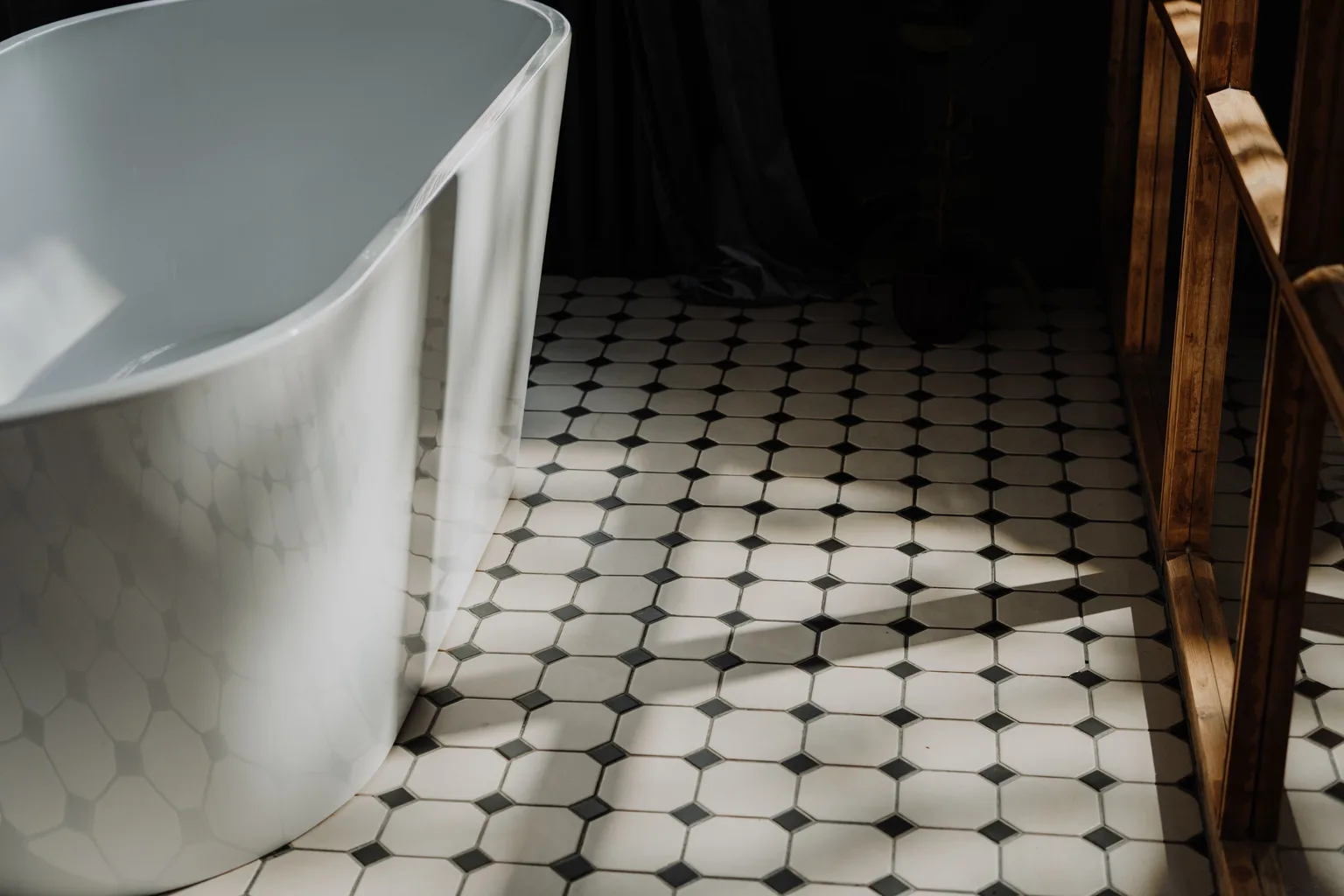
A tile floor is really two materials with opposite properties. The tile is dense, fired, and effectively waterproof. The grout between it is cement-based and porous, full of microscopic channels that absorb liquid the way a sponge does.
Every problem people have with tile floors is actually a problem with the grout, and sealing is the only thing that changes the equation.
What Sealer Actually Does
A penetrating sealer soaks into the grout and lines the interior of those pores with a water-repellent layer. It does not sit on top as a film, and it does not change the look of the grout when it is applied correctly.
The effect is on surface energy. An unsealed grout line pulls liquid in almost immediately — put a drop of water on it and watch the grout darken within seconds. A sealed line holds the drop on the surface long enough for somebody to wipe it up.
That window is the whole benefit. Sealer does not stop spills, it does not clean grout, and it does not prevent staining from something left overnight. It converts a stain into a wipe, provided someone is there to wipe it.
There is a second benefit that matters more in this climate: sealed grout absorbs less ambient moisture, which slows the mildew and odor that come with constant humidity. In a coastal bathroom that is not a small thing.
Cleaning Has to Come First
The single most common grout mistake is sealing a floor that is not clean, and it is worth being emphatic about because it is not reversible.
Sealer locks in whatever is present. Apply it over grout holding soap scum, body oil, or years of mop water and you have permanently encapsulated all of it. The floor is now protected from future soil and permanently discolored by past soil, and getting back out of that position means stripping the sealer, which is a considerably larger job.
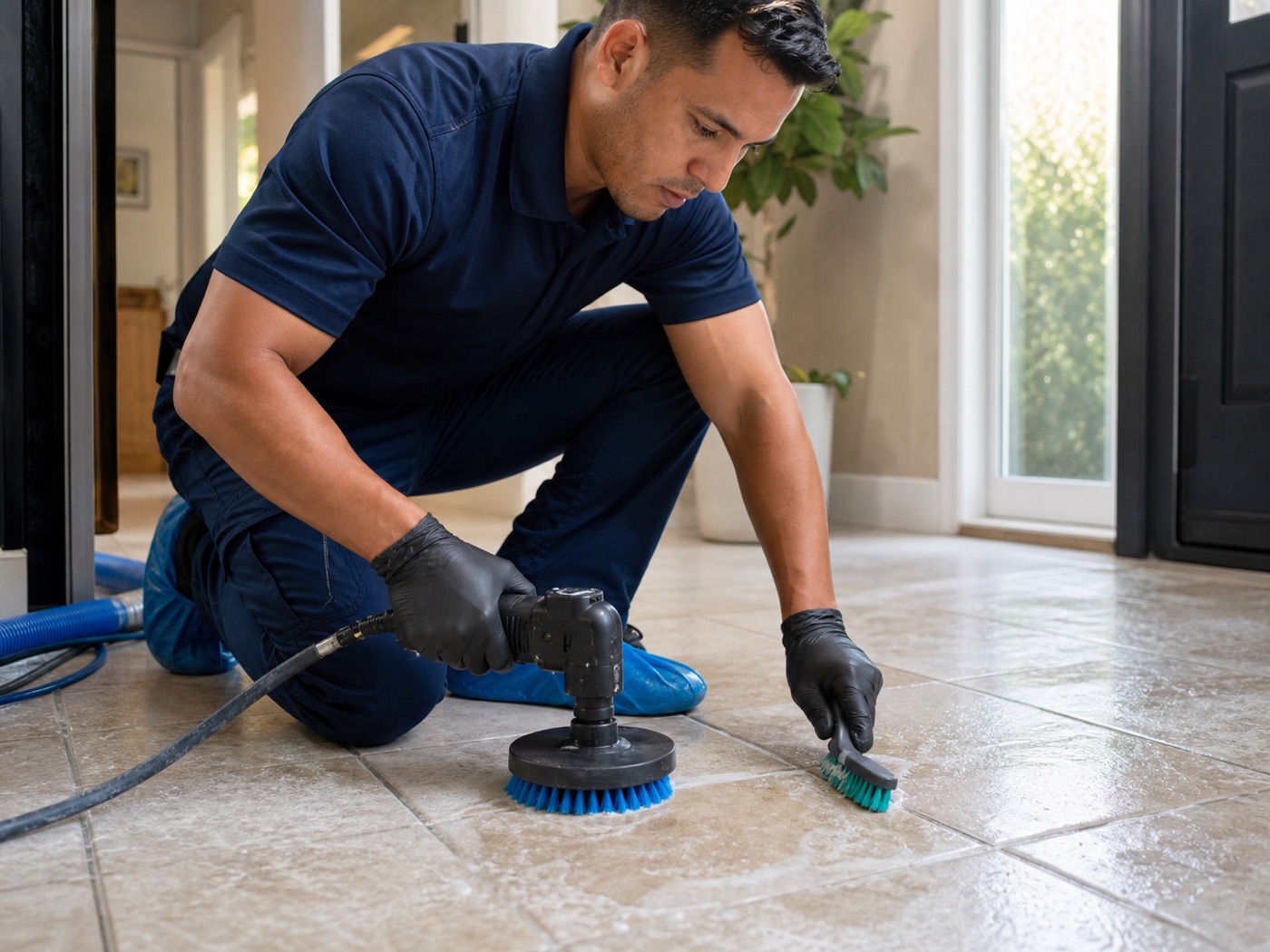
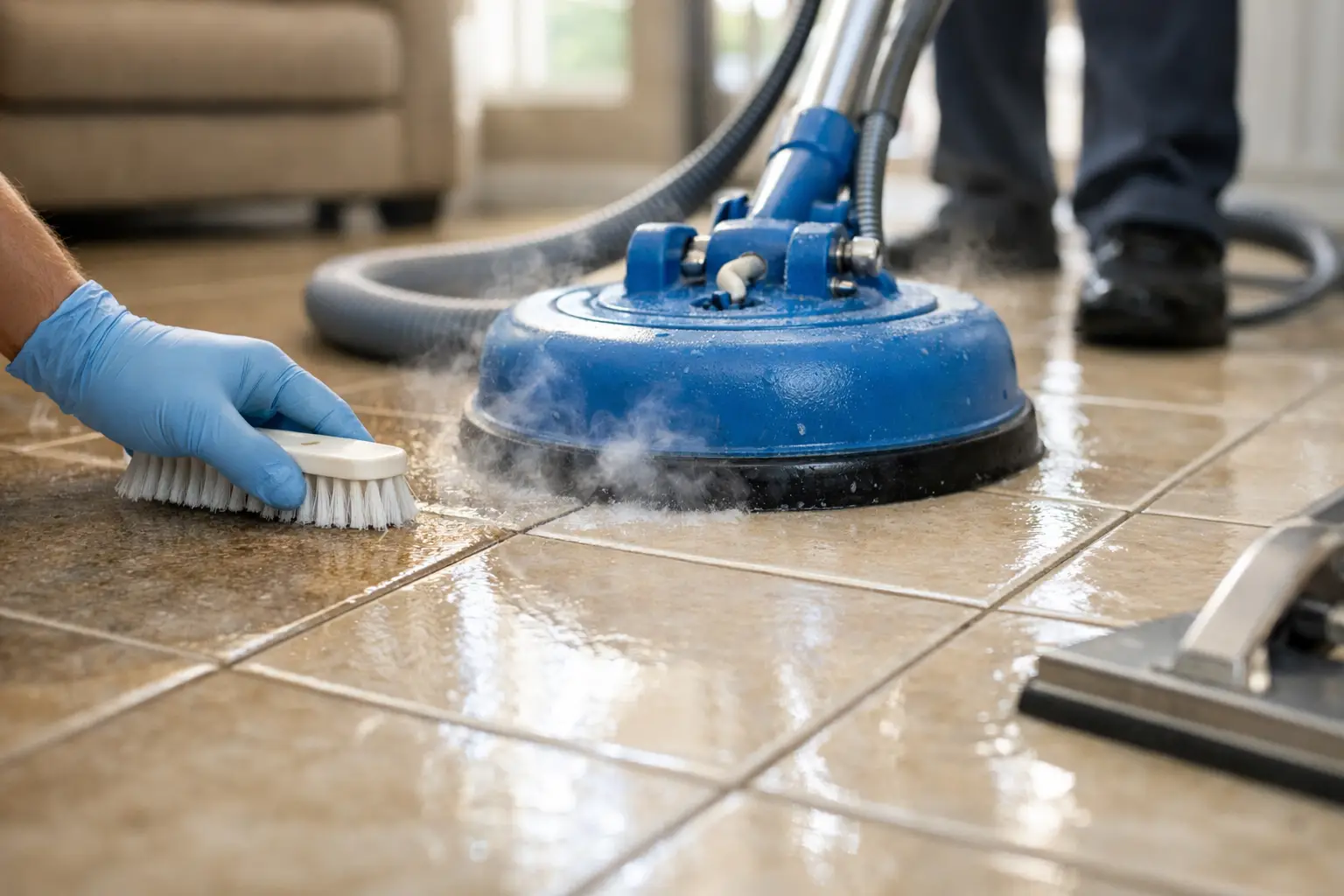
Proper cleaning before sealing is mechanical rather than chemical alone: an alkaline cleaner with genuine dwell time, agitation with a brush or rotary tool, then a pressure rinse with immediate extraction so the suspended soil leaves the building rather than settling back into the lines. Mopping cannot do this — a mop moves dirty water into grout and leaves it there to dry.
Then the grout has to dry completely. Cement holds water longer than the surface suggests, and in a humid Hampton Roads house that means waiting a day or more. Sealing damp grout traps moisture inside it and produces a hazy, blotchy finish.
Penetrating Versus Topical
Two categories of product get sold as grout sealer and they behave very differently.
| Type | How it works | Best for |
|---|---|---|
| Penetrating, water-based | Lines the pores, no surface film | Most floors; easy to reapply |
| Penetrating, solvent-based | Deeper penetration, stronger repellency | Heavy-use and wet areas |
| Topical coating | Forms a film on the surface | Rarely appropriate on floors |
| Epoxy colorant | Recolors and seals permanently | Old, stained, or mismatched grout |
For floors, penetrating sealers are almost always the right answer. Topical coatings form a film that looks good initially and then scuffs, wears unevenly in traffic lanes, and eventually peels — and removing a failed topical coating from grout is a genuinely unpleasant job.
Epoxy colorant is a legitimate option worth knowing about for grout that is permanently stained or has gone blotchy with age. It recolors and seals in one step, it lasts far longer than a penetrating sealer, and it can make a twenty-year-old floor look new. It is also effectively permanent, so it belongs in the category of decisions to make carefully rather than quickly.
How Often and How to Check
Sealer is a consumable, and the interval depends far more on what happens to the floor than on the calendar.
A residential entry or kitchen typically holds sealer for two to three years. A family bathroom is closer to one or two. A shower floor, a pool bath, or a commercial kitchen often needs resealing annually, because constant moisture and aggressive cleaning chemistry break it down much faster than foot traffic alone.
Rather than tracking dates, test it. A few drops of water on a grout line, watched for a minute, tells you everything — beading means the sealer is intact, immediate darkening means it is gone. Doing that test in four or five places across a floor also shows you where the wear is concentrated, which is usually more informative than a single check by the door.
It is worth pairing resealing with cleaning as a matter of routine, since the grout has to be clean and dry anyway. Treating them as one job on a two-year cycle is simpler to remember and cheaper than doing them separately.
Where It Matters Most in This Region
Not every tile floor needs the same attention, and the priorities in a coastal house are fairly clear.
Showers and tub surrounds are first. Constant moisture, soap residue, and warm temperatures are ideal conditions for everything nobody wants in a bathroom, and unsealed grout absorbs all of it. Shower grout in this climate often needs resealing annually rather than every few years.
Kitchen floors are second, because oil is the specific enemy. Cooking aerosolizes fat, it settles across the floor, and unsealed grout absorbs it — which is why kitchen grout darkens along the lines near the stove first. Oily soil also holds dry soil, so the discoloration compounds.
Entry areas are third, and in Hampton Roads they earn their place. Sand tracked in from parking lots and beaches acts as an abrasive that wears sealer off grout lines faster than foot traffic alone would, and the same grit is what damages every other floor in the house.
Pool baths and outdoor-adjacent bathrooms combine all three problems and are the shortest-cycle tile in any property, residential or commercial.
What Sealing Will Not Fix
Sealer is protection against what happens next. It does nothing about several conditions people hope it will solve, and it is better to know that in advance.
Cracked or missing grout is a repair rather than a sealing job. Grout cracks because of movement underneath — a flexing subfloor, a missing expansion joint, or settlement — and sealing over a crack accomplishes nothing while the water continues to go through it to whatever is below. In a coastal house with a crawlspace, that is a problem worth chasing down rather than covering.
Loose or hollow-sounding tile is the same story a step further along. Tap across a floor with a knuckle and listen; a hollow note means the tile has lost its bond to the substrate, and no surface treatment addresses that.
Permanently discolored grout is a third case. Some grout has absorbed so much over so many years that cleaning brings it back partway and no further. That floor is a candidate for epoxy colorant rather than for another round of cleaning and sealing, and it is worth knowing which one you are looking at before spending money twice.
And sealer does nothing about a moisture source. Grout that stays damp because of a leak behind a wall or a shower pan that has failed will keep failing regardless of what is applied to the surface. Commercial buildings see the same pattern in restrooms and kitchens, where the underlying problem is usually drainage rather than cleaning.
Keeping It That Way
Sealer lasts longer when daily maintenance is not actively removing it, and a few habits make a large difference.
- Use a pH-neutral cleaner. Strong acids and strong alkalis both break sealer down, and most bathroom cleaners are one or the other.
- Skip the steam mop on grout. Heat and pressure degrade sealer quickly, whatever the packaging claims.
- Change mop water often, or use a microfiber flat mop. A dirty mop deposits soil into grout lines rather than removing it.
- Squeegee shower walls after use so water is not sitting in the grout for hours every day.
- Run the bathroom exhaust fan for twenty minutes after a shower. Humidity control does more for grout than any product.
- Wipe kitchen floor spills promptly, especially anything oily, because oil is what sealer repels least well.
Commercial spaces need the same approach on a tighter cycle, and in food service the grout is the whole battle — restaurant kitchen grout takes grease continuously and the sealer has essentially no chance without a scheduled program behind it.
All City Carpet Cleaning And Building Solutions cleans and seals tile and grout throughout Virginia Beach, Norfolk, Chesapeake, Suffolk, Hampton, Portsmouth, and Smithfield, and our pricing is published so you can see what a floor costs before anyone comes out.