Almost every household vacuums. Almost nobody vacuums effectively, and the gap between the two is larger than most people would guess — the same machine, on the same carpet, can remove two or three times as much material depending entirely on how it is used.
This matters more in Hampton Roads than in most places, because the soil arriving in our houses is abrasive rather than merely dirty, and what a vacuum fails to remove stays at the base of the pile cutting fiber under every footstep.
Slow Down
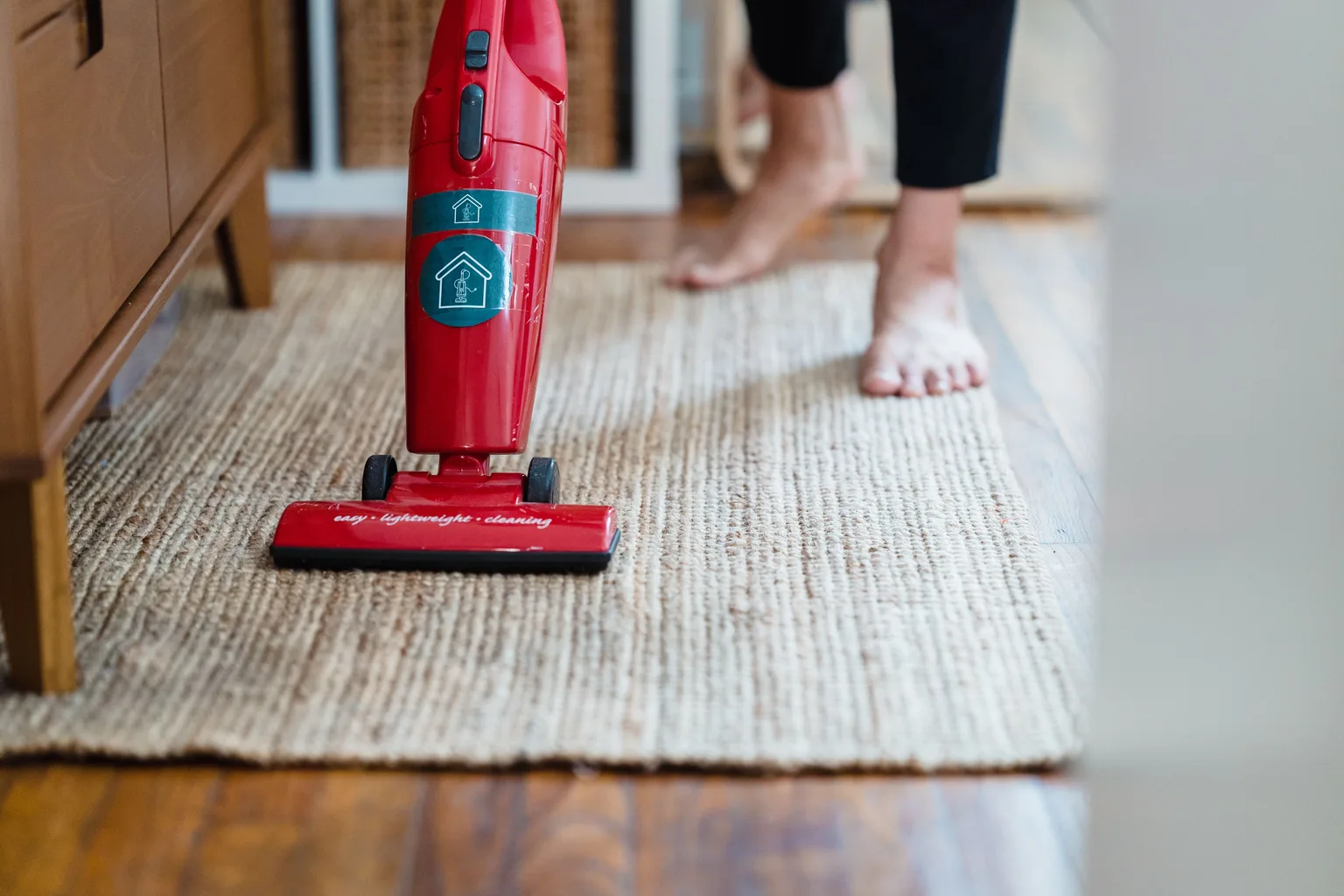
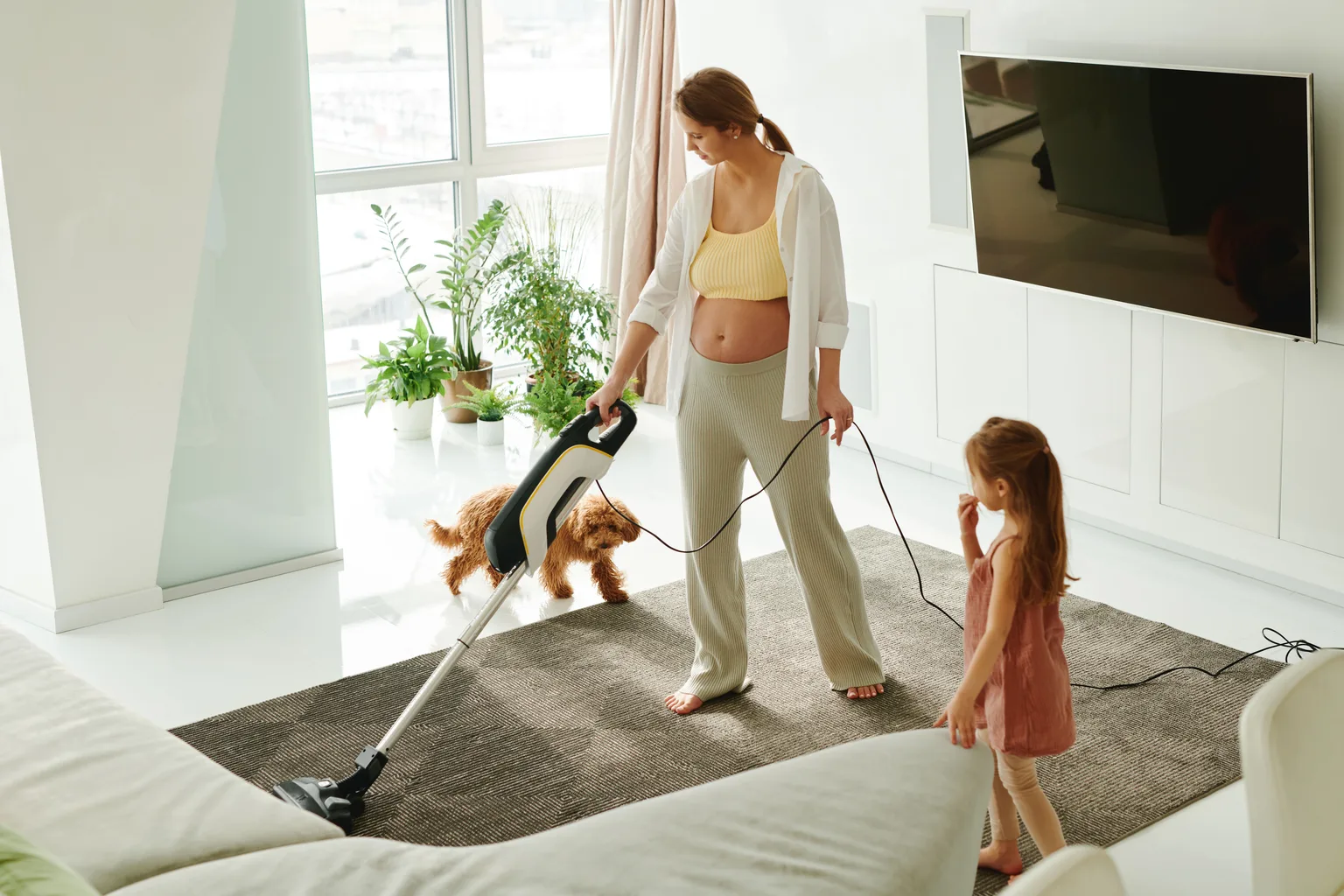
If you change one thing, change your speed. Most people vacuum at roughly walking pace. The correct pace is about one pass per second, which feels almost comically slow until you see what comes out.
The reason is mechanical. A vacuum removes soil through two actions working together: the beater bar agitates the pile and flicks embedded material loose, and airflow carries it into the machine. Both need dwell time. A fast pass gives the brush one or two contacts with any given fiber and gives the airflow almost no opportunity to lift anything heavy.
Sand is heavy. That is the crux of it. Lint and hair come up easily at any speed, which is why fast vacuuming feels productive — the bin fills with visible material. Quartz grit sits at the base of the pile and requires sustained agitation and airflow to move, and it is the material that causes permanent damage.
Try it once as an experiment. Vacuum a traffic lane at your usual speed, empty the bin, then go over the same strip at one pass per second for six passes. The second bin is the argument.
Set the Height Correctly
Height adjustment is the most ignored control on any vacuum, and on most machines it affects results more than suction does.
Set too high and the brush never contacts the pile, so you are relying on airflow alone. Set too low and the machine seals against the carpet, airflow drops, the motor labors, and the brush can fuzz the fiber. Either extreme reduces what you collect.
The correct setting is the lowest one where the machine still moves without excessive effort and the motor does not change pitch under load. Most carpets want a middle setting; plush and thick pile want higher; low-pile and commercial carpet want lower. If your machine adjusts automatically, it is usually erring toward the safe high side, and a manual override will often outperform it.
Maintain the Machine
A vacuum loses performance long before it stops working, and the decline is gradual enough that people adjust to it without noticing.
- Empty the bin or change the bag at about two-thirds full. Performance falls off well before capacity, particularly on bagless machines where the cyclone efficiency drops as it fills.
- Wash or replace filters on the manufacturer's schedule. A clogged filter strangles airflow, and airflow is most of the cleaning.
- Cut hair and fiber off the beater bar regularly. A wrapped brush cannot agitate anything.
- Check the belt every few months. A stretched belt spins the brush slowly and a broken one leaves you with a very expensive floor wand.
- Look at the hose for clogs if suction drops suddenly — a sock or a toy in the hose is more common than a failed motor.
- Replace the machine when the brush housing has worn enough to lift the brush off the carpet, which happens to well-used vacuums after several years.
Sealed filtration deserves a note for allergy households. An unsealed machine picks material up and blows a portion of the finest particles back into the room through gaps in the housing — which is why some people feel worse after vacuuming. A properly sealed HEPA system keeps what it collects, and in a household with asthma that difference is worth the price of a better machine.
Where and How Often
Frequency should follow soil, and soil is not distributed evenly. The usual household pattern — vacuum everything once a week — overspends on the bedrooms and badly underspends on the entries.
| Area | Why | How often |
|---|---|---|
| Entries and foyer | All outdoor soil arrives here | Two or three times a week |
| Main hallway and stairs | Everything passes through | Twice a week |
| Family and living room | Daily use, large area | Once or twice a week |
| Dining area on carpet | Food debris | Twice a week |
| Bedrooms | Low soil load | Weekly or every other week |
| Guest and formal rooms | Minimal use | Every few weeks |
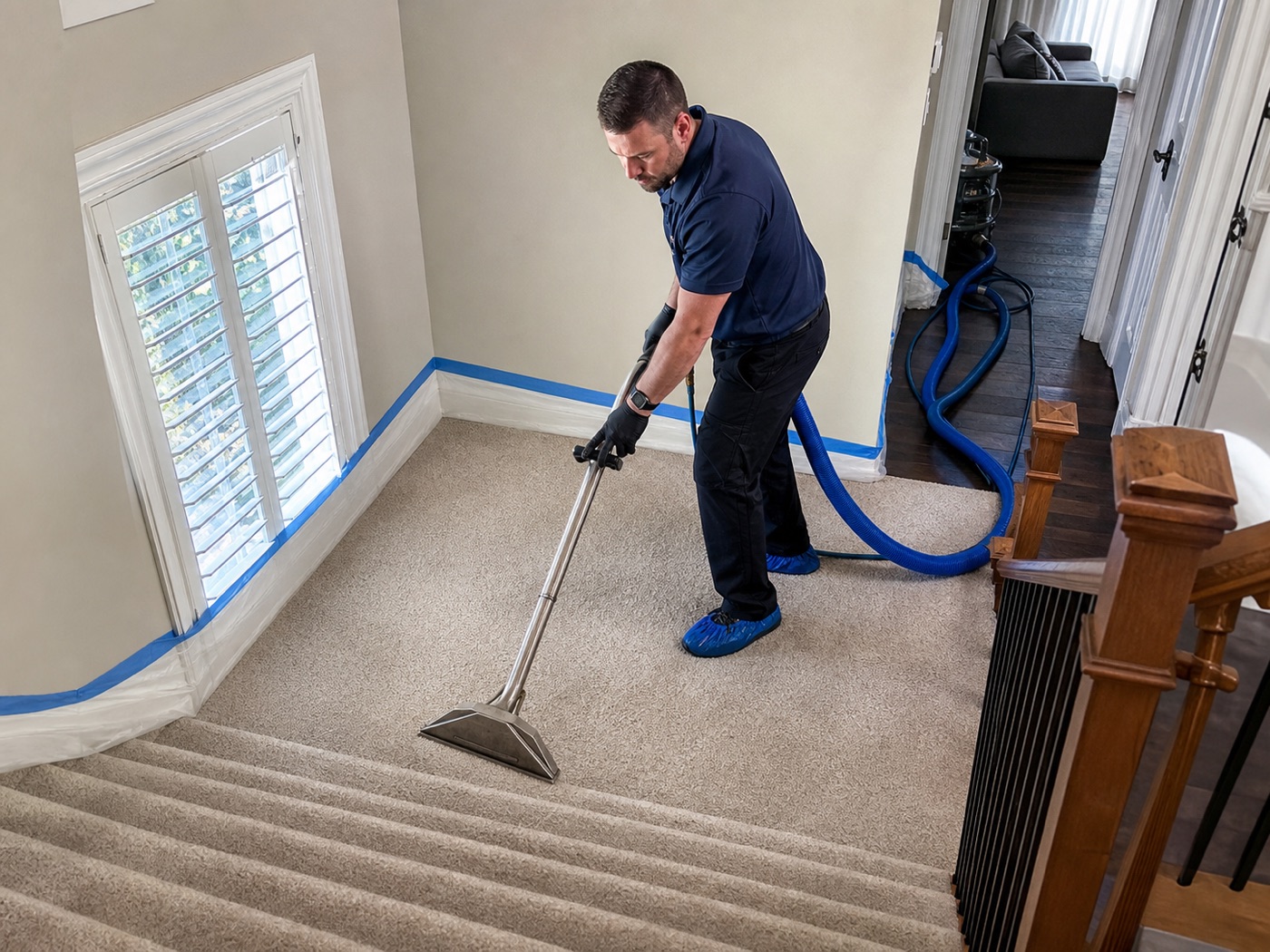
Stairs are the exception to every rule here. They take concentrated weight on the leading edge of each tread, they hold grit in the crevice where tread meets riser, and they are awkward enough that most people skip them. A stair tool used properly, tread by tread, is fifteen minutes that prevents the fastest wear in the house.
Direction and Pattern
Carpet fiber does not stand straight up. It leans, and after months of traffic it leans consistently in the direction people walk.
That means a single direction of vacuuming only ever reaches one face of each fiber. Approaching from the opposite direction, and then across, exposes the other faces and the space between strands where fine soil settles. In a traffic lane, alternating direction between passes noticeably increases what comes out.
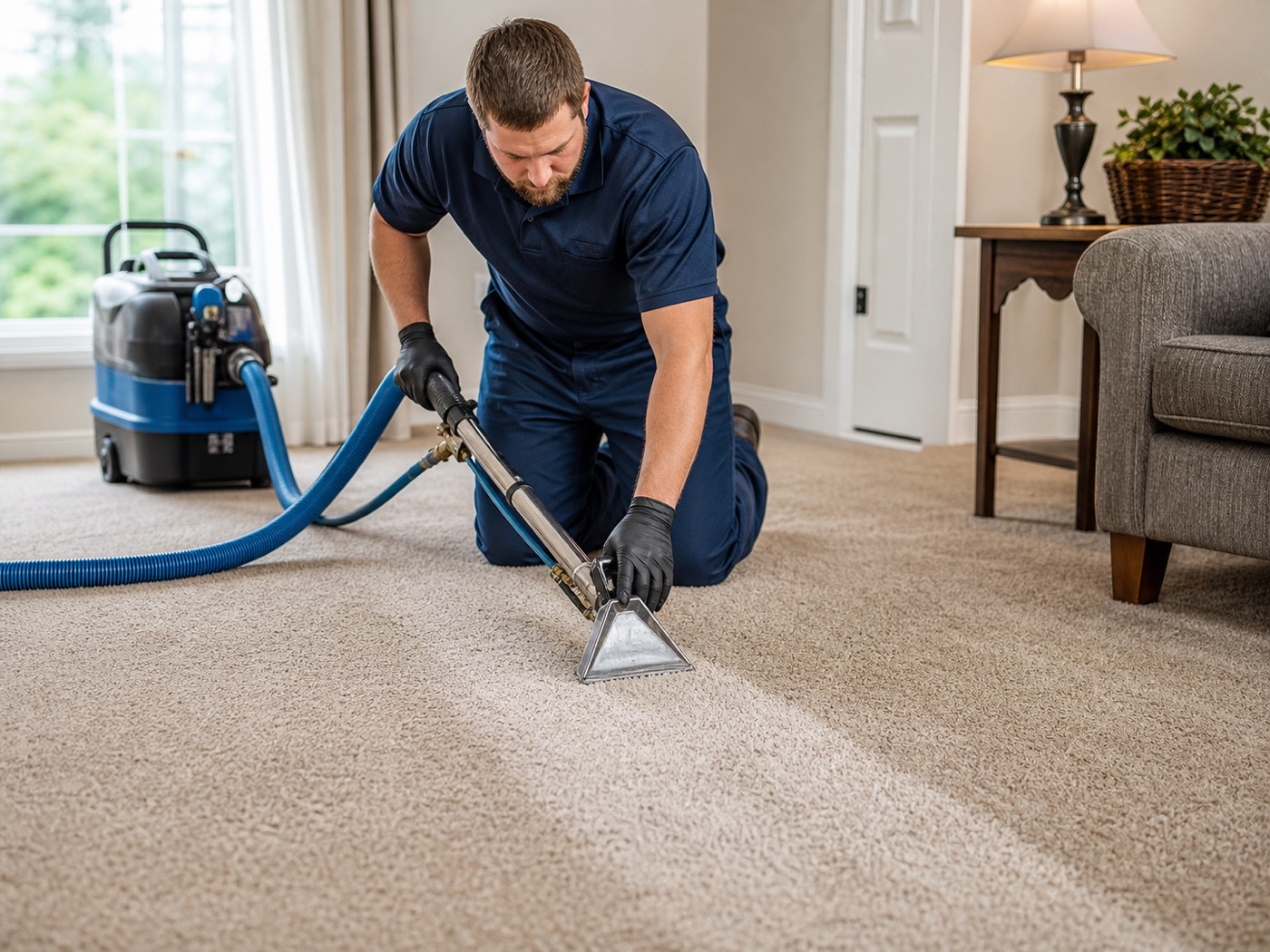
Work in overlapping strips rather than long sweeps across the room, and finish by pulling the machine toward you in the direction you want the pile to lay. The visible result is the clean striping people associate with hotels, and the functional result is pile standing upright rather than matted, which is most of why a well-vacuumed carpet looks better a week later.
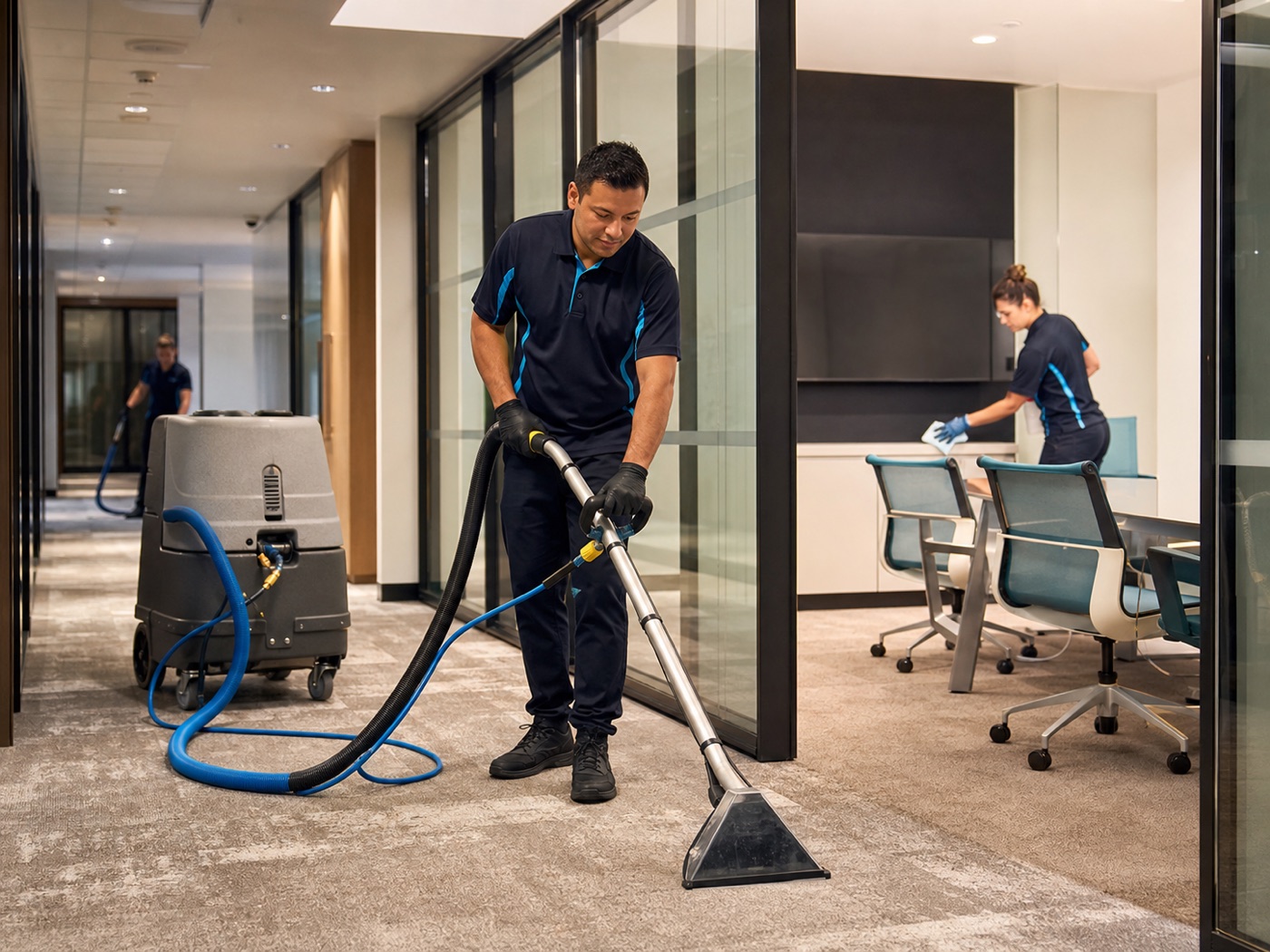
In commercial buildings this is formalized — crews vacuum traffic lanes daily and the full floor on a rotation, because that is what the traffic pattern warrants. Households can borrow the idea without the paperwork.
The Edges, Corners, and Everything Else
An upright vacuum cleans the middle of a room well and the perimeter badly, and the perimeter is where a surprising amount of material collects.
Fine dust drifts toward walls on air currents and settles along the edge of the carpet where the pile meets the baseboard. Nothing with a rotating brush reaches that strip, so it accumulates for years and eventually shows as a darker line along the wall — a condition sometimes mistaken for a mold or moisture problem when it is simply filtration soil.
The crevice tool handles it, and once or twice a year is enough. The same tool belongs along the base of stair risers, around furniture legs, under the edge of area rugs, and in the track of sliding glass doors, which in a coastal house is essentially a sand collection device.
Upholstery is the other thing a vacuum should be reaching and usually does not. A sofa holds far more than its surface suggests, and a pass with the upholstery tool across the cushions and into the crevices every few weeks removes material that would otherwise work its way into the fill.
What Vacuuming Cannot Do
Even done perfectly, vacuuming has a ceiling, and it is worth being clear about where it sits.
It removes dry particulate. It does not remove oily soil, which accumulates as a film from cooking, skin contact, and outdoor pollutants, and which is what turns traffic lanes grey. It does not remove anything bonded to the fiber, it does not touch the pad, and it does nothing about odor at the source.
That is the division of labor. Vacuuming is the frequent maintenance that keeps the abrasive load down between cleanings; periodic hot water extraction removes what vacuuming cannot reach. Households that do both well get considerably more life out of the same carpet than households that do either one alone.
Where the two meet is worth planning deliberately, because doing the frequent part properly genuinely lets you stretch the interval on the expensive part.
All City Carpet Cleaning And Building Solutions serves Virginia Beach, Norfolk, Chesapeake, Suffolk, Hampton, Portsmouth, and Smithfield, with area pricing published so you can see the numbers before you call.