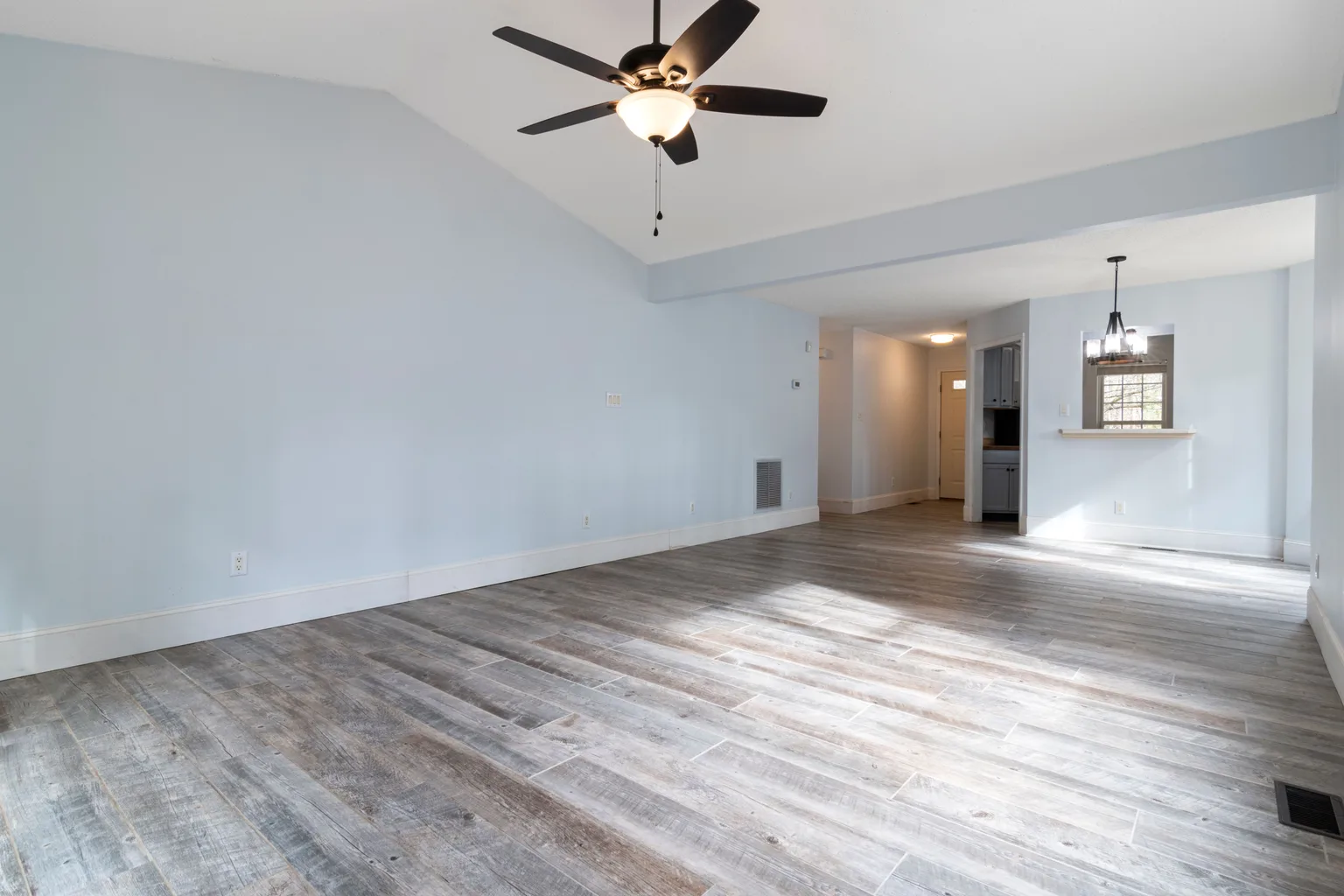
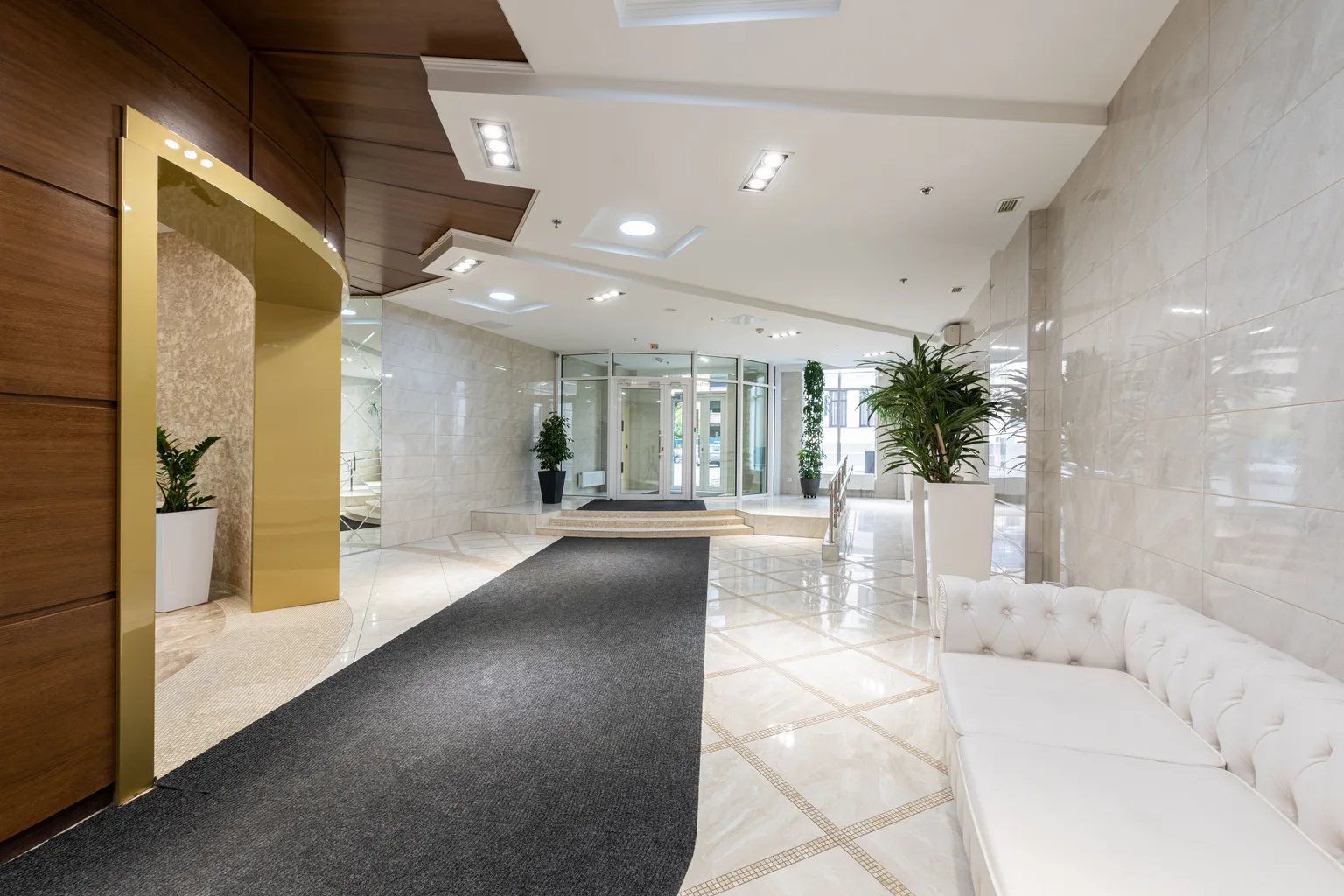
Patients form an impression of a medical or dental practice within a few seconds of walking in, and a meaningful share of that impression comes from things nobody consciously evaluates: whether the room smells like anything, whether the seating looks used, and whether the floor looks cared for.
That is a slightly uncomfortable thing to design a maintenance program around, but it is real, and it sits alongside a set of practical requirements that other commercial spaces do not have.
Where Carpet Belongs — and Where It Does Not
This is the first question, and it is not a cleaning question so much as a design one that cleaning has to live with.
Operatories, treatment rooms, sterilization areas, and laboratories need hard, non-porous, cleanable surfaces. Carpet in those spaces cannot be disinfected to any meaningful standard, because disinfection requires a surface a product can actually reach and remain in contact with. Porous fiber does not qualify. Practices occasionally inherit carpeted clinical space in an older building, and that is worth planning to change rather than cleaning around indefinitely.
Waiting rooms, corridors, business offices, and consultation rooms are a different matter. Carpet there does real work — it absorbs sound in a space where conversations are frequently private, it is warmer and less institutional than tile, and it reduces the noise of a busy corridor. Those are genuine benefits, and they come with a maintenance obligation.
The Waiting Room Does Most of the Work
Every single person who visits your practice crosses the waiting room floor, usually twice. Nothing else in the building sees that traffic, and the wear reflects it.
| Zone | What it takes | Reasonable interval |
|---|---|---|
| Entry and vestibule | All outdoor soil for the entire building | Monthly attention, plus real matting |
| Waiting room traffic path | Every visitor, twice per appointment | Quarterly |
| Check-in and check-out counter | Standing traffic, pivoting, spills | Quarterly |
| Corridors to treatment areas | Staff plus every patient | Quarterly to semiannual |
| Business office and break room | Staff only, plus food and drink | Semiannual |
| Consultation rooms | Comparatively light | Annual |
The entry row is the one that pays for itself. Matting at the door removes soil before it reaches carpet, and in this region that includes abrasive sand that cuts fiber rather than just dirtying it. A practice that maintains real walk-off matting replaces its waiting room carpet years later than one that does not, and it is a far cheaper line item than flooring.
The Seating Nobody Schedules
Here is the gap in almost every practice's maintenance program. The waiting room chairs get wiped down, and that is where it ends.
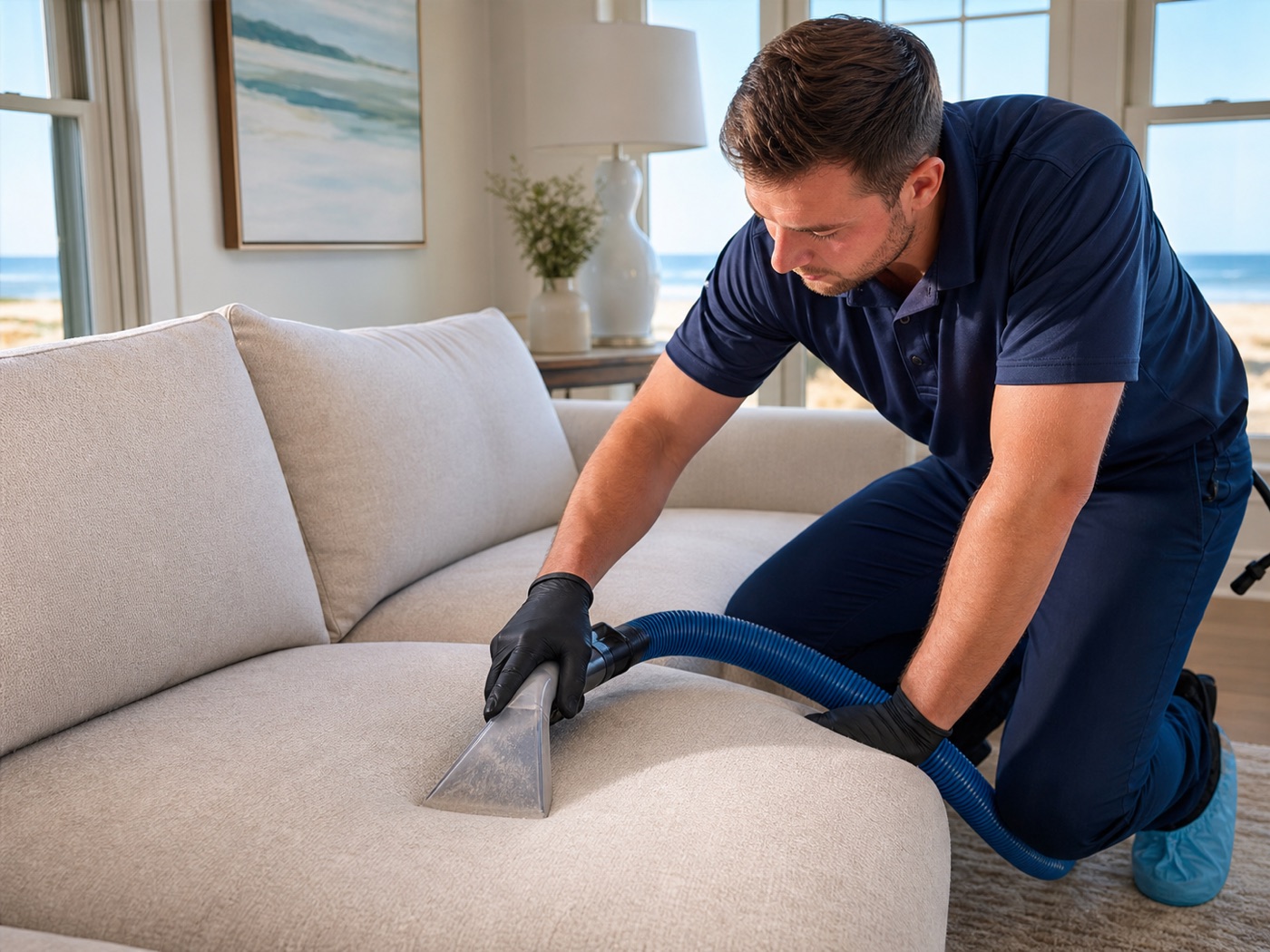
Upholstered seating in a waiting room absorbs body oils, hair product, perfume, cigarette smoke carried in on clothing, and occasionally worse. Cushion fill holds all of it, and unlike a floor there is no vacuum pass clearing the surface daily. A five-year-old waiting room chair that has never been cleaned is usually the single largest odor source in the room, and it sits at nose height.
Practices that notice a persistent smell in the waiting area almost always clean the carpet first and are disappointed. Fabric seating needs its own scope, with fabric-appropriate methods and controlled moisture, because a cushion that stays damp in a humid climate creates a worse problem than the one it solved.
Vinyl and medical-grade upholstery are easier and are frequently the better specification for high-volume practices — but they still need periodic real cleaning at the seams and the deck under the cushion, which is where things collect.
Odor Control Without Fragrance
It is worth saying directly: a heavily fragranced waiting room is not neutral. A meaningful share of patients — people with asthma, migraines, chemical sensitivity, pregnancy, or active chemotherapy — react badly to strong scent, and in a medical setting that population is overrepresented by definition.
Beyond that, patients read fragrance as cover. A room that smells strongly of anything raises the question of what it is covering, which is precisely the impression a practice does not want.
The alternative is removal rather than masking. Extract the soil that holds odor, clean the seating that holds more of it, keep drying times short enough that nothing goes musty, and address the source of any persistent smell rather than layering something over it. That is more work than a plug-in air freshener, and it is the only version that holds up.
Accessibility and the Floor Underfoot
One consideration specific to healthcare settings rarely comes up in a cleaning conversation and probably should: a meaningful share of your patients arrive with mobility limitations.
Walkers, canes, crutches, wheelchairs, and unsteady gait all interact with flooring. Loose or curling entry mats are a trip hazard. A damp floor at opening is a slip hazard. Thick, plush carpet is genuinely harder to push a wheelchair across than the low-pile commercial carpet most practices specify, and transitions between carpet and hard surface are exactly where a walker catches.
None of that is a cleaning company's decision, but it does shape how the work should be done. It means matting needs to lie flat and get replaced when it stops doing so rather than being left down until it looks bad. It means the drying window is a safety question and not only a convenience one. And it means transitions and edges deserve the same attention as open floor, because that is where damage produces a hazard rather than just an appearance problem.
The practical version is simple: when we walk a practice, we flag matting that has curled, transitions that have lifted, and any area where carpet has worn enough to create an edge. Those are cheap to address early and expensive to ignore.
Drying Is the Real Scheduling Constraint
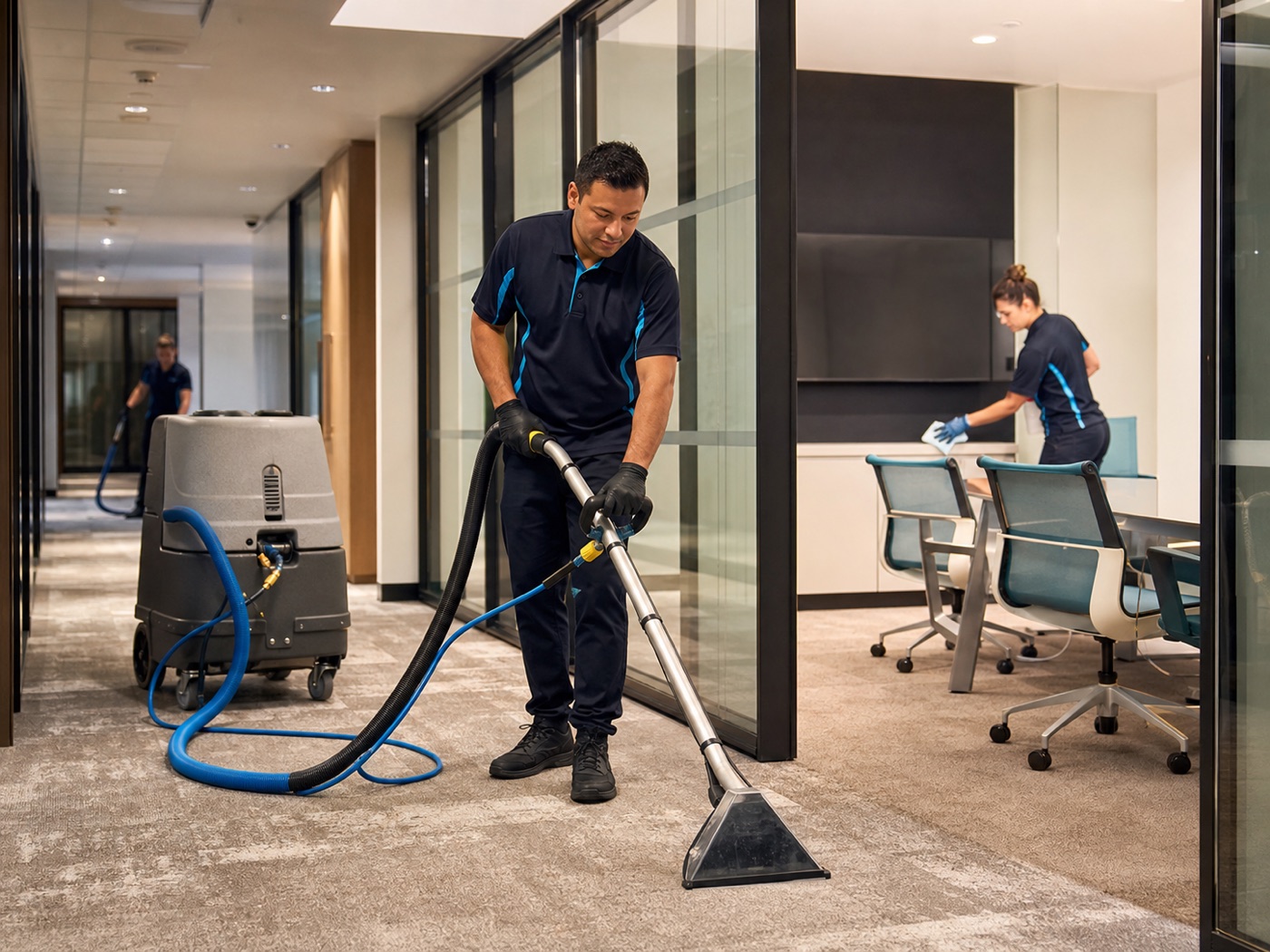
A practice closing at five and opening at eight has a fifteen-hour window, which sounds generous until you account for coastal humidity. Hot water extraction on a dense commercial carpet with the HVAC set back overnight can easily still be damp at seven in the morning.
The fixes are mechanical and they need to be agreed in advance: keep the air conditioning running rather than setting it back, add air movers, and in some cases choose a lower-moisture method for a mid-cycle maintenance clean while reserving full extraction for a closed day or a holiday weekend. Planning for that window is the difference between a clean floor and a wet one at opening.
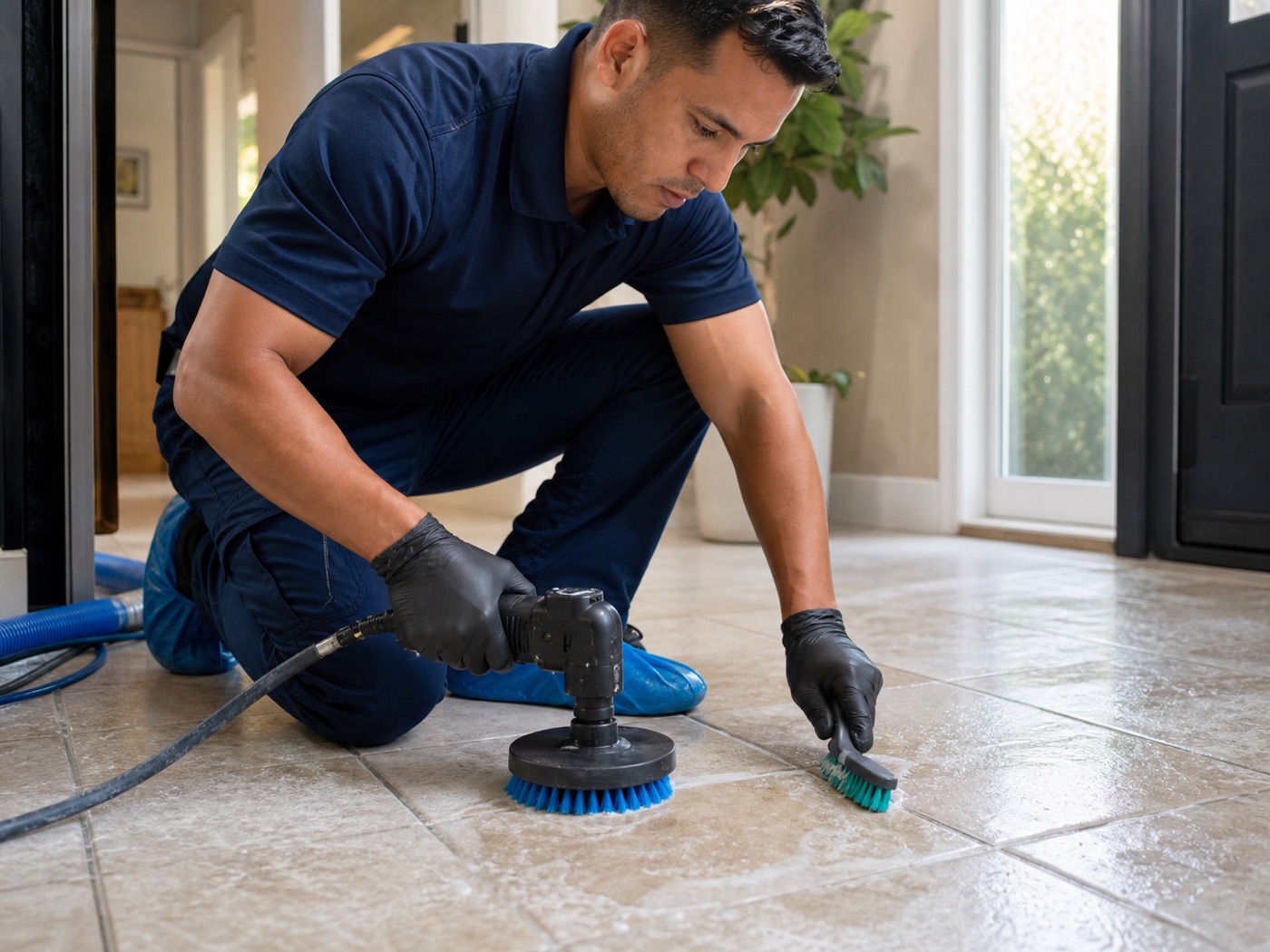
Hard surfaces in the clinical areas are typically on a different cycle entirely, handled by your own staff daily and deep-cleaned periodically. Grout in restrooms and sterilization areas is the part that tends to fall between the two, and it is worth naming explicitly in whoever's scope covers it.
What to Ask a Vendor Before Hiring Them
Practices are used to vetting vendors carefully, and floor care usually gets less scrutiny than it deserves given that the crew will be in your building unsupervised after hours.
- Are you insured, and can I see the certificate? This is the baseline, and it should take a vendor thirty seconds to produce.
- Who is actually coming, and will it be the same crew each visit? Consistency matters in a space with access controls and a lot of expensive equipment.
- How will you handle after-hours access, alarm codes, and locking up? Get this in writing rather than agreeing to it verbally at the first visit.
- What is your realistic dry time for this specific carpet in August, and what will you do to hit it? A vendor who answers this with a generic number has not thought about your building.
- What will you tell me if something cannot be cleaned? The answer reveals whether you are hiring someone who sets expectations or someone who takes the job and hopes.
The last question is the useful one. A vendor who has a ready answer about limits — this stain is permanent, this seating is past cleaning, this area needs replacement rather than another appointment — is a vendor who will tell you the truth when it is inconvenient. That matters more over a multi-year relationship than a slightly lower per-visit price does.
The Short Version
Keep carpet out of clinical areas and maintain it properly everywhere else. Put the money at the entry and the waiting room, because that is where the traffic and the first impression both are. Put the seating on an actual schedule instead of a wipe-down. Remove odor rather than covering it. And build the schedule around how long the floor takes to dry, not how long it takes to clean.
All City Carpet Cleaning And Building Solutions works with medical, dental, and professional practices across Virginia Beach, Norfolk, Chesapeake, Hampton, and Suffolk. Scope and timing are confirmed per office, because a pediatric practice and a specialist's suite are not the same building.