You can rent a carpet cleaning machine from a grocery store for less than the cost of dinner, and plenty of people do. It is a reasonable thing to try, and the results range from genuinely good to actively counterproductive depending almost entirely on what the job was.
It is worth being straightforward about where the line falls, because the failure mode is not obvious. A DIY cleaning that looks perfect on the day can leave a carpet in worse condition two months later, and most people never connect the two events.
The Difference Is Recovery, Not Water
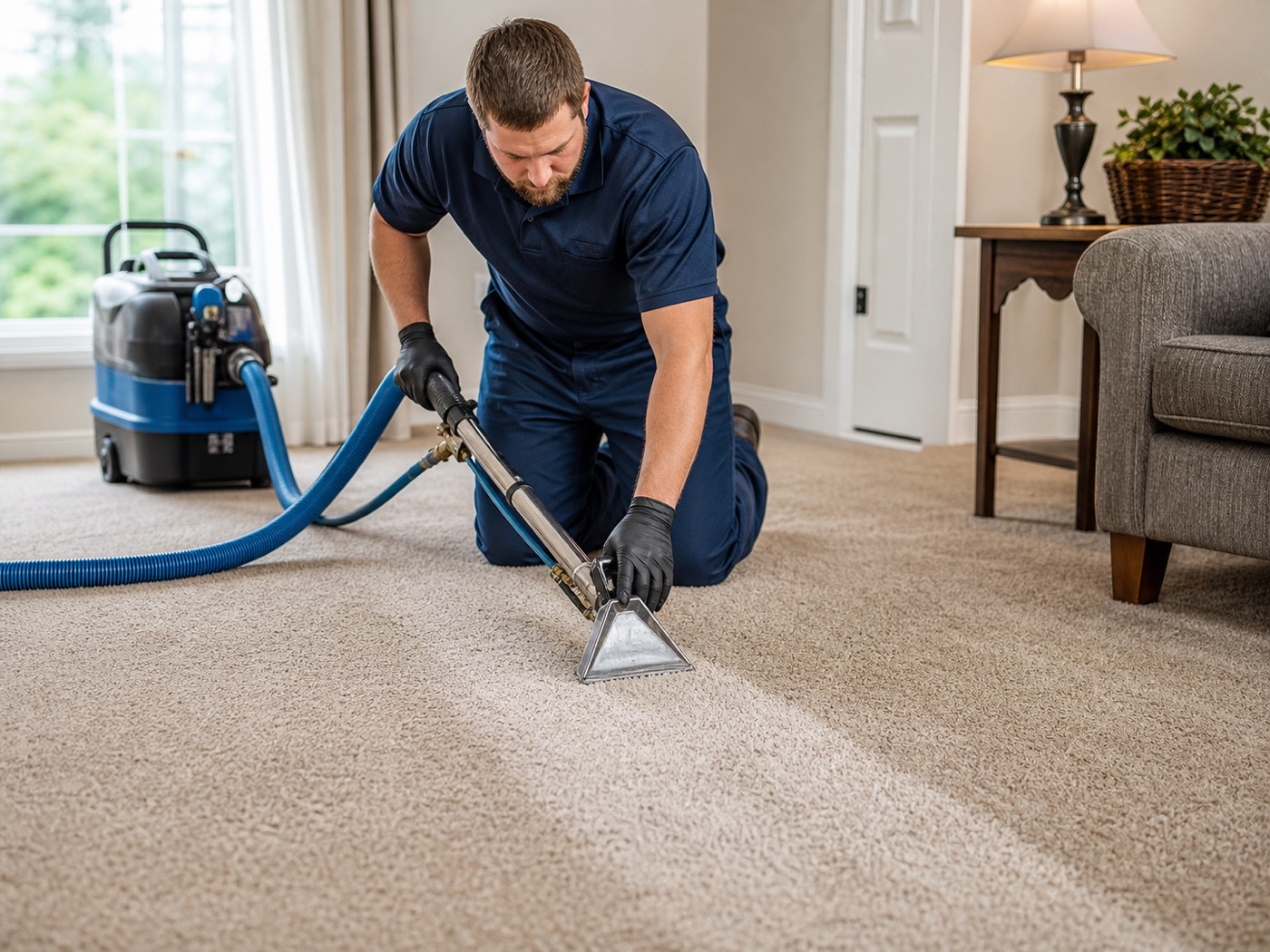
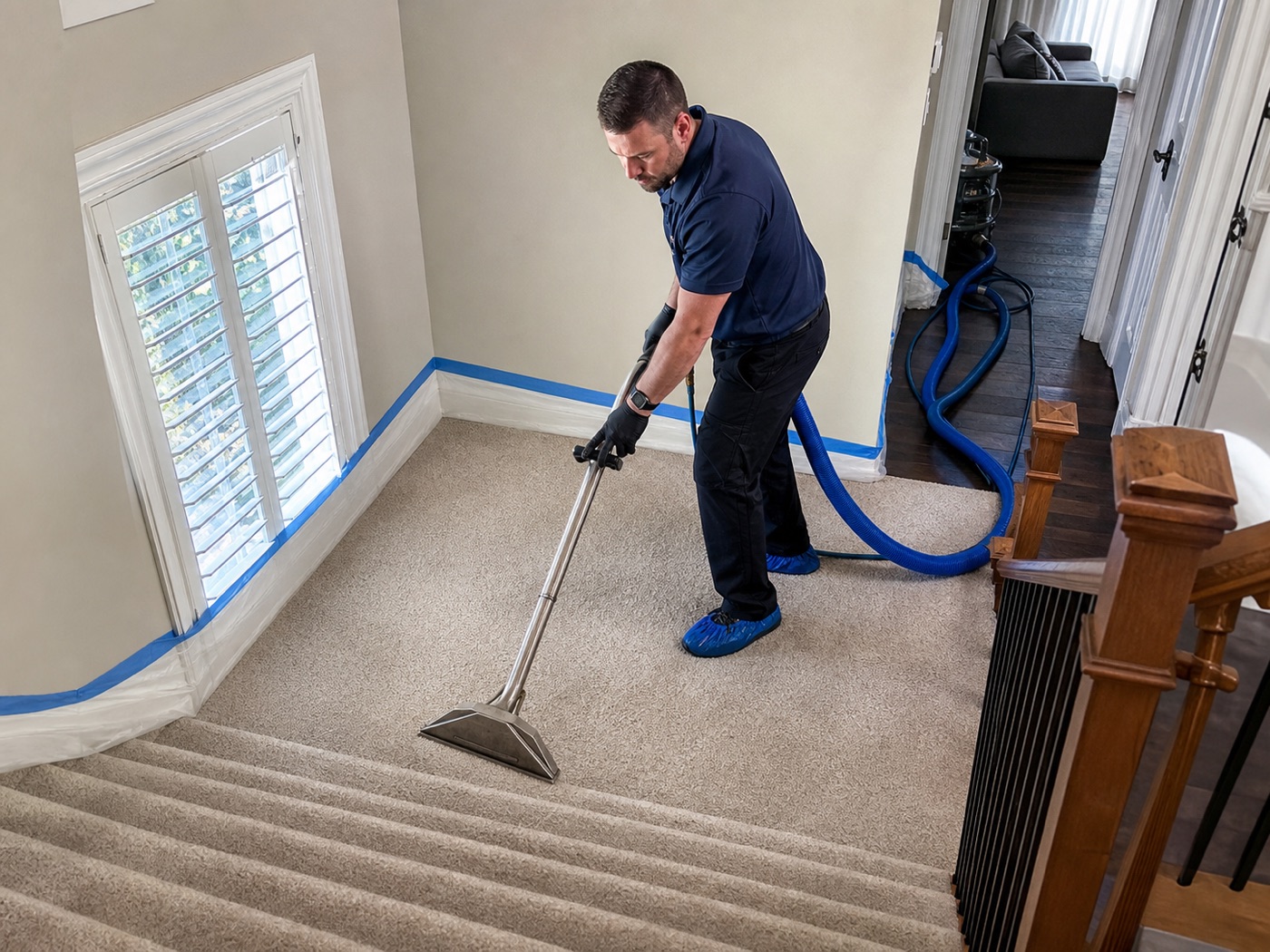
Both a rental machine and professional equipment do the same three things: apply heated solution, agitate the fiber, and vacuum the water back out. The applying part is easy and rental machines do it fine.
The recovery part is where the equipment gap is enormous. A truck-mounted system uses a powerful vacuum blower driven by the vehicle's engine, pulling water back out of the carpet with force a portable unit cannot approach. It also maintains high solution temperature consistently, where a rental machine relies on whatever came out of your tap and loses heat throughout the job.
That single difference cascades. Weaker recovery means more water left in the carpet, which means longer drying. Longer drying in a humid Hampton Roads house means more time for wicking to bring dissolved material back to the surface, more time for a musty smell to establish, and more time before the floor can take traffic without re-soiling.
It also means more detergent left behind, and that is the failure that shows up months later.
An Honest Comparison
| Factor | Rental machine | Professional extraction |
|---|---|---|
| Solution temperature | Tap water, cooling through the job | High and consistent |
| Vacuum recovery | Modest — leaves the carpet quite wet | Strong — the main equipment advantage |
| Typical dry time here | 12-24 hours, sometimes longer | 4-8 hours with airflow |
| Rinse capability | Limited; residue is common | Rinse step is part of the process |
| Pre-treatment | Whatever you buy separately | Chemistry matched to fiber and soil |
| Best for | One room, a fresh spill, a small rug | Whole house, heavy soil, odor, delicate fiber |
| Cost | Machine rental plus solution plus your day | Published starting prices |
The dry time row is the one that matters most in this region. Twelve to twenty-four hours is a long time for a carpet to be damp in a house where indoor humidity is already high, and it is why the same rental machine produces better results in Denver than it does in Norfolk.
Where a Rental Machine Is the Right Call
This is not a piece arguing nobody should ever rent one. There are jobs where it is clearly the sensible choice.
- A single room that needs freshening between professional cleanings.
- A fresh spill in a defined area, where the goal is flushing rather than deep cleaning.
- A small area rug that can be taken outside and given real airflow to dry.
- A rental you are moving out of, where a documented professional cleaning is not required by the lease and the carpet is in reasonable shape.
- A situation where a professional simply cannot come in time and something needs doing now.
If you do rent one, the technique that improves results most is counterintuitive: use less solution than the instructions call for, and make several passes with the trigger released to pull water back out. The recovery passes are worth more than the application passes, and almost nobody does enough of them.
Two other things help. Vacuum thoroughly first, so the machine works on embedded soil rather than loose debris. And set up airflow afterward — fans at floor level aimed across the carpet, air conditioning running, windows closed on a humid day.
Where It Goes Wrong
The jobs where DIY reliably disappoints share a pattern: they are the ones where the equipment difference matters most.
Pet odor is the clearest. Urine that has reached the pad is a contamination problem, and adding a gallon of water to a pad that already holds contamination makes the smell worse rather than better once it warms up. Rental machines cannot recover enough of what they put down to help here, and the common outcome is a house that smells worse in July than it did before.
Carpet over hardwood is the second. Water that passes through the pad onto an old wood floor causes cupping and finish damage, and weak recovery is exactly the condition that allows it. This is common in older Norfolk, Portsmouth, and Hampton homes and it is a genuinely expensive mistake.
Wool and delicate fibers are the third. Wool reacts to high pH and heat differently than nylon does, most consumer solutions are not formulated for it, and browning or dye bleed is not reversible.
And then there is simply heavy soil. A carpet that has gone five years without professional cleaning has soil bound into the fiber with body oils and cooking residue, and dissolving that bond takes heat and chemistry a rental unit does not provide. The machine will make it look better and leave most of the load in place.
The Products Matter as Much as the Machine
Less discussed than the equipment gap, and responsible for a good share of the disappointing outcomes, is what goes into the tank.
Consumer carpet solutions are formulated to be safe across every fiber and every situation, which necessarily means they are not optimized for any of them. A professional selects chemistry for the fiber type, the soil type, and the pH the situation calls for — an alkaline pre-spray for greasy traffic-lane soil behaves nothing like a neutral product for a wool rug, and using the wrong one either underperforms or causes damage.
The bigger issue is that consumer solutions are designed to foam, because foam reads to users as cleaning power. Foam is exactly what you do not want in a machine with weak recovery — it makes water harder to extract and it leaves more surfactant behind. This is why the instruction to use less than the bottle suggests is genuinely good advice rather than penny-pinching.
The other trap is adding household products to the tank. Dish soap, laundry detergent, and general-purpose cleaners all show up in advice online, and all of them are close to impossible to rinse out of carpet with a portable machine. A spot treated that way often looks perfect and reappears as a dark ring within a couple of months, because the residue has been collecting soil the whole time.
The Cost Comparison People Skip
The arithmetic usually gets done on the rental fee alone, which understates it considerably.
A machine rental plus solution runs a meaningful fraction of a professional visit before counting anything else. Add most of a Saturday, the effort of moving furniture yourself, and the possibility of doing it again in two months because of residue, and the gap narrows sharply.
Because professional cleaning carries a minimum service charge, the value proposition also inverts with scale. One room is where a rental is most competitive. Four rooms is where it is least — the marginal cost of additional rooms in a professional visit is low, while a rental machine costs you the same day regardless.
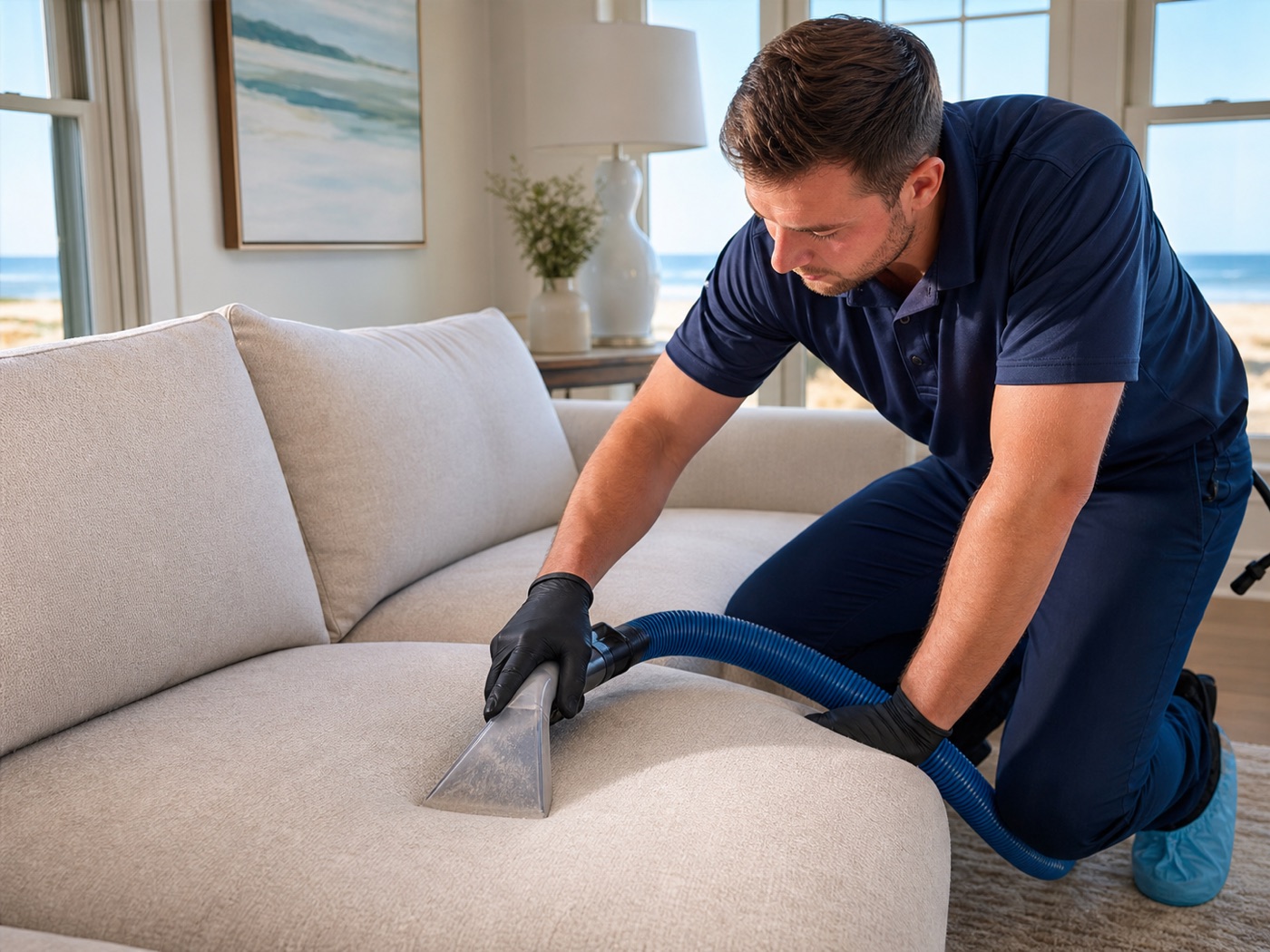
Upholstery deserves a specific warning. Rental machine attachments apply more moisture to a cushion than it can shed, and cushion fill in a humid house dries very slowly. A sofa cleaned with a rental unit in August can stay damp inside for days, which produces exactly the smell the cleaning was meant to remove.
The Short Version
Rent one for a room, a spill, or a small rug, use less solution than it tells you to, and make extra recovery passes. Do not use one on pet contamination, on wool, on carpet over old hardwood, or on a whole house that has gone years without attention — those are the jobs where weak recovery turns an attempt to help into a problem.
All City Carpet Cleaning And Building Solutions serves Virginia Beach, Norfolk, Chesapeake, Suffolk, Hampton, and Portsmouth. If you are weighing whether a job is worth calling about, describe it to us — we will tell you when a rental would do fine.