Turn over a seat cushion on almost any sofa made in the last forty years and you will find a small tag with a letter printed on it. W, S, WS, or X. Most people have never looked at it. It is the single most important piece of information about how that piece of furniture can be cleaned, and it takes about ten seconds to find.
Ignoring it is how a well-made sofa becomes a sofa with a permanent water ring across one arm.
The Four Codes
The codes come from the furniture industry and they describe what kind of cleaning agent the face fabric can tolerate. They are not a difficulty rating and they say nothing about how dirty a piece is.
| Code | Means | Typical fabrics |
|---|---|---|
| W | Water-based cleaning agents are safe | Polyester, microfiber, olefin, most synthetics |
| S | Solvent only — no water | Rayon, acetate, some silks, certain velvets |
| WS | Either water-based or solvent | Many blends, most performance fabrics |
| X | Vacuum only — no liquid of any kind | Some delicate wovens, haitian cotton, certain jacquards |
W is the most common on modern furniture and the most forgiving. S is where the trouble lives. X is rare, and when a piece genuinely carries it, the honest professional answer is vacuuming and careful dry compound work rather than anything wet.
There is a fifth possibility worth mentioning: no tag at all. Antique pieces, custom upholstery, imported furniture, and anything that has been reupholstered often have nothing to go on. In that case the fabric gets identified by fiber burn test or by feel and construction, and every product gets tested in a hidden area first — under the skirt, behind a leg, on the back panel against the wall.
Why the Code Exists at All
The reason some fabrics cannot take water comes down to fiber chemistry, and it is worth understanding rather than memorizing.
Cellulosic fibers — rayon, viscose, acetate, and their relatives — swell when wet and lose a significant share of their strength. A rayon velvet that gets damp can shrink unevenly, distort the pile, and develop a permanently different texture where the water landed. It does not go back.
Then there is wicking. As a wet area dries, moisture travels outward toward the dry fabric and carries dissolved soil and loose dye with it. At the edge, where evaporation happens fastest, that material concentrates into a visible line. This is the water ring people describe after trying to clean one spot on a cushion, and it is almost always worse than the original stain.
Solvent cleaning sidesteps both problems by dissolving oily soil without swelling the fiber and by evaporating far faster, so there is much less opportunity for wicking. It is less aggressive on water-soluble soil, which is the trade-off.
What Professional Cleaning Adds
The work itself is not glamorous, but each step exists for a reason.
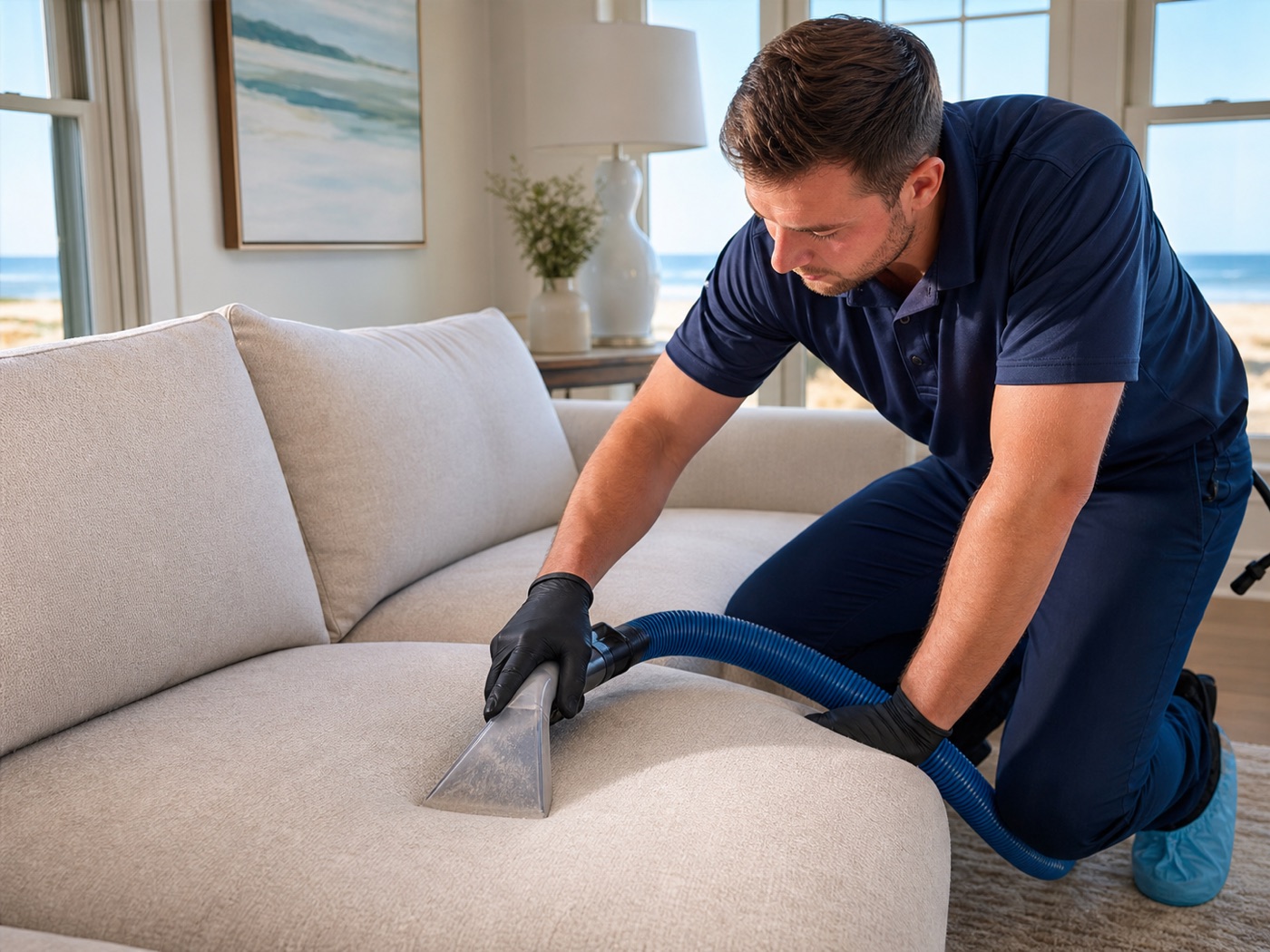
It begins with dry soil removal — a thorough vacuum with an upholstery tool, including in the crevices and under the cushions, because loose particulate turns to mud the moment anything wet touches it. Then the fabric is identified and tested, the appropriate pre-treatment goes on, and it is given time to work before any extraction happens.
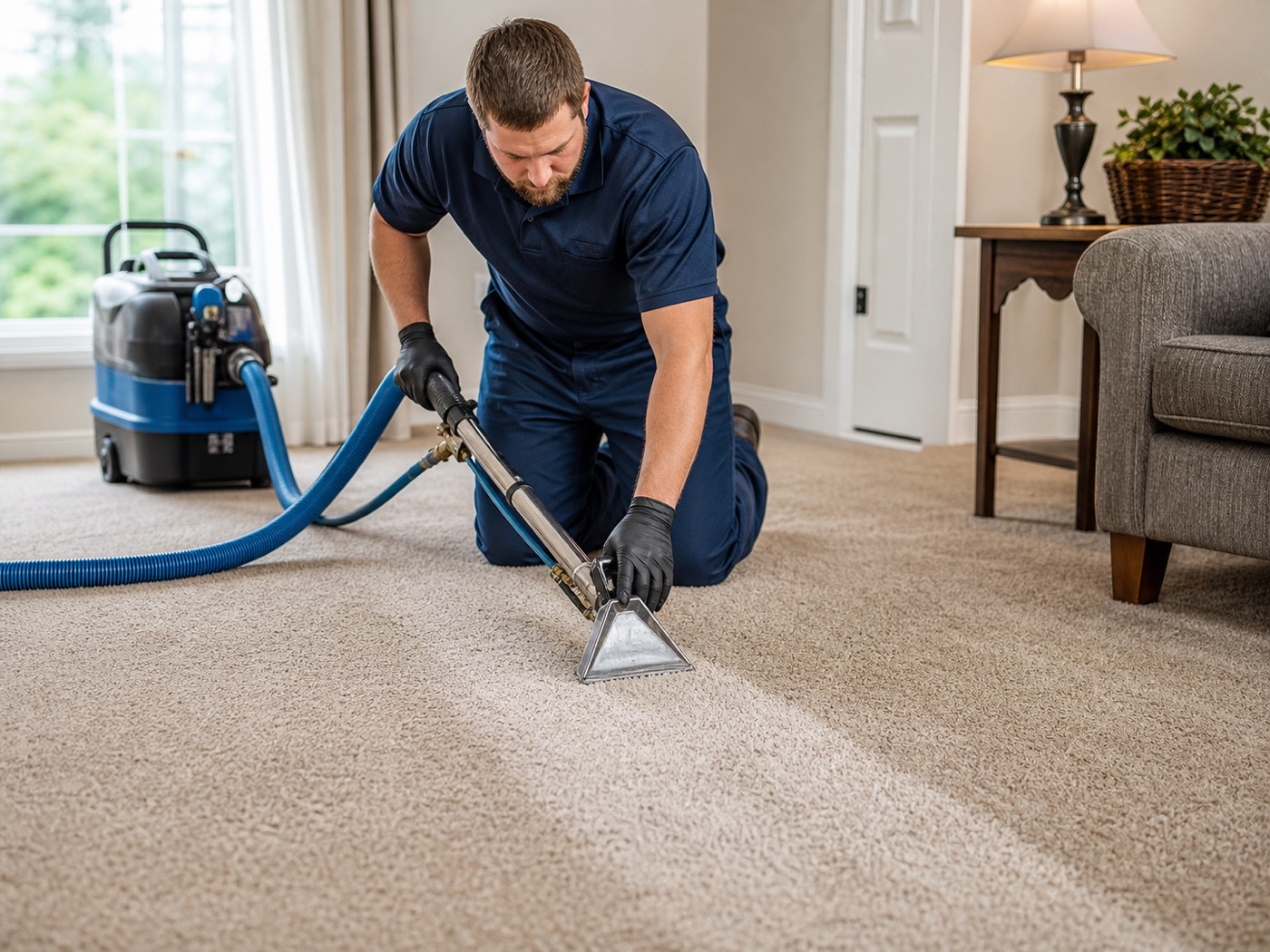
Extraction uses a hand tool at controlled pressure rather than the wand used on floors, because upholstery has cushion fill behind it and over-wetting there is far more consequential than over-wetting carpet. The goal is to clean the fabric and the top of the fill without saturating the foam underneath. Professional upholstery cleaning is genuinely a different craft from carpet work, which is why it is priced separately.
Finally the panel dries evenly, with air movement if needed. Even drying is what prevents rings, and it is the step homeowners skip because it is the boring one.
The Fabrics We See Most in Hampton Roads
Regional housing stock shapes what ends up in living rooms, and a few patterns repeat here.
Performance fabrics have taken over in family and military households, and for good reason. Most are solution-dyed polyester or olefin coded W or WS, they release water-based spills readily, and they hold up to repeated cleaning. They are not stain-proof, whatever the showroom said, but they buy you time to respond.
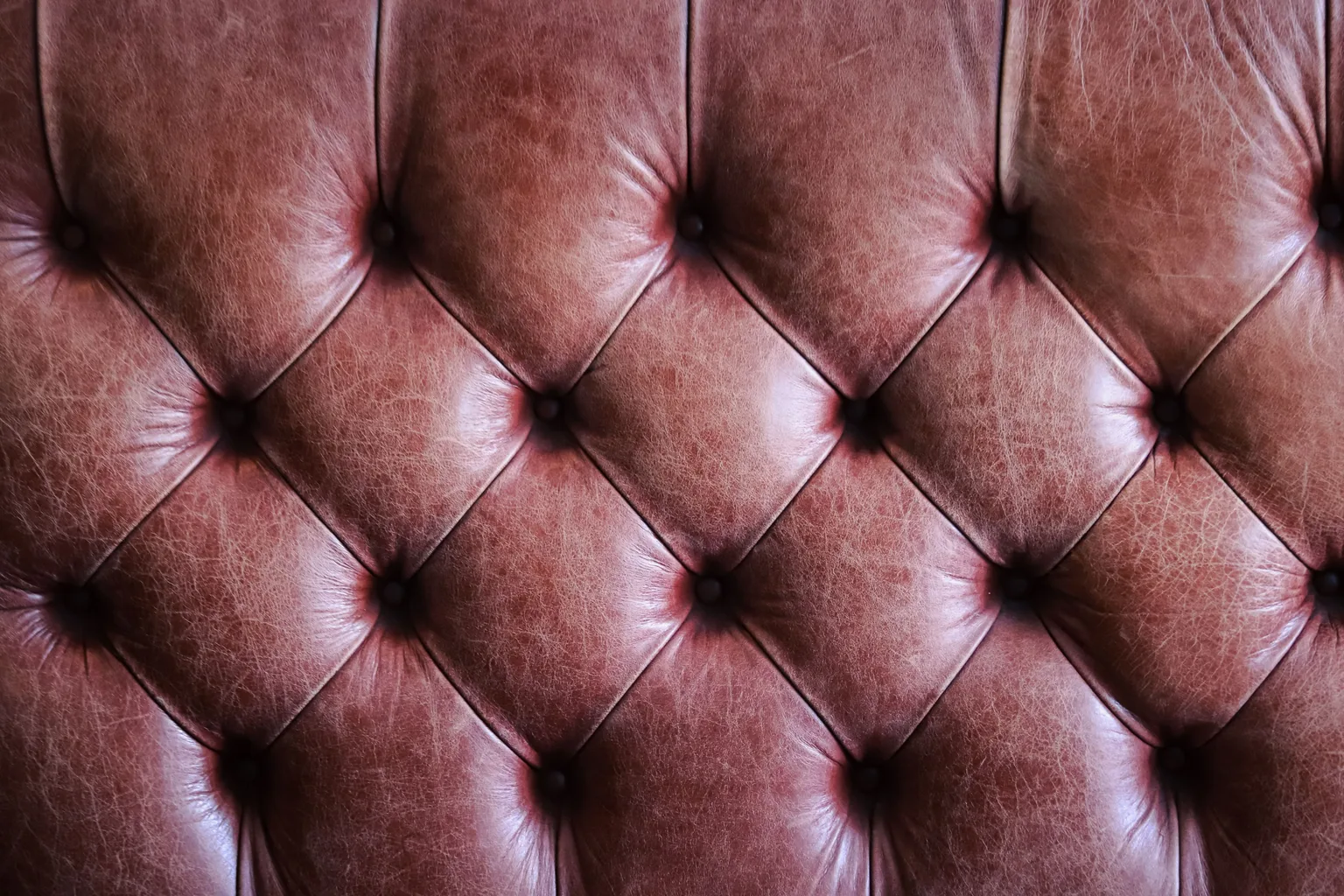
Leather shows up constantly and is not covered by the code system at all. Leather needs cleaning and conditioning rather than extraction, and the main risk in this climate is the opposite of what people expect: not moisture, but drying and cracking from sun exposure and running the air conditioning for eight months a year.
Older upholstered pieces in Norfolk and Portsmouth homes are often rayon blends or cotton velvets from an era when S codes were common, and they deserve real caution. There is a lot of beautiful furniture in this region's historic neighborhoods that has survived seventy years and could be ruined in one afternoon with a rented machine.
And everywhere near the water, upholstery collects the same sand and salt-air film that floors do. Furniture on a screened porch or in a beach cottage needs shorter intervals than the same piece would in a house five miles inland.
What to Do About a Fresh Spill
Most permanent upholstery damage happens in the first five minutes after a spill, when someone reaches for whatever is under the sink.
- Check the tag before you touch anything wet. It takes ten seconds and it determines everything that follows.
- Blot, never rub. Rubbing distorts the pile and drives the spill deeper into the fill.
- Work from the outside of the spot inward, so you are not spreading the edges outward.
- On a W or WS fabric, use plain cool water and a white towel first. Water alone resolves a surprising share of fresh spills with no residue left behind.
- On an S or X fabric, blot dry and stop. Call rather than experiment.
- Dry the whole panel rather than the spot — a fan pointed at the cushion for an hour prevents the ring.
That last point is the one that separates a rescued cushion from a ruined one. The specific chemistry of common household spills — red wine, coffee, ink, grease — matters too, and each behaves differently enough to be worth knowing in advance rather than looking up mid-panic.
Dining Chairs, Mattresses, and the Rest
The sofa gets all the attention, but it is not the only upholstered surface in a house, and the others fail in their own ways.
Dining chairs collect food and hand oil concentrated onto a small seat area, and because the seats are usually removable panels they are among the easiest pieces to clean well. Chairs are also where most people first notice that the fabric has gone darker at the front edge — that is body oil, not soil, and it needs an oil-capable treatment rather than more scrubbing.
Recliners and sectionals hide their problems in the mechanism. Crumbs, coins, pet hair, and spilled drinks work into the frame where nothing reaches them, and a sectional that smells faintly of something nobody can place is usually holding it in the seam between two sections rather than in the fabric.
Mattresses belong in the conversation too and almost never make it. Eight hours a night of direct contact makes a mattress the highest-exposure soft surface in the house. Most benefit more from a zippered encasement than from cleaning, but a mattress that has never had attention in a household with allergies is worth including on a visit.
Office seating is the commercial version of the same story, and it wears faster because it is used harder and shared. Adding chairs to a scheduled commercial carpet cleaning is inexpensive and it changes how a space reads more than the floor does.
The Surface You Touch Most
For all the attention floors get, the sofa is the surface a household has the most direct contact with. Hours a day, skin against fabric, and no weekly vacuum to interrupt the accumulation.
Body oils, hair product, food residue, pet dander, and dust settle into cushion fill and stay there. In allergy households that reservoir matters as much as the carpet does, and it is almost never part of the conversation. Cleaning the seating in the room where people actually spend their evenings often does more for indoor air than anything else available.
The practical move is to add upholstery to a carpet appointment rather than booking it separately. It avoids a second trip charge, it gets the whole room handled at once, and it means the floor and the furniture are back in service the same afternoon. The area pricing for both is published so you can work out the combination before calling.
All City Carpet Cleaning And Building Solutions cleans upholstery throughout Virginia Beach, Norfolk, Chesapeake, Suffolk, Hampton, Portsmouth, and Smithfield. Seventeen years of reading tags before touching fabric.