
Hampton Roads doesn't slow down for short-term rentals once summer ends. Fall brings its own wave of bookings — Virginia Beach boardwalk events shifting into their shoulder season, oyster festivals up and down the coast, college family weekends, and a steady stream of military families visiting Naval Station Norfolk, Langley, and Oceana. For hosts, that means the turnover pace barely eases up, it just changes shape.
Where summer turnover is often about sand and sunscreen, fall turnover shifts toward a mix of muddy shoes from festival grounds, pet hair from guests traveling with dogs, and the general wear of a property that's had more consecutive weekends booked than any other stretch of the year. Floors take the brunt of all of it, and floor condition is one of the fastest things a guest notices and one of the fastest things they mention in a review.
Why Fall Is a Real Peak in This Market
The Hampton Roads short-term rental market doesn't follow the same curve as beach towns further south, where the season drops off hard after Labor Day. Between festival season, military PCS timing, and college visit weekends, bookings stay dense enough through October and into November that many hosts run close to peak-season turnover volume without peak-season staffing or budget adjusted for it.
That mismatch is where floor care tends to slip. A property that got a deep clean every few weeks over the summer can quietly drift to less frequent attention once the obvious sand-and-sunscreen problem fades, even though guest volume hasn't actually dropped much. The soil accumulation from fall bookings is just less visually obvious than summer's, which makes it easier to under-clean without noticing.
The First Impression Problem
A guest forms an opinion of a rental within the first few seconds of walking through the door, well before they've unpacked or tested the WiFi. Floor condition is one of the fastest signals in that first impression — carpet that looks flat, matted, or slightly off-color reads as an unclean space even if the kitchen and bathroom are spotless.
This matters directly for review scores. Guests mention flooring in reviews more often than hosts expect, and a complaint about carpet or floors tends to color how a reader interprets the rest of the review, even when everything else about the stay was positive. A five-star stay with one line about carpet feeling not quite clean still reads as a mixed review to someone scrolling past it.
Odor: The Silent Review Killer
Odor is the turnover problem hosts are least likely to catch on their own, because anyone who spends regular time in a property goes nose-blind to it. A smell that's obvious to a first-time guest walking in can be completely invisible to a host or cleaner who's been in and out of the unit for months.
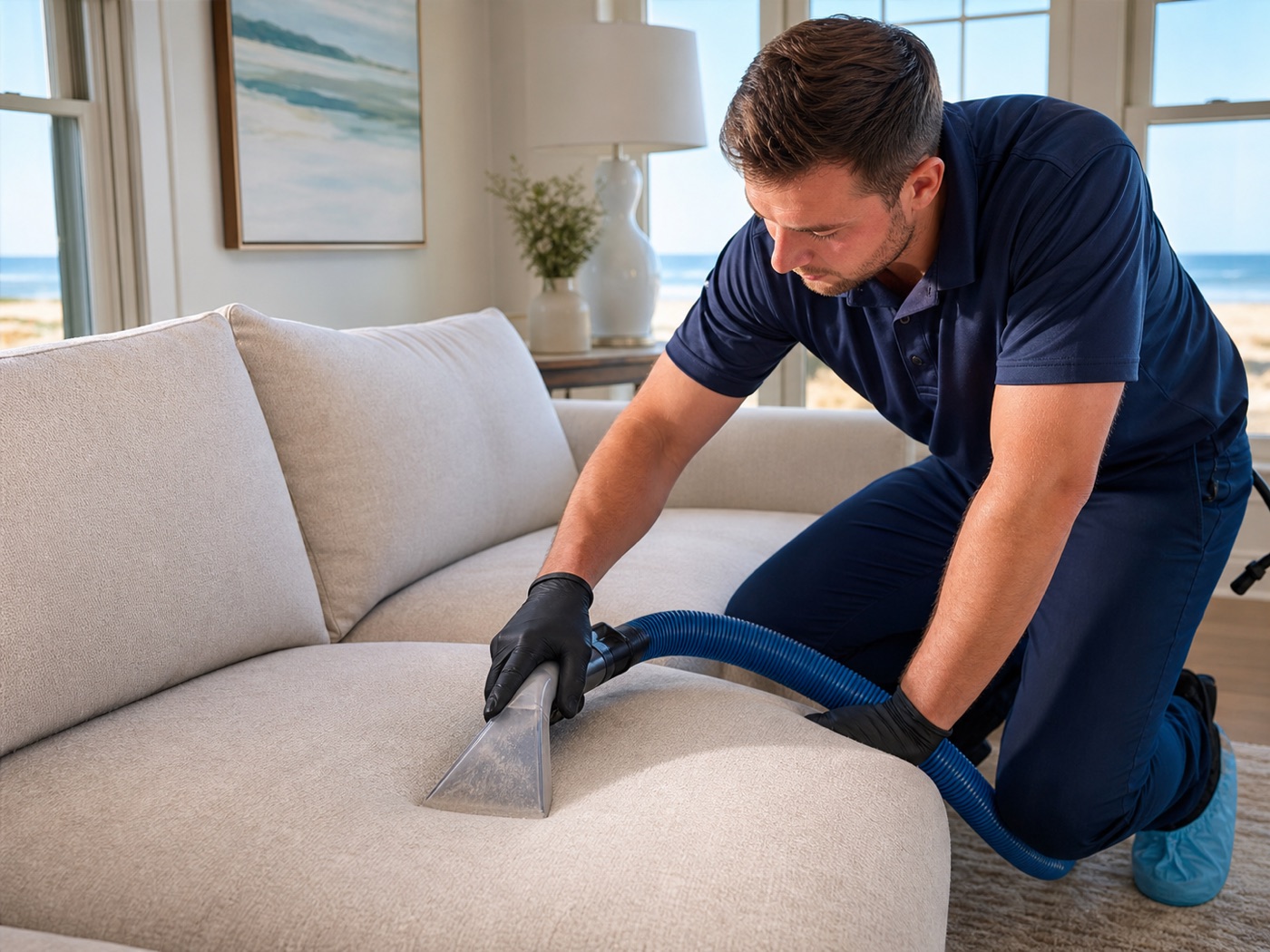
This is especially true for pet-friendly listings, which have become more common as hosts try to capture a wider booking pool. Pet odor sits in carpet padding and upholstery in ways that surface cleaning doesn't reach, and it tends to resurface with humidity — a real factor in this coastal climate — even after a room looks and smells fine on a dry day.
Rotating in an outside set of eyes, or ears in this case, periodically catches what daily familiarity misses. A cleaning crew that services multiple properties tends to notice odor faster than an owner-operator who's acclimated to their own unit.
What Professional Cleaning Adds That a Cleaning Crew's Vacuum Can't
Most turnover cleaning crews are staffed and priced for speed — linens changed, surfaces wiped, bathroom sanitized, floors vacuumed, all within a tight window between guests. That's the right model for the majority of turnovers, but it isn't designed to catch or fix soil that's already worked into carpet fiber over weeks of bookings.
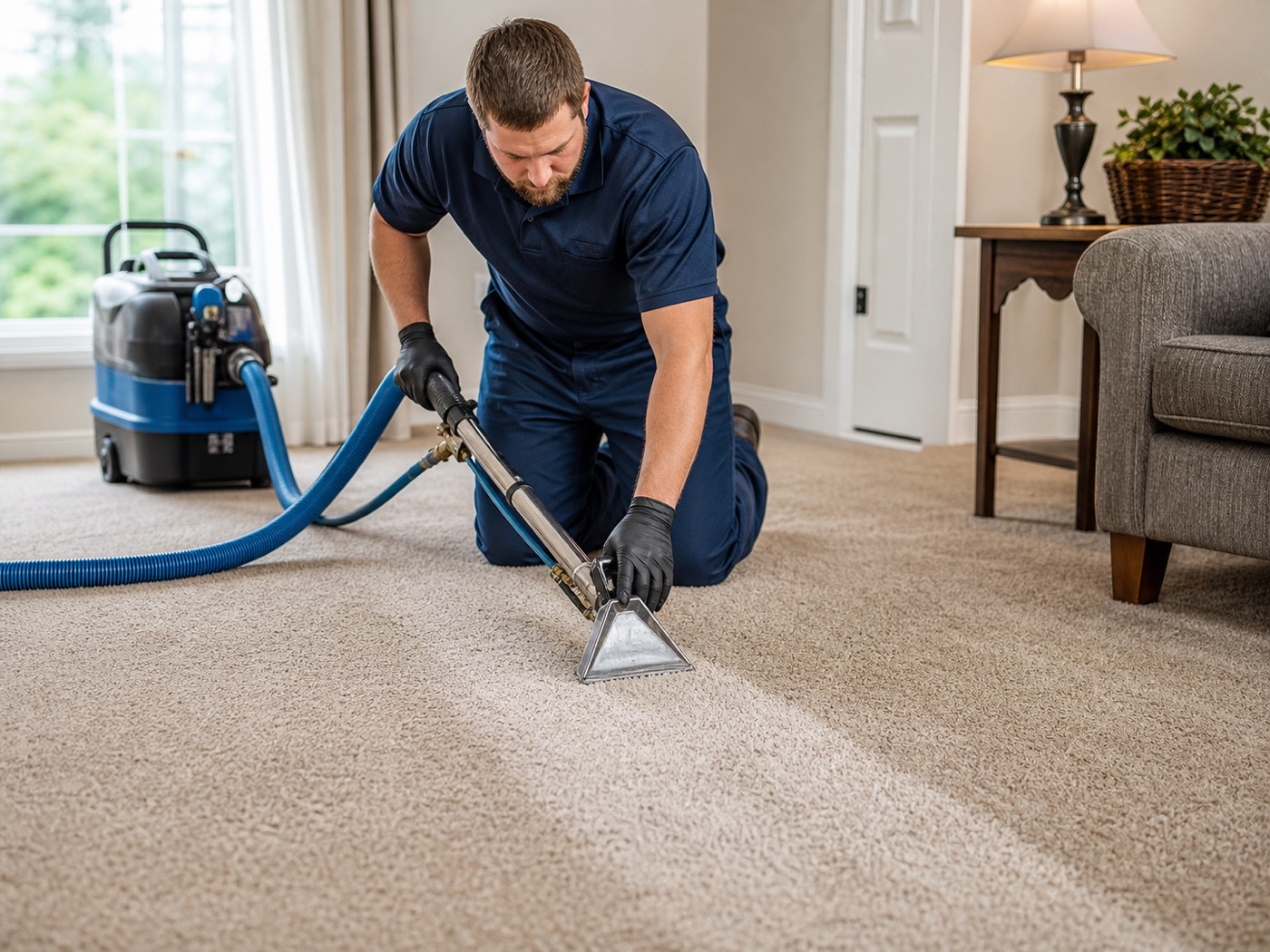
A professional hot water extraction reaches soil and odor sitting below the surface, in the fiber and pad, in a way a vacuum and surface wipe-down never will. For a rental running weekly or biweekly bookings through fall, layering this in periodically, separate from the standard turnover clean, is what actually resets the carpet's baseline condition rather than just maintaining its current state indefinitely.
This distinction matters for hosts thinking about their cleaning budget. The standard turnover clean is a fixed, recurring cost tied to every booking. A periodic deep clean is a separate line item, scheduled less often, that protects the asset itself and keeps the property from slowly drifting toward the kind of wear that eventually shows up in photos and reviews rather than being caught early.
Building a Floor-Specific Turnover Checklist
Most turnover checklists cover linens, kitchen, and bathroom in detail but treat floors as a single line item: vacuum. For a property running dense fall bookings, floors deserve their own checklist, separate from the general cleaning pass.
- Vacuum every room between every guest, including under furniture that doesn't move often
- Spot-check high-traffic paths — entryway, hallway to bedrooms, path to the kitchen — for compacted soil vacuuming alone won't lift
- Check closets and under-bed areas specifically for pet hair or forgotten spills
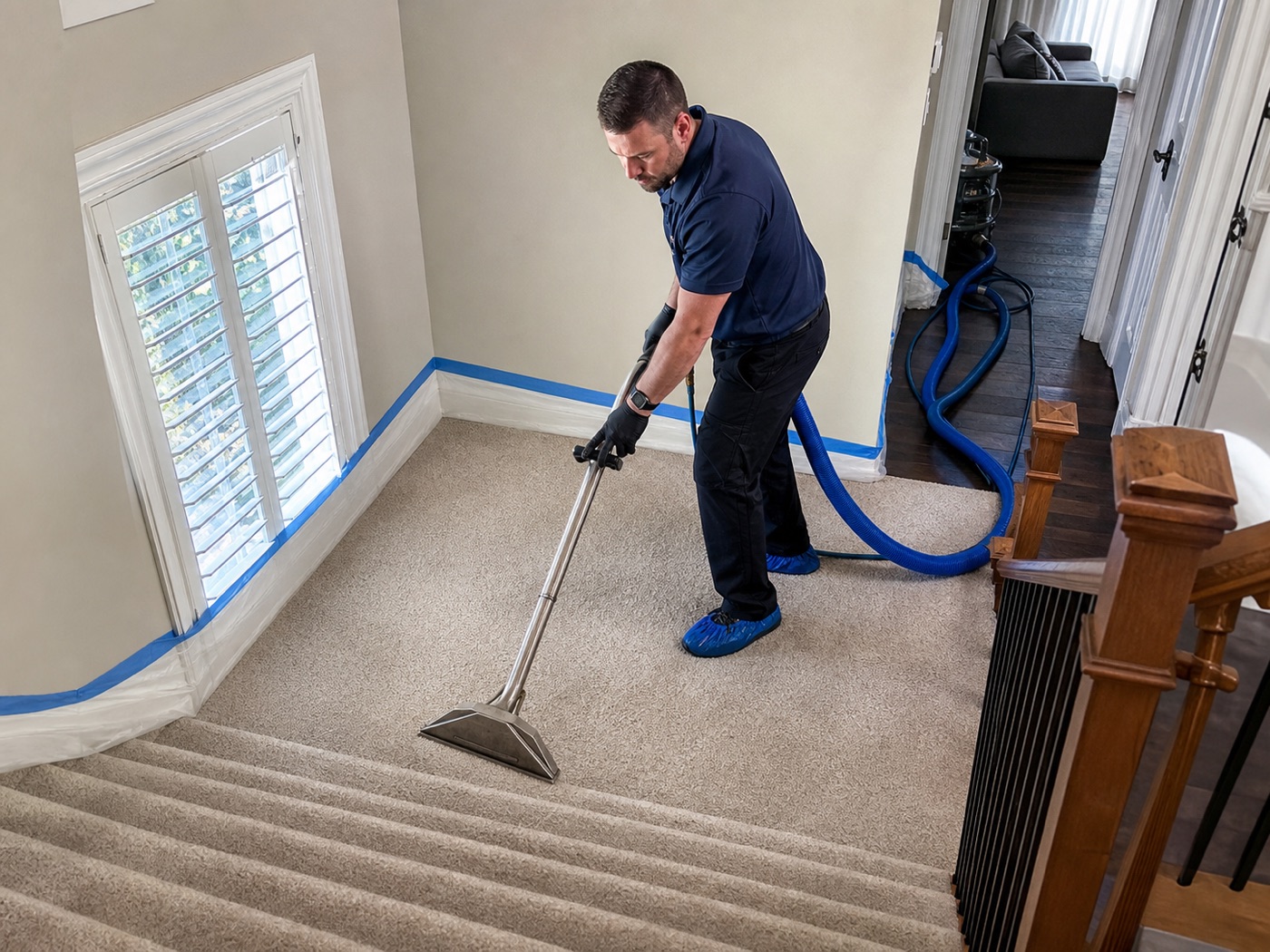
- Schedule a full extraction cleaning on a fixed calendar interval, not just when something looks visibly dirty
- Do a doorway odor check after the property has been closed up for a few minutes, not while cleaning products are still in the air
A schedule beats a reactive approach because soil buildup on carpet is gradual and easy to miss guest by guest. A property that gets a deep clean only when it finally looks dirty has already been through several stays where it looked slightly worse than it should have, and slightly worse is exactly what shows up in review language even when guests can't quite name what bothered them.
Hosts managing several units at once benefit from borrowing the same playbook property managers use for standard rental turnovers, adapted for the faster pace of short-term stays rather than annual lease cycles.
Coordinating Cleaning Around Tight Turnover Windows
Peak season turnover windows are often just a few hours between an eleven o'clock check-out and a three or four o'clock check-in, which doesn't leave much room for a floor cleaning appointment that runs long or shows up late. Hosts running multiple properties or back-to-back weekend bookings need a cleaning partner who can commit to a specific window reliably, not just fit them in whenever.
It's also worth building in drying time to the schedule rather than assuming carpet will be guest-ready the moment cleaning wraps up, especially with this region's humidity working against fast drying. A deep clean scheduled for the morning of a same-day turnover, rather than the day before, risks carpet that's still slightly damp when the next guest arrives.
Multi-property hosts also benefit from consolidating cleaning vendors rather than juggling a different crew for each listing. A single vendor who knows all of a host's properties learns each unit's particular wear patterns and problem spots over time, which speeds up both routine turnovers and periodic deep cleans compared to starting from scratch with an unfamiliar crew every visit.
Fall's tourism bump also tends to bring a different guest mix than summer — more couples and small groups traveling for a festival weekend or a family visit, fewer large groups renting a house for a week at the oceanfront. That shift changes wear patterns slightly, with more concentrated use of a smaller number of rooms rather than the whole property getting used evenly, which is worth factoring into which rooms get prioritized for deeper attention between bookings.
Hosts who track review mentions of cleanliness over time often find that floor-related comments cluster around specific months rather than being spread evenly across the year, and fall's dense booking calendar is a common pattern. Getting ahead of that with a scheduled deep clean before the season's heaviest weekends, rather than reacting after a review mentions it, keeps the property's rating trending in the right direction through the exact months that matter most for next year's booking momentum.
All City Carpet Cleaning And Building Solutions works with short-term rental hosts and property managers across Virginia Beach, Norfolk, Chesapeake, Suffolk, Hampton, Portsmouth, and Smithfield to keep floors guest-ready through the fall booking rush, with straightforward pricing for recurring turnover work.