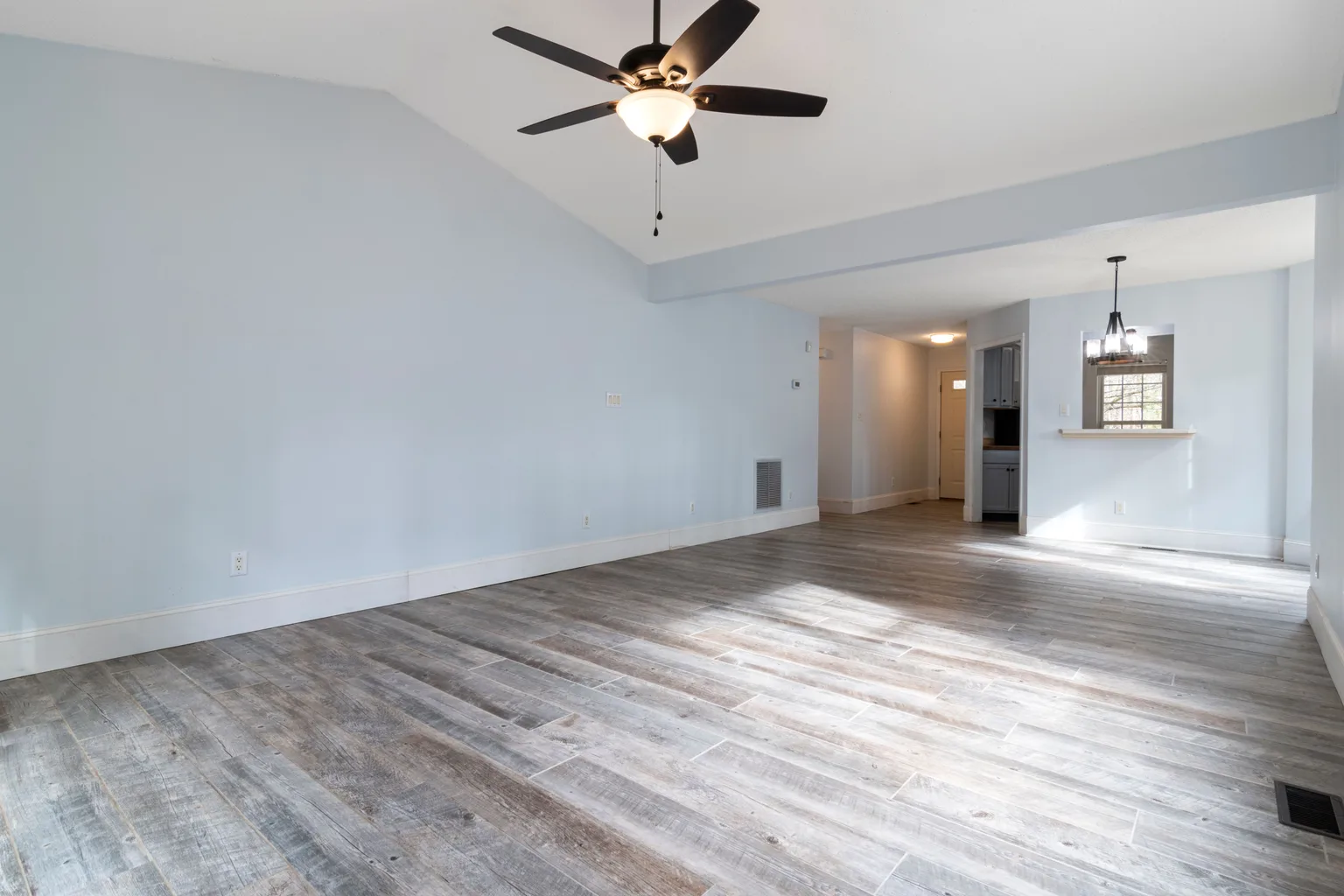

There is a particular quiet that settles over a house during the first week of school. The back door stops swinging every four minutes. Nobody is tracking in from the pool. For about two weeks, before fall sports and holiday planning take over, the house is emptier and calmer than it will be again until June.
That window is the single best time of year to reset your floors, and almost nobody uses it. Most households wait until late November, when the motivation is company rather than condition — which means cleaning in the worst drying month on a deadline set by somebody else's travel plans.
What Summer Actually Leaves Behind
Summer soil in Hampton Roads is not the same as winter soil, and it does not respond to the same handling. It arrives as two separate problems that happen to show up together.
The first is sand. Between the Oceanfront, the Bay beaches, Sandbridge, and every backyard within a few miles of the water, a summer's worth of quartz grit works its way to the base of the carpet pile. It does not sit on top where a vacuum can reach it. It settles down against the backing and stays there, and every footstep grinds it against the yarn like very fine sandpaper. This is the mechanism behind almost all premature carpet wear in this region.
The second is oil. Sunscreen, insect repellent, pool chemistry, sweat, and bare feet leave a thin oily film across everything the family touched. Oil is the reason a carpet can look reasonably clean in September and then go grey unusually fast in October — the film is sticky, so new soil bonds to it instead of vacuuming away.
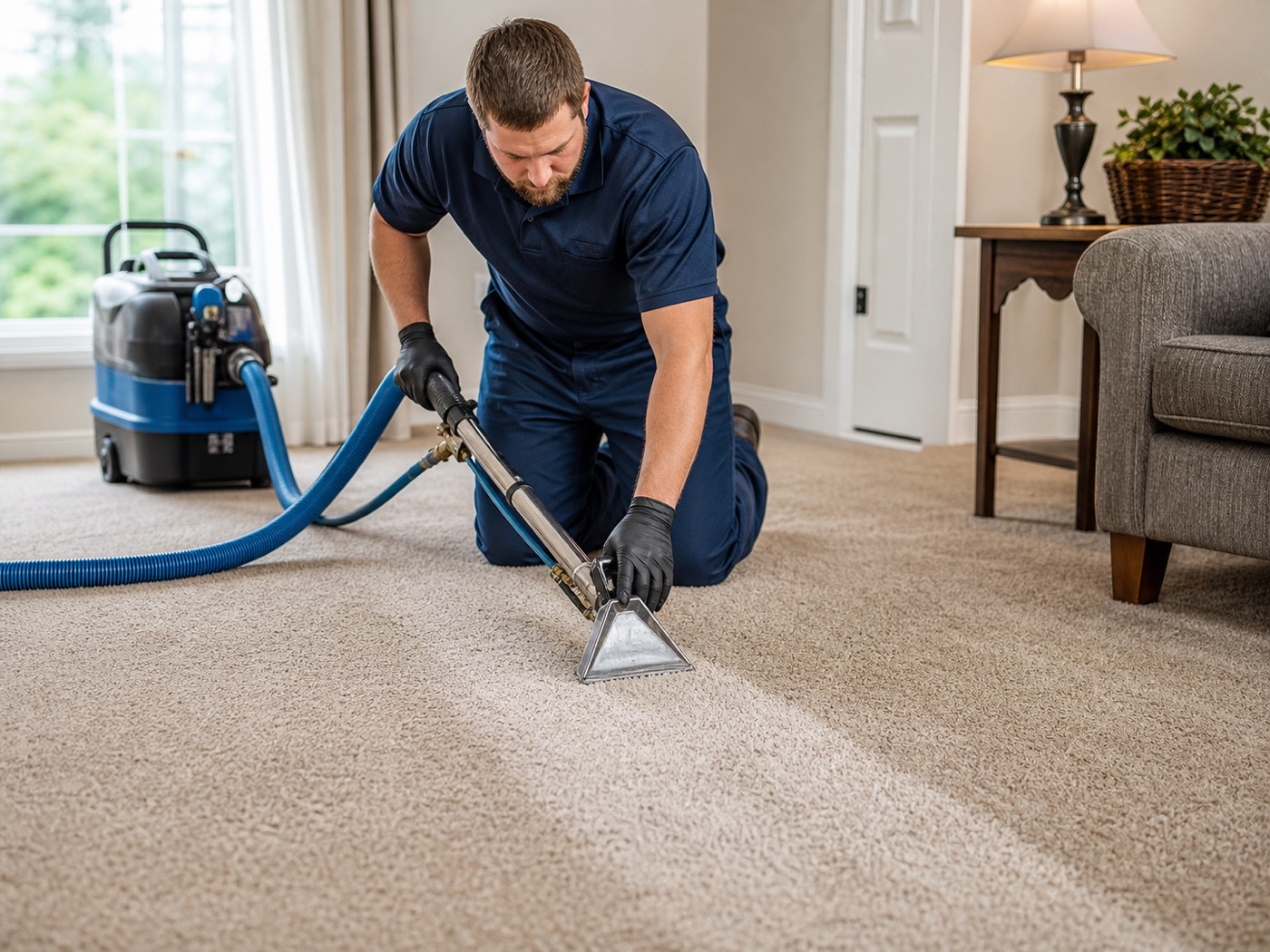
Those two problems need different answers. Sand needs mechanical agitation and strong extraction. Oil needs heat and a proper pre-spray with enough dwell time to break the film. A rental machine with cold tap water addresses neither one particularly well, which is why so many end-of-summer passes look good for three weeks and then worse than before.
The Four Zones That Matter
You do not need to clean the whole house. Summer soil is not distributed evenly — it concentrates hard in a handful of places, and those are where the money belongs.
| Zone | What it collected | Priority |
|---|---|---|
| Back door and garage entry | Sand, pool water, grass, mulch | Highest |
| Main hallway and stairs | Everything, redistributed | Highest |
| Family room and its seating | Sunscreen oil, snacks, pet hair | High |
| Front entry | Ordinary soil, less sand | Moderate |
| Kids' bedrooms | Sand carried in on feet | Moderate |
| Dining and formal rooms | Very little | Low |
| Guest rooms | Essentially nothing | Skip |
The back door is almost always the worst spot in a Hampton Roads house in September, and it is almost always the one people forget, because it is not the door guests use. It is the door that connects the pool, the yard, the grill, and the garage to the inside of your house, and it ran nonstop for three months.
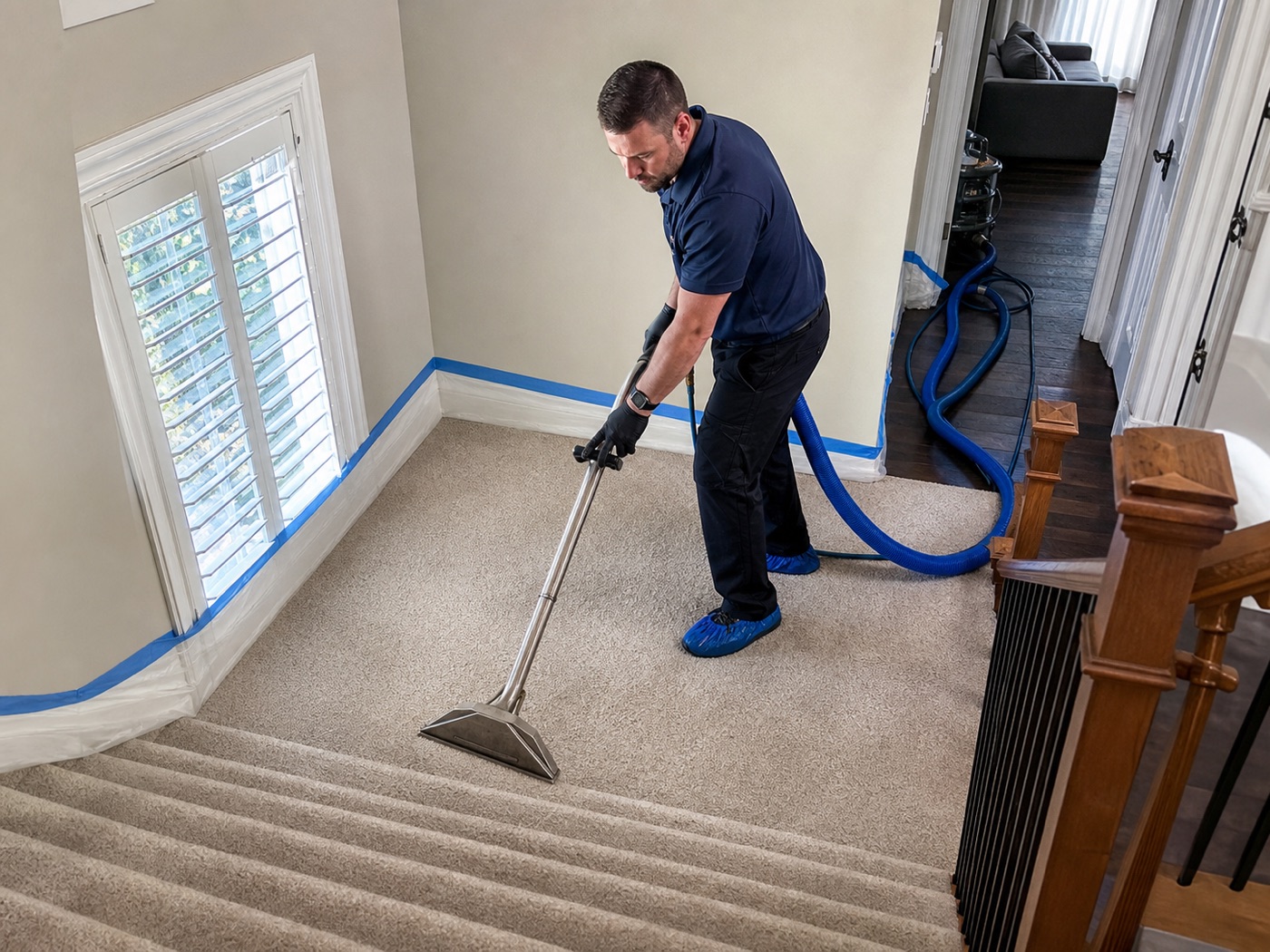
Stairs deserve their own mention. They take concentrated weight on the leading edge of each tread, they are the hardest surface in the house to vacuum properly, and they hold sand in the crevice where the tread meets the riser. A staircase that has not been cleaned since spring is usually the dirtiest twenty square feet in the building.
Why September Drying Beats December
Timing in this region is not a matter of preference. It is a matter of dew point.
Through July and August, coastal Virginia air is close to saturated. Water evaporating out of a carpet has nowhere to go, so drying stretches out and the house feels damp for a day. By the second week of September that starts to change — nights cool, dew points slide, and the same job that took most of a day in August dries in four to six hours.
December is worse than August in a different way. The air outside is dry, but the house is sealed, the heat is running, and there is little ventilation to carry moisture out. Add a holiday deadline and the temptation to rush a floor back into service before it is fully dry, which is how houses end up with a musty note that was not there before.
So the practical recommendation for Hampton Roads is simple: if you clean carpet once a year, do it in September or October. You get the best drying conditions available, you remove a full summer of abrasive grit before the wet season adds to it, and you are not doing it two days before your in-laws land.
The Habits That Hold It
A reset is only worth what you do afterward. The households that get two clean seasons out of one September appointment tend to do the same handful of things.
- Put real matting at the back door, not a decorative square. You want enough length for three or four full steps, indoors and out.
- Make the shoe rule stick while the house is empty during school hours. New habits form easier in a quiet house than in a full one.
- Vacuum the entries and stairs twice a week and the bedrooms every other week. Frequency belongs where the soil is.
- Slow down. About one pass per second is what it takes for a beater bar to lift grit from the base of the pile.
- Blot spills with water and a white towel, and skip the aerosol spot cleaner — its residue is what causes the spot to come back darker.
- Change the HVAC filter at the start of the school year, and again when the heat first comes on.
The matting point is the one with the most leverage. A good entry system captures a large share of the soil that would otherwise end up in your traffic lanes, and it costs less than a single cleaning. Commercial buildings have known this for decades, which is why every lobby in Hampton Roads has ten or twelve feet of walk-off matting inside the door.
Don't Skip the Furniture
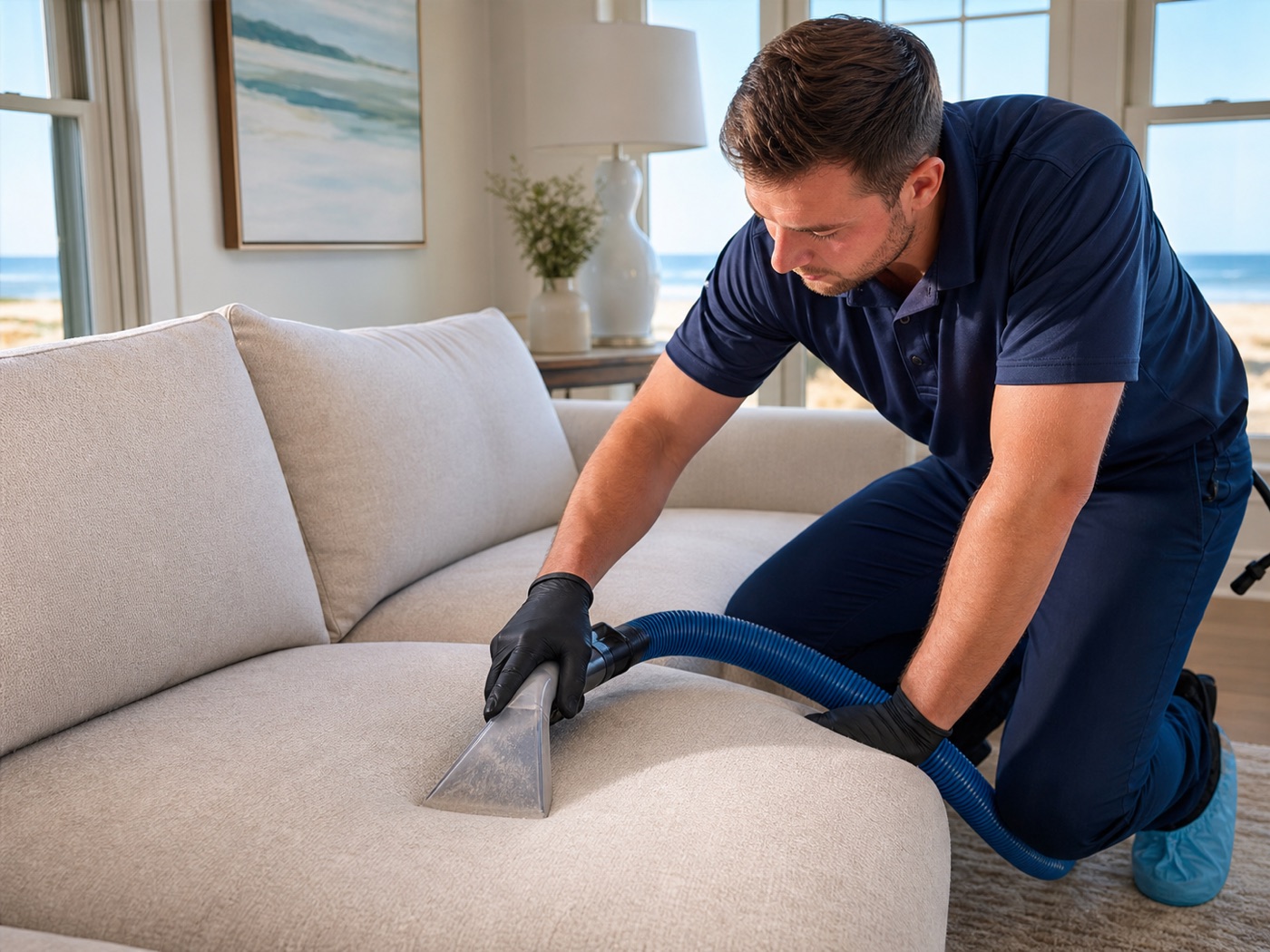
The family room sofa absorbed the summer more directly than the floor did. Sunscreen, wet swimsuits, popsicles, sandy legs, and a dog who spent three months outside all ended up in the same cushions.
Upholstery never gets the maintenance carpet does. Nobody vacuums a sofa weekly, and cushion fill holds far more soil than the surface fabric lets on. A summer's worth of body oil in seat cushions is also a common source of a room that smells faintly stale without any obvious cause.
Adding upholstery cleaning to the same visit is the efficient move — no second trip charge, and the whole room gets handled at once rather than leaving a clean floor next to a sofa that is now obviously the dirtiest thing in the house.
What This Costs
A zone-based reset — back entry, hallway, stairs, and family room — lands well under a whole-house price for most Hampton Roads homes, and it addresses close to all of the summer damage. Adding a sofa is a modest step up from there.
We publish our area pricing rather than making you call to find out, including the minimum job price and what carpet protector costs per area. If you want to know roughly where you will land before anyone comes out, the numbers are all there.
And if you are not sure which rooms genuinely need it, say so when you call. Talking a customer down from six rooms to four is a normal conversation here, because a household that gets honest advice in September tends to call again in the spring. That is a better business than one oversold appointment.
All City Carpet Cleaning And Building Solutions serves Virginia Beach, Norfolk, Chesapeake, Suffolk, Hampton, Portsmouth, and Smithfield. Seventeen years of carpet, upholstery, and floor care in this climate.